
Wall Street Swings Widely
The credit crunch brought on by failing mortgages sent the entire economy into freefall as investment banks and other credit institutions began to fail during the quarter. As our session ended Sept. 30, 2008, massive volatility continued on Wall Street and globally after the U.S. House rejected the $700 billion bailout proposed by Treasury Secretary Paulson and the White House. The Dow posted its third-largest one-day gain in history as the quarter ended, but that was preceded by the index’s largest one-day drop the day before. Stunned players on Wall Street anticipated a long recovery no matter what the outcome of the vote. “I am worried that if there is no plan, then the credit squeeze will get worse and it will be like a boa constrictor has got the economy and just keeps squeezing,” said Al Kugel, chief investment strategist at Atlantic Trust in Chicago.
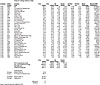
The PCI Stock Index fell to 851.18, a drop of 109.65 points, or 11.41 percent. Declining issues sharply outweighed advancing issues by a 22-to-12 count.
Despite an eight percent downturn in second quarter results and failing to meet analysts’ expectations for the earning period, Rohm & Haas rose 23.56 points, or 50.73 percent on news that rival Dow has made a $15 billion all-cash deal to purchase the company. For the quarter ended June 30, Rohm & Haas reported net earnings of $147 million, or $0.75 per share, compared to net income of $160 million, or $0.74 per share in the comparable year-ago quarter. Revenue increased to $2.57 billion from $2.19 billion last year. Analysts surveyed by Thomson Financial expected net income of $0.85 per share and revenues of $2.51 billion. In early September, the Federal Trade Commission requested additional information about the proposed purchase. The deal remains subject to shareholder approval and other customary regulatory hurdles. Rohm & Haas ended at 70.00, and was the top dollar and percentage gainer.
Shares of Air Products fell 30.37 points after the company guided analysts lower for its fourth quarter. Citing a strong U.S. dollar, hurricanes Ike and Gustav and a fire at a plant in South Korea, Air Products said it expects earnings from continuing operations to range between $1.24 per share and $1.26 per share. Earlier, Air Products had forecast earnings of $1.37 per share and $1.42 per share. Analysts surveyed by Reuters Estimates expected Air Products to earn $1.40 per share for the quarter. The company said a fire at its nitrogen triflouride factory required a shutdown until January and will result in a 5-cent-per-share cut. The hurricane disruptions are expected to dock earnings by an equal amount. Air Products lost 30.72 percent, and ended at 68.49. APD was the top dollar loser for the quarter.
Ashland tumbled 18.96 points, or 39.34 percent after its fiscal third quarter earnings fell 28 percent. For the quarter ended June 30, Ashland reported net income of $72 million, or $1.13 per share, compared to net income of $100 million, or $1.58 per share in the comparable year-ago quarter. Revenue rose 11 percent, to $2.2 billion. However, the results surpassed estimates by analysts: those polled by Thomson Financial expected Ashland to earn $0.86 per share with revenues of $2.1 billion. Ashland said its results were hampered by higher raw materials costs. Ashland also came up short on news that it plans to buy competitor Hercules in a $2.6 billion cash-and-stock transaction. The deal includes the assumption of $700 million in Hercules debt. The deal is expected to close at the end of 2008. Ashland ended at 29.24, and was the top percentage loser.
Looking for a reprint of this article?
From high-res PDFs to custom plaques, order your copy today!