
The Use of Chitosan in Paint Detackification
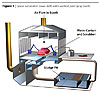
The paints used in automotive-finishing operations are a tacky material and tend to adhere to the surfaces of spray booths, particularly in the sump and drain areas. To maintain the design intent of the paint spray booth, the paint overspray must be constantly removed from the sump to prevent clogging of the sump drain and recirculating system. In order to assist in the removal of the oversprayed paint from the air and to provide efficient operation of the down-draft, water-washed paint spray booths utilize paint detackifying chemical agents. The detackification products are commonly introduced into the water that is recirculated in the paint spray booth system.
Automatic Spray Operation
Paint spray booths are typically 100 – 300 feet in length and usually contain many robotic and manual spray zones. The temperature and humidity are rigorously controlled in these systems. As vehicles are painted in these booths, a certain amount of paint does not contact the article being painted and forms a fine mist of paint in the air space surrounding the article. This paint must be removed from the air. To accomplish this, the contaminated air is pulled through the paint spray booth by exhaust fans. A curtain of circulating water is maintained across the path of the air in such a way that the air must pass through the water curtain to reach the exhaust fans. As the air passes through the water curtain, the paint mist is “scrubbed” from the air and carried to a sump basin (sludge pit), usually located below the paint spray booth. In this area, the paint particles are separated from the water so that the water may be recycled and the paint particles disposed of as paint sludge (Figure 1).Common Detackifiers
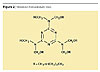
The paint detackifiers (or “denaturants”) commonly added to these systems are either melamine-formaldehyde based (Figure 2) or based upon acrylic acid chemistry (Figure 3).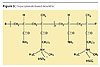
Chitosan Detackifier
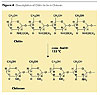
The innovative nature of the BC4200NP technology lies in the fact that it is derived from chitin, the waste product of food production, namely shell fish harvesting. The solid chitin derived from these operations is treated with sodium hydroxide at an elevated temperature to produce chitosan, also called poly(glucosamine), that represents a deacetylated chitin. The chitosan produced in this way yields a glucosamine polysaccharide structurally similar to cellulose. The degree of deacetylation can be controlled by temperature and reaction time. The chitosan produced, also in a solid state, is not readily soluble in water, but can be rendered more water soluble by the addition of various acids such as acetic, sulfuric, hydrochloric, citric, sulfamic and mixtures thereof. The deacetylation of chitin to produce chitosan is represented in Figure 4.
The melamine-formaldehyde detackifiers that
BC4200NP is replacing are derived from non-renewable natural gas supplies and
contain residual amounts of free formaldehyde as a necessary consequence of the
resin production operation. The acrylic acid-based detackifiers are derived
from non-renewable crude oil feed stocks and their price is therefore subject
to the global oil market. Further, since the chitosan-based product is less
acidic than the traditional products, less sodium hydroxide is necessary in an
operating system to control pH, resulting in less overall chemical usage.
Additional field studies have also indicated that less detackifier is necessary
to treat a given amount of paint, and this also makes the BC4200NP more
attractive from an application cost perspective.
Successful Chitosan Operations
The BC4200NP technology has been running successfully at the Mitsubishi Motors facility in Normal, IL, for over a year and a half with excellent results. Sodium hydroxide usage has been reduced by 87%, very little residual sludge has accumulated in their sludge pit, and plant operators claim to have very little involvement with the process. The sludge characteristics are the same or better than with the previous melamine-formaldehyde technology. The BC4200NP product also contributes no additional VOC to plant processes.Significant milestones in regard to this technology are as follows:
- Compositional patent granted, US 6,673,263, B2, 1/6/04;
- Process patent granted, US 6,858,093 B2, 2/22/05;
- Commercially launched at MMNA in Normal, IL, 8/23/05;
- Received 2005 Environmental Achievement Award from EMA, 3/23/06;
- Received 2006 Honorable Achievement Award from Environmental Protection Magazine, 9/15/06;
- Featured case study at CMS Forum in San Francisco, CA, 10/26/06;
- Nominated for Presidential Green Chemistry Award, December 2006; and
- Launched at Ford TCAP facility in St. Paul, MN, January 2007.
On a pound for pound basis, the BC4200NP technology is either cost neutral or less expensive than the current paint detackifiers in the market place. Further, field studies indicate that the BC4200NP technology may reduce the overall cost of such programs by lowering detackifier usage and by decreasing the use of ancillary chemicals, i.e., liquid caustic and biocides.
Environmental Advantages of BC4200NP Technology
The environmental advantages of this technology are summarized as follows.- Program does not include the use of melamine-formaldehyde resins, therefore no residual free formaldehyde (a known carcinogen) is introduced.
- Raw material is not derived from natural gas and/or crude oil, and therefore does not utilize non-renewable resources.
- Raw material is obtained from the waste products of food production, i.e., crab, lobster and shrimp shells.
- Product is safer than other conventional technologies do to its lower acidity level.
- Chitosan, the main component of the BC4200NP technology, has been demonstrated to have anti-microbial properties and will therefore decrease the use of toxic and hazardous biocides.
Looking for a reprint of this article?
From high-res PDFs to custom plaques, order your copy today!