Biomaterials and PC Coatings
Editors Note – The following is an excerpt on medical coatings from company literature obtained at the 2008 InformEx meeting (New Orleans) and from a presentation at this meeting by Dr. Mike Driver, Biomaterials Health and Specialty Products, Vertellus Biomaterials, Hampshire, UK.
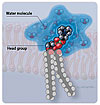 PC is short for phosphorylcholine, the chemical name of a polar head group found in many phospholipids, particularly those that form the bi-layers that make up cell membranes. As the predominant head group present in the lipids of the outer membrane layer, PC plays a key role in determining how a cell interacts with its surrounding environment and is attributed to be one of the primary natural materials responsible for the biocompatibility that exists between most cells.
PC is zwitterionic, i.e., it has a positive and negative charge on the same molecule but is overall electrochemically neutral. This confers the PC group with high polarity and, consequently, a natural affinity for water. As a result, materials that incorporate the PC group are surrounded by molecular layers of water that effectively mask the substrate to which it is applied, providing a biological “non-stick” surface that resists protein and cell adhesion.
PC Technology™ is a proprietary platform of methacrylate polymers incorporating phosphorylcholine. These biomimetic materials build on the body’s own chemistry but are totally synthetic, allowing precise control over the purity profile, the molecular structure and avoiding any of the risks associated with animal-derived material. They can provide an elegant solution to biocompatibility challenges for medical devices and can be tailored to specific application needs.
For example, PC materials are available as coatings, bulk materials, gels and solutions, and properties such as water content, elasticity and hardness can easily be varied. Several of these systems have been successfully used to enable the localized delivery of drugs and, once again, variation of the polymer allows the release rate of the active to be varied considerably.
PC is surrounded by tightly held layers of water that form an effective barrier, providing a “non-stick” surface that resists protein and cell adhesion. In the case of a PC-coated substrate, the protein can still interact with the surface, but it is now energetically unfavourable for irreversible binding to occur. Essentially the surface layer of water bound to the PC disguises the surface such that the protein does not recognize the foreign body and therefore does not denature and activate.
In recent years the development of drug-device combination products has brought a step-change in certain parts of the medical device arena. A notable example has been the drug-eluting stent (DES) market, which saw explosive growth over a two-year period. PC coatings have played a significant part in this area with the launch of Abbott Laboratories’ PC/dexamethasone coated Dexamet® stent. The flexible chemistry upon which PC polymers are based allows modification with a wide range of monomers that enables customization for different actives to influence drug elution and fine tune performance.
PC coatings can: adsorb high-molecular-weight drugs; absorb low-molecular-weight drugs; exhibit precise loading and controlled release; and remain unchanged once the drug is released. These coatings can deliver anti-inflammatories, analgesics, anti-microbials, hormones and DNA fragments for use in gene therapy.
Healthcare
PC materials improve the biocompatibility and performance of medical devices and materials through reduced protein deposition/activation; bacterial adhesion; biofilm deposition; inflammatory response; fibrous capsule formation; and blood activation/thrombus formation.
PC biomaterials have been used to successfully coat the following substrates.
• Metals – stainless steel, nitinol, titanium, gold, platinum
• Plastics – polyolefins, PVC, PMMA, PET, PU, polycarbonate, polyamides, polyimides, polystyrene, PTFE
• Rubbers – silicone, latexes, PIB
• Glasses and ceramics
• Tooth enamel and other tissues
Non-Healthcare
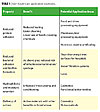
It is clear that the non-fouling and surfactant properties of PC have potential benefits outside of healthcare. Some examples are noted in Table 1. Because of the properties, PC can bring potential benefits and cost savings to a variety of industries including: construction, textiles, food and beverage, latex products, filtration and personal care.
For more information, see the full story at www.pcimag.com. Also see www.vertellus.com, www.pcbiomaterials.com, or info@pcbiomaterials.com.
PC is zwitterionic, i.e., it has a positive and negative charge on the same molecule but is overall electrochemically neutral. This confers the PC group with high polarity and, consequently, a natural affinity for water. As a result, materials that incorporate the PC group are surrounded by molecular layers of water that effectively mask the substrate to which it is applied, providing a biological “non-stick” surface that resists protein and cell adhesion.
PC Technology™ is a proprietary platform of methacrylate polymers incorporating phosphorylcholine. These biomimetic materials build on the body’s own chemistry but are totally synthetic, allowing precise control over the purity profile, the molecular structure and avoiding any of the risks associated with animal-derived material. They can provide an elegant solution to biocompatibility challenges for medical devices and can be tailored to specific application needs.
For example, PC materials are available as coatings, bulk materials, gels and solutions, and properties such as water content, elasticity and hardness can easily be varied. Several of these systems have been successfully used to enable the localized delivery of drugs and, once again, variation of the polymer allows the release rate of the active to be varied considerably.
Mode of Action
When a foreign material is placed in the body, the body immediately begins to “reject” the material through the deposition of lipids and proteins, which denature, adopting active conformations and encouraging the adhesion of cells from the surrounding environment. These cells may then promote further fouling of the surface.PC is surrounded by tightly held layers of water that form an effective barrier, providing a “non-stick” surface that resists protein and cell adhesion. In the case of a PC-coated substrate, the protein can still interact with the surface, but it is now energetically unfavourable for irreversible binding to occur. Essentially the surface layer of water bound to the PC disguises the surface such that the protein does not recognize the foreign body and therefore does not denature and activate.
Applications
Drug DeliveryIn recent years the development of drug-device combination products has brought a step-change in certain parts of the medical device arena. A notable example has been the drug-eluting stent (DES) market, which saw explosive growth over a two-year period. PC coatings have played a significant part in this area with the launch of Abbott Laboratories’ PC/dexamethasone coated Dexamet® stent. The flexible chemistry upon which PC polymers are based allows modification with a wide range of monomers that enables customization for different actives to influence drug elution and fine tune performance.
PC coatings can: adsorb high-molecular-weight drugs; absorb low-molecular-weight drugs; exhibit precise loading and controlled release; and remain unchanged once the drug is released. These coatings can deliver anti-inflammatories, analgesics, anti-microbials, hormones and DNA fragments for use in gene therapy.
Healthcare
PC materials improve the biocompatibility and performance of medical devices and materials through reduced protein deposition/activation; bacterial adhesion; biofilm deposition; inflammatory response; fibrous capsule formation; and blood activation/thrombus formation.
PC biomaterials have been used to successfully coat the following substrates.
• Metals – stainless steel, nitinol, titanium, gold, platinum
• Plastics – polyolefins, PVC, PMMA, PET, PU, polycarbonate, polyamides, polyimides, polystyrene, PTFE
• Rubbers – silicone, latexes, PIB
• Glasses and ceramics
• Tooth enamel and other tissues
Non-Healthcare
It is clear that the non-fouling and surfactant properties of PC have potential benefits outside of healthcare. Some examples are noted in Table 1. Because of the properties, PC can bring potential benefits and cost savings to a variety of industries including: construction, textiles, food and beverage, latex products, filtration and personal care.
For more information, see the full story at www.pcimag.com. Also see www.vertellus.com, www.pcbiomaterials.com, or info@pcbiomaterials.com.
Looking for a reprint of this article?
From high-res PDFs to custom plaques, order your copy today!