
Painting & Coating Industry (PCI) logo Powder coating summit logo
search
cart
facebook twitter linkedin youtube
  • Sign In
  • Create Account
  • Sign Out
  • My Account
Painting & Coating Industry (PCI) logo Powder coating summit logo
  • NEWS
    • Latest News
    • Market Trends & Reports
    • Finishing News
    • Price Alerts
    • Subscribe to Newsletters
    • Global Top 10/ PCI 25
    • Weekly Featured Article
    • COATLE Word Game
  • PRODUCTS
    • Product News
    • Must See Products and Services
  • MATERIALS
    • Additives
    • Resins/Polymers
    • Pigments
    • Equipment
    • Distributors
  • TECHNOLOGIES
    • Adhesives
    • Architectural Coatings
    • Finishing Articles
    • Finishing Technologies
    • Finishing Equipment
    • Industrial Coatings
    • Nanotechnology
    • Powder Coatings
    • Solventborne
    • Special Purpose Coatings
    • Sustainability
    • UV Coatings
    • Waterborne
  • RESOURCES
    • Columns
      • Did you know?
      • Distribution Dive
      • Formulating With Mike
      • Innovation Insights
      • Powder Coating Perspectives
      • TiO2 Insider
    • Blogs
      • Editor's Viewpoint
      • Industry Insights
    • Coatings Supplier Handbook
    • Podcasts and Videos
      • COAT-IT! Podcast
      • Videos/PCI TV
    • PCI Store
    • Classifieds
    • eBooks
    • Sponsor Insights
    • White Papers
    • COATLE Word Game
  • EVENTS
    • Coatings Trends & Technologies Summit
    • Paint and Coatings Academy
    • Webinars
    • Calendar of Events
    • Lifetime Achievement Award
  • DIRECTORIES
    • Buyer's Guide
    • Equipment Directory
    • Materials Directory
  • EMAGAZINE
    • Current Issue
    • eMagazine Archive
    • China Issue Archive
    • Editorial Advisory Board
  • CONTACT
    • Contact Us
    • Advertise
    • Subscribe to eMagazine
    • Subscribe to Newsletters
  • SIGN UP!
Architectural Coatings

Photocatalytics in Coatings for VOC Reduction

By John Schierlmann
pci0622-Bona-1272073986-1170.jpg
June 10, 2022

Indoor air quality is becoming a growing concern for consumers and business owners. Indoor air pollutants (VOCs — volatile organic compounds) can come from sources such as carpets, furnaces, furniture, insulation, pets, refuse and fuels from the garage (Figure 1). While current technology in home building makes houses with fewer air turns and that are far better insulated, this can trap VOCs within a house, and lead to increased asthma and allergies for the occupants.
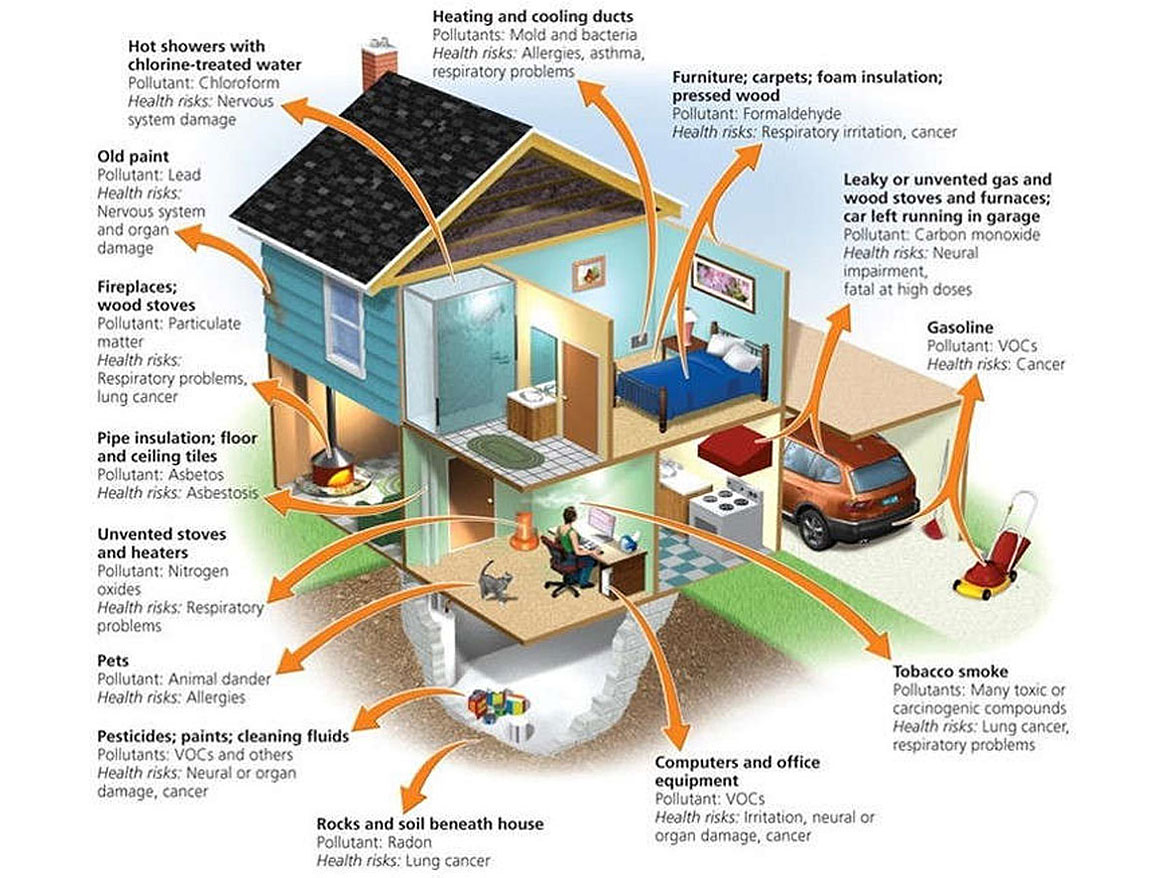
Sources of indoor air pollutants (VOCs).
FIGURE 1 » Sources of indoor air pollutants (VOCs).

Products are available that claim to clean VOCs from the indoor air. These is not a magic panacea to solve all issues. The hybrid light/filter systems are costly and cover a small area for efficiency. There are also hybrid systems that are modifications to HVAC systems that are efficient but costly. Other machine types can create ozone, which poses other health concerns. Some that contain filters that can become inactive as they fill with impurities and lose their VOC reduction efficacy.

Hybrid systems such as the Molecule or HVAC systems (Figure 2) with UV lights to degrade indoor toxins, and in some cases bacteria, share a technology called photocatalytic oxidation as the active component to cause a chemical degradation.
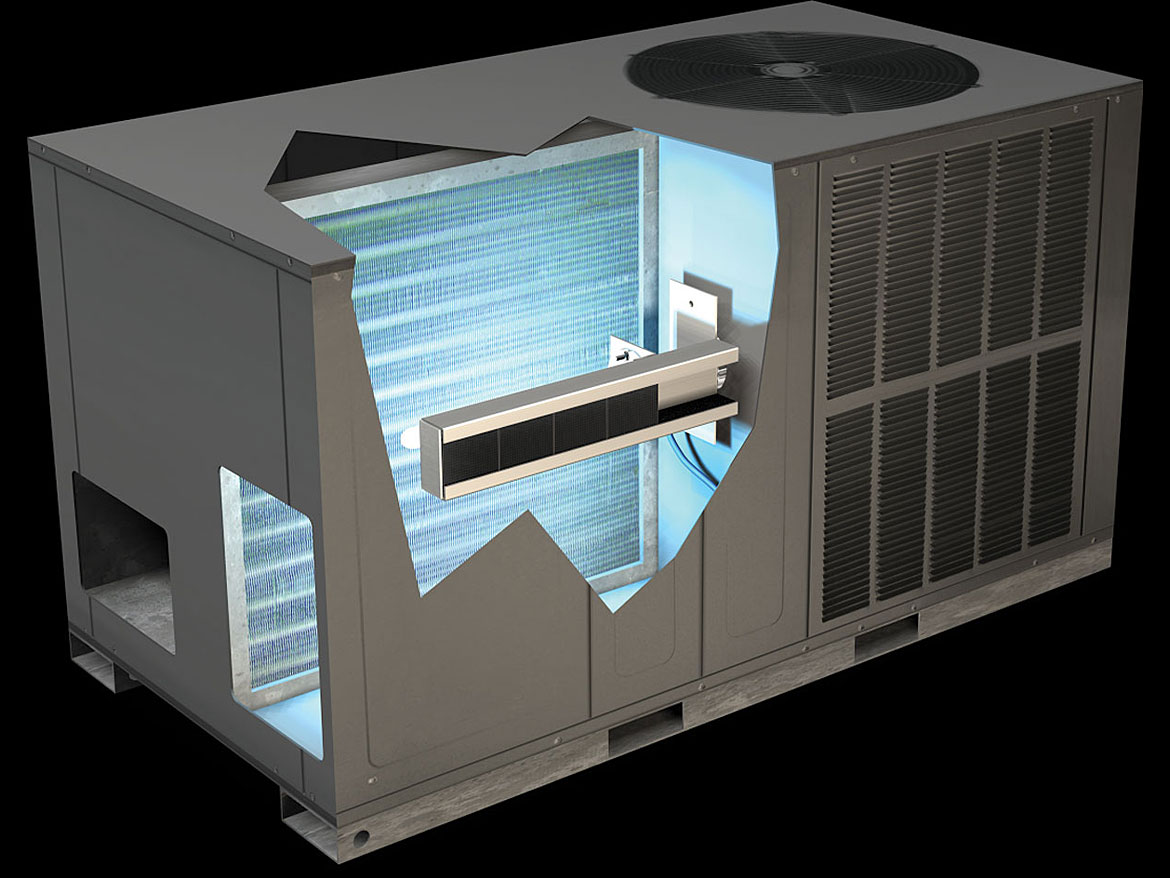
Photocatalytic HVAC system.
FIGURE 2 » Photocatalytic HVAC system.

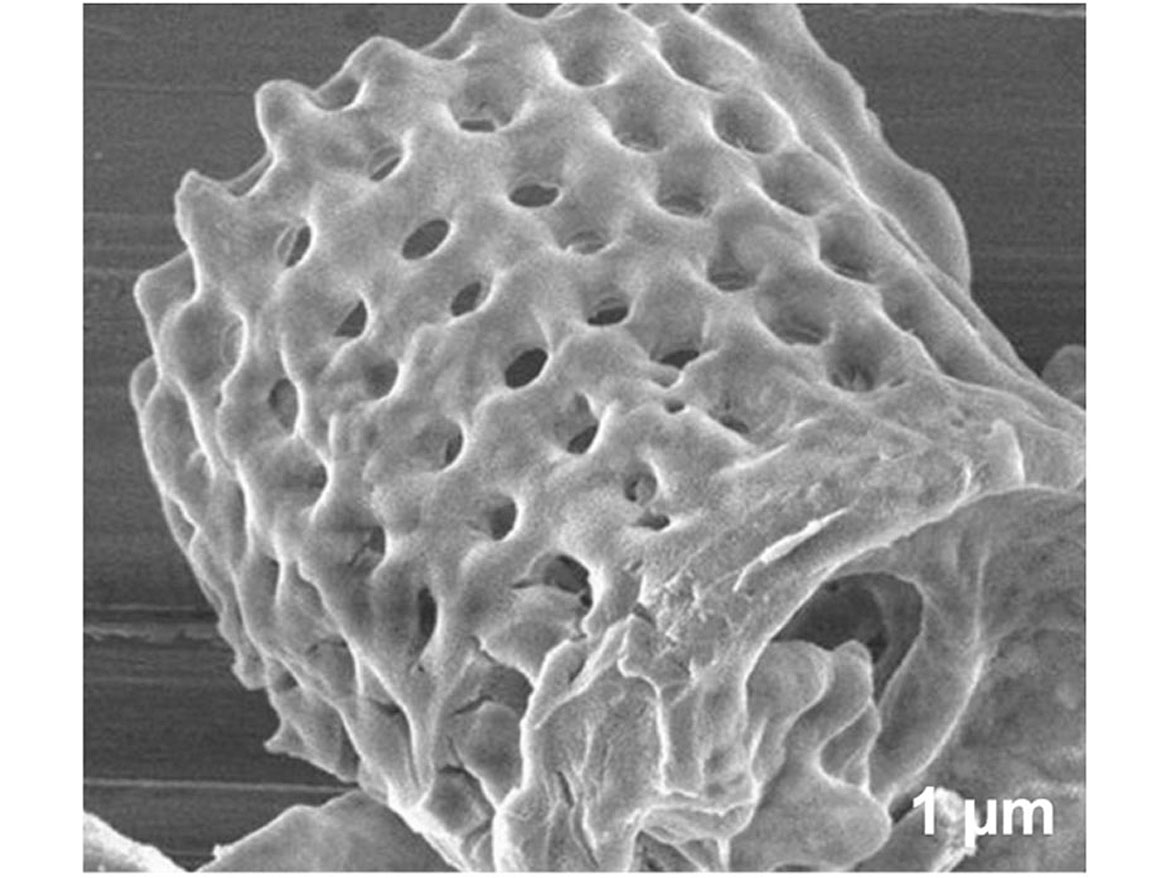
There are several metal oxides, such as titanium dioxide, zinc oxide and copper oxide, that are utilized in the process of photocatalysis. These can be applied via chemical treatment in a high-temperature chemical “bath” and fused to the surface of more inert and stable structures such as diatoms. The metal oxides are 10-20 nanometers (Figure 3), whereas the diatoms 10-50 microns (Figure 4) are far larger in particle size, leading to a very stable and durable material.
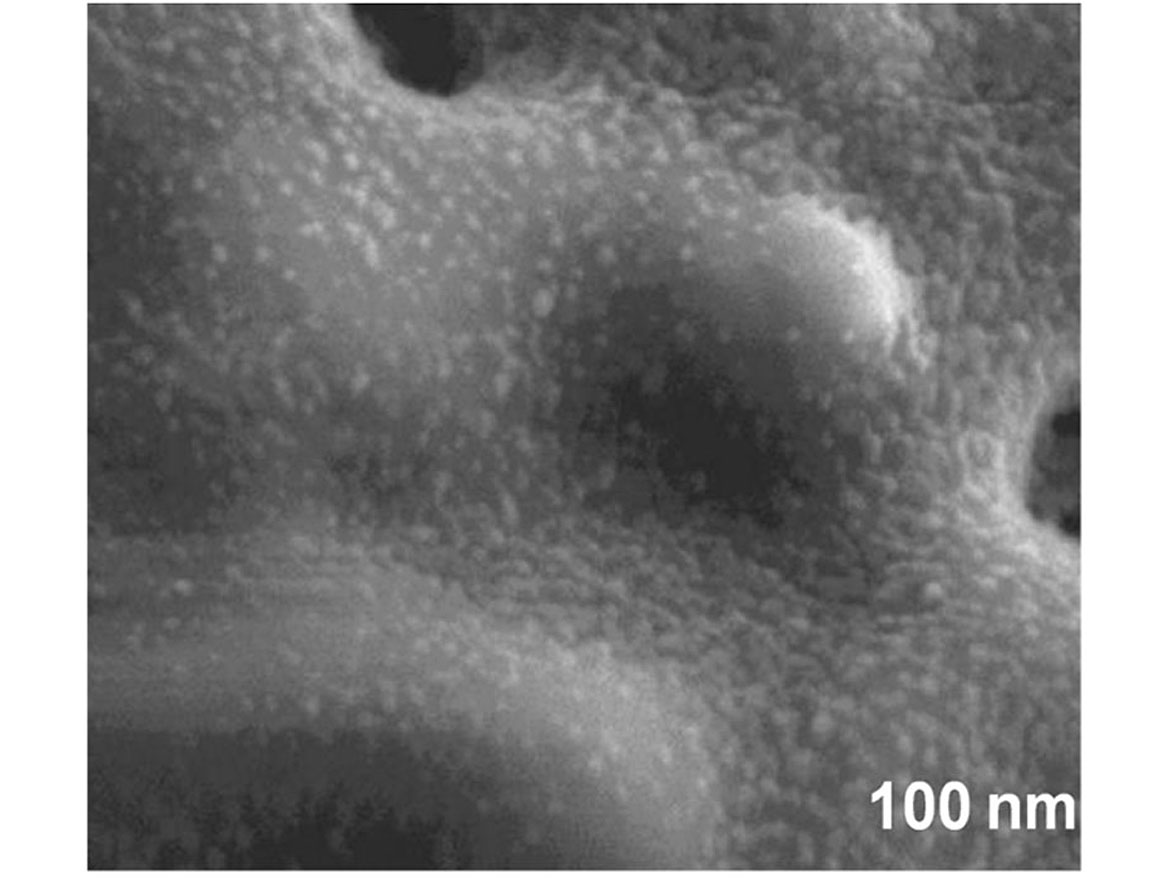
Titanium dioxide 10-20 nanometers.
FIGURE 3 » Titanium dioxide 10-20 nanometers.
Diatom 10-50 microns.
FIGURE 4 » Diatom 10-50 microns.

This material can be either added directly into the coating, if lower in spectral gloss <50 @ 60 degrees, or a dispersion can be made with a smaller particle size 0.5-3 microns. This can be added to higher gloss systems without affecting gloss level or haziness. To illustrate how the pigments dispersed into the coating, we had a third-party lab run TEM (transmission electron microscopy) images (Figure 5).
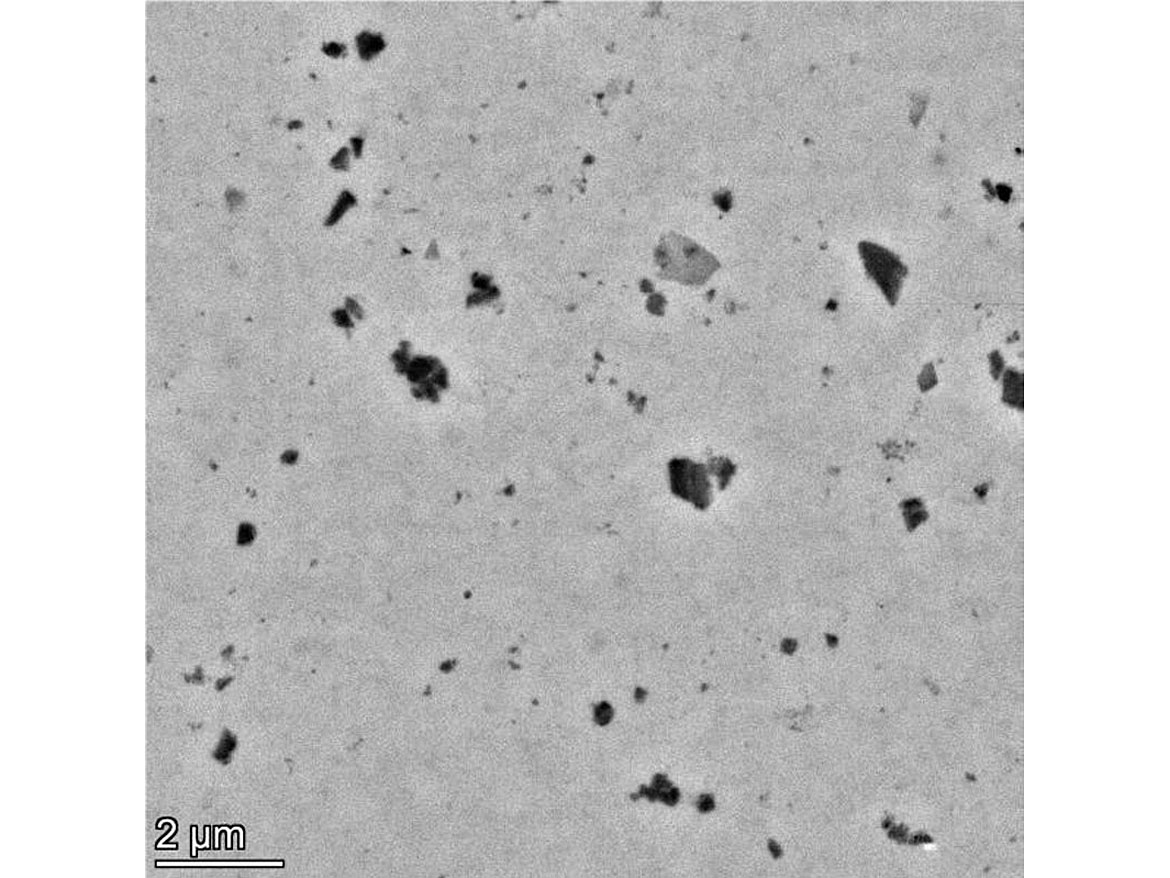
Diatom particles in polish utilizing TEM.
FIGURE 5 » Diatom particles in polish utilizing TEM.

The mechanism of degradation is UV, LED or visible light striking the titanium catalyst on the diatom. The energy most efficient to accomplish this is around the 400 nanometer wave length. The diatom, with the nanoparticle titanium dioxide dispersed in the coating (as illustrated in Figure 5) causes an electron to jump energy states. This free electron reacts with the VOC, breaking the molecule into smaller species (Figure 6). The degradation process illustrated is that of formaldehyde CH2O — an oxidation/reduction to H2O and CO2.
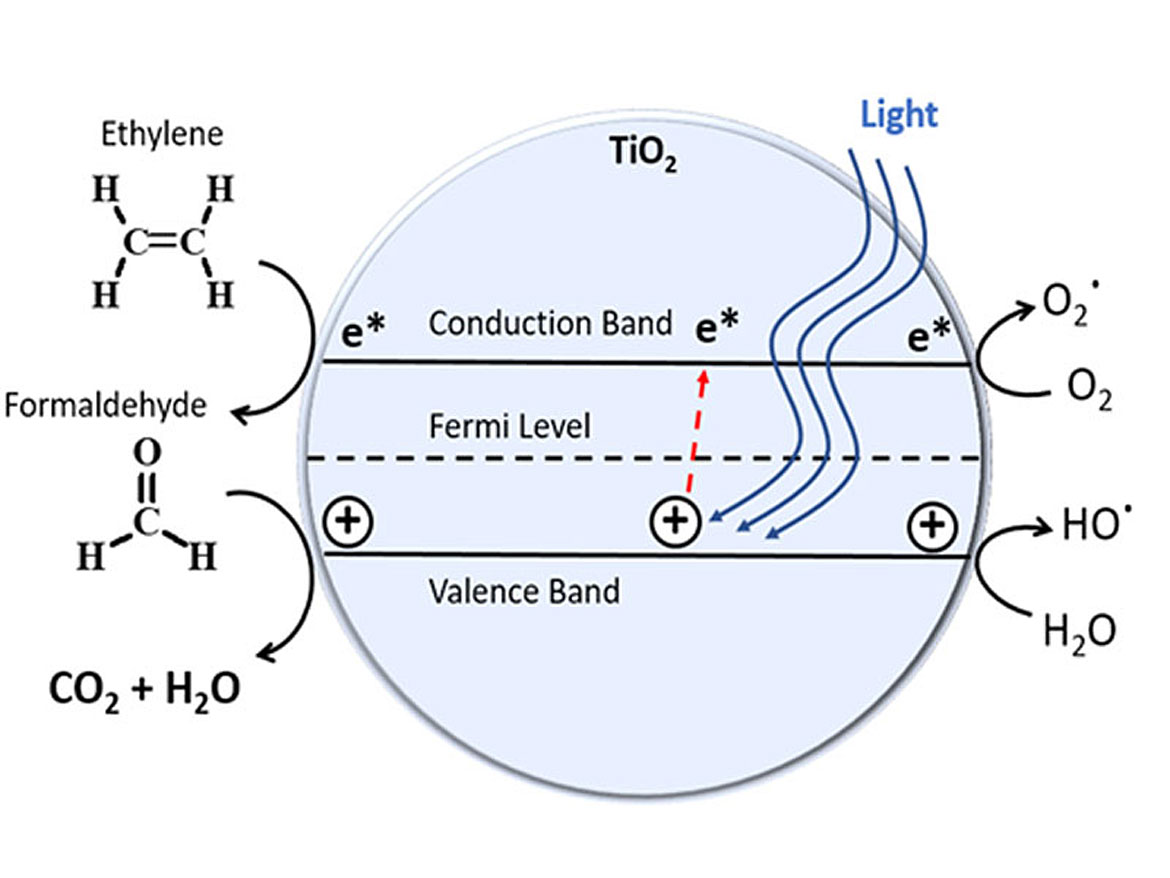
Photocatalytic degradation mechanism.
FIGURE 6 » Photocatalytic degradation mechanism.

Obviously, all bond energies are different. Some require more energy than others to break the bonds. The energy band gap for the titanium dioxide is around 3 electron volts, which is enough to disrupt all but a carbon oxygen double bond. Table 1 illustrates some of the energy required to disrupt typical bonds.
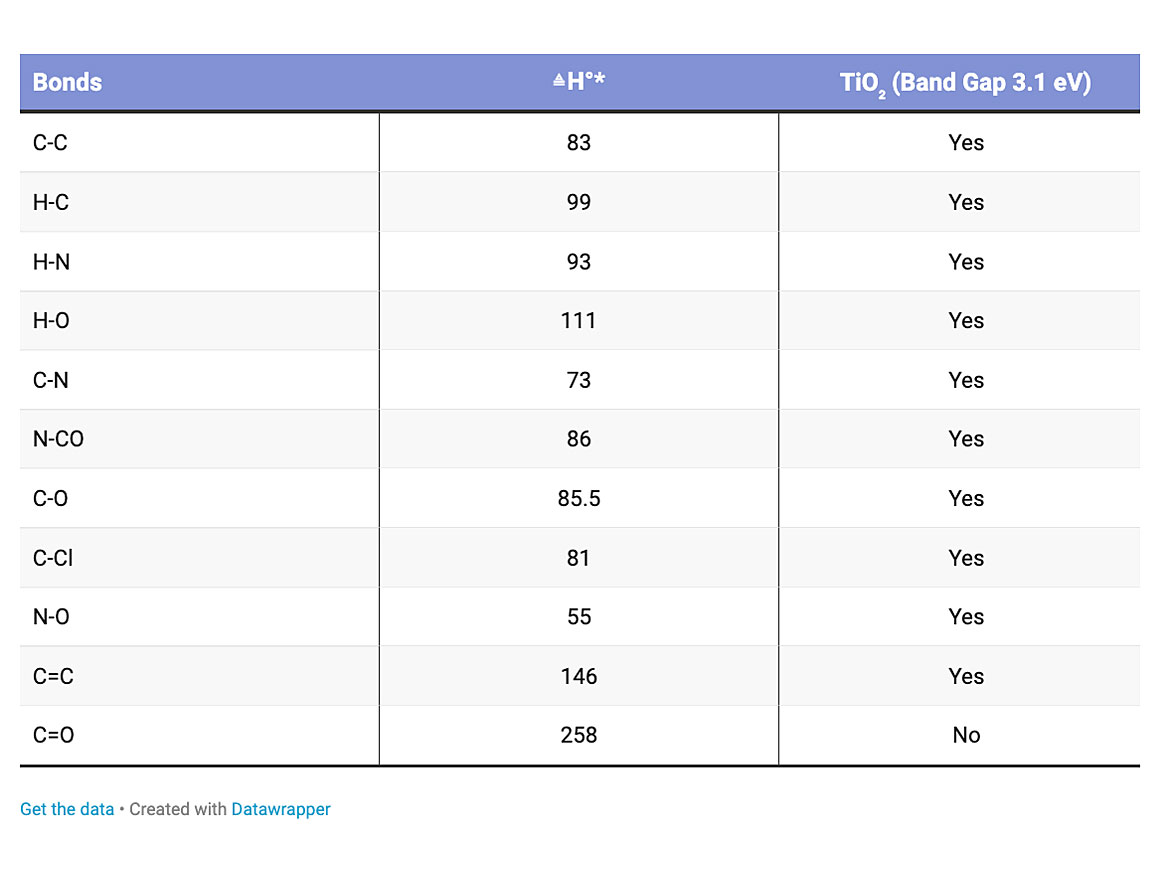
Bond energies.
TABLE 1 » Bond energies.

To validate how effective the titanium dioxide was, we put together several coatings systems but will only discuss three. These all used the dispersion form that was added to the coating systems. The coatings we tested were a low-solids gloss polish, a higher solids gloss polish and a satin 2K urethane. All three were water-based.

To monitor and track this degradation process we utilized the ISO 22197-4 standard for formaldehyde reduction and ISO 22197-5 for methyl mercaptan reduction. This was conducted in test chambers at RTP labs in Raleigh, NC. RTP labs utilized a 27-liter chamber for tighter experimental control. Testing was conducted on glass panels 7x14 inches, to not influence testing. One gram of coating was weighed and applied to the glass plates and allowed to cure for 30 minutes at 25 °C and 40% relative humidity. A control, with none of the active titanium dioxide, was run in one set of tests, and an active sample with a specific amount of titanium dioxide was run. The chamber was sparged with nitrogen to eliminate any VOC in the chamber.

In the test run with gloss low-solids polish, 5 parts per million of formaldehyde was added at time zero and monitored up to 72 hours. In another test run, 2.5 parts per million methyl mercaptan was added at time zero and monitored up to 72 hours. Outside the chamber, T8 LED lights were utilized as the energy source and left on the entire time of testing.

The testing was conducted on two polishes, and a catalyzed 2K water-based urethane. The first test was conducted on a low-solids (10% non-volatile material) content gloss polish for retail consumer applications. The loading level of the titanium dioxide was 0.15% dry active in the polish (Table 2). The reduction of formaldehyde was a little lower, 13% over the control for the low-solids polish likely due to loading level, but more efficient on methyl mercaptan with a 39% reduction compared to the control.
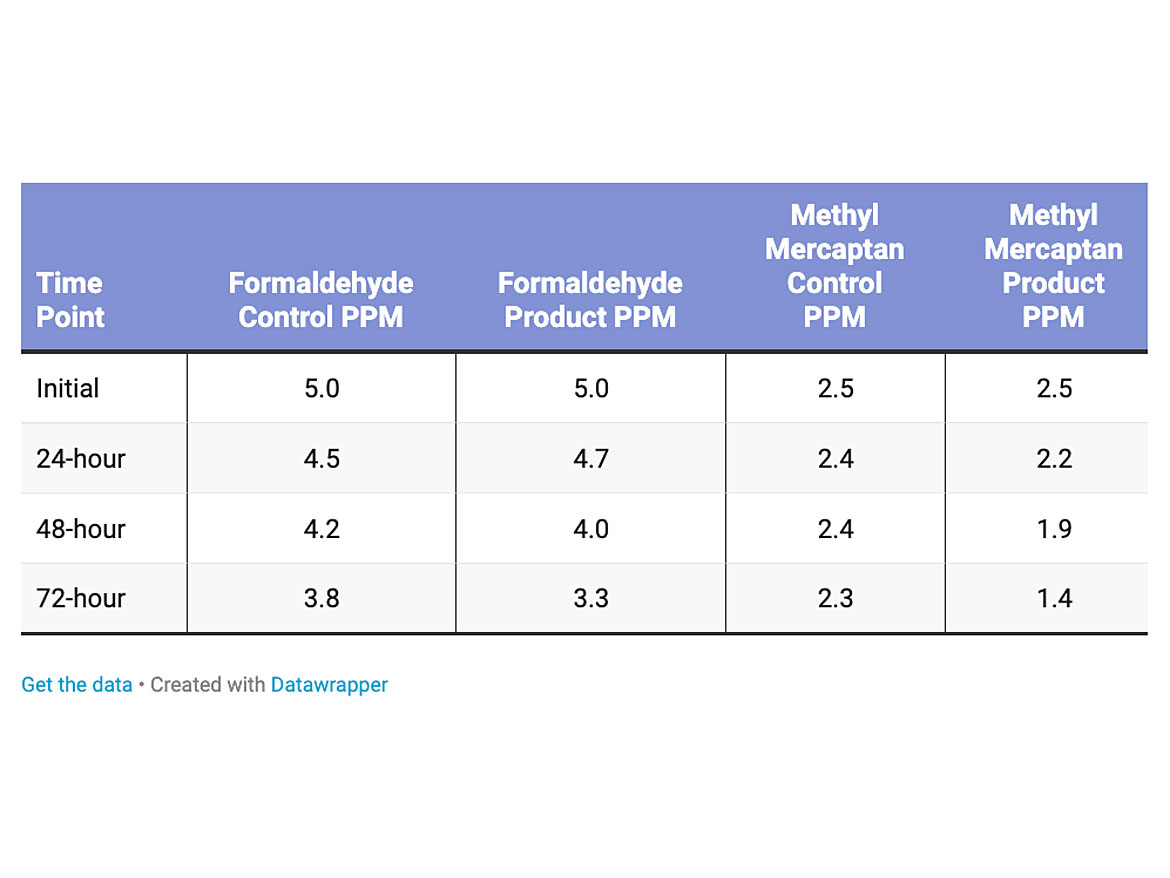
Test 18-009 gloss polish.
TABLE 2 » Test 18-009 gloss polish.

The amount of formaldehyde and methyl mercaptan were increased with a higher solids (22% non-volatile material), buffable Jan/San type polish (Table 3). The loading level of the titanium dioxide was 0.5% dry active in the polish. The reduction of formaldehyde was more pronounced, 93% reduction over the control. The reduction of methyl mercaptan was 36% over the control.
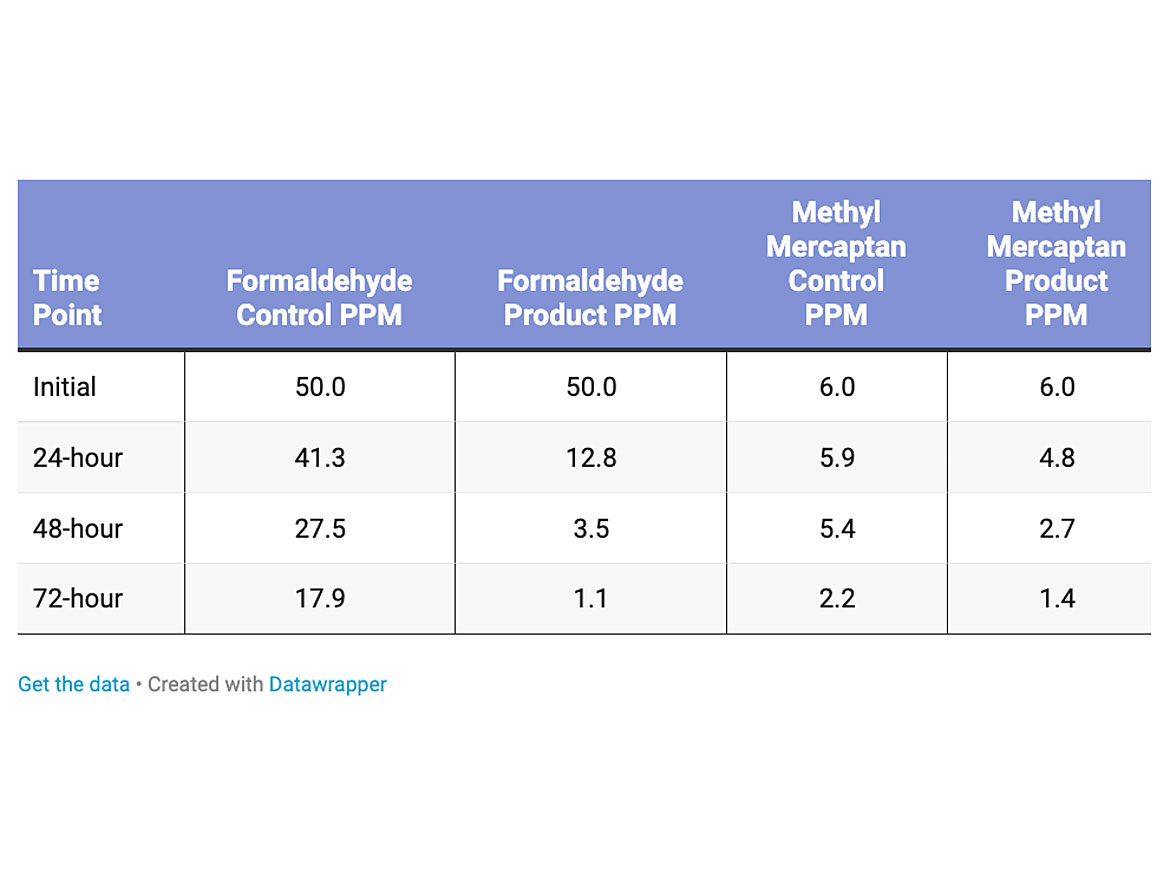
Test 18-045 high-solids polish.
TABLE 3 » Test 18-045 high-solids polish.

The amount of the formaldehyde in the test was 25 parts per million, and methyl mercaptan was not tested for this product (Table 4). The loading level of the titanium dioxide was 1% dry active in the polish. The reduction of the formaldehyde versus the control was 82%.
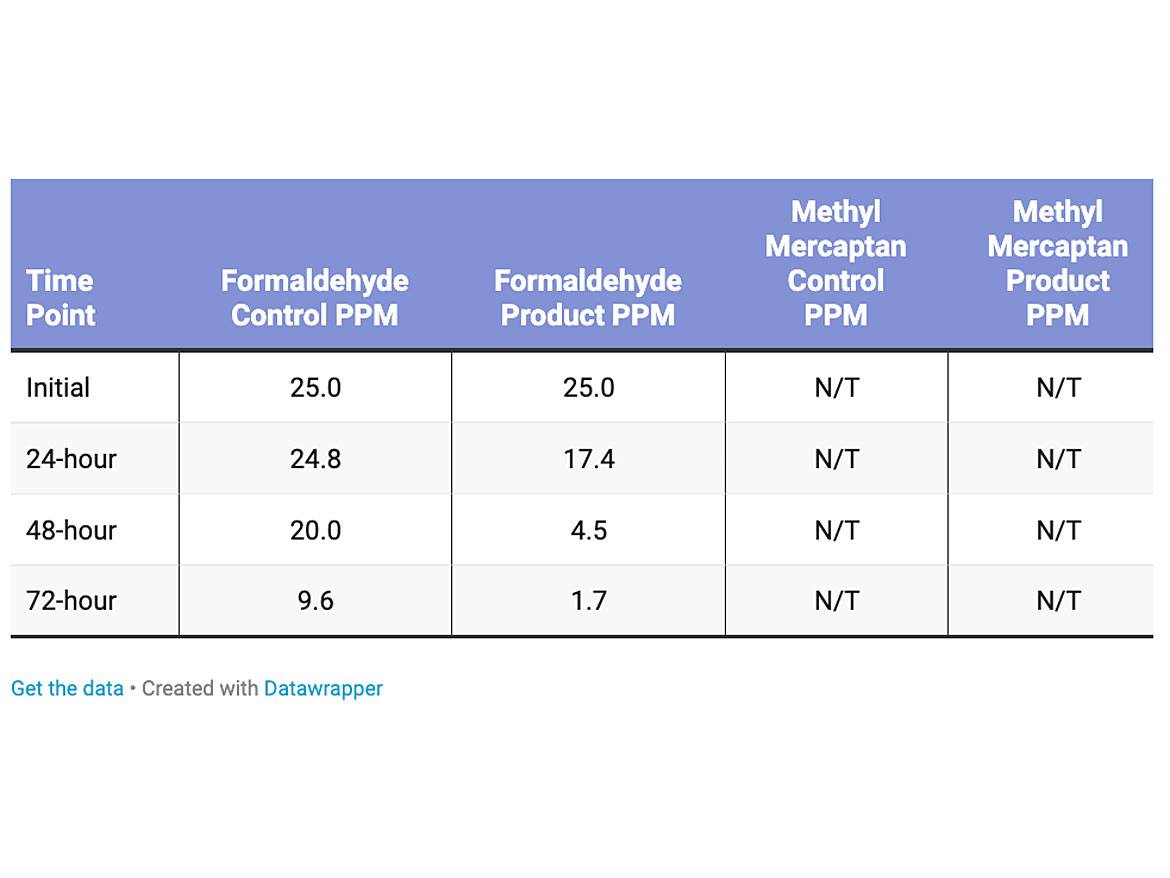
Test 21-047 2K urethane.
TABLE 4 » Test 21-047 2K urethane.

The testing consistently showed a better reduction of the formaldehyde and methyl mercaptan (in the case of the polishes) than did the natural degradation of the formaldehyde in the control. There is also some natural degradation of the formaldehyde and methyl mercaptan over time. The reduction values were compared to the final control degradation.


Conclusion

While we were able to prove reduction of formaldehyde and methyl mercaptan in a controlled chamber, it is more challenging to demonstrate this in a room in a house. There are several factors affecting this, such as the air turns in a house, the level of insulation, and the level and source of the VOCs being emitted. We will be spending more time investigating in controlled rooms in houses.

The author would like to give a special thanks to Pietrina Peschel, Senior Chemist, Bona Corporation; Nicholas Day, Ph.D. (and team), CEO, Diatomix Corporation, (supply of photocatalytic titanium dioxide and background materials); and Alston Sykes, Principal Chemist, RTP Laboratories Inc. (analytical testing and VOC emissions).

KEYWORDS: air quality VOC

Share This Story

Looking for a reprint of this article?
From high-res PDFs to custom plaques, order your copy today!


John Schierlmann, National Product Manager, Specialty Polymers, Inc., Chester, SC

Recommended Content

JOIN TODAY
to unlock your recommendations.

Already have an account? Sign In

  • pci1022-Kinaltek-Lead-1170.jpg

    A Novel Pigment Production Technology

    Following an extensive R&D program that demonstrated...
    Paint and Coating Pigments
    By: Jawad Haidar and Nitin Soni
  • pci global top 10

    2025 Global Top 10: Top Paint and Coatings Companies

    The following is PCI’s annual ranking of the top 10...
    Global Top 10 and PCI 25
    By: Courtney Bassett
  • 2025 pci 25

    2025 PCI 25: Top Paint and Coatings Companies

    PCI's annual ranking of the top 25 North American paint...
    Global Top 10 and PCI 25
    By: Courtney Bassett
You must login or register in order to post a comment.

Report Abusive Comment

Manage My Account
  • eMagazine
  • Newsletters
  • Online Registration
  • Subscription Customer Service

More Videos

Sponsored Content

Sponsored Content is a special paid section where industry companies provide high quality, objective, non-commercial content around topics of interest to the PCI audience. All Sponsored Content is supplied by the advertising company and any opinions expressed in this article are those of the author and not necessarily reflect the views of PCI or its parent company, BNP Media. Interested in participating in our Sponsored Content section? Contact your local rep!

close
  • colorful building exterior
    Sponsored byDow

    Insights into Exterior Architectural Coating Degradation: Bridging Accelerated and Natural Weathering

  • digital pigments
    Sponsored bySiltech

    The Fourth Dimension of Silicon: Siltech Q Resins

Popular Stories

Company News

What the AkzoNobel–Axalta Merger Means for the Future of Coatings

AkzoNobel and Axalta Headquarters

AkzoNobel and Axalta Announce $25 Billion Merger

Wacker logo

WACKER Plans More Than 1,500 Job Cuts


PCI Buyers Guide

Submit a Request for Proposal (RFP) to suppliers of your choice with details on what you need with a click of a button

Start your RFP

Browse our Buyers Guide for manufacturers and distributors of all types of coatings products and much more!

Find Suppliers

Events

September 4, 2025

N-Butylpyrrolidone (NBP) as a Green Solvent to Replace N-Methylpyrrolidone (NMP) in Industrial Coating Applications

ON DEMAND: EPA published a regulation proposal around N-methylpyrrolidone (NMP) in June 2024 to ban or limit NMP in many applications, such as paints and coatings and their removers. N-butylpyrrolidone (NBP) is a powerful and versatile solvent for a variety of industries looking for alternatives to substance of very high concern (SVHC)-listed solvents.

March 24, 2026

The Manufacturing & Automation eXchange (MAX)

MAX presents a rare opportunity to observe the full scope of manufacturing in one environment. From systems integration and materials handling to automation, quality, safety, and packaging, each discipline is represented through live, operational displays. By experiencing these technologies side by side, as they are on actual production floors, attendees gain a grounded understanding of how manufacturing functions align, overlap, and evolve in practice.

View All Submit An Event

Poll

Longest-running laboratory experiment

What is the longest-running laboratory experiment?
View Results Poll Archive

Products

Automotive Paints and Coatings, 2nd Edition

Automotive Paints and Coatings, 2nd Edition

Now in its second edition and still the only book of its kind, this is an authoritative treatment of all stages of the coating process.

See More Products
pci voices from the top ebook

PCI webinar

Related Articles

  • CEPE Proposes ‘Harmonized’ VOC-Reduction Proposal for Architectural Coatings

    See More
  • Reduction of VOCs in Europe's Coatings Industry at 28 Percent

    See More
  • MarketForecasts-118438237.jpg

    Report Predicts Growth in Global Market for Low-VOC Coatings

    See More

Related Products

See More Products
  • durability.jpg

    Increasing the Durability of Paint and Varnish Coatings in Building Products and Construction 1st Edition

See More Products
×

Keep the info flowing with our eNewsletters!

Get the latest industry updates tailored your way.

JOIN TODAY!
  • RESOURCES
    • Advertise
    • Contact Us
    • Directories
    • Store
    • Want More
  • SIGN UP TODAY
    • Create Account
    • eMagazine
    • Newsletters
    • Customer Service
    • Manage Preferences
  • SERVICES
    • Marketing Services
    • Reprints
    • Market Research
    • List Rental
    • Survey & Sample
  • STAY CONNECTED
    • LinkedIn
    • Facebook
    • Youtube
    • X (Twitter)
  • PRIVACY
    • PRIVACY POLICY
    • TERMS & CONDITIONS
    • DO NOT SELL MY PERSONAL INFORMATION
    • PRIVACY REQUEST
    • ACCESSIBILITY

Copyright ©2025. All Rights Reserved BNP Media.

Design, CMS, Hosting & Web Development :: ePublishing