"What Carbon Footprint?" One of Europe's Largest Steel Producers Asks...
Spooner and Anguil Environmental Systems have recently partnered to fabricate and install oxidizer designs on applications throughout Europe.

In case you haven’t heard, our planet is getting warmer. At what rate it is occurring or how much human activity has to do with the increasing temperatures is a heated debate, pardon the pun. One thing we do know for sure…carbon dioxide (CO2) is a contributing factor in global warming, and humans are responsible for a large portion of these emissions. If you had asked someone five years ago what their carbon footprint was, most people would have likely responded by looking towards their feet, thinking they stepped in something. That same person would probably laugh uncontrollably if you had told them that Al Gore, former Vice President of the United States and once Presidential hopeful, would star in a 2006 movie that brought climate change to the forefront by drawing millions of viewers from all over the world.
Corus Colors – Shotton Works, located at Deeside, North Wales, produces organic paint-coated prefinished steel principally for cladding, composite walling and roofing applications within the building and construction sector both in the UK and overseas.
There are two manufacturing processes at Shotton Works for coating steel strip with paint. They use a series of driven roller coaters and industrial curing ovens, controlled within a continuous process line, that are capable of applying protective and decorative high-quality finishes to the galvanized flat steel strip substrate. The number-one Colorcoat Line process is capable of coating strip widths up to 1400 mm with a thickness up to 1.6 mm, giving a weekly throughput capability of up to 4000 tonnes subject to product type and dimensions.
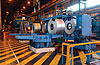
Two existing, inefficient oxidizers for the prime and finish ovens were being used to control VOC and HAP emissions at the North Wales facility. To achieve proper destruction the systems required large amounts of natural gas, which affected operating expenses and contributed to CO2 and NOX emissions. Furthermore, breakdowns and maintenance problems were not only costing the company money to repair but also revenue in lost production. Because the oven and oxidizer are so vital to each other, Corus wanted a solution provider with experience and knowledge on both. In addition, they were looking for a system with low operating costs and heat recovery capabilities that could achieve 99.5% DRE (Destruction Removal Efficiency), which was well above their permit requirements.
The reduction in carbon emissions and energy consumption from this facility is dramatic. Gas usage has dropped by more than 60%, an average reduction of 522 m³/hr (or 5742 kW) per hour – saving over £1million a year. At 181 grams of CO2 produced per KWH used, Corus is preventing 1 tonne of carbon from reaching our atmosphere each hour, nearly 8,000 tonnes per year.
With innovation and continuous improvement at the heart of its business, the company is already planning for similar modifications at other Corus plants.
A spokesperson from Corus commented, “We are committed to minimizing the environmental impact of our operations and our products through the adoption of sustainable practices and continuous improvement in environmental performance.”
For more information, contact Steve Newell of Spooner Industries Ltd. at www.spooner.co.uk, +44 (0) 1943 609505; or Kevin Summ of Anguil Environmental Systems, Inc. and www.anguil.com, 800/488.0230.
In case you haven’t heard, our planet is getting warmer. At what rate it is occurring or how much human activity has to do with the increasing temperatures is a heated debate, pardon the pun. One thing we do know for sure…carbon dioxide (CO2) is a contributing factor in global warming, and humans are responsible for a large portion of these emissions. If you had asked someone five years ago what their carbon footprint was, most people would have likely responded by looking towards their feet, thinking they stepped in something. That same person would probably laugh uncontrollably if you had told them that Al Gore, former Vice President of the United States and once Presidential hopeful, would star in a 2006 movie that brought climate change to the forefront by drawing millions of viewers from all over the world.
Carbon Footprints
Indeed, things are much different today than they were five years ago; individuals and businesses alike are trying to reduce their environmental impact and GHG (Green House Gas) emissions. What the average person does not realize is that they have two types of footprints, a primary and secondary. The primary footprint is a measure of our direct CO2 emissions from the burning of fossil fuels including domestic energy consumption and transportation, e.g., car and plane. The secondary footprint is a measure of indirect CO2 emissions from the whole lifecycle of products we use, those associated with their manufacturing and eventual breakdown. To put it simply – the more we buy, the more emissions will be caused on our behalf.Reducing the Secondary Footprint
Thankfully companies like Corus, a subsidiary of Tata Steel, are doing their part to reduce the world’s secondary footprint by improving the energy efficiency of their manufacturing processes. Corus is Europe’s second largest steel producer and comprises three operating divisions: Strip Products, Long Products, and Distribution & Building Systems. Corus Colors, as part of the Strip Products Division, is an international business manufacturing pre-finished steel for the building envelope, domestic appliances and manufactured goods markets.Corus Colors – Shotton Works, located at Deeside, North Wales, produces organic paint-coated prefinished steel principally for cladding, composite walling and roofing applications within the building and construction sector both in the UK and overseas.
There are two manufacturing processes at Shotton Works for coating steel strip with paint. They use a series of driven roller coaters and industrial curing ovens, controlled within a continuous process line, that are capable of applying protective and decorative high-quality finishes to the galvanized flat steel strip substrate. The number-one Colorcoat Line process is capable of coating strip widths up to 1400 mm with a thickness up to 1.6 mm, giving a weekly throughput capability of up to 4000 tonnes subject to product type and dimensions.
Manufacturing Process
This manufacturing process requires large amounts of natural gas to ensure proper application and fast curing time in the ovens, which, in turn generates a substantial amount of CO2 and NOX (Nitrous Oxides). In addition to these emissions, the solvent-based coatings release HAPs and VOCs during the drying process that need to be treated by an air pollution control device such as an oxidizer. New oxidizer systems are capable of destroying over 99% of the HAPs and VOCs through the process of high temperature destruction with very little fuel consumption. However older technologies can be a source of CO2 and NOX as well as the requirement for high maintenance and large operating expenditures.Pollution Control
Pollution control initiatives are nothing new to Corus. The company has been monitoring and controlling its oven emissions at the Shotton Works, North Wales facility, since the 1970s. Their first oxidizer/incinerator was installed on the paint coating processes for abating exhaust gases and solvents. Even then, the company was thinking green by utilizing waste heat from these older oxidizers/incinerators to pre-heat the ovens and to supply their manufacturing facility with additional process steam. However, as environmental regulations tightened, energy prices increased and new technologies emerged, the company decided to re-evaluate their entire system as part of their manufacturing efficiency improvements as well as the wider Corporate Responsibility Program for energy usage reduction. The objective was to reduce the gas consumption by at least 45% and increase processing speeds on certain products. They quickly realized another benefit to their sustainable energy plans…a much smaller carbon footprint.Sustainable Energy Solution
Looking for a sustainable energy solution, they turned to Spooner Industries in the United Kingdom, who has worked closely with Corus on a number of projects over the past 30 years. Oven technology and safety regulations had changed dramatically since the line was first installed, but Spooner was able to successfully complete several upgrades that brought the system up to current standards and increase its’ flexibility.- Each zone was retrofitted with a special low-NOX burner to reduce emissions.
- Variable-frequency drives or inverters on every oven fan were incorporated into the control system to make each section more efficient and reduce electrical consumption.
- The ductwork was changed to bring hot air into the system quickly, reducing maintenance issues.
- New thermocouples (temperature measurement), pressure transmitters, pressure switches and flow measurement systems were installed in the ovens to bring the equipment up to today’s technology standards, allowing for remote monitoring and fine-tuning.
- A new computer-controlled system was integrated with the SCADA (System Control and Data Acquisition) program. The proper PLC (Programmable Logic Controller) allows the central Corus system to communicate with the ovens so they can be setup for different production runs, eliminating errors and decreasing setup time.
Two existing, inefficient oxidizers for the prime and finish ovens were being used to control VOC and HAP emissions at the North Wales facility. To achieve proper destruction the systems required large amounts of natural gas, which affected operating expenses and contributed to CO2 and NOX emissions. Furthermore, breakdowns and maintenance problems were not only costing the company money to repair but also revenue in lost production. Because the oven and oxidizer are so vital to each other, Corus wanted a solution provider with experience and knowledge on both. In addition, they were looking for a system with low operating costs and heat recovery capabilities that could achieve 99.5% DRE (Destruction Removal Efficiency), which was well above their permit requirements.
Spooner-Anguil Partnership Offers Solutions
Spooner, having recently partnered with Anguil Environmental Systems in the United States to fabricate and install its oxidizer designs on applications throughout Europe, was confident that it could be done. After consulting with the engineers at both Spooner Industries and Anguil Environmental Systems, Corus made the decision to replace their multiple air pollution control systems with one, RTO (Regenerative Thermal Oxidizer) from Spooner Anguil. It would give them the desired efficiency and single-source solution they were looking for. The system has the following features and benefits.- The oxidizer is a three-chamber design that processes 83,000 NM3/hr (55,000 SCFM) of air, achieving 99%+ DRE without visible emissions and 85%+ heat recovery for energy-efficient operation.
- The RTO self-sustains at low solvent-loading conditions, meaning that once the oxidizer is at operating temperature and receiving process airflow it requires no additional fuel for emission destruction, releasing very little CO2 and NOX.
- A secondary heat exchanger sends waste heat directly back to the ovens, reducing the amount of natural gas required for product curing.
- Stainless-steel components throughout the system prevent corrosion and allow for high-temperature process streams.
- A hot-gas bypass on the RTO is used during high loading situations to avoid over heating the oxidizer.
- An intelligent bake-out feature cleans the RTO of condensable organics without internal fires or safety concerns.
- The control panel has a large operator screen with a built-in maintenance manual and trouble-shooting guide, which makes for ease of use.
The reduction in carbon emissions and energy consumption from this facility is dramatic. Gas usage has dropped by more than 60%, an average reduction of 522 m³/hr (or 5742 kW) per hour – saving over £1million a year. At 181 grams of CO2 produced per KWH used, Corus is preventing 1 tonne of carbon from reaching our atmosphere each hour, nearly 8,000 tonnes per year.
With innovation and continuous improvement at the heart of its business, the company is already planning for similar modifications at other Corus plants.
A spokesperson from Corus commented, “We are committed to minimizing the environmental impact of our operations and our products through the adoption of sustainable practices and continuous improvement in environmental performance.”
For more information, contact Steve Newell of Spooner Industries Ltd. at www.spooner.co.uk, +44 (0) 1943 609505; or Kevin Summ of Anguil Environmental Systems, Inc. and www.anguil.com, 800/488.0230.
Looking for a reprint of this article?
From high-res PDFs to custom plaques, order your copy today!