Paint, Pigments and the Global Economy
Dispersion is a concept embodied at multiple levels in the titanium dioxide industry. On a chemical engineering level, it is an indicator of performance, where pigment particles exceeding a target size of around 0.3 micrometres must be limited. In terms of product application, dispersion refers to how well the pigment gets incorporated into the medium. And on a more abstract, commercial level, the myriad of TiO2 applications are dispersed throughout the world’s markets.
Indeed, TiO2 pigment demand trends are often likened to those of the general economy. Over the long term, global TiO2 demand grows at a comparable rate to GDP. The ranking of nations’ income distribution, measured by the gini coefficient, in many cases correlates well with that of its TiO2 consumption per person. The supply of so-called aspirational goods such as houses, cars and durable goods, is used by producers as a guide for production. And the surge in mass production of this non-toxic white powder has run in parallel with demographic expansion of the last 40 years.
In its role as proxy of global economic activity, TiO2 is very much the dependant variable. The shifts witnessed in the global economic system have sown the seeds of change in the TiO2 industry. What will grow from these seeds remains to be seen. This article looks at the forces and actors shaping the future of TiO2.
For readers less familiar with TiO2, it is a crystalline powder whose high refractive index has made it the white pigment and opacifier of choice for coatings formulators. Along with carbon back it is a non-color pigment that is used in all chromatic paint. Titanium dioxide accounts for at least half of all pigment sales in the world, according to BASF. Other compounds, organic and inorganic, are used with TiO2 to impart different tints.
Titanium dioxide has been commercially produced since 1916, although widespread production did not occur until the 1960s. The TiO2pigment is produced either via sulfuric acid digestion and calcination, known as the sulfate process, or by chlorination of a high-purity feedstock to produce titanium tetrachloride, which is then oxidized at high temperature. This is known as the chloride process.
Current processing technology is a function of the feedstocks that are available. Sulfate processing lends itself to ilmenite, a mineral consisting of a roughly equal mixture of iron and titanium, while chloride processing, which demands a higher purity of feedstock, draws on natural rutile and beneficiated products like slag, which are created from ilmenite.
A Global Economy in Transition
A cycle has run from the mid-1980s to the present, characterized by globalization and the rise of fiat currency (Fiat money is money that derives its value from government regulation or law. The term fiat currency is used when the fiat money is used as the main currency of the country). Liberalized trade and financial policies in the 1980s coincided with a manifold increase in the volume of global trade, as countries with comparative abundances of energy, technology and labor sought access to markets that were in short supply. Among other things, the early stages of globalization enabled cross-border financing, ownership of global distribution networks that went hand in hand with the rise of industries such as TiO2.
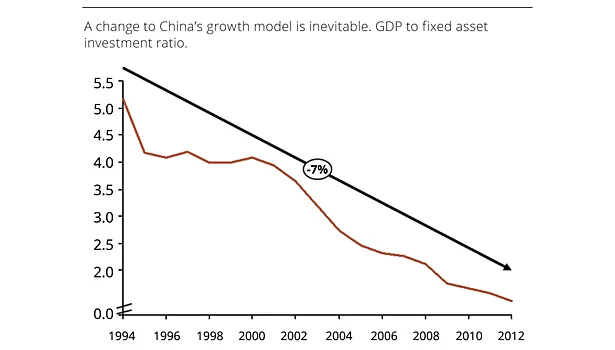
This system allowed countries like China, Germany and Japan to build more industrial capacity than their domestic economies could absorb and export the excess to lesser-developed or high-cost countries. China, in particular, funnelled the export earnings into construction, which in combination with a liberalized borrowing environment spurred an enormous boom in property investment. Under the pro-industrial stance taken by the country’s regional governments, production plants for almost every good that was technologically feasible was invested in.
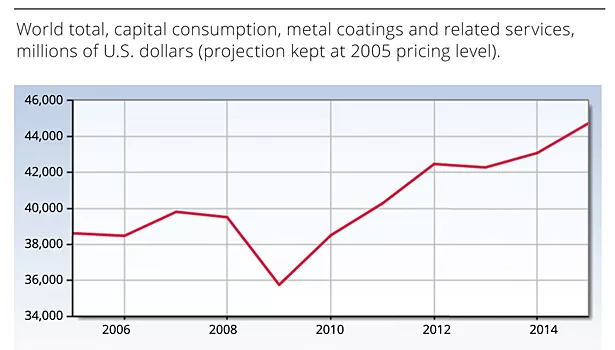
The 2008 global financial crisis exposed the extent to which current account surpluses had grown in some countries and deficits grown in others, highlighting the extreme and unbalanced nature of economic activity. Over a period of days, the disappearance of credit spread from the financial markets to the industrial sector. Industries that included not just TiO2, but many of its end-use applications, had a high monetary burn rate and were caught short. Demand quickly evaporated. In the TiO2 sector the issue was compounded by high levels of inventory carried by global producers. This in turn saw a number of TiO2 feedstock producers with excess capacity temporarily or permanently shuttered.
Stimulus measures, rolled out across a number of countries, led to a restocking for the supply chain. But having already reduced capacity, feedstock producers were unable to satiate demand. This meant that, like many other commodities, ilmenite and titanium dioxide pigment prices climbed over 2009 and 2010. The Chinese stimulus, valued at RMB 4 trillion, was allocated in the form of loans for local producers to invest in even greater capacity. Between the end of 2007 and the end of 2012, TiO2 pigment capacity doubled. China overtook the United States as the world’s largest market in 2010, and in 2011 became a net exporter of TiO2.
Fast forward to the present day, and growth in North America, predicted at a CAGR (compound annual growth rate) of 2.0% from 2012 to 2020, has shifted from a construction and financial services centric make up to a healthier distribution of drivers. New initiatives in energy and energy distribution are leading to a renaissance of its chemicals and manufacturing sectors. During the recession, disruptive technologies such as 3D printing were given space to grow and, while still nascent, they are coming of age in the world’s largest and most dynamic economy. America’s bottom up change contrasts with the state-sponsored initiates in markets like China. The United States is the first country to emerge from the global rebalancing, and it is all the stronger for doing so.
Meanwhile, Europe’s problems persist with no end in sight. The region, once a net exporter of pigment, is now seeing flows directed the other way. Brussels used to enjoy significant bargaining power when striking deals with the rest of the world. Now, competing interests from member states going into their sixth year of economic depression undermine the EU. This weaker position will only serve to further erode the investment and confidence in the market needed for industrial expansion.
If Europe is losing its lustre, then the Middle East is a blast furnace. Hardly a day goes by without news of the violence that has engulfed its young population. Such disruptions are felt for generations and will still be felt when the oil runs out.
Pigments and Powder Coatings
These structural economic changes are creating opportunities for powder coatings. A fall in energy costs makes fluidized bed dipping and curing more favorable, while VOC awareness and regulation continues to spread in developing markets. Private consumption in emerging markets like China, Brazil and India is expected to rise, meaning more buildings, cars and appliances will be needed.
The last 10 years witnessed an expansion in the use of powder coatings in the automotive industry. Currently powder coatings are used as primers and on under the hood components. High-end brands are using powder in their topcoats, as it works well with the specialized and organic pigments that are being used for popular colors. Recently powder has begun to be used in clearcoat applications due to developments in weatherability and temperature performance.
It’s desirable coloration and durability properties make powder coatings the choice for almost all domestic appliances today. This segment is the biggest end-user application of powder coatings, accounting for around 40% of total global powder coatings consumption. Powder coatings cover panels on most refrigerators, microwaves, dishwashers, washers and dryers, water heaters and dispensers, among other applications.
Pigment quality is still paramount. Powder coatings require a mean particle size similar to that of “wet” coatings to reflect visible light, but with strict limitations on oversize particles because of the extrusion. Particle size control and pigment surface treatment technologies are common under-performing areas faced by TZMI’s Chinese clients aiming to capture a share of the growing market.
These market dynamics pose an interesting challenge to pigment producers. Normally a substrate may require multiple coats to achieve a desired finish. Anecdotally, local Chinese producers are cutting corners by going to bake with a lower thickness, thus reducing raw material costs. The reasoning is that families in China’s new growth areas in lower-tiered cities in the middle of the country won’t know any better. This is a common thought in areas when quality comes a distant second to price in purchasing decisions.
There is a gap of approximately four kilograms between per capita pigment consumption in Norway, the world’s most TiO2-intense country, and the world’s largest pigment market, China. We have traditionally assumed that China and the other BRIC-like countries will in some way catch up to the West’s consumption. But what if they don’t? What if there is a certain quality of paint, frequency of recoat and general acceptance of the low-end quality that Western companies can’t competitively provide?
The powder coatings market is small, and like TiO2, its trends depend on those of a dynamic new global middle class. The needs, tolerances, buying habits and expectations of this consumer are turning out to be unique, and this is having an impact on coatings technology across the board. The extent to which we can predict future developments depends on understanding the consumption of a unit of pigment across different geographies and market segments. New growth opportunities will still be a function of dispersion.
Looking for a reprint of this article?
From high-res PDFs to custom plaques, order your copy today!