
Asbestos Still a Threat for Today’s Painters

The chemical industry must have felt like it struck gold when Alan Ward discovered a way to make “fireproof paint”. It was a fibery, lightweight, cheap “gold”: asbestos. The additive made paint easier to work with: it kept it in suspension so only initial stirring was required; it improved the spread, adhesiveness and opacity, so fewer layers were needed. Its chemical properties were equally impressive: fireproof, lightweight, non-corrosive, non-conductive and chemically inert.
Ship builders fell in love with asbestos paint because it prevented corrosion, contained fires and reduced sound. Auto manufacturers adopted it on a large scale for the same reason. The new paint reduced fire hazards in industrial installations and office buildings. It was ideal for chemical plants because it didn’t react with anything. Finally, it coated homes to make them safer and prettier, with vibrant colors and textures that kept for a long time.
Surprisingly, the fact that the new wonder material came with some downsides was well-known from as early as 1880, when a British surgeon couldn’t perform an autopsy because his scalpel kept sliding on the asbestos-filled lungs of a former mine worker.
Less than a surprise, asbestos industry officials denied or downplayed the toxic potential of their product. This carried on with various degrees of underhandedness – they switched from lying to their workers that asbestos was safe in the 1920s to lying in court about work safety measures in the 1960s – until the early 70s, when the U.S. EPA started heavily regulating asbestos products. The agency placed a near-ban on their manufacture in 1989. December 1976 saw the release of the U.S. National Institute for Occupational Safety’s (NIOSH, OSHA’s predecessor) asbestos protection standards, which placed the maximum permissible particle concentration on worksites at 100,000 fibers per one cubic meter of air.
How Asbestos Paint Can Cause Harm
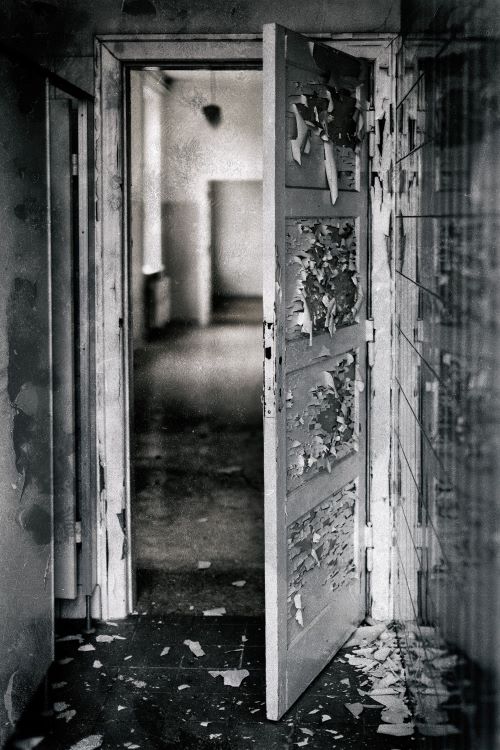
Despite all these measures and increasing public awareness, the chemical industry wasn’t very quick to drop asbestos as a paint additive. Admittedly, the paint is perfectly safe when dry and in good shape but can hit you with some very nasty surprises when it begins to flake and crack.
If disturbed, asbestos paint will release a myriad of tiny, dagger-shaped fibers. When inhaled, these particles lodge themselves into parts of a person’s respiratory and gastric systems, from where they cannot be removed. In other words, if they get in you, they stay there forever.
In time, the fibers will cause cell damage and scaring. If they get stuck in the lungs, the accumulated scar tissue will lead to a condition called asbestosis, which is characterized by coughing, breathing difficulties and often severe fatigue. It can also increase the risk of developing several forms of cancer.
This isn’t the worst possible scenario, however. Asbestos can also affect the pleura, which is a thin tissue layer that covers the lungs and abdomen. Severe cellular damage over time can end in mesothelioma, a highly aggressive and deadly cancer of the pleura.
Like with most asbestos-related diseases, mesothelioma has a long latency period, which can vary from anywhere between 10 and 60 years. This is why a majority of the 2,700 U.S. citizens that are annually diagnosed with mesothelioma are over 80 years of age and were most likely exposed before current regulations were fully in place. However, the 35 to 50 cohort is not negligible, and their number doesn’t show signs of abatement.
Apparently, asbestos used in the past continues to damage us, and we are now confronted with what experts back in 1990 duped the “third wave of asbestos disease”. The first wave were people who worked with the mineral directly in mining and processing. Second came those who made use of asbestos-containing products as part of their jobs: construction workers, shipbuilders, pipefitters, etc. Finally, our current predicament comes from dismantling and restoring the things where the dangerous mineral was employed.
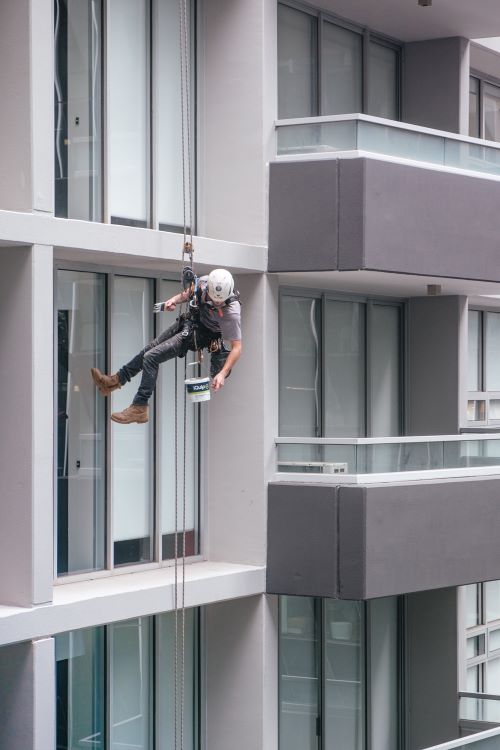
The third wave is made up of abatement workers, construction and demolition workers, roofers, even old car enthusiasts and naval restorers. And yes, painters are among them. The highest risk of exposure for those in the painting profession occurs during the initial sandpapering to remove the old layer of paint from a wall. This releases a huge amount of fine asbestos dust into the air. This can be inhaled, swallowed, and can settle on clothes and skin to be brought home after the workday is over.
Worse, still, even if you’re certain the paint you’re removing wasn’t mixed with asbestos, this doesn’t mean you’re in the clear. The insulation, cement or masonry underneath it might very well contain it. Protective measures should be carefully considered when working on structures built before 1990, and these can differ substantially from what we are used to.
U.S. sources that offer safety recommendations specifically targeting painters seem to be rather sparse online.
Mesothelioma Deaths Reported to This Day
In 2017, the CDC reported a rather odd trend in the U.S. mesothelioma deaths. Contrary to what everyone was expecting and the agency itself predicted, the number of fatalities due to the rare disorder – which is caused almost exclusively by asbestos – saw absolutely no decrease between 1999 and 2015, although we are getting further and further in time from the unfortunate 70s and 80s.
What is probably the main cause for this worrisome trend has been discussed above, but there might be other factors at play.
First, just because workplace regulations exist, doesn’t mean they are being followed to the letter. According to the 2017 CDC report, a 2002 investigation of worksites found that OSHA’s maximum air safety limits were exceeded on 20% of the locations.
Second, the mineral is still being used in the United States at a rate of some 350-400 tons per year, according to the US Geological Survey. Since the mining of asbestos has been prohibited by the EPA for some time, the figure covers only raw asbestos imports, which the authorities are aware of.
Developing countries don’t usually have the same stringent regulations as the U.S., and even when this is not the case, there is no guarantee these are actually enforced. For example, Chinese dubious business and manufacturing practices are a matter of public record. If counterfeit baby formula, plastic rice, fake eggs, and counterfeit airliner parts are not out of bounds, then asbestos in paint should not surprise anyone.
While there is currently no direct evidence that any of the $450b+ worth of goods the U.S. annually imports from China contain asbestos, a recent scandal from Australia might serve as indication of what we can reasonably expect.