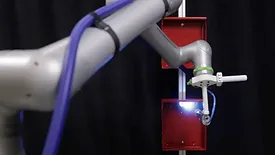
A portable collaborative painting system is designed to bring automated spraying to high-mix, lower-volume operations without requiring a conventional automated line.
Automation technologies are reshaping coating application through drones, robotics and AI-driven systems designed to improve safety, consistency and productivity.
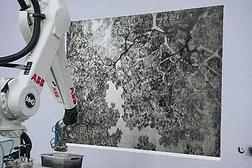
PPG announced its waterborne basecoat technology was used in an AI-designed robotic mural created during a live public art event in the Czech Republic.
The new plant aims to serve as a model for energy optimization while significantly increasing production capacity for battery-powered vehicles and hybrid models.
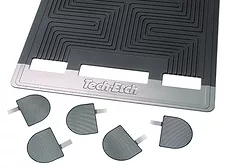
Tech Etch has designed and developed a robotic spray-coating process used to apply conductive carbon and graphite coatings to battery current collectors, fuel cells, thin-metal cathode grids used in implantable pacemaker batteries, and other energy storage devices that require low-resistance coatings.
In order to slow down the erosion of the base metal and help to extend battery life, one company has designed and developed a robotic spray coating process used to apply conductive carbon and graphite coatings to battery current collectors, fuel cells, thin-metal cathode grids used in implantable pacemaker batteries, and other energy storage devices that require low-resistance coatings.