Alternatives to Cadmium in Aerospace
Presenting a Solution that Will Take Off
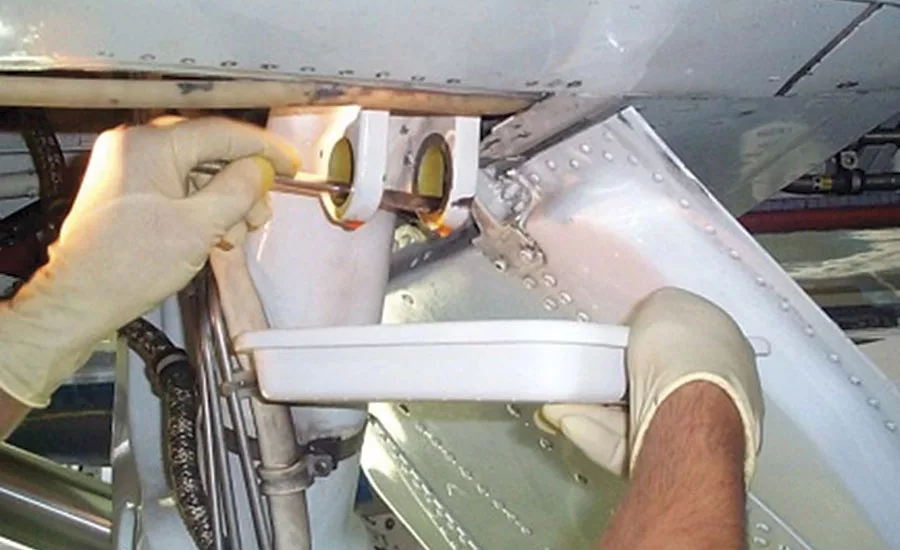
Chromate application
It is both an exciting and a difficult time for the aerospace industry. While the sector is at its most buoyant, with demand soaring in the commercial market, this is placing a strain on the manufacturing supply chain and putting the maintenance, repair and overhaul (MRO) market under pressure to keep aircraft in operation for as long as possible. In addition, original equipment manufacturers (OEMs) and MRO businesses are being forced to consider potential ever-evolving legislation, particularly regarding the use of various chemicals used in the plating process, most notably the use of cadmium. This toxic metal has long been the topic of debate in the industry, with companies facing the threat of a European ban on cadmium being extended to the global aerospace industry if studies into possible alternatives prove fruitful.
SIFCO ASC is already heavily involved in bringing an alternative to cadmium to the OEM and MRO markets. This article explores the dangers associated with cadmium, the legislation that exists surrounding its use, and the alternative materials that could replace it.
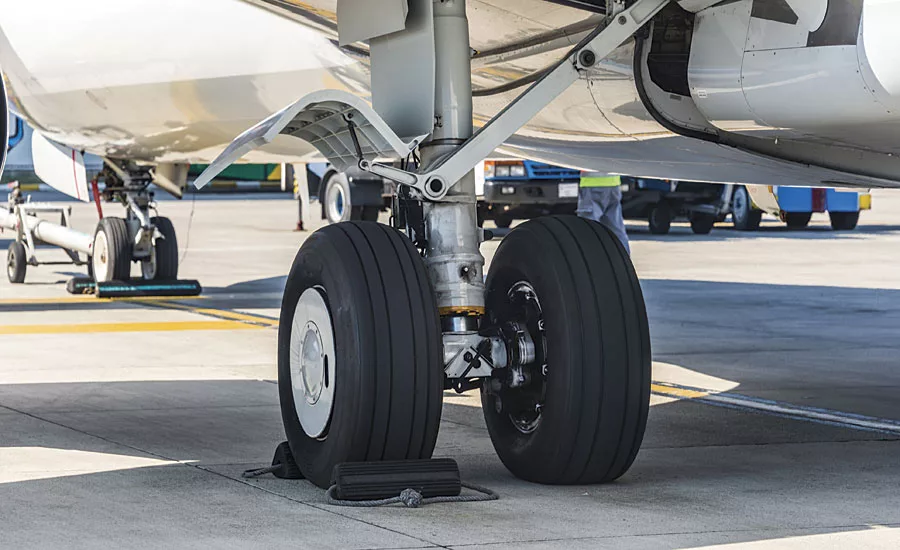
For many years the aerospace market has trusted cadmium as its deposit of choice for corrosion protection on landing gear, airframe structures, flap tracks and anywhere bare steel is present. When you examine the properties of cadmium it is easy to see why it has long been such a popular choice. Not only does it corrode sacrificially, it has excellent electrical conductivity, as well as consistent torque-tension characteristics. More importantly, cadmium is relatively simple to apply by electroplating.
However, while cadmium presents a number of benefits to MRO professionals in terms of ease of use, operational effectiveness and overall convenience, its use is currently under the microscope.
Environmental Impact of Cadmium – a Turbulent Topic
Releasing cadmium into the environment impacts both people and the environment. As a nonessential heavy metal, cadmium is not used by biological systems and accumulates in invertebrates, algae and plants. The critical health effect of cadmium is on the kidneys where it damages the blood filtration system, resulting in protein being excreted in urine. Cadmium can also cause skeletal damage and lung cancer.
It is very difficult to eliminate cadmium from the atmosphere altogether, since the chemical is also released naturally in the form of particles through volcanoes and the weathering of rocks. Once it is in the environment it remains present for a long period of time and can be transported from one location to another, blown by the wind or washed away by water. While natural emissions of cadmium are thought to be higher than human emissions, hundreds of thousands of tons of cadmium are released into the environment every year.
In terms of weight, only a thin layer of cadmium is used on aircraft, with less than 1 percent of an aircraft’s weight being comprised of the substance. However, when you consider the area of an aircraft that comprises cadmium and multiply this by the number of steel parts that require cadmium, it is easy to see how much volume is being used.
REACH (Registration, Evaluation and Authorization of Chemicals) legislation has already called for a ban on cadmium for use in jewellery and plastics in the EU, where previously it was used in volume for PVC applications.
The legislation, which is a result of several years of debate, is almost 1,000 pages long and considered one of the most complex bills in EU history. It requires companies to register data on 30,000 chemicals with the European Chemicals Agency in Helsinki, Finland, seek authorization for the use of substances of very high concern, and substitute them with safer alternatives that have less of an effect on human health and the environment. It also means that U.S. companies providing MRO services to some of the major European OEMs will need to start seeking an alternative solution.
A Drive from the U.S. OEM Market
The primary reason why no real alternative has been mass adopted in the U.S. aerospace sector to date is the perceived risk involved from switching from a deposit that OEMs are confident delivers the right sacrificial corrosion protection, to one that is yet to be proven when used in high volume. There is a higher risk for military aircraft manufacturers for which cadmium is a mission-critical application, and it is unlikely that the drive for alternative deposits will come from this area. Instead, it needs to be driven by the OEM market. Boeing has been pushing for a change from cadmium for the last 20 years, but there is still no real drive from governments, OEMs or any other bodies forcing this change. This puts the MRO market in a difficult position. While OEMs will continue to insist on the use of cadmium, MRO businesses are often tied to this instruction. The only way that the MRO market can start to eliminate the use of cadmium is if OEMs begin to state this in their directives.
This drove SIFCO to explore an altogether different process, the SIFCO Process®. SIFCO has been working closely with Sikorsky Aircraft to use zinc-nickel plating on its heavy lift helicopter, and with OEM parts on localized areas. The results have found that zinc-nickel could become a reliable and compliant alternative to cadmium in the aerospace sector.
Benefits of Zinc-Nickel
The application of zinc-nickel follows the principle of electroplated zinc, which is nothing new to the industry. Indeed, it has been used with a post-treatment chromate conversion coating for many years. Zinc-nickel has been proven to give more than 500 hours of salt spray protection when used with a chromate coating, presenting a more environmentally friendly solution to the market, which is just as reliable and effective as cadmium.
When used with the right conversion coating, the corrosion protection of zinc-nickel is even more impressive. For example, the use of a high-performance, nonhexachrome clear passivation further increases protection of zinc-nickel against rust to double the duration achieved without a coating.
Furthermore, because of its high efficiency, the deposit from a zinc-nickel plating process has little tendency toward hydrogen embrittlement.
Perhaps the biggest advantage of adopting zinc-nickel as an alternative to cadmium, aside from its performance benefits, is the fact that it is a drop-in replacement process. The technology already used for cadmium plating needs not change. With many other suggested cadmium alternatives, it is necessary for OEMs and MRO professionals to also adopt new processes and procedures, overhauling the way the industry currently operates.
Boeing is one OEM keen on seeing this process developed for the aerospace market, and SIFCO is helping to lead the drive to bring this to the mass MRO audience.
An Automated and Future-Proof Solution
Zinc-nickel also presents a number of long-term benefits to the MRO market. As the aerospace industry continues to seek new, automated ways of working, the SIFCO Process has already been automated for high-volume applications - something not traditionally associated with selective plating.
Working with Safran Landing Systems, SIFCO worked extensively to design and manufacture a robotic system that automates the selective plating process for installation into the company’s normal production process. Safran’s robust manufacturing quality standards meant that the plating process had to be highly traceable and repeatable, thus requiring automation for high volume. AeroNikl was chosen as the most effective plating treatment to prevent wear between the company’s stop-pad, located between the bogie beam and the vertical part of the landing gear component, as it is retracted into the fuselage. The result is a highly traceable, repeatable and accurate plating process, which is well suited to the high-tech facility it sits within. An integrated computer logs all relevant information including the parameters plated, batch numbers, densities and solution levels. It is currently processing 30 bogie beams per month, resulting in cost and production efficiencies for Safran.
Conclusion
During a time when the aerospace sector is stuck in a quandary, facing an imminent ban on the use of cadmium while still attempting to qualify replacements, zinc-nickel offers a more cost-effective, simple and effective replacement. As SIFCO continues to drive adoption of zinc-nickel in aerospace, the advice to OEMs is to be both more confident and forceful in driving this specification down to the MRO market. Only by taking action now can we ensure that the U.S. maintenance market is not left lagging behind its overseas neighbors when a proposed ban on cadmium in aerospace is finally introduced.
For more information on SIFCO alternatives to cadmium, visit www.sifcoasc.com/cadmium-replacements.
Looking for a reprint of this article?
From high-res PDFs to custom plaques, order your copy today!