When the Film Thickness Does Not Determine the Leveling
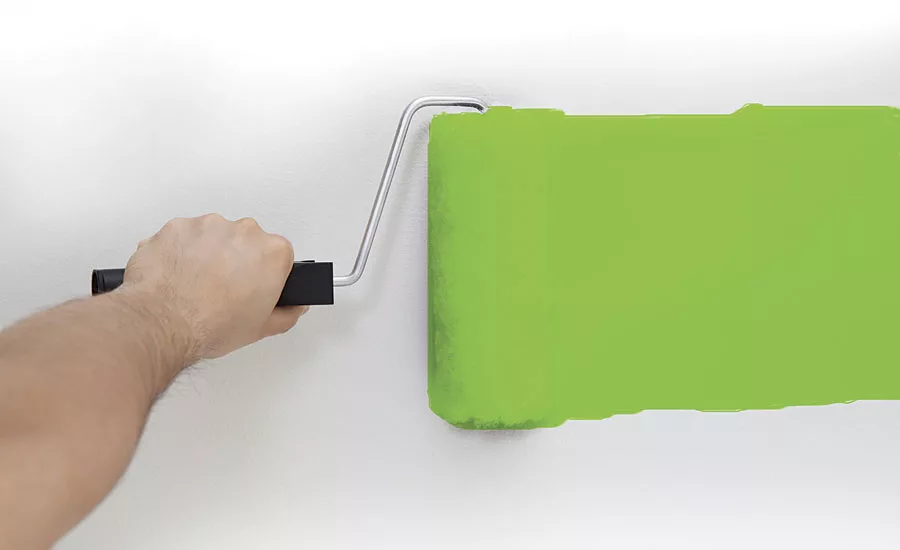
Rheology is the study of the flow of matter. Most important and well known is the term “viscosity”. This describes the resistance of the material against the flow, and is defined as the shear stress divided by the shear rate. External influences such as temperature, pressure and time also affect the viscosity.
Different rheology effects can occur such as Newtonian, thixotropic or pseudoplastic flow behavior, to name the most important ones. Newtonian liquids are 100% viscous, and the viscosity is independent of the shear rate. Pseudoplastic liquids show a shear thinning effect, while the viscosity depends on the shear rate but is independent of the time. Thixotropic liquids show a shear thinning effect and time-dependent recovery.
Challenges for Rheology Additives
Nowadays, the demands on paints and coatings are increasing. Optimal processing is crucial, and coatings applied in a single step are preferred. Application of one layer to achieve the desired thickness and properties, hiding power, good flow and leveling, applied with all kinds of tools is the aspiration. In addition, a low tendency to spatter or drip and adequate stability are essential.
Due to these requirements, the demands on additives and their mode of action are increasing, too. The aim is not simply to achieve the right rheology profile; negative side effects are similarly undesirable, and environmental aspects are vital. New developments need to stand out from the crowd, have a unique selling point and provide a well-balanced rheology profile. These additives need to obtain excellent processing, application properties and storage stability. They should be universal and suitable for several systems with different resin chemistries. Easy incorporation and handling is an advantage. Side effects such as turbidity, leveling issues, haze and gloss reduction are untenable. Additionally, the additives ought to be environmentally friendly and fulfill certain regulatory specifications.
How to Choose the Right Rheology
Architectural coatings require a particular rheology profile to achieve optimal production and application conditions. Due to the wide range of different systems, working methods and application tools, the paints must be pumpable and flowable, as well as stirrable and dispersible. Furthermore, depending on the application, the paints need to be brushable, rollable or sprayable without spattering or dripping. In addition, the surface properties after application, namely leveling and anti-sagging, are important. Finally, yet significantly, storage stability, including anti-settling, anti-syneresis and a stable viscosity, play a major role and once again, while selecting paint components, the regulatory aspect is essential.
To choose the right rheology additive, the first step is to decide what kind of rheology profile is preferred: Newtonian, pseudoplastic or thixotropic. At the same time, the shear rate at which the rheology effect should take place is critical. The low shear range influences storage stability, leveling, settling and sagging. Transportation, sagging and stirring take place in the medium shear range. The high shear range indicates the production and application properties. A combination of thickeners for different shear rates is preferable and recommended to cover all paint properties.
The next step is to clarify the point of additive addition in the production process and the applied shear forces required to incorporate the rheology modifier. Depending on the additive, an addition during grinding, in the let-down stage or as a post-addition is possible.
Last but not least, the final step is to think about possible side effects. The rheology additive can influence side effects: gloss can increase or decrease; and colorant acceptance, transparency and pH-value may vary. Nevertheless, the influence might be reversed and other paint ingredients could influence the rheology effect of the additive, such as the co-solvents, other additives, etc.
Associative Thickeners – Chemistry and Properties
The diversity of chemistry for rheology additives is great. Solid, liquid and pasty products are available: from acrylates, clays, polyureas, cellulosics to hydrogenated castor oils, polyamids and fumed silicas. One major group consists of associative thickeners and especially polyurethane thickeners for aqueous systems.
The classical structure of polyurethane thickeners is the HEUR (hydrophobic ethoxylated urethane) structure; the polymers have the structure: hydrophobic-hydrophilic-hydrophobic. That means the polymers are water-soluble with attached water-insoluble groups at the ends. Their working mechanism is to interact with themselves and with other hydrophobic substances, primarily latex particles, in the system. If no shear forces are applied to the system, the chain-like macromolecules become entangled and demobilize the water in between. As soon as shear forces are applied, the macromolecules become untangled and orientate in the direction of stirring. That leads to a remobilization of the water and a viscosity decrease – what describes a shear thinning effect.
Polyurethane thickeners generate a pseudoplastic to Newtonian flow behavior and they are effective at all shear rate ranges. This means that not only the sag resistance can be improved but also the anti-spatter and non-drip properties without negatively influencing the leveling. What is more, polyurethane thickeners for the high shear range encourage a Newtonian flow behavior and will cause an “alkyd feeling” or brush drag in addition to the anti-spatter and leveling properties. Moreover, they will positively influence the colorant acceptance of the system, while polyurethane thickeners for the low shear range foster a pseudoplastic flow behavior and easily adjust the in-can viscosity, improve the sag resistance and the storage stability.
In general, polyurethane thickeners are very easy to incorporate at any stage of the paint production, and post-addition is possible as well. They tolerate differences in the pH and do not need a specific pH-value to operate. Combinations of high-shear and low-shear thickeners are recommended to achieve a rheology profile that covers all paint properties in different shear rates. VOC compliance is an additional benefit of BYK’s RHEOBYK associative thickeners.
Rheology Additive with Outstanding Viscosity Profile and Self-Leveling Effect
The aim was to develop an outstanding rheology additive that generates a well-balanced rheology profile and additionally influences the coating performance in a positive way. Nobody wants an additive that leads to turbidity or extraordinary orange peel. There are already a variety of rheological additives on the market that exhibit a range of properties. Due to the effects in different shear ranges, it is possible to adjust, inter alia, the storage stability, flow and processing of a system. However, with RHEOBYK-7610, BYK has succeeded in developing a rheology additive which, in addition to the familiar properties, generates a specific viscosity profile. It is an associative polyurethane thickener based on a HEUR structure for aqueous systems. It generates a highly pseudoplastic flow behavior and considerably increases the viscosity in the low shear range very effectively. The most impressive feature is the outstanding self-leveling property of the finished system.
Paint systems for spray applications have to satisfy high demands, especially for airless application. They need to have a special rheology profile to meet all requirements; a strong pseudoplastic flow behavior is not enough. The film thicknesses are very high, so the paint must have a high sag resistance while, at the same time, good leveling is required. Additionally, the paint must be pumpable and suitable for the high pressure that is applied during airless spray application. The limited drying time is another issue. In a short period of time, the high film thickness needs to defoam, while the film should not sag but provide exceptional leveling. A thixotropic effect is undesirable due to the slow viscosity recovery. Especially clear coats need products that achieve an excellent transparency with no effect on gloss or haze, and outstanding leveling. RHEOBYK-7610 exactly satisfies the desired properties and fulfills all the requirements for an outstanding spray application, airless, airmix and HVLP.
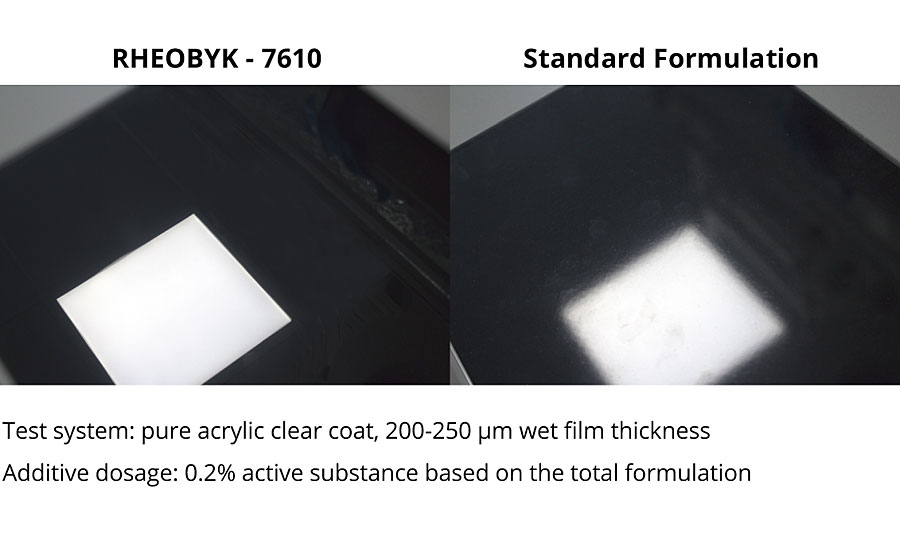
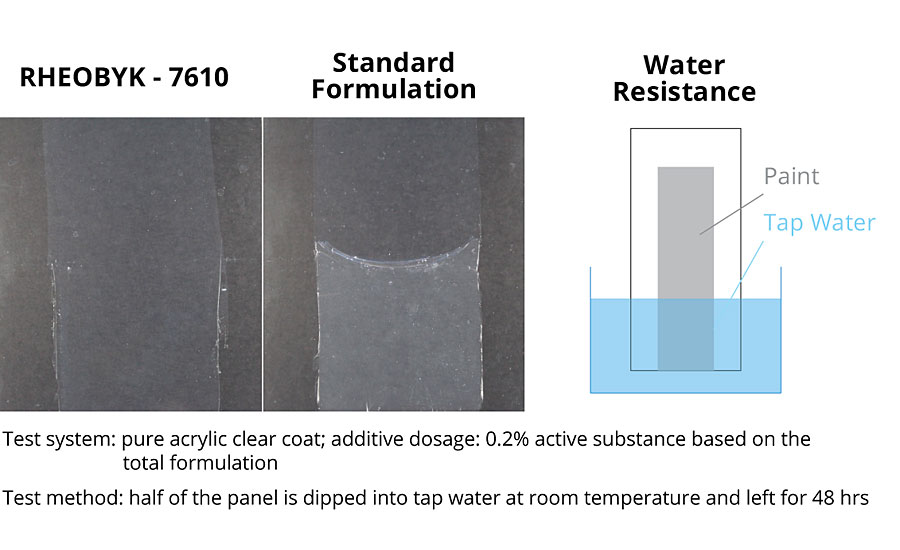
Due to its self-leveling effect and high transparency in the coating, RHEOBYK-7610 is an excellent choice for high-build clear coats (Figure 1). Furthermore, it has no influence over gloss or haze. The storage stability and the colorant acceptance can be improved as well. The additive prevents settling and stabilizes the paint system against syneresis. Moreover, the foaming behavior of RHEOBYK-7610 is noteworthy; the additive is less foam-stabilizing in aqueous systems. It is liquid and easy to handle. At any time during paint production, it is possible to incorporate this rheology additive without any specific shear forces being needed. It can be incorporated in the grind, the let-down and post-addition. A pH-value adjustment or control of the temperature during incorporation is not necessary. The product is not limited to spray applications. Likewise, brush and roller applications in combination with a high-shear thickener are worthwhile. For the brush and roller applications especially, the non-drip effect together with the self-leveling properties is a great advantage during application and for the finished coating. RHEOBYK-7610 provides a very good water resistance in the system (Figure 2). Due to the importance of the environmental aspect, the additive is VOC-, APEO- and tin-free.
Conclusion
The demands on paints, coatings and additives are increasing. One-coat hide, environmental regulations, outstanding mechanical benefits or functional coatings, to name just a few, are highly desirable properties. BYK always focuses on customer requirements, and new developments are especially designed to realize as many important aspects as possible. Rheology additives are one of the major product groups. It is of utmost importance to tailor the viscosity profile to the application field. Therefore, RHEOBYK-7610 is an outstanding product when it comes to achieving thick layers of self-leveling, water-resistant, highly transparent coatings.
Looking for a reprint of this article?
From high-res PDFs to custom plaques, order your copy today!