Anticorrosion Coatings Make Life Simpler for Manufacturing, Maintenance and Concrete Repair
Much of today’s protective coatings market for corrosion control focuses on permanent topcoats for vehicles, bridges, structural steel or other metals. These coatings are designed to have a pleasing appearance while also providing a barrier to the corrosive elements of nature, and delaying the advent and propagation of rust. What may not come to mind as quickly, or perhaps not at all, are coatings designed to solve the problem of previously rusted surfaces or temporary protection needs. However, such technologies bid to make life and work much simpler for those involved in metals manufacturing, maintenance or concrete repair.
Why Corrosion Protection?
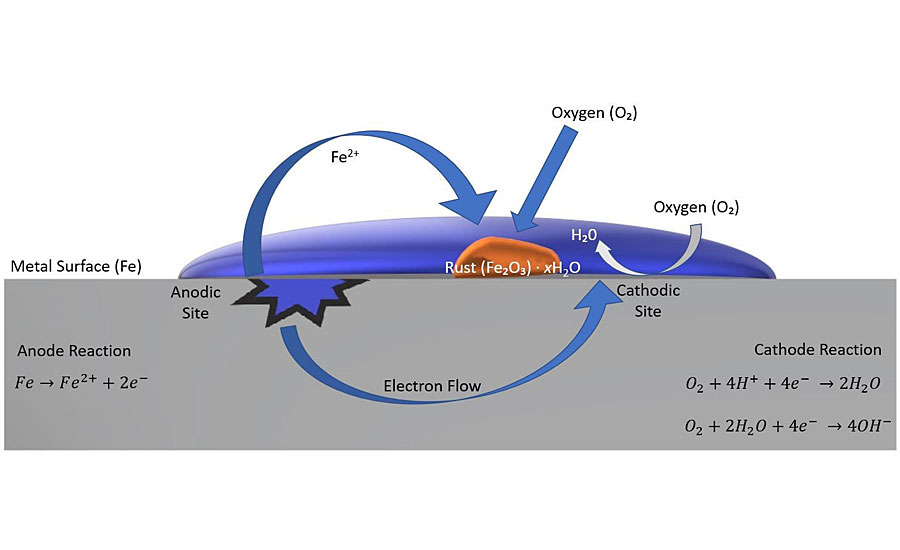
The reason metals typically need a protective coating is because of the natural oxidative processes at work to bring metal back to its low energy state. When steel surfaces are exposed to oxygen and moisture, an oxidation/reduction reaction takes place, and what was once a shiny metal surface begins to deteriorate back into its original form (Figure 1). The product of this reaction is iron oxide, or rust, which exists in the natural environment as iron ore. Although called by different names, all three compounds have the same chemical makeup: Fe2O3. In order to stop the vicious cycle of corrosion, something must be done to interfere with the natural oxidation reaction. Often this is accomplished by applying paint that creates a barrier between the bare metal, and surrounding oxygen and moisture. The coating may include sacrificial metal particles that take the brunt of the corrosion reaction and oxidize instead of the coated surface, and/or they may contain corrosion inhibitors or passivators that temporarily keep the metal ions “occupied“ so they are less available to interact with oxygen, water and chloride ions.
Preparing a Rusty Surface for Coating
Proper surface prep is critical to avoid premature failure of a coatings system. The substrate must be clean and free of greases, dirt or other contaminants that could interfere with the adhesion of the paint to the metal. One serious contaminant is rust, which not only causes issues for adhesion but can continue to eat away at the metal like a cancer under the topcoat.
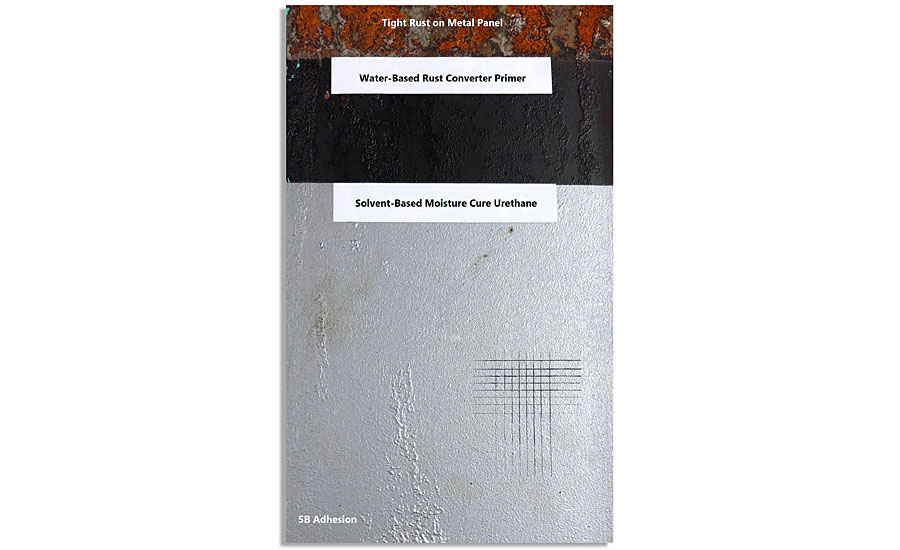
Sandblasting or water blasting is often used to achieve a rust-free surface, but this is not always the best option. Abrasive blasting creates dust and noise hazards for workers.1 Furthermore, blasting with silica sand is banned in many countries because of the danger of silicosis.2 In these situations, a rust converter primer such as Cortec’s CorrVerter® Rust Converter Primer/CorrVerter MCI® Rust Primer is a welcome alternative. This primer can be painted directly onto the corroded surface after loose rust has been removed, then top-coated once proper drying and curing has occurred (Figure 2).
Rust converter primer works by converting existing rust to a hydrophobic passive layer and creating a barrier to protect against further rusting. It contains two important chemistries: chelating agents and PVDC resins. Chelating agents form a bond with free metal ions, and make them more stable and less reactive. This is important in order to interrupt the corrosion process in which free ions at the anode and cathode of a corrosion cell are otherwise open to oxidation and reduction reactions. PVDC resins are polymer chains whose makeup serves as an excellent barrier to water, oxygen and other vapors. Together, chelating agents and PVDC resins work to passivate the rust already begun and block additional corrosives from accessing the metal.
CorrVerter is water-based and contains very low VOCs at 0.1 lbs/gal (12 g/L). It shows excellent 5B adhesion, an important consideration when looking at the full picture of achieving a successful coatings system. It is easy to clean up as a waterborne coating, yet it offers the versatility of compatibility with either water-based or solvent-based topcoats, an unusual option for rust converter primers. Altogether, these features make it very practical and user friendly.
Where to Use Rust Converter Primer
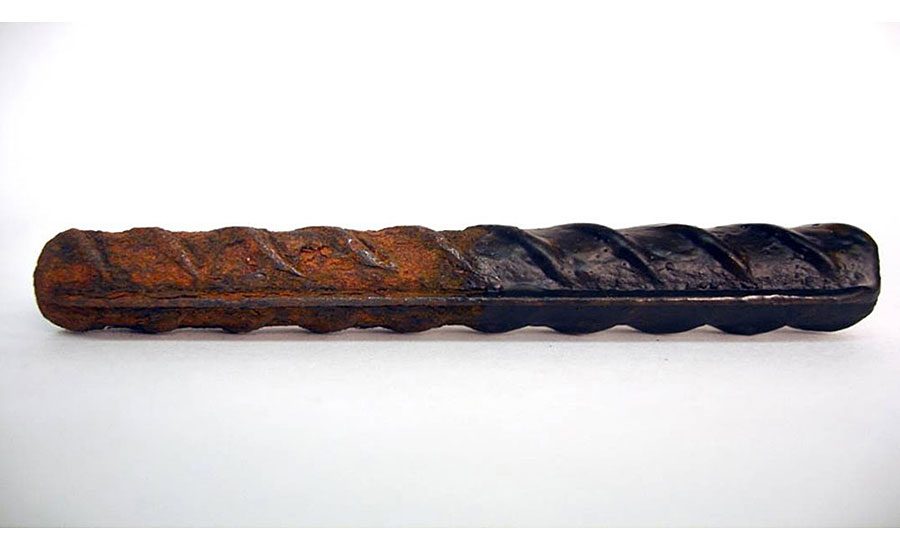
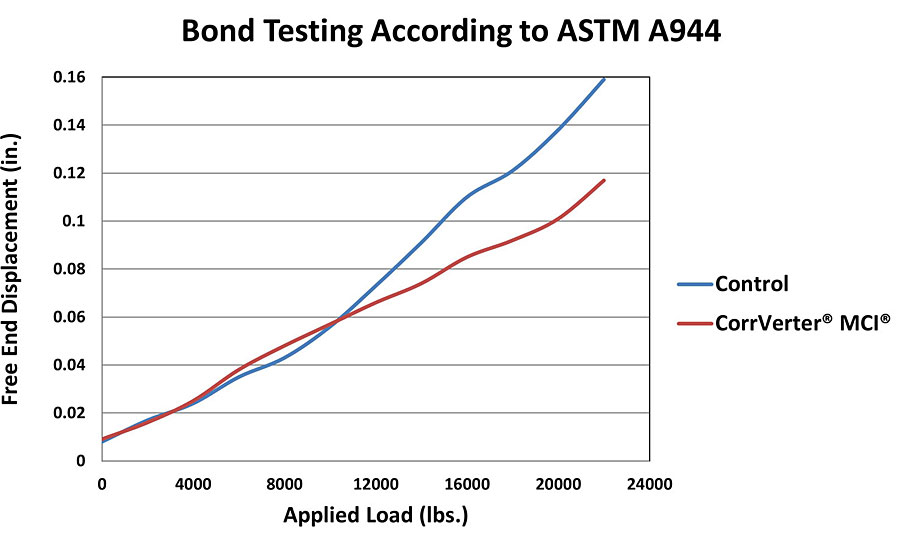
Although there are many maintenance and coatings applications where rust converter primer can be used to make surface prep easier, one of special interest and advantage is concrete repair. Concrete repairs are typically required because the rebar beneath the surfaces has started to rust, growing larger as it corrodes and putting pressure on the concrete cover until it spalls off. At the time of repair, any metal reinforcement that remains in place must have good adhesion to the patch material by proper surface prep. This is often done by labor-intensive blasting. However, the application of a good rust converter is also acceptable in many cases (Figure 3). When choosing this route, it is important to ensure that the rust converter shows good bond testing and good corrosion resistance (Figure 4).3
Rust converting primer has also been used to preserve sunflower oil reservoirs, spiral stairs, powerline piers and car rims, to name a few examples. In the case of the sunflower oil reservoirs, several large tanks needed painting, but rust removal by sand or water blasting was not allowed. Therefore, a rust converter primer was applied after power washing off loose rust. A 2K epoxy middle coat and a 2K enamel topcoat were applied on top. The primer was compatible and took care of the rusty surface prep problem without the prohibited sandblasting.4
Removable Coatings for Temporary Corrosion Protection
Another lesser-known category of protective coatings is “removable” or “temporary” coatings for rust prevention on metals. These fill an important need that permanent coatings do not. Temporary coatings are often used for protection during an interim period such as transit or storage. They are sometimes applied directly to bare metal and other times sprayed right over a vehicle’s finish (e.g., removable coatings applied to fire trucks for protection during transport). Some coatings are easier to remove than others and may even be so unnoticeable that they do not need to be removed at all. This feature should factor into the decision-making process for the best overall experience.
Non-Tacky, Water-Based, Easy to Remove
Cortec’s non-tacky, water-based temporary coating technology is known on the market by the names of VpCI®-391 and MCI CorShield®, depending on the industry in which it is used. It has proved versatile and effective for a variety of temporary protection applications (Figure 5). Its water-based technology facilitates good cleanup and workability. Another important feature is its non-tacky finish, which is less likely to attract dust and grime during component storage. When the coating needs to be removed, it can be cleaned off with relative ease using an alkaline wash. Interestingly, though, this is not always necessary because of its inconspicuous appearance and good concrete bonding properties.
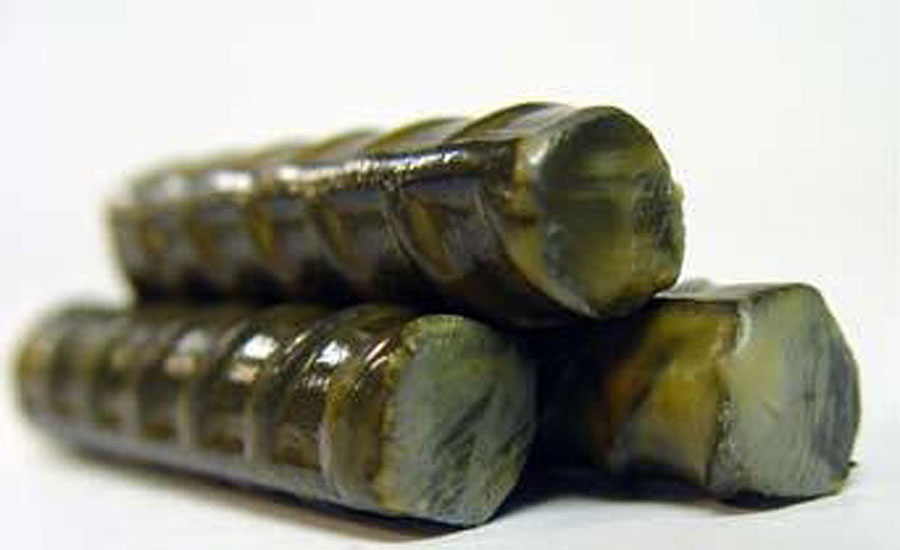
Weld joints and threaded bolt joints are two prime candidates for a temporary coating that does not need to be removed. In the case of weld joints, a clean, corrosion-free surface is mandatory to ensure a good weld job. The surface can be protected in advance with a coating, but this often has to be cleaned off before welding can be done, creating extra work. VpCI-391 can be used in this manner with minimal difficulty; however, removal may not even be necessary since testing has showed no negative impact on weld geometry or mechanical properties.5
Protection is also critical for internal threads on heavy equipment bolt joints, which can be especially prone to corrosion. This has a direct impact on the integrity of the joints and the equipment subassemblies themselves. The use of a protective “temporary” coating that does not need to be removed would greatly ease the production hassle for anyone assembling or receiving the components. However, since coating the inside threads can also affect bolt torque, the coating product must undergo testing to ensure it does not interfere. VpCI-391 passed torque coefficient testing with a minimal effect, therefore qualifying it for use by a major heavy equipment manufacturer, with no removal required on threaded joints.6 Coatings such as this simultaneously solve critical rust issues without seriously complicating the subsequent assembly process.
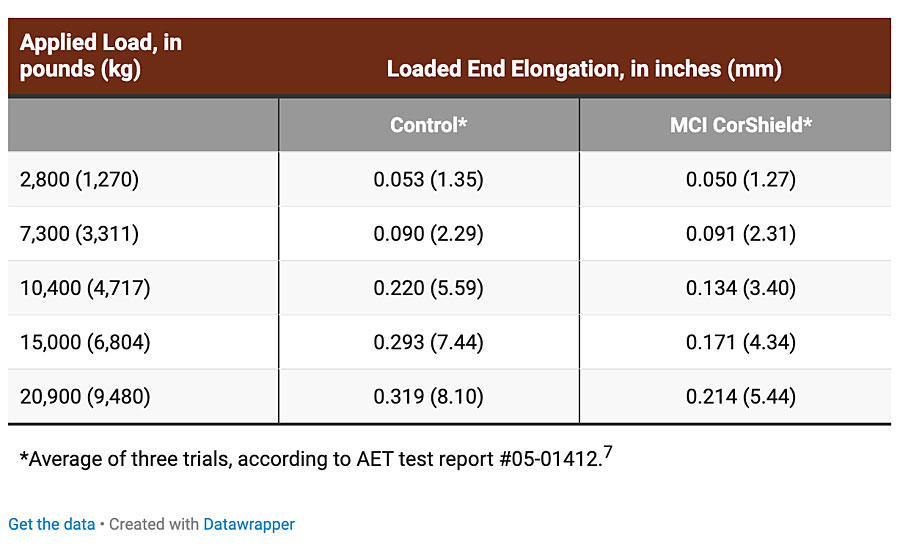
In the construction industry, this non-tacky coating is available as MCI CorShield for the protection of rebar. Often, construction delays mean that piles of rebar sit outside waiting to be used, or that metal reinforcement installed in infill beams or expansion joints are left exposed to the elements until the project can be continued. Another problem arises when epoxy-coated rebar is chipped and damaged during installation, making exposed areas susceptible to corrosion that can open the door to further problems down the road. In either case, this non-tacky “removable” coating can be applied onsite and left on for extended protection. The coating eventually hardens and offers six months to two years of protection in outdoor unsheltered conditions. A critical factor enabling use in these applications is the coating’s good concrete adhesion according to ASTM A944-99 test results (Table 1). This eliminates the need to remove the coating before embedding coated rebar in concrete, allowing for the ultimate in mid-construction reinforcement protection convenience.
Water-Based and Peelable
Another unique temporary coating is VpCI-372, a water-based, peelable coating. This type of coating can be applied by spray, roll or dip like a normal coating but dries to a waxy texture. When the protection period is over, the coating can be peeled off by hand and discarded as solid waste. In addition to corrosion protection, the coating offers a degree of abrasion resistance for situations where, for instance, gravel could hit a coated part as it travels down the road on the back of a truck. The coating has also been formulated into an extra elastic version that makes it easier to peel off when protection is needed on intricate surfaces such as pipe threads. Other potential applications include metal boats and equipment being prepped for storage, heavy equipment forklift tines and grader blades on intermittently used equipment, or individual manufactured parts that need to be prepared for shipping.
Conclusion
Anticorrosion coatings go beyond the standard topcoats seen on bridges, cars or heavy equipment exteriors. Rust-converting coatings can do much for surface prep, while removable coatings meet an important temporary protection need. Whatever the specific situation, it is good for manufacturers, maintenance crews and even construction workers to be aware of specialty coatings that can make their job easier. Whether to prepare a rusty surface for painting, perform a concrete repair, or protect metal parts during transit and storage, these specialty technologies meet important needs in the area of corrosion resistance and mitigation while eliminating many difficult aspects of the task.
Acknowledgements
Special thanks to Lisa Marston, Cortec Technical Service Engineer, for technical input. Julie Holmquist is the content writer at Cortec Corporation, where she has been writing about corrosion control for six years. She can be reached at jholmquist@cortecvci.com.
All images (other than the lead image) are courtesy of Cortec® Corporation.
References
1 See “Protecting Workers from the Hazards of Abrasive Blasting Materials.” OSHA Fact Sheet. Accessed 11 August 2021.
2 See “OSHA Silica Rule: Compliance Workbook with a Step by Step Checklist.” Blastone International. Accessed 11 August 2021.
3 “CorrVerter® MCI® Rust Primer: The Clear Winner Against Rebar Corrosion in Concrete Repairs.” Press Release. Cortec Corporation. 23 November 2020.
4 “Sunflower Oil Reservoir Preservation.” Case History 548. Cortec Corporation. February 2017. Accessed 12 August 2021.
5 See “New White Paper Confirms Compatibility of Cortec Coatings for Corrosion Protection of Welded Joints.” News Alert. Cortec Corporation. 23 January 2017. Accessed 11 August 2021.
6 Contact Cortec for details: https://www.cortecvci.com/.
7 “Cortec® Names MCI® CorShield® Brand as Go-To for Exposed Rebar Protection.” Press Release. Cortec Corporation. November 16, 2020.
Looking for a reprint of this article?
From high-res PDFs to custom plaques, order your copy today!