Anti-Pollution Paint Targets Urban Air Quality in Bangladesh

- Air pollution remains a critical environmental and public health challenge in rapidly urbanizing cities such as Dhaka, Bangladesh.
- Rising carbon dioxide emissions from industrial activity, transportation and construction contribute to both outdoor and indoor air quality concerns.
- Indoor environments are especially important, as people spend most of their time inside homes, schools, hospitals and workplaces.
- Air-purifying coatings are being explored as one strategy to reduce exposure to greenhouse gases and airborne pollutants.
- Recent product developments incorporate hybrid technologies designed to interact with carbon dioxide and other harmful gases.
- Independent testing and validation play a key role in assessing pollutant-reduction performance under controlled conditions.
Dhaka is a rapidly growing megacity where residents pursue economic opportunity while facing mounting environmental pressures. As one of the most densely populated cities in the world, Dhaka has a population that exceeds its infrastructure capacity by an estimated four to five times. Have we ever considered whether this city can bear the pressure of such a large population and still provide adequate civic amenities?
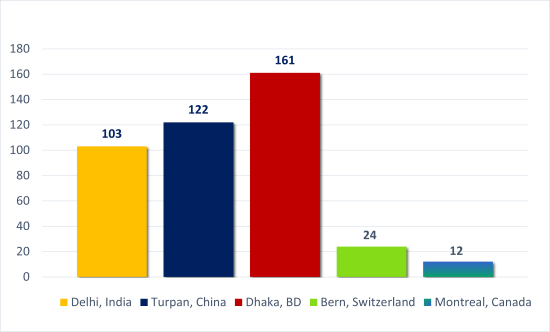
In recent years, Dhaka has experienced severe air quality degradation. The city frequently ranks among the most polluted globally. As pollution levels rise, both environmental and public health risks continue to intensify.
Figure 1. Average AQI in 2024. Source: Air Quality Index (AQI).
 Source: Air Quality Index (AQI) via Berger Paints.
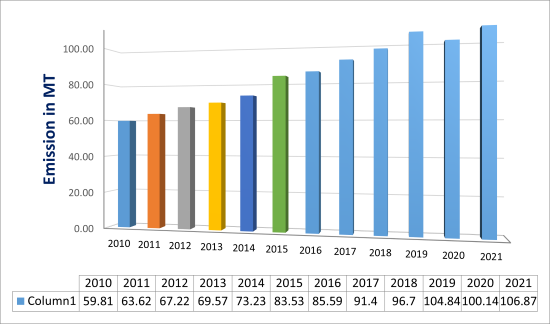
An analysis of air pollution sources in Dhaka shows that carbon dioxide (CO₂) and other greenhouse gases are primary contributors. Emissions from power plants, construction debris, industrial activity and transportation have all contributed to the toxic air that residents breathe daily.
Figure 2. Yearly CO₂ emissions in Bangladesh. Source: IEA (International Energy Agency).
 Source: IEA (International Energy Agency) via Berger Paints.
 Bangladesh’s CO₂ emissions increased from 59.81 million tonnes in 2010 to 106.87 million tonnes in 2021, reflecting an average annual growth rate of approximately 5.5%. If this trend continues, emissions are projected to reach more than 155.45 MT CO₂ by 2028. If carbon emissions cannot be controlled, the environment may face serious long-term consequences, raising concern for both present and future generations.
Indoor air quality presents an additional challenge. Studies indicate that people spend approximately 80%–90% of their time indoors, making interior environments a significant factor in overall pollutant exposure. Maintaining acceptable levels of carbon dioxide and limiting other airborne contaminants is especially important for vulnerable populations, including children and older adults.
Berger Paints (BD) Ltd. has taken an initiative by launching Eco Coat, described as Bangladesh’s first anti-pollution paint, developed to address air pollution challenges. Air Purifying Hybrid (APH) technology, developed by Berger R&D researchers, is used to neutralize harmful airborne pollutants. According to the company, this paint is designed to absorb greenhouse gases including carbon dioxide (CO₂) and methane (CH₄), as well as toxic gases such as carbon monoxide (CO), hydrogen sulfide (H₂S), sulfur oxides (SOx), nitrogen oxides (NOx) and formaldehyde (HCHO) present in the air.
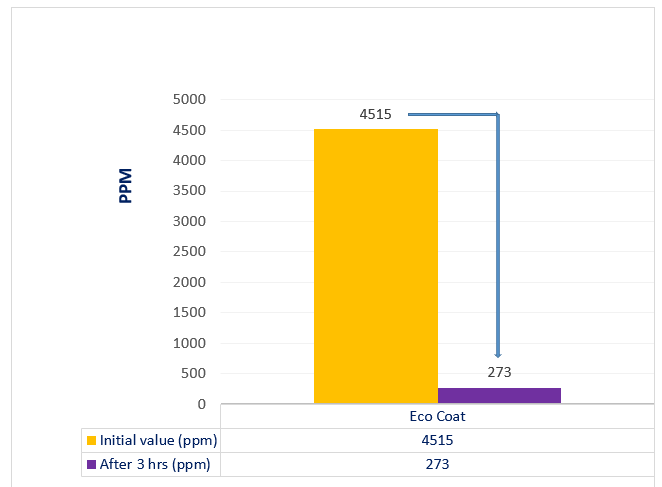
Figure 3. Berger Eco Coat: CO₂ absorption efficacy (%) and CO₂ absorption in ppm. Source: BUET test report.
 Source: BUET test report via Berger Paints
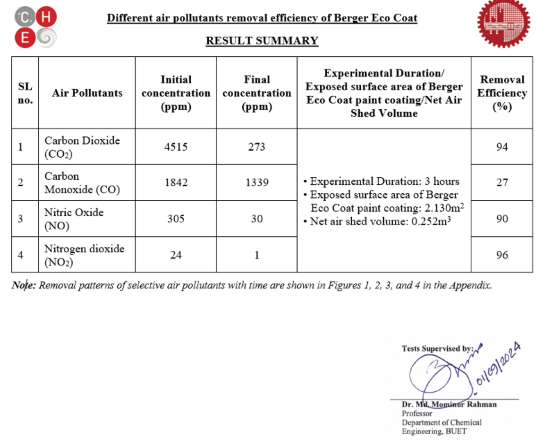
 The graphical data show that the CO₂ concentration in a demonstration room prior to application was measured at 4515 ppm. Three hours after application of the product, CO₂ levels reportedly decreased to 273 ppm, corresponding to a measured reduction efficiency of approximately 94%. Based on available test results, the coating demonstrated a capacity to reduce indoor air pollutants by up to 90% under specific conditions.
The coating is intended for both interior and exterior applications, including residential buildings, schools, hospitals and other enclosed environments where ventilation may be limited. The product has been tested and validated by SGS Bangladesh, Rudolf (Germany) and the Bangladesh University of Engineering and Technology (BUET).
Figure 4. Summary of air pollutant removal efficiency for Berger Eco Coat.
 Credit: Berger Paints
Berger Paints states that its products are formulated to be lead-free and free of other heavy metals, as well as low-VOC and APEO-free. In the context of growing concern around carbon footprints, Eco Coat represents one approach aimed at supporting more sustainable building practices. According to Md. Mohsin Habib Chowdhury, chief operating officer of Berger Paints Bangladesh Limited and president of the Bangladesh Paint Manufacturer’s Association (BPMA), “We recognize industry challenges and actively invest in climate-specific solutions.” The focus on environmental sustainability continues to grow worldwide, contributing to rising interest in eco-friendly paint technologies.
Berger Paints Bangladesh won the SDG Brand Champion Award this year in the Industry, Innovation and Infrastructure category. The company said this marks the first time a product from Bangladesh’s paint industry has received the award. Dr. A.S.M. Obaidullah Mahmud, chief research and development officer of Berger Paints Bangladesh and the developer of Berger EcoCoat, has focused his research on coatings intended to support healthier living and environmental responsibility. The company said his work has contributed to the development of paints that are free of harmful heavy metals, low in volatile organic compounds (VOCs) and formulated without alkylphenol ethoxylates (APEO) and nonylphenol ethoxylates (NPEO). The company said these efforts support eco-friendly paint solutions and aim to reduce greenhouse gas emissions, with Berger EcoCoat positioned as part of that approach.
Advances in sustainable coatings continue to shape how manufacturers address environmental performance and regulatory pressures across global markets.
Looking for a reprint of this article?
From high-res PDFs to custom plaques, order your copy today!