
Guide to High-Temperature Masking
Inside this Article
- This article provides an overview of high-temperature masking used in coating and finishing operations.
- It reviews common masking products, measurement considerations and temperature requirement.
- The article also examines hanging methods and reusable solutions used to improve efficiency.
This guide to high-temperature masking provides information on products used during coating, painting, refinishing and refurbishment processes. This guide outlines the different masking options available and the properties they provide.
High-temperature masking is a necessity in many industries that operate in heat-intensive or hostile environments where baking or heat treatment is required to complete the application. Available in many shapes and forms, from hooks to end caps, masking products are highly versatile and can be adapted to meet specific project requirements.
When and Why to Use High-Temperature Masking
Providing a Higher-Quality Finish
When used for applications such as powder coating, masking solutions can be used to provide a higher-quality finish by preventing overspray or coating of areas that are not required. Masking tapes are generally recommended for these applications to reduce the need for secondary processes.
Increasing Efficiency
Certain products, such as tape dots, help reduce the time required to mask smaller areas such as bolt holes. This can improve efficiency when used over extended periods. Increasing efficiency supports on-time completion and higher project throughput.
Decreasing Costs
Some masking products can be used in a cost-effective manner to reduce overall costs in repeat projects. Products such as silicone caps and plugs can be reused multiple times before they are no longer effective, reducing the need for frequent stock replenishment.
How to Measure for Masking
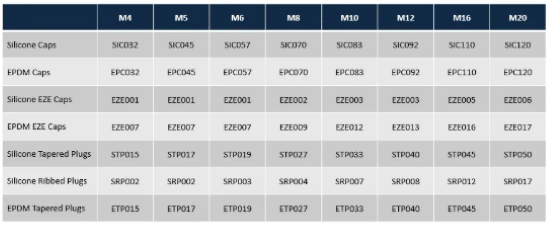
Because masked applications vary widely, it is generally recommended to maintain a selection of different masking sizes. Products such as masking tapes can be cut to specific shapes to cover excess holes and gaps that may not have been identified during initial preparation. Most high-temperature masking solutions can accommodate a range of hole and stud sizes. Guidance on measuring studs for caps and holes for plugs is commonly provided to support proper selection.
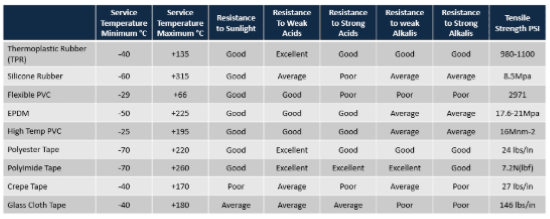
Along with dimensional considerations, temperature resistance must also be evaluated. Temperatures of 200 °C and above are generally recommended as an industry standard for most curing methods, although both higher and lower temperatures may be required depending on the application.
Figure 1. Resistances of various masking solutions.
 Credit: Vital Parts
Weight Ratings and Hanging Requirements
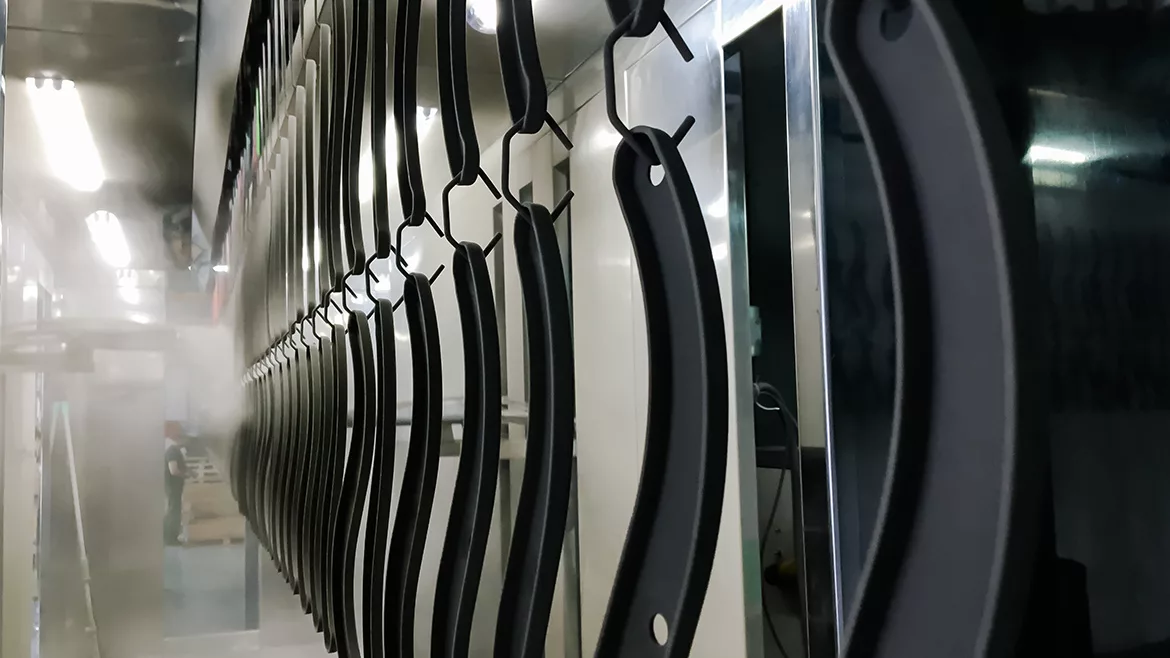
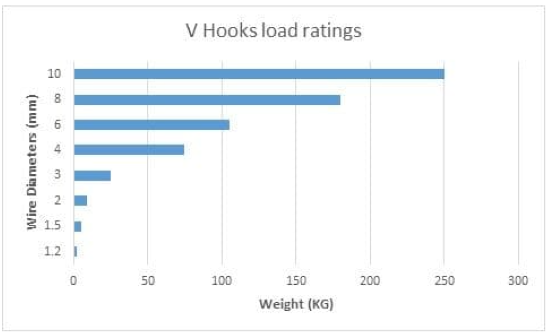
If hanging is required during masking or finishing, weight ratings must be considered. Metal hooks, commonly referred to as paint hooks, are widely used for this purpose. These hooks are available in C, V and S styles to suit different applications. Selecting the appropriate hook style and load rating helps ensure safe suspension and consistent coating coverage.
Figure 2. Typical masking size and temperature resistance comparison table.
 Credit: Vital Parts
Figure 3. Load rating comparison for V-style paint hooks.
 Credit: Vital Parts
Masking Products Commonly Available
Caps and Plugs
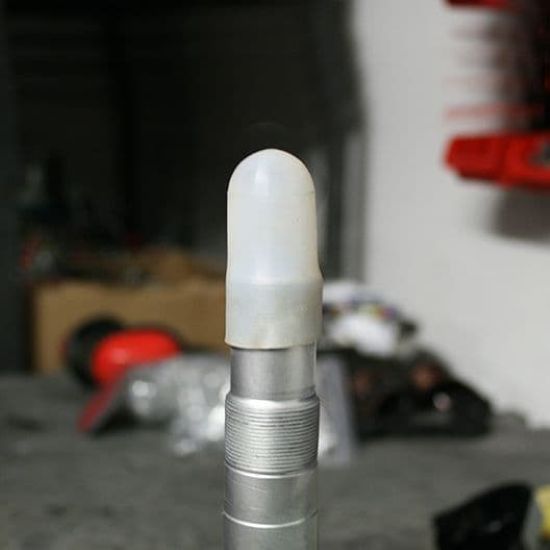
Caps and plugs are widely used as masking solutions for holes, rods and studs. Manufactured from high-temperature rubber materials, these components remain in place without the need for adhesives, which can deteriorate under heat exposure. Materials commonly include PVC, EPDM and silicone.
Figure 4. High-temperature masking caps used to protect threaded components.
 Credit: Vital Parts
Masking Kits
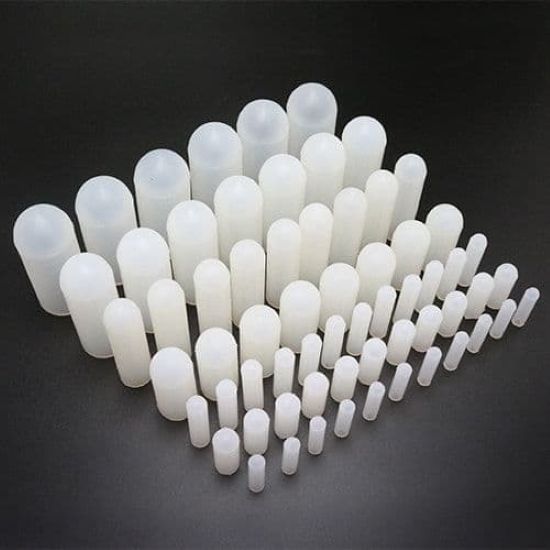
Masking kits are recommended for applications requiring a range of sizes in smaller volumes. Kits may include combinations of caps, plugs and tapes and are often used for varied or lower-volume projects.
Figure 5. Assorted high-temperature masking kit containing caps and plugs.
 Credit: Vital Parts
Hanging Hooks
Hanging hooks are commonly used during the coating or refurbishment of alloy wheels and similar components. Suspending parts allows for improved coverage and supports the curing process. Hooks are available in C, V and S configurations and in wire diameters ranging from 1.2 mm to 10 mm.
Figure 6. C-style hanging hooks used during wheel coating applications.
 Credit: Vital Parts
High-Temperature Tapes and Discs
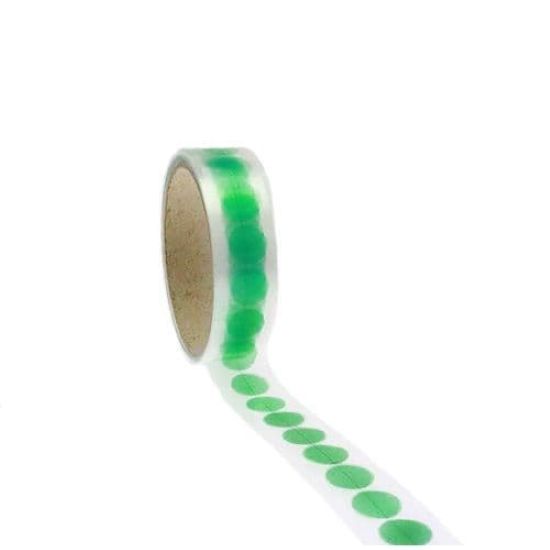
Masking tapes and discs are among the most frequently used masking products due to their versatility. These materials can be cut to nearly any size or shape and are available in widths ranging from 1 mm up to 1,000 mm. Common materials include polyester, polyimide, crepe paper and cloth, with various thicknesses and surface properties available.
Figure 7. High-temperature polyester masking tape used during component preparation.
 Credit: Vital Parts
Wheel Masking Discs
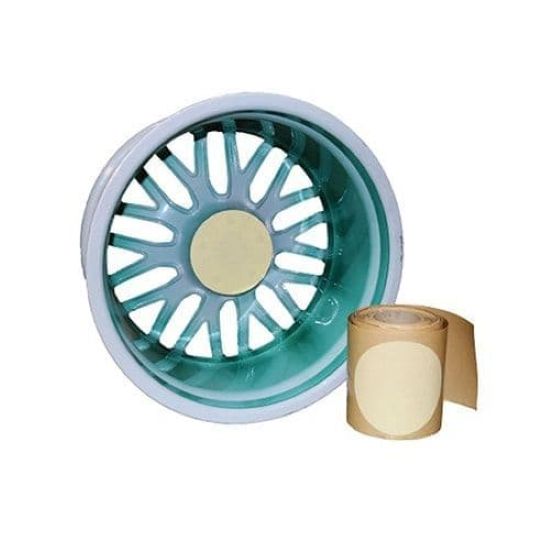
Wheel masking discs are designed specifically for alloy wheel coating, finishing and refurbishment. Pre-cut to standard wheel sizes, these discs help increase efficiency and reduce material waste. Available sizes typically range from 140 mm to 200 mm, covering many common wheel designs.
Figure 8. Pre-cut alloy wheel masking disc applied prior to coating.
 Credit: Vital Parts
Learn more about surface preparation.
Looking for a reprint of this article?
From high-res PDFs to custom plaques, order your copy today!