Court Filing Details Lincoln Memorial Reflecting Pool Coating Installation
Need to Know
- A July 31 court filing cites records describing weather delays, failed joint-sealant trials, blister repairs and bonding problems during Atlantic Industrial Coatings’ work at the Lincoln Memorial Reflecting Pool.
- A July 20 inspection report discussed bonding-agent application as a possible cause and outlined AIC’s proposed surface preparation and recoating process.
- The court did not determine the damage’s cause or assign responsibility. AIC said the affected areas did not indicate liner failure, while the National Park Service extended the closure through Sept. 10.
A D.C. Superior Court filing provides additional technical detail about the installation and inspection of the Lincoln Memorial Reflecting Pool lining following reports of peeling on the renovated surface.
In a July 31 motion to dismiss a criminal indictment, federal prosecutors summarized approximately 695 MB of Interior Department and contractor records that they said were provided after David Hearn had been indicted in connection with damage to the pool.
The court dismissed the case Aug. 6 while holding in abeyance the government’s request for dismissal without prejudice and Hearn’s request for dismissal with prejudice. The order did not independently determine the cause of the coating damage or assign contractual responsibility.
The following technical sequence comes from the government’s motion and the records it quotes. PCI did not independently review the underlying 695 MB collection.
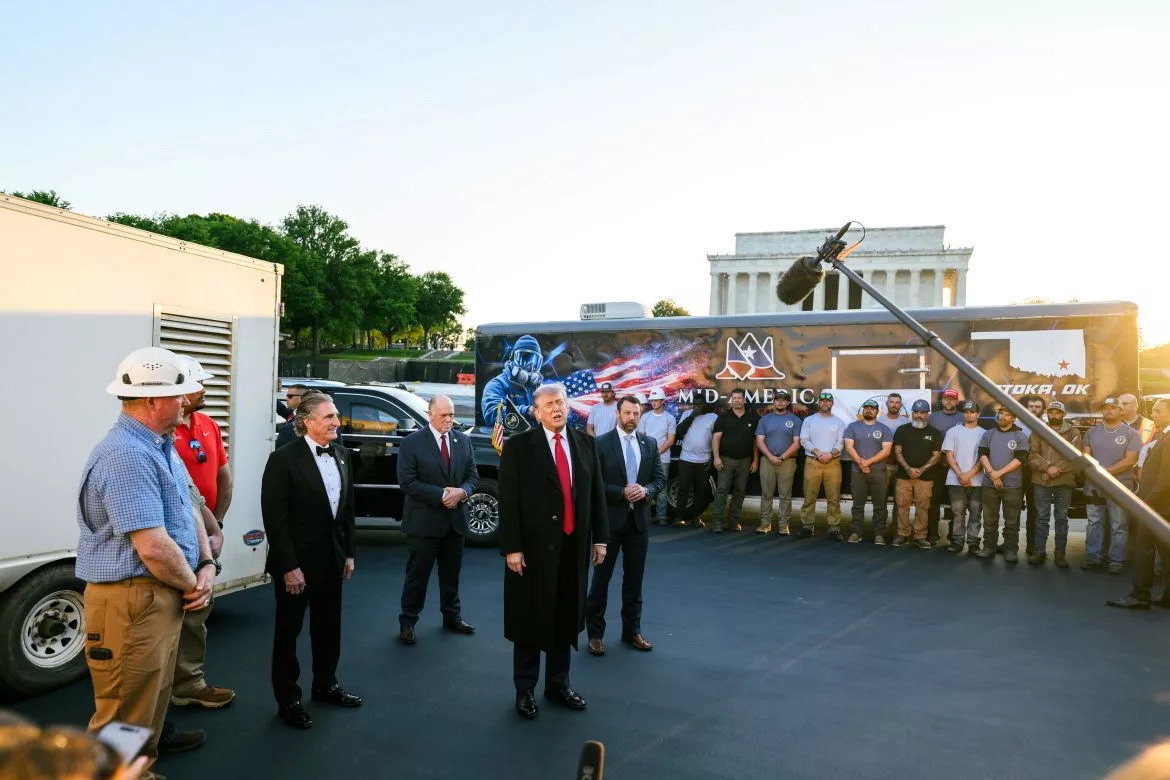
According to the filing, Atlantic Industrial Coatings began installation May 5. The lining required multiple coats of Rhino 406 followed by two coats of Pipeliner 5000. Expansion joints required separate treatment that later included Rhino 11-35 sealant.
The motion describes rain interruptions, testing problems and a material shortage during installation. It quotes a Brown Construction Services employee assigned to monitor progress as writing May 7 that AIC was “significantly behind schedule.” A second trial application of expansion-joint sealant failed May 16, and AIC ran out of Rhino 406 on May 18, according to the filing.
Application of Rhino 406 resumed May 20 after additional material arrived. A quality-control inspector observed blistering and directed AIC to make repairs. Heavy rain that evening required water to be pumped from the pool so mechanical drying could take place. The motion says the blistering was subsequently remediated.
A third expansion-joint sealing test was reviewed by the National Park Service and found acceptable May 21. The filing says installation of Pipeliner 5000 was completed by May 31, Rhino 11-35 work continued through June 6 and refilling began June 7. A final inspection took place June 9.
In a June 11 email quoted in the motion, an NPS engineer described less than 1 square foot of noncontinuous top-layer peeling. The engineer wrote that the condition would not affect the liner’s strength and said the contractor attributed the peeling to overspray from work around a perimeter joint.
The engineer expressed concern that overspray could leave a 1- to 2-foot strip around the perimeter vulnerable to peeling. The engineer also reported walking the perimeter and finding no additional peeling at that time.
The filing also summarizes a Brown Construction Services report following a July 20 inspection of the drained pool. According to the motion, participants discussed several possible explanations for failures at the interface between Rhino 11-35 and Pipeliner 5000. The report said an apparent cause could be the application of too little or too much XP bonding agent.
The report also described areas where Pipeliner 5000 applied for texture had oversprayed onto existing Pipeliner 5000 and had not bonded. It said loose material could be removed by power washing.
AIC’s proposed remediation, as summarized in the filing, involved removing failed material until firmly adhered material remained, power washing and abrading the surface, applying XP bonding agent, reapplying Rhino 11-35 and adding Pipeliner 5000 for texture.
The government’s motion characterized overspray and failure to bond as the predominant issues described in the July inspection report. It also said damage was observed throughout the pool rather than only along the perimeter. Those statements represent the prosecution’s assessment of the records and are not an independent engineering finding or judicial determination of root cause.
In a June 21 public statement, AIC said it and the National Park Service had identified areas requiring repairs. The company characterized those areas as a small portion of the 7-acre project and said they did not indicate failure of the liner. AIC said it would return after the pool was drained to complete repairs under the warranty. That statement preceded the July 20 inspection and July 31 court filing.
The National Park Service has extended the Reflecting Pool closure through Sept. 10, citing ongoing repair and restoration work involving heavy equipment. The notice does not identify the repair materials, application steps or coating system being used.
Sources:
- Government’s Motion to Dismiss the Indictment, filed July 31, 2026
- D.C. Superior Court order, Aug. 6, 2026
- Atlantic Industrial Coatings’ June 21 Reflecting Pool statement
- National Park Service Reflecting Pool closure notice
- Previous PCI coverage
The filing adds publicly available detail about the coating sequence, weather interruptions, joint treatment and adhesion observations behind the peeling discussed in PCI’s earlier coverage. These records illustrate the application and quality-control variables involved in large-scale industrial and protective coating projects without establishing a final independent root-cause determination.
Looking for a reprint of this article?
From high-res PDFs to custom plaques, order your copy today!