Re-Inventing Primer to Prevent Industrial Facility Corrosion
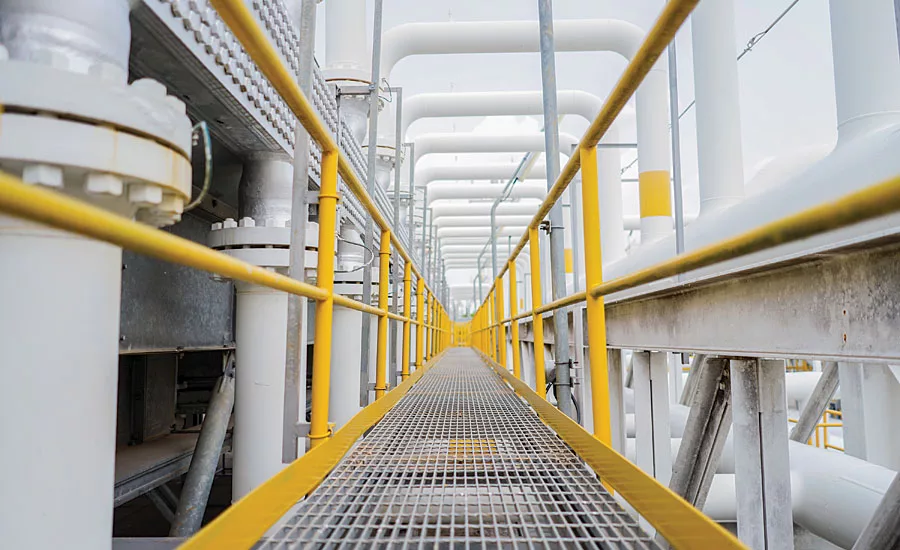
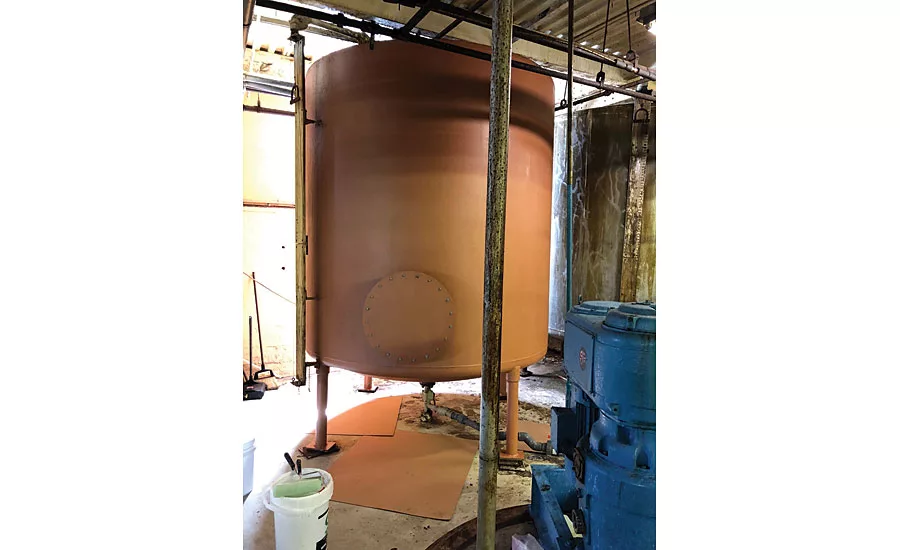

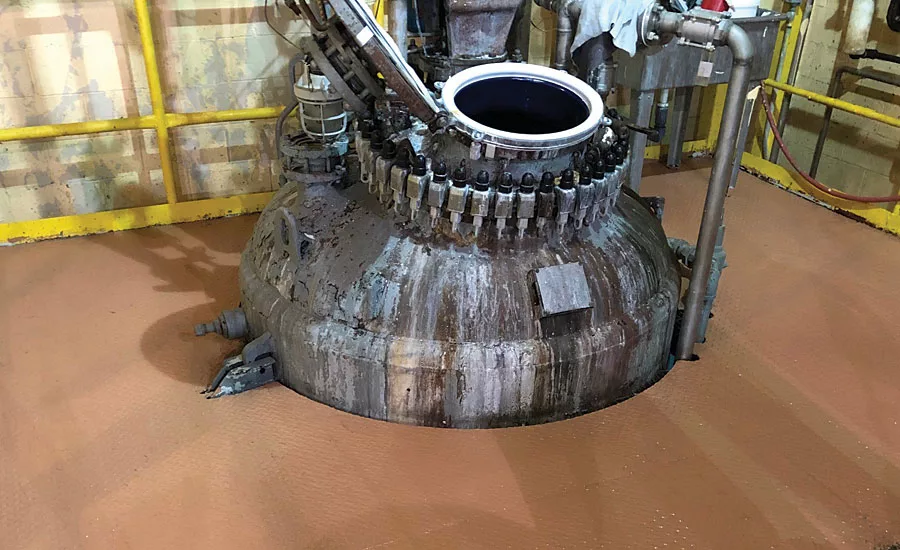
For industrial facilities, such as manufacturing plants, processing centers and storage sites, preventing corrosion is a critically important operational and safety issue. However, frequent exposure to chemicals, chlorides, moisture and humidity, whether indoors or out, is a corrosive combination that can shorten the service life of everything made of steel such as tanks, pipes, walkways, facility structures and external infrastructure. Because the corrosion of steel is a serious concern in such installations, re-priming and re-painting often needs to occur every few years.
While industrial primers represent a critical foundation for paints and coatings in harsh environments, they have historically been unable to effectively deal with the eventual formation and recurrence of rust. Traditional primers only encapsulate rust until the paint/primer is scratched, chipped or breached, and moisture and oxygen migrate under the film, allowing the corrosion to spread.
As a result, maintenance personnel or coating applicators must repeatedly utilize costly, time-consuming and environmentally hazardous surface preparation methods such as sandblasting to prepare surfaces for priming and repainting.
“When sandblasting is required, it can significantly lengthen the time a facility is shut down for recoating and maintenance, including set up, clean up and having to stop work near the blast zone for safety,” says Diego Cavalieri, an engineer and industrial maintenance consultant with over 25 years of coatings application and corrosion mitigation experience. “Although efforts are made at containment, the blasting creates a dangerous dust cloud that can drift for miles even after the larger particles settle.”
However, not all environments can withstand sandblasting, which can ricochet, damage critical surfaces, and even get into gears and mechanical equipment. It can also be impractical for reaching hard-to-access areas such as cracks and crevices.
Now more advanced primers have been formulated that set a higher performance bar in corrosive industrial environments. These reactive primers go beyond encapsulating rust to instead convert it to a protective material (iron phosphate) to minimize the risk of further corrosion. The chemical bond provides superior adhesion and corrosion protection, while eliminating under-film corrosion.
The rust conversion formulation also differs from prior technologies by using a non-toxic, ultra-low-VOC, water-based acrylic polymer solution that can be applied with minimal surface preparation without the need to sandblast steel substrates.
“Eliminating the need to sandblast can improve safety, equipment reliability and reduce total facility shutdown time by up to 30%,” says Cavalieri. “This can translate into millions of dollars in savings if a large facility is put back into production a week or two early.”
Primer Pitfalls Allow Corrosion
One of the main reasons that industrial facilities are so susceptible to corrosion is that traditional primers have serious deficiencies in this area. A common failure of primers is not sufficiently protecting against underfilm corrosion.
“A primer must first form an effective chemical bond to the metal substrate,” says Martin Lawrence, Managing Director of New Jersey-based NanoRustX LLC, a supplier of advanced primer technologies. “Without this, rust promoters like chemicals, oxygen, moisture and humidity will creep underneath the primer, causing further corrosion. Most primers only encapsulate the iron oxide, which is not 100% effective in preventing further corrosion.”
Another reason that so much industrial infrastructure is prone to rust when utilizing typical primers is that a high level of surface preparation is required because most corrosion primers are sensitive to chlorides.
“Even a minute amount of chloride on the steel can cause coating system failure,” says Lawrence. “This is why leading coating manufacturers demand extreme levels of surface cleaning (sandblasting) and chloride removal to a level of 5 mcgr/m2, which is nearly impossible to achieve. Even when sandblasting is used for surface preparation, flash rusting will occur.”
In response, the search for more enduring corrosion protection for industrial infrastructure has involved the development of long-lasting primers that correct traditional deficiencies.
Lasting Corrosion Protection
NanoRustX (NRX) NanoPrime, for example, works by chemically reacting with iron and iron oxide (rust) to form iron phosphate and creates a nano bond with both metallic and painted surfaces. The chemically bonded layer is insoluble and extremely corrosion resistant. This “bonding” process also provides superior adhesion and flexibility, and stops underfilm corrosion that occurs when conventional coatings are damaged.
The non-toxic, ultra-low-VOC primer contains nano polymers for added strength and durability, and has been tested to successfully coat surfaces from rust-free to up to 700 microns of rust. The elasticity of the advanced primer makes it very durable in temperature variations from -67 °C to +200 °C (-90 °F to 400 °F).
Because the advanced primer actually chemically reacts with galvanized steel surface, no surface preparation is required other than a water wash. The water-based acrylic polymer is not sensitive to chlorides or rust and can actually neutralize them. Unlike initial generations of rust-converting primers, the primer performs equally well on clean, partially corroded and heavily rusted surfaces.
Typically, a power wash (240 bar/3,500 psi) is all that is needed before applying to steel (clean or corroded), galvanized steel or aluminum in order to remove loose paint, dirt and grease. The primer can be applied to a corroded surface by hand brush, roller or airless spray gun on the substrate. After the application of the primer, a single coat of a low-VOC topcoat will complete the job.
The primer has successfully been used on a wide variety of industrial applications to quickly and cost effectively deter corrosion without extensive surface preparation.
A pulp and paper manufacturing plant in Queensland, Australia used the coating on a crane walkway that had become severely corroded and weathered as a result of mechanical damage and regular use in a high‑humidity (~90%) and high-temperature (~40 °C) environment.
To improve operational safety and function, the manufacturing plant recently sought a simple, time and cost-effective coating solution, compatible with the currently utilized topcoat that could be applied directly to rusted metal.
Due to its properties, NRX NanoPrime was selected for a trial application. The walkway was high-pressure water blasted at 4,500 PSI to remove loose or flaking rust and paint, and ensure the substrate was free from any contaminants. Heavily rusted areas were spot primed and two coatings of primer were applied, followed by one coat of JOTUN Hardtop XP.
The combined system has provided corrosion protection against harsh industrial conditions to date, and the results are being observed as the trial continues.
Compared to typical sand blasting, however, the nominal surface preparation requirements, along with the ability to be applied directly to rusted substrate, has helped to minimize operational downtime for maintenance. The ability of the primer to convert rust to iron phosphate also bodes well for extended protection against corrosion, even in an industrial work setting prone to equipment damage because it will help to eliminate underfilm corrosion.
While the industrial sector has long battled corrosion, the use of advanced primers that convert rust into a protective layer and eliminate the need to sandblast promises to help keep facilities and production infrastructure in good working order far longer, with less costly maintenance, than traditional methods.
For more information, visit www.nanorustx.com or e-mail sales@nanorustx.com.
Looking for a reprint of this article?
From high-res PDFs to custom plaques, order your copy today!