Painting & Coating Industry (PCI) logo Powder coating summit logo
search
cart
facebook twitter linkedin youtube
  • Sign In
  • Create Account
  • Sign Out
  • My Account
Painting & Coating Industry (PCI) logo Powder coating summit logo
  • NEWS
    • Latest News
    • Market Trends & Reports
    • Finishing News
    • Price Alerts
    • Subscribe to Newsletters
    • Global Top 10/ PCI 25
    • Weekly Featured Article
    • COATLE Word Game
  • PRODUCTS
    • Product News
    • Must See Products and Services
  • MATERIALS
    • Additives
    • Resins/Polymers
    • Pigments
    • Equipment
    • Distributors
  • TECHNOLOGIES
    • Adhesives
    • Architectural Coatings
    • Finishing Articles
    • Finishing Technologies
    • Finishing Equipment
    • Industrial Coatings
    • Nanotechnology
    • Powder Coatings
    • Solventborne
    • Special Purpose Coatings
    • Sustainability
    • UV Coatings
    • Waterborne
  • RESOURCES
    • Columns
      • Did you know?
      • Distribution Dive
      • Formulating With Mike
      • Innovation Insights
      • Powder Coating Perspectives
      • TiO2 Insider
    • Blogs
      • Editor's Viewpoint
      • Industry Insights
    • Coatings Supplier Handbook
    • Podcasts and Videos
      • COAT-IT! Podcast
      • Videos/PCI TV
    • PCI Store
    • Classifieds
    • eBooks
    • Sponsor Insights
    • White Papers
    • COATLE Word Game
  • EVENTS
    • Coatings Trends & Technologies Summit
    • Paint and Coatings Academy
    • Webinars
    • Calendar of Events
    • Lifetime Achievement Award
  • DIRECTORIES
    • Buyer's Guide
    • Equipment Directory
    • Materials Directory
  • EMAGAZINE
    • Current Issue
    • eMagazine Archive
    • China Issue Archive
    • Editorial Advisory Board
  • CONTACT
    • Contact Us
    • Advertise
    • Subscribe to eMagazine
    • Subscribe to Newsletters
  • SIGN UP!
Paint and Coatings AdditivesArchitectural CoatingsWaterborne Coatings

New Silicone-Free Super-Wetting Surfactants for Waterborne Coatings
By Hilbert Esselbrugge, Senior Technical Director, Specialty Additives, Ashland, Wilmington, Delaware
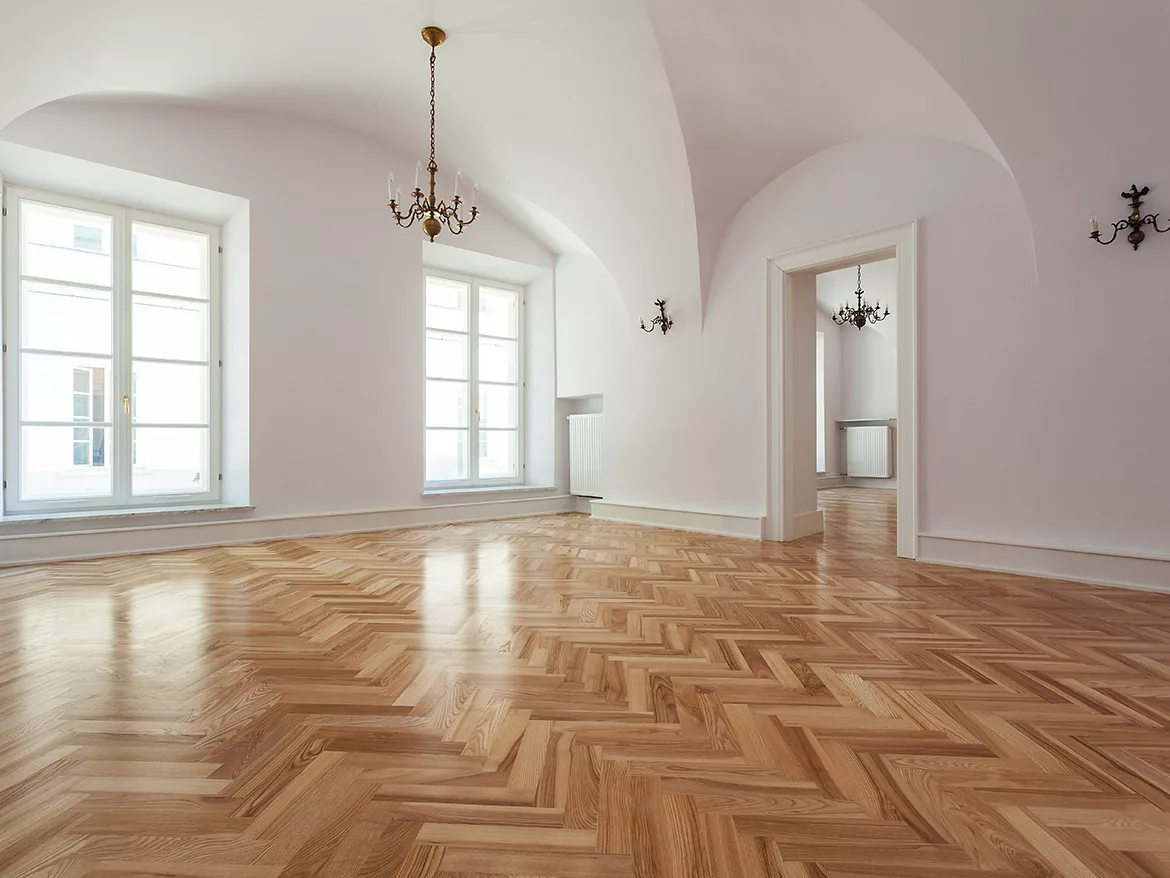
Empty interior in an elegan new house with wood floor
KatarzynaBialasiewicz, iStock, via Getty Images
June 14, 2024

Additives that improve the wetting behavior of coatings on wood substrates have grown in importance over the last decade. As a result, the super-wetting agents market is growing; Maximize Market Research (MMR) projects growth at about 6% CAGR over the next five years. These additives play a significant role in providing a smooth and defect-free surface, and enhance the penetration of the coating into the wood substrate. 

Good wetting performance improves the visual and aesthetic appeal of the coating on the wood surface and, thereby, the finished wood product, such as a parquet floor, a cabinet, or wooden furniture. Most of these coatings are spray-applied, and to prevent the formation of pinholes and cratering, the coatings need to wet the surface rapidly and entirely without excessive foaming. Consequently, these additives must provide a good balance of wetting and low foaming to be effective.

Additionally, there is a growing interest among paint manufacturers of waterborne industrial coatings in offering their customers more environmentally safe and cost-efficient wetting agents. This market trend is resulting in the need to identify alternatives to silicone surfactants and fluoroalkyl-based wetting agents that provide the same or better wetting performance—a challenging proposition since all premium wetting agents are applied in premium, high-performance industrial coating systems.

This article will introduce an innovative approach to enhancing wetting behavior based on a comparative evaluation of silicone-free and silicone-based surfactants, focusing on surface tension and contact angle. The product, Easy-Wet™ 300 substrate wetting agent, is a carbon-based technology from one of Ashland's breakthrough platform technologies.


Surface Tension

Surface tension is not just a factor but a key determinant in the quality of applied coating systems. It influences wetting behavior, adhesion, film thickness, and overall coating quality. Understanding and implementing technologies like Easy-Wet 300 can significantly enhance the quality of a coating because of the way it interacts with both water-based and solvent-based paint systems. 

Traditional surfactants used to improve wetting can consist of four main types: anionic, non-ionic, cationic, and zwitterionic. These surfactants typically have a hydrophilic end and a hydrophobic tail, usually alkyl or fluoroalkyl. They aggregate in water at the interface and help lower the surface or interfacial tension, enabling wetting. Surface tension measures solvent (water) molecules’ "cohesion." In other words, lower surface tension promotes substrate wetting, and water droplets spread on the surface. Conversely, higher surface tension can result in "beading" on the surface. 

Since water has a very-high surface tension around 72 dynes/cm, and typical coating surfaces have surface energies around 35-45 dynes/cm, for adequate wetting to occur, the surface tension in water needs to be lower—generally, the lower, the better. Currently used carbon-based surfactants typically don't display static surface tension values below 29 dynes/cm. Also, they tend to foam, resulting in surface imperfections such as pinholes and reduced surface appearance.

Historically, silicone-based surfactants have addressed this issue in wood coatings by lowering the static surface tension to around 21 dynes/cm. They are also good at controlling the amount of foam. However, reducing static or equilibrium surface tension is not the only factor contributing to good wetting. 

This speed of wetting is equally essential. Depending on the application method, it is desirable to reduce the surface tension rapidly and have the surfactant molecules reach the newly created surface very quickly to facilitate good wetting. One disadvantage of silicones is that they can lead to inter-coat adhesion failure since they concentrate on the coated surface, which causes problems due to their hydrophobic nature.

The right balance of properties provides good wetting and surface finish. Easy-Wet 300 wetting agent offers a practical and cost-effective solution. It substantially reduces static and dynamic surface tension and aggregates in water at very-low concentrations to reduce surface tension at low dosages, making it a valuable tool in enhancing the quality of a coating.

The dynamic surface tension behavior of Easy-Wet 300 in comparison to a competitive silicone and a competitive carbon-based surfactant.
FIGURE 1 » The dynamic surface tension behavior of Easy-Wet 300 in comparison to a competitive silicone and a competitive carbon-based surfactant.

The new wetting agent reduces surface tension more rapidly with time compared to the competitive silicone, even though the equilibrium surface tension value for the silicone is lower (21 dynes/cm compared to 27 dynes/cm). In comparison, the carbon-based competitive product has a lower surface tension at shorter time scales. Still, the drop in surface tension is gradual, and the equilibrium surface tension is higher. The contact angle is another critical indicator of a substrate's wettability. Good wetting occurs when the contact angle is low and greatly influences adhesion or how the coating spreads and adheres to the surface.

The competitive silicone and Easy-Wet have similar wetting profiles. In contrast, the contact angle for the competitive carbon-based surfactant is much higher; therefore, its wetting behavior is not as good, as illustrated in Figure 2.
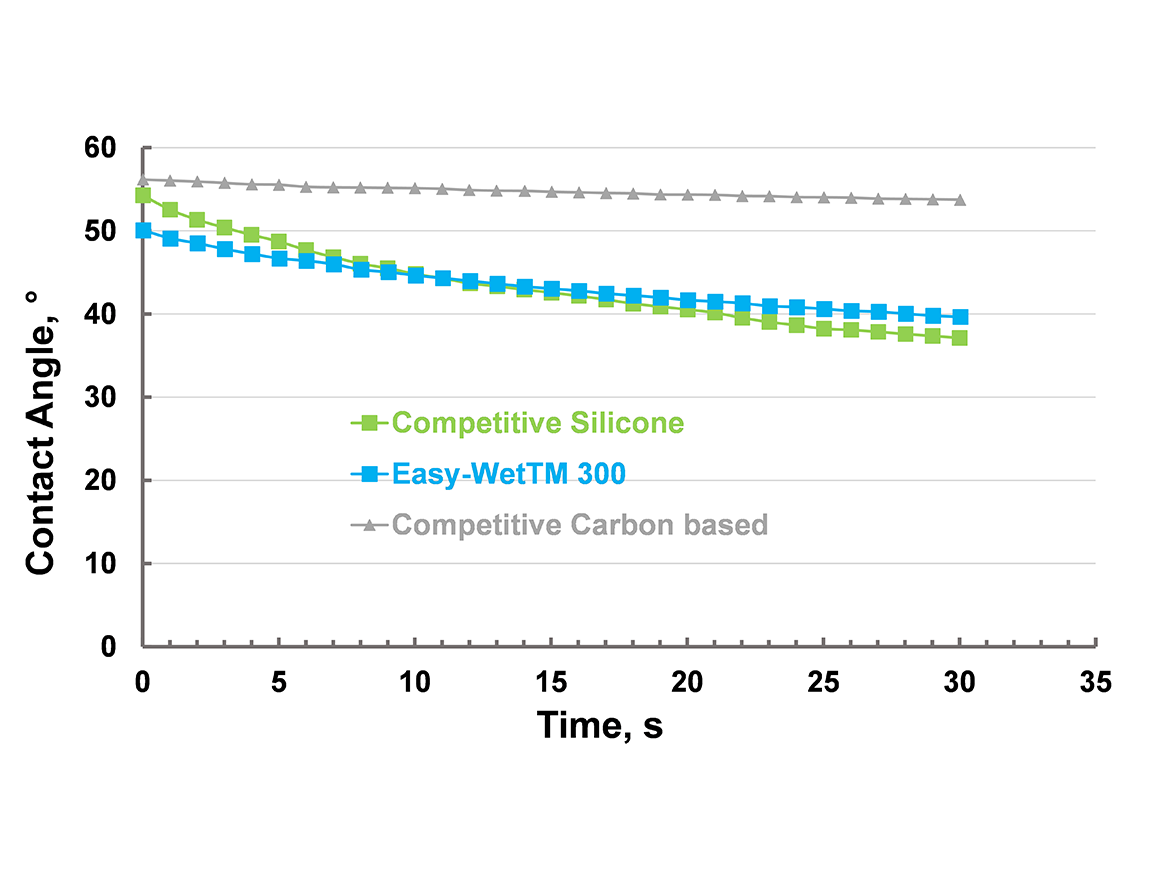
Contact angle measurement of different super wetters.
FIGURE 2 » Contact angle measurement of different super wetters.


Compatibility

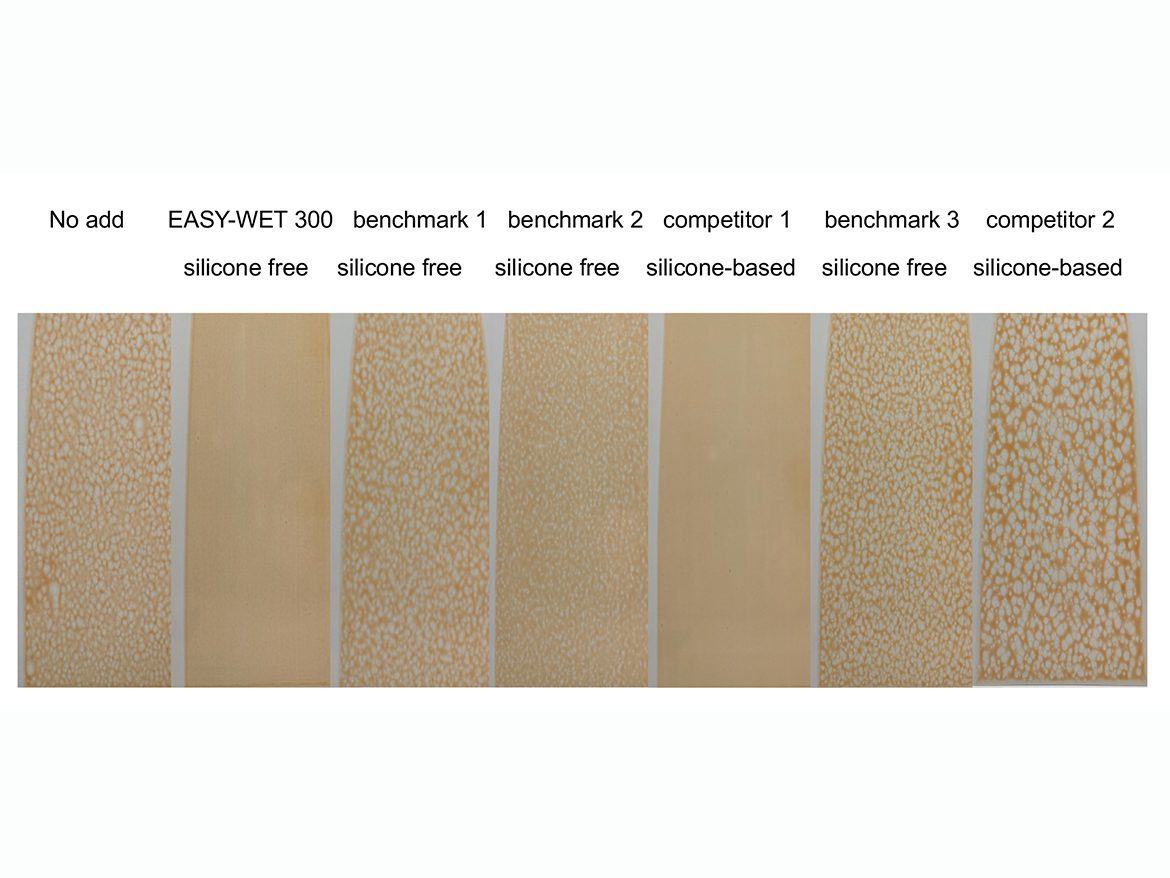
Another challenge for wood coating manufacturers is when there are issues with compatibility due to contaminants in the system, or the use of incompatible defoamers. This incompatibility leads to severe cratering effects on the coating film. Adding super wetting agents based on silicones can be helpful, especially as fluorosurfactants are increasingly scrutinized because of environmental hazards. Table 1 shows a 1K waterborne parquet flooring composition in which 1% of various surfactants have been added to correct a cratering or incompatibility issue. Figure 3 shows the drawdowns of these coatings and the varying degrees of cratering after adding 1% additive. The data indicates that silicone-based surfactants are much better than silicone-free surfactants in addressing incompatibility issues. However, the data indicates that Easy-Wet 300 can also clearly resolve the incompatibility issue and produce a smooth, defect-free film.
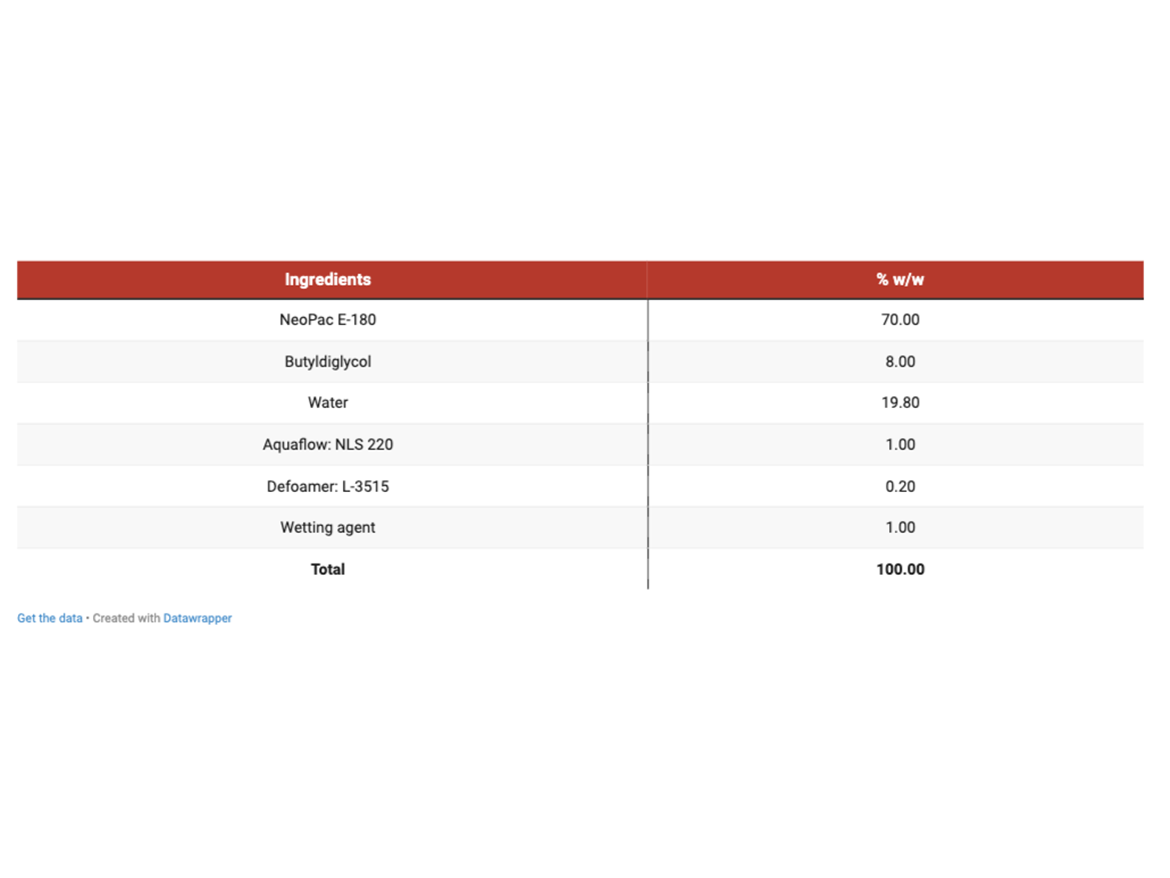
1K parquet lacquer coating formulation with varying wetting agents.
TABLE 1 » 1K parquet lacquer coating formulation with varying wetting agents.
Drawdowns and degrees of cratering after adding 1% additive.
FIGURE 3 » Drawdowns and degrees of cratering after adding 1% additive.


Summary

In conclusion, Ashland’s Easy-Wet 300 substrate wetting agent provides formulators with a sustainable and differentiated high-performing wetting agent. The product has very-low static surface tension and rapidly reduces the surface tension over time as measured by dynamic surface tension data. It provides a smooth coating finish without any defects such as pinholes, cratering, and leveling. It is highly compatible in multiple solvent systems and can be used to formulate solventborne and waterborne coatings. Finally, this new additive has very-low VOC, less than 1%, compared to other wetting agents. 

For more information, click here. 

KEYWORDS: Floor Coatings silicones Surfactants Wetting Agents wood coatings

Share This Story

Looking for a reprint of this article?
From high-res PDFs to custom plaques, order your copy today!


Hilbert Esselbrugge, Senior Technical Director, Specialty Additives, Ashland, Wilmington, Delaware

Recommended Content

JOIN TODAY
to unlock your recommendations.

Already have an account? Sign In

  • pci1022-Kinaltek-Lead-1170.jpg

    A Novel Pigment Production Technology

    Following an extensive R&D program that demonstrated...
    Paint and Coating Pigments
    By: Jawad Haidar and Nitin Soni
  • pci global top 10

    2025 Global Top 10: Top Paint and Coatings Companies

    The following is PCI’s annual ranking of the top 10...
    Paint and Coating Market Reports
    By: Courtney Bassett
  • 2025 pci 25

    2025 PCI 25: Top Paint and Coatings Companies

    PCI's annual ranking of the top 25 North American paint...
    Global Top 10 and PCI 25
    By: Courtney Bassett
You must login or register in order to post a comment.

Report Abusive Comment

Manage My Account
  • eMagazine
  • Newsletters
  • Online Registration
  • Subscription Customer Service

More Videos

Sponsored Content

Sponsored Content is a special paid section where industry companies provide high quality, objective, non-commercial content around topics of interest to the PCI audience. All Sponsored Content is supplied by the advertising company and any opinions expressed in this article are those of the author and not necessarily reflect the views of PCI or its parent company, BNP Media. Interested in participating in our Sponsored Content section? Contact your local rep!

close
  • colorful building exterior
    Sponsored byDow

    Insights into Exterior Architectural Coating Degradation: Bridging Accelerated and Natural Weathering

  • digital pigments
    Sponsored bySiltech

    The Fourth Dimension of Silicon: Siltech Q Resins

Popular Stories

Company News

What the AkzoNobel–Axalta Merger Means for the Future of Coatings

AkzoNobel and Axalta Headquarters

AkzoNobel and Axalta Announce $25 Billion Merger

Wacker logo

WACKER Plans More Than 1,500 Job Cuts


PCI Buyers Guide

Submit a Request for Proposal (RFP) to suppliers of your choice with details on what you need with a click of a button

Start your RFP

Browse our Buyers Guide for manufacturers and distributors of all types of coatings products and much more!

Find Suppliers

Events

September 4, 2025

N-Butylpyrrolidone (NBP) as a Green Solvent to Replace N-Methylpyrrolidone (NMP) in Industrial Coating Applications

ON DEMAND: EPA published a regulation proposal around N-methylpyrrolidone (NMP) in June 2024 to ban or limit NMP in many applications, such as paints and coatings and their removers. N-butylpyrrolidone (NBP) is a powerful and versatile solvent for a variety of industries looking for alternatives to substance of very high concern (SVHC)-listed solvents.

March 24, 2026

The Manufacturing & Automation eXchange (MAX)

MAX presents a rare opportunity to observe the full scope of manufacturing in one environment. From systems integration and materials handling to automation, quality, safety, and packaging, each discipline is represented through live, operational displays. By experiencing these technologies side by side, as they are on actual production floors, attendees gain a grounded understanding of how manufacturing functions align, overlap, and evolve in practice.

View All Submit An Event

Poll

Longest-running laboratory experiment

What is the longest-running laboratory experiment?
View Results Poll Archive

Products

Automotive Paints and Coatings, 2nd Edition

Automotive Paints and Coatings, 2nd Edition

Now in its second edition and still the only book of its kind, this is an authoritative treatment of all stages of the coating process.

See More Products
pci voices from the top ebook

PCI webinar

Related Articles

  • pci0220-BYK--1163891251-900.jpg

    Novel Silicone Surfactants for Waterborne Wood Coatings

    See More
  • Additives

    Ashland Introduces Portfolio of Silicone-Free, High-Performing Substrate Wetting Agents

    See More
  • Waterborne-123199038.jpg

    New Wetting and Dispersing Agent for Waterborne Inks and Coatings

    See More

Related Products

See More Products
  • Surfactants and Rheology: Chemistry, Theory, Mechanism and Application (Zoom course 3/26/26)

See More Products

Events

View AllSubmit An Event
  • April 23, 2025

    A New Multi-Functional Silicone Emulsion for Durable Exterior Architectural Coatings

    On Demand We will focus on how this functional silicone additive can enhance coating performance over time, without sacrificing other desired properties such as incompatibility, surface blooming and poor dirt pickup that is seen with traditional silicone polymer-based additives.
View AllSubmit An Event

Related Directories

  • AB Specialty Silicones

    Manufacturer/distributor of specialty silicone materials that enhance properties of paints and coatings. Manufacturing, R&D, and warehousing located in IL.
  • AB Specialty Silicones

    Manufacturer/distributor of specialty silicone materials that enhance properties of paints and coatings. Manufacturing, R&D, and warehousing located in IL.
×

Keep the info flowing with our eNewsletters!

Get the latest industry updates tailored your way.

JOIN TODAY!
  • RESOURCES
    • Advertise
    • Contact Us
    • Directories
    • Store
    • Want More
    • Manufacturing Division
  • SIGN UP TODAY
    • Create Account
    • eMagazine
    • Newsletters
    • Customer Service
    • Manage Preferences
  • SERVICES
    • Marketing Services
    • Reprints
    • Market Research
    • List Rental
    • Survey & Sample
  • STAY CONNECTED
    • LinkedIn
    • Facebook
    • Youtube
    • X (Twitter)
  • PRIVACY
    • PRIVACY POLICY
    • TERMS & CONDITIONS
    • DO NOT SELL MY PERSONAL INFORMATION
    • PRIVACY REQUEST
    • ACCESSIBILITY

Copyright ©2025. All Rights Reserved BNP Media.

Design, CMS, Hosting & Web Development :: ePublishing