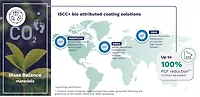
Value Chain Partnership Slashes Powder Coating Carbon Footprint

AkzoNobel said the carbon footprint of its superdurable Interpon architectural powder coatings is now up to 40% lower through an ongoing value chain partnership with Arkema and BASF. The improvement combines supplier-specific product carbon footprint data with the sourcing of bio-attributed raw materials. The shift replaces calculations based on generic industry averages for polyester resins with supplier-specific PCF data that reflect factors such as process efficiencies and renewable electricity use.
Further reductions come from BASF’s bio-attributed intermediates, which have a calculated PCF of zero. Arkema converts these bio-attributed raw materials into low and standard temperature cure superdurable polyester resins for AkzoNobel. The partners published an industry case study with methodology and calculations.
“This collaboration is a major step forward for the paints and coatings industry,” said Jeff Jirak, director of AkzoNobel’s powder coatings business. “Our customers require solutions that support their environmental goals and green building certification.”
Vasilios Galanos, senior vice president, Intermediates Europe, BASF, said the initiative supports value chain partners with biomass-balanced materials manufactured with renewable electricity. Richard Jenkins, senior vice president, coating solutions and member of the executive committee at Arkema, said the program leverages mass balance and low temperature cure innovations to enable mainstream decarbonization.
AkzoNobel said the color collections and Low-E architectural powders produced by Interpon in Europe now use reduced-emission bio-attributed material and can help lower the carbon footprint of the built environment.
See more on architectural coatings.
Looking for a reprint of this article?
From high-res PDFs to custom plaques, order your copy today!