Dürr Unveils Dry Coating and Cell Assembly Advances
PCI editors had the opportunity to stop by Dürr’s booth at The Battery Show North America 2025 in Detroit to learn more about the company’s newest battery manufacturing technologies. The innovations on display underscored how coating and finishing expertise is taking on a larger role across the battery value chain with process improvements that target energy use, scrap reduction and high-throughput cell assembly for next-generation production.
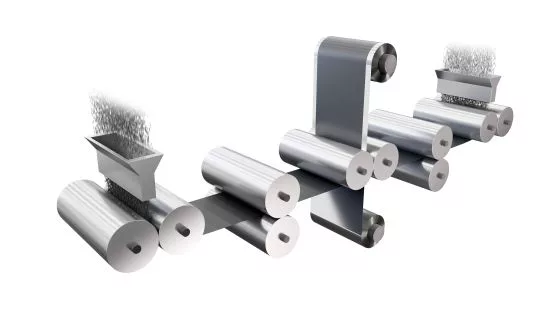
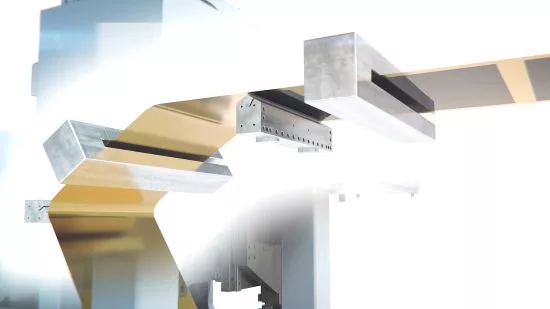
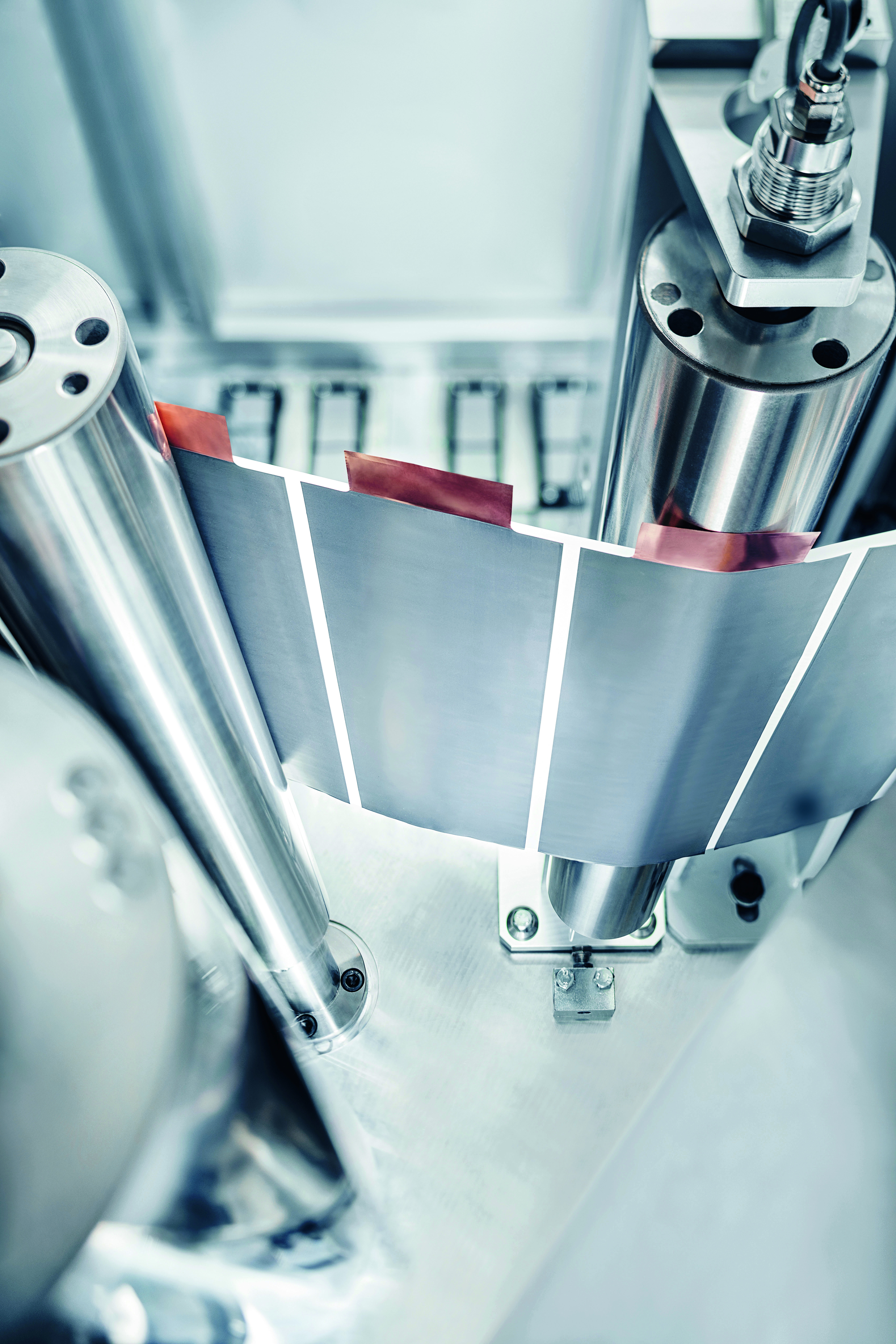
Dürr has advanced a dry electrode coating approach called X.Cellify DC that forms a free-standing film of active material before lamination to the current collector. The process operates without solvents or drying ovens, cutting energy demand and floor space versus conventional wet coating. In proof-of-concept runs, the technology demonstrated reliable, scalable performance suitable for pilot projects at gigawatt scale. The system produces electrodes from a dry powder mixture that is pressed into a film using the Activated Dry Electrode® process from development partner LiCAP Technologies, then densified and laminated to the collector foil.
According to the company, dry coating can reduce space requirements by up to 65% and energy consumption by up to 70% because it eliminates drying and solvent recovery steps. “The successful proof of concept is a major step forward for us. We have demonstrated that the new kind of dry coating with free-standing film works reliably and delivers consistently good quality. It can be scaled up, making it the basis for initial pilot projects in industry,” said Bernhard Bruhn, vice president of Dürr’s Global Business Unit LIB. The approach is applicable to today’s lithium-ion chemistries and is positioned for solid-state batteries as well.
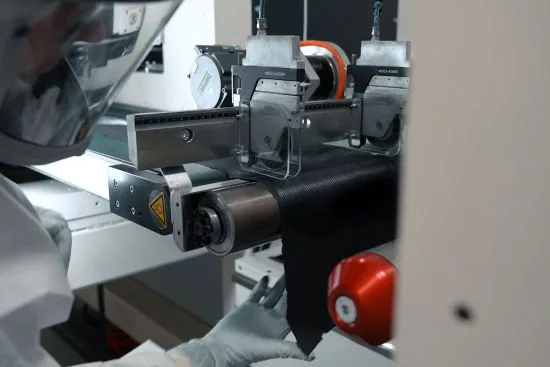
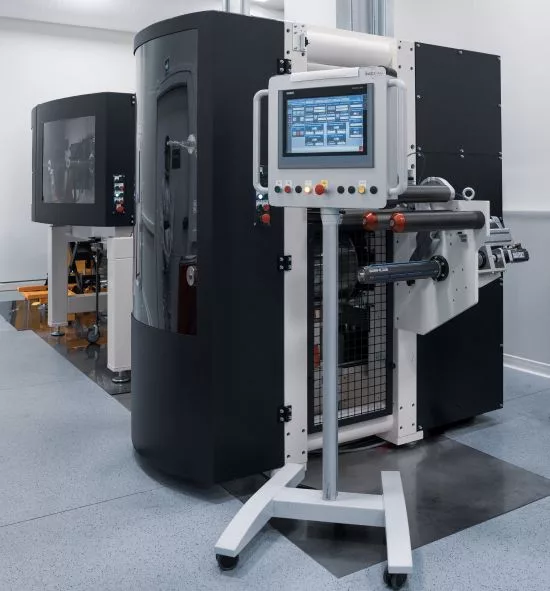
A key feature of X.Cellify DC is its web guidance that transports the free-standing film without a carrier and compresses it to the target thickness, density and porosity before lamination. Because no carrier foil is used until the final step, off-spec film can be returned to the process in full, which lowers scrap and preserves valuable active material. The resulting electrodes require less force during lamination than wet-coated films, improving processability for downstream notching and stacking.
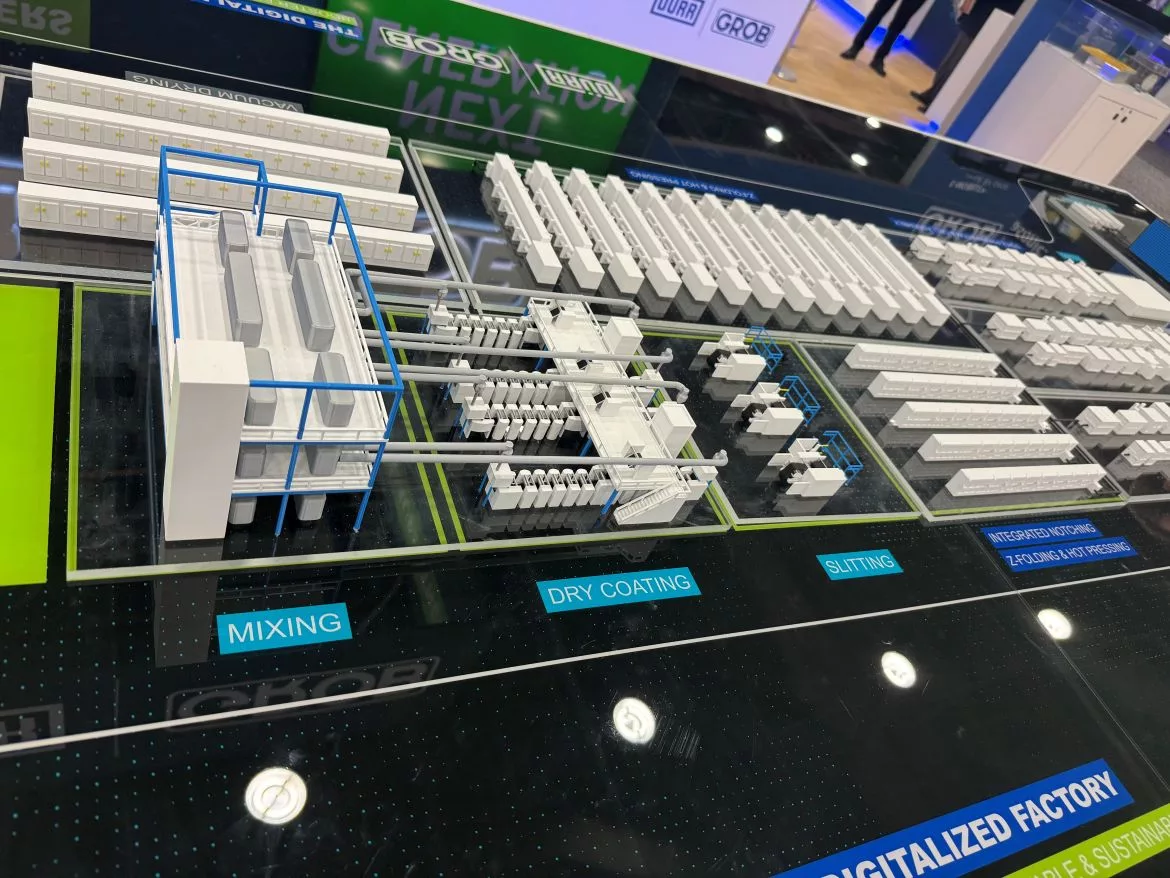
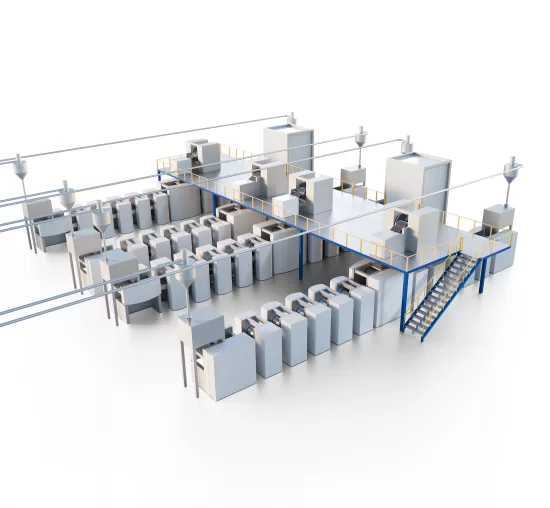
At the Detroit show, Dürr and GROB showcased a concept factory for lithium-ion cell production that integrates dry coating with GROB’s new Z-folder technology, which includes inline notching. The partners reported production layouts that require 50% less space and 70% less energy while maintaining high availability. GROB’s Z-folder guides the separator over a limited number of deflection rollers at low and even web tension and uses a high-quality magazine buffer for electrodes to achieve about 95% availability.
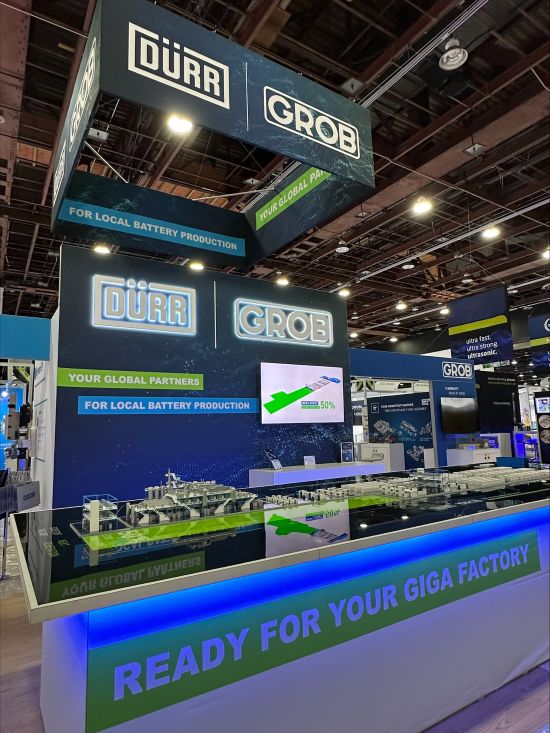 Photo Credit: Dürr
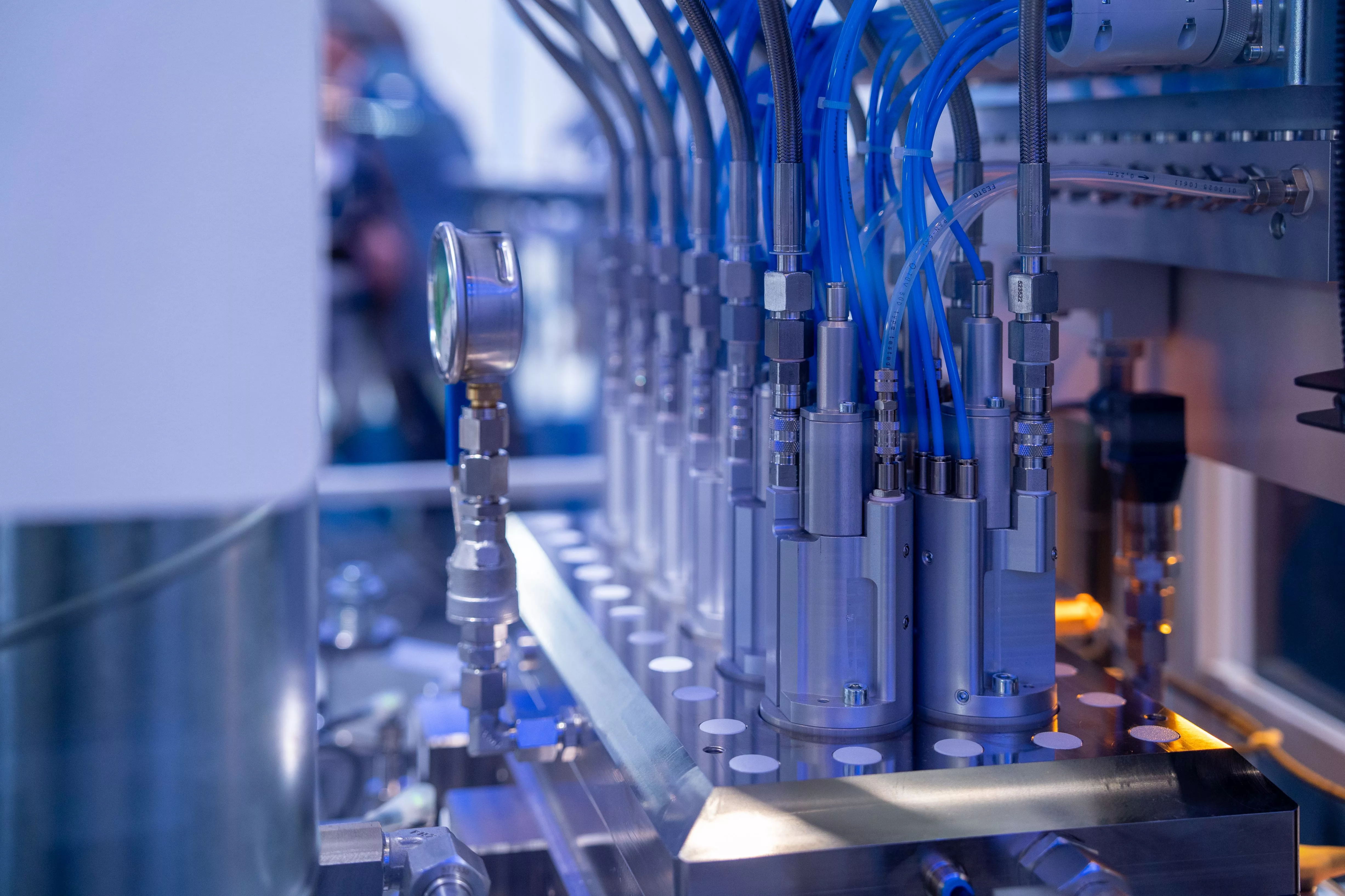
Dürr also presented a single-step, high-pressure electrolyte filling process that reaches up to 30 bar. By filling directly into the cells without residual gas, the method enables precise dosing and shortens both the filling step and the electrolyte’s penetration into the active material.
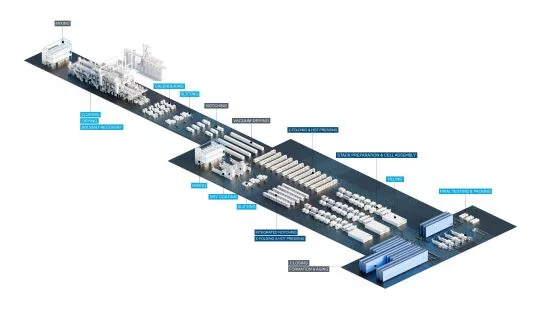
End-to-end digitalization complements the equipment portfolio. Before production starts, a digital twin simulates the full factory and accelerates on-site ramp-up. Simulation data flows into MES/MOM software from Dürr subsidiary iTAC for production control and planning with traceability and quality analytics designed to reduce defects and improve overall equipment effectiveness.
Alongside dry coating, Dürr continues to optimize wet coating. The company cited automation of the coating station and slot dies with closed-loop profile control for faster start-ups and lower scrap, laser drying that can deliver 50% faster web speeds, and precision calendering with Dynamic Gap Control that measures roller distance to 0.5 µm for uniform layer thickness. “Adding automated slot die profile control provides our customers with the ability to not only reduce the machine startup time, but it also ensures quality throughout the production process by maintaining the coating uniformity,” said Adam Shambeau, senior director of Dürr Lithium-Ion Batteries Americas. “Scrap reduction and machine up-time are critical to our customer’s success, so enhancing our products through automation or innovating our offerings with dual-side coating technology to reduce the total cost of ownership are two great examples where our products bring value to our customers.”
Dürr is actively seeking pilot partners for gigawatt-scale projects to validate the dry coating line in real production environments across electric vehicles, stationary storage and other applications. The company is also rolling out a unified naming structure under the “X.Cellify” banner for electrode coating and electrolyte filling solutions.
For related coverage, explore our Industrial Coatings topic page.
Looking for a reprint of this article?
From high-res PDFs to custom plaques, order your copy today!