GrayMatter Robotics Wins AFWERX D2P2 for Transparent-Structures Finishing
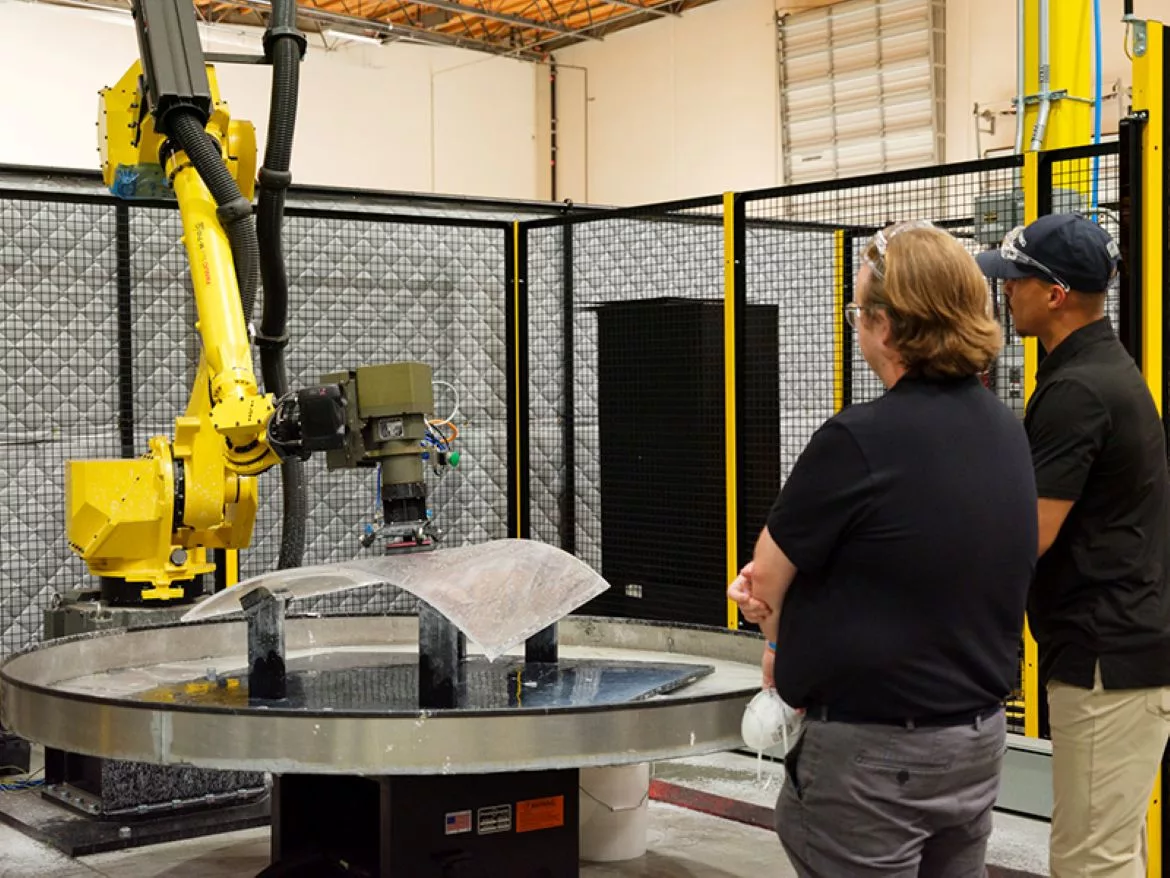
GrayMatter Robotics received a Direct-to-Phase II SBIR contract from AFWERX, the innovation arm of the Department of the Air Force, to advance robotic technology that addresses optical distortion and defects on transparent components. The company said the autonomous solution builds on an existing system that detects and corrects optical distortions to provide consistent, clear visibility through transparent structures. It cited the challenges of producing high-mix, low-volume parts with unique geometries for aerospace manufacturing, inspection, maintenance and repair.
“Sanding and polishing transparent components are a tremendously challenging and time-consuming part of aerospace component manufacturing while also representing the root cause of most defects associated with rework,” said Ariyan Kabir, CEO and co-founder of GrayMatter Robotics. “Final products must be free of optical distortion and no visible scratches on the interior or exterior of the structure. GrayMatter Robotics will build upon its existing AI-powered robotic solution to solve this problem.”
GrayMatter described its approach as “physical AI,” which it defines as physics-informed automation that incorporates models of forces, materials, geometries and tool behavior. “Our physical AI is designed to give robots intelligence and autonomy in a wide range of manufacturing applications,” said Brual Shah, CTO and co-founder. “Whether its sanding complex shapes like guitars, or intricate parts for ships, trucks, or heavy equipment, or precision surface finishing for highly contoured transparent structures for aerospace applications, our technology enables smart robotic cells to empower businesses and teams with unprecedented reliability, speed, and consistency.”
The company said it targets complex factory challenges in high-mix production, offering deployment, operation and troubleshooting support with 24/7 service. “GrayMatter Robotics’ physical AI-powered systems allow companies to scan parts and autonomously program themselves, adapt to part variations without human intervention, and deploy in two to four months,” said Satyandra K. Gupta, chief scientist and co-founder. “With our solutions, people can bring a part to a cell, put it in front of a 3D camera, and task the system to go, and it will autonomously begin the operation.”
GrayMatter Robotics is based in Carson, California. The company said its new 100,000-square-foot headquarters will add advanced manufacturing capacity in the United States and create more than 100 jobs in engineering, AI and machine learning, and robotics integration. The site will also support workforce development and technology demonstrations. Contact information and additional details are available on the company’s website.
For finishing automation and precision surfaces, see our Finishing topic page.
Looking for a reprint of this article?
From high-res PDFs to custom plaques, order your copy today!