Visco-Elastic Technology Enhances Pipeline Protection and Market Growth
Inside this article:
- Visco-elastic coatings create a monolithic amorphous layer through van der Waals molecular bonding, enhancing corrosion resistance and adhesion.
- Visco-elastic formulations provide self-repairing capability, seamless wetting on multiple substrates and performance under aggressive soil conditions.
- Case histories demonstrate long-term stability in high-salinity coastal and clay environments with no disbondment or corrosion.
- Standards such as ISO 21809 and AWWA C232 validate performance criteria.
- Market demand for pipeline coatings is rapidly expanding globally as infrastructure protection needs grow.
The Critical Role of Pipelines
Pipelines play a critical part in supporting our way of life. In the United States alone, there are a total of 3 million miles of natural gas pipelines¹ and 2.2 million miles of water pipelines² supporting the infrastructure to fulfill demands for basic functions that are often taken for granted, such as available energy and water. The infrastructure is aging, however. For example, more than 50% of pipelines in the United States were built 40 years ago or longer. Without coatings and cathodic protection systems, the majority of this infrastructure would have required replacement by now. The cost to rebuild pipeline networks would be astronomical, which is why companies and governments invest in protecting pipelines to extend the life of these assets as long as possible.
The Growing Market for Pipeline Coatings
The global pipeline coatings market was valued at $8.4 billion in 2024³ and is expected to grow to $15.1 billion by 2033³. New technologies such as visco-elastic coating systems have established markets in niche areas within this industry, including replacing or repairing old pipe coatings, coating weld seams on new pipeline projects and coating transitions between underground and aboveground pipelines (soil-air interface). Market share and revenues have grown rapidly over the past two decades and are expected to continue growing due to versatility, ease of application, cost savings and increased technology awareness among a broader audience. This article explains the benefits and cost savings this technology has brought to the market.
The Evolution and Innovation of Visco-Elastic Technology
History
Originating from a waterproofing concept, visco-elastics were designed to stop water at a molecular level. Corrosion cannot occur without water, including microbiologically influenced corrosion (MIC).
The elimination of water at a molecular level is the essential concept of visco-elastics and was developed in the 1990s with support from a major gas and oil company in the Netherlands. After trials and long-term testing confirmed the proof of concept, the products entered the market. Multiple patents were granted to different manufacturers over the years. In 2016, international standards organizations such as the International Organization for Standardization (ISO) incorporated this technology, establishing minimum requirements for products on the market and for future developments. Standards including ISO 21809-3:2016, ISO 21809-11:2019, AWWA C232:2022, NACE SP 0109:2019 and CSA Z45.32 have since been implemented to safeguard the technology and assist end users in its application.
Bonding on a Molecular Level
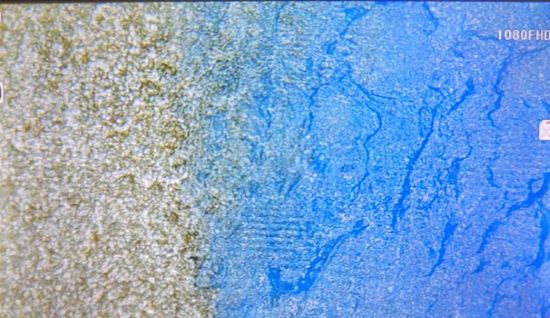
The polymers of a visco-elastic coating adhere by van der Waals bonding and exhibit a continuous wetting effect on the surface. The distance between the coating polymers and the steel substrate is extremely small (10⁻9 m), as van der Waals bonding occurs on a molecular level between the two materials through electron affinity and interaction. Examples of other materials that demonstrate wetting and van der Waals bonding on a substrate include oil and grease. These materials are well bonded and, without a solvent, are very difficult to remove from the surface. Figure 1 shows a microscopic image of a visco-elastic product adhering to the surface via van der Waals bonding, demonstrating the close interaction between the coating and the substrate.
Figure 1. Microscopic image of a visco-elastic product.
 Credit: Denso
Due to low surface tension, visco-elastics adhere to steel and most common materials used in the industry, including PE, PP, bitumen, epoxy, urethanes and coal tar. This creates a seamless transition and allows for easy integration into existing pipeline networks.
Monolithic Self-Repairing Coating
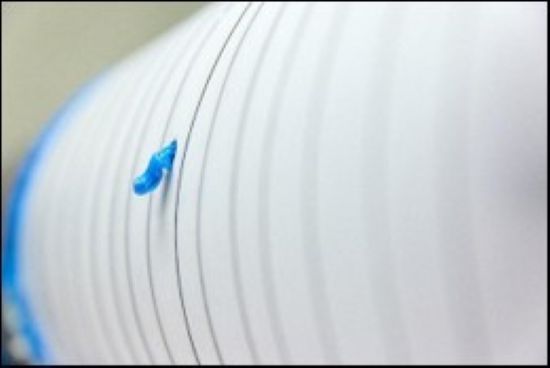
Unlike oil and grease, visco-elastic coatings exhibit both liquid behavior and rubbery behavior and are carefully designed to fulfill coating functionality. This design enables unique features such as self-repair (Figure 2) when indentations or minor damage occur, as well as easy application that creates a smooth, monolithic layer. The coating conforms entirely to the substrate without inducing stress.
Figure 2. The design allows for unique features such as self-repair.
 Denso
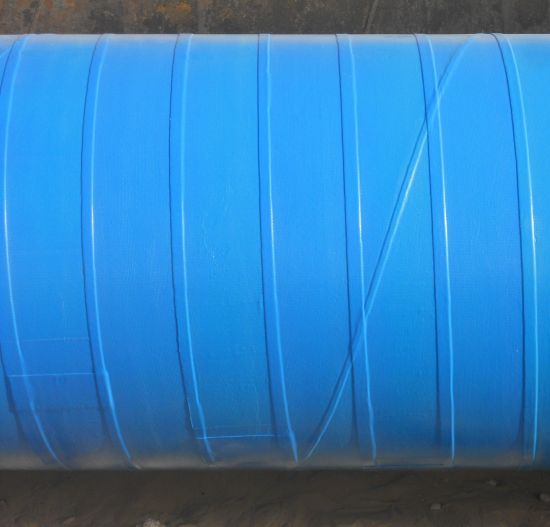
DensoAn example of the manual application of a visco-elastic coating on a large pipe surface with spiral welds demonstrates excellent coverage (Figure 3). The coating conforms precisely to the surface, bonding on a molecular level and preventing water molecules from penetrating. This results in a monolithic layer with complete adhesion, ensuring the coating is entirely watertight. Such applications often undergo rigorous testing, including peel strength testing in accordance with standards such as ISO 21809-3:2016.
Figure 3. A large pipe surface with spiral welds demonstrating excellent coverage.
 Credit: Denso
 The unique properties of visco-elastic coatings are now included in the minimum requirements of various international standards and specifications used by leading oil and gas, utility and water companies. This recognized technology, with its established properties and benefits, has continued to gain traction over the past decades, with growing demand driven by the need for new solutions for pipeline owners and the replacement of older, traditional coating systems with longer-lasting, easy-to-apply and clean alternatives.
Traditional systems such as tapes and shrink sleeves often require higher levels of surface preparation and may require primers, while installation is more sensitive to application errors. Shrink sleeves are applied by heating the product, for example with a torch, while tapes are applied under tension, preferably using a machine. In addition to safety concerns, these application methods are more sensitive and may result in disbondment and overlap issues. Liquid coatings such as epoxies or polyurethanes typically require a perfectly clean surface (SSPC 10), are sensitive to humidity and temperature variations and require drying time.
Visco-elastics address these challenges through an easy-to-apply, conforming inner layer that is hand-applied without tension and requires lower surface preparation levels (SP-2 or SP-3). These systems require no primers, solvents or drying time. The easy, safe and clean application creates a more controlled installation environment and minimizes the risk of coating failures. Visco-elastics are compatible with existing and previous line pipe coatings such as coal tar, 3LPE, 3LPP, urethanes and bitumen. They offer advantages for field applications including pipe coating rehabilitation, pipe crossings, soil-to-air interfaces, field joints (girth welds) both onshore and offshore, tees, elbows and additional configurations.
Case Histories
Gulf Coast Countries (GCC) such as Saudi Arabia, United Arab Emirates and Oman are faced with aggressive soils (sabkha soil) in coastal areas. Due to tides, seawater can travel more than a mile inland, depositing salt and sulfuric compounds into desert sands and creating repeated wet and dry cycles. Salinity concentrations at the surface may exceed 30%, representing salt concentrations present in dust, while brine salinity in the water table can reach as high as 18%. Laboratory testing conducted according to international standards typically utilizes salt concentrations similar to seawater (3%), which is not representative of these conditions.
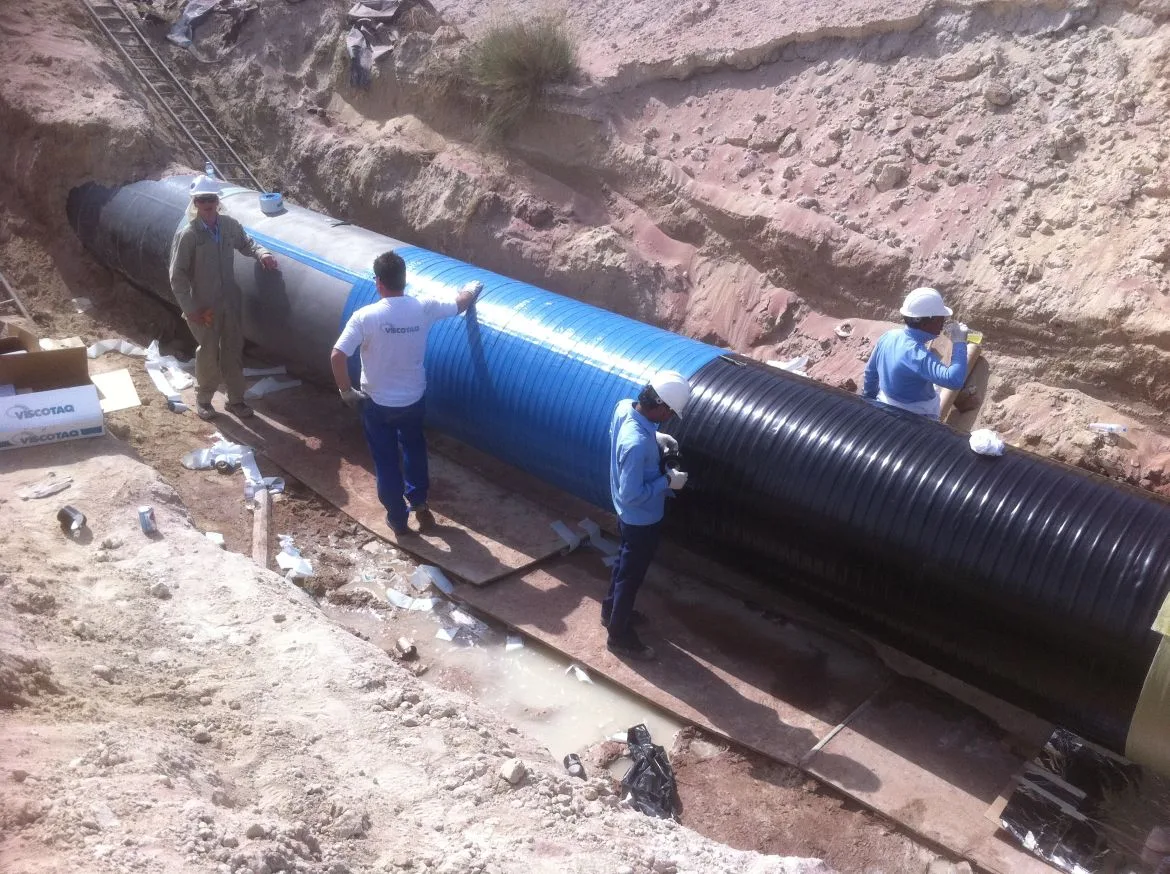
During application, a sandblasted clean pipe can become contaminated with salt from airborne dust within hours. Coatings that are sensitive to osmosis will not survive under these conditions, while surface preparation requirements limit many coatings currently on the market. End users therefore prefer long-term trials to qualify coatings for use in these regions. In 2011, a visco-elastic coating (Viscotaq) was applied on a 42-inch mainline pipeline and inspected after 15 months. The coating remained in excellent condition, with no corrosion and no disbondment observed during inspection.
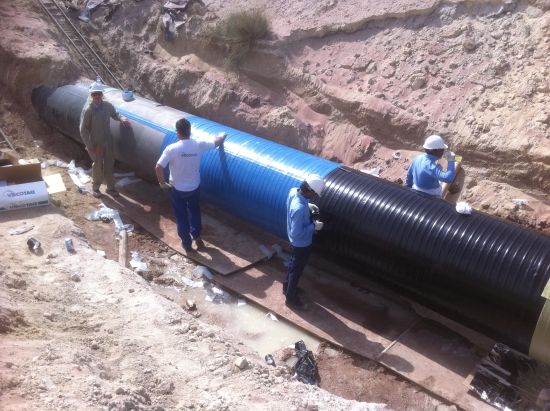
Figure 4 shows an image taken during application, where salt crust, the water table and intermediate soil layers are clearly visible. Inspection results after 15 months demonstrated complete adhesion to the surface as well as uniform, continuous coating behavior, with no overlaps present and a single cohesive layer formed. Visco-elastic coatings have proven successful in these environments and have saved end users in the GCC region tens, and potentially hundreds, of millions of dollars in repair and maintenance costs.
Figure 4. An image taken during application, where salt crust, the water table and intermediate soil layers are clearly visible.
 Credit: Denso
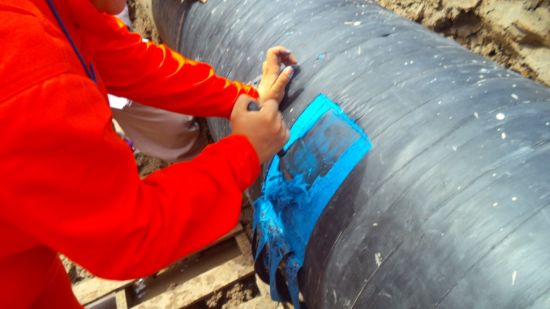
 Another long-term review of an applied coating showed excellent performance of a visco-elastic system in aggressive clay soils, where the elastic, rubbery behavior allowed for resilience against shear forces. After installation in 2012 on pipelines of various diameters operating at temperatures between 40 and 50 °C, inspections conducted after two years showed no corrosion, 100% adhesion and consistent thickness readings at various clock positions (Figure 5). The visco-elastic coating used was a semi-solid technology, which provided added benefits under these conditions and is discussed further in the next section.
Figure 5. After installation in 2012 on pipelines of various diameters operating at temperatures between 40 and 50 °C, inspections conducted after two years showed no corrosion, 100% adhesion and consistent thickness readings at various clock positions.
 Credit: Denso
The coating rehabilitation program continued for several years, enabling the end user to strengthen its integrity management system while saving millions of dollars in recoating programs. No recoating has been required to date. Compared to traditional systems, which showed deterioration in some cases within five years, service life was nearly tripled by selecting a visco-elastic system. The coating remains in excellent condition and continues to extend service life year after year without additional cost.
In summary, many clients worldwide have saved millions of dollars over the past decades by leveraging the benefits of visco-elastic technology. Most importantly, critical assets are preserved through reliable service-life extension using a clean, easy-to-apply and long-term solution.
Technological Advancements
Although visco-elastic technology is often considered relatively new, it has been available on the market for more than 30 years. In 2009, an improved visco-elastic coating (Viscotaq) was developed to enhance stability at elevated temperatures and in vertical applications, while increasing resilience to soil stress and other mechanical influences. Unlike earlier visco-elastics, which were more semi-liquid and therefore more dynamic, this advancement introduced a semi-solid concept that provided improved stability to prevent sliding on vertical surfaces and variations in thickness over time at elevated temperatures.
In addition, the proprietary, patented polymer formulation demonstrates high stability through semi-solid behavior at temperatures up to 130 °C and increased resistance to mechanical influences such as soil stress caused by pipe movement resulting from thermal expansion and post-installation settlement.
Current Limitations of Visco-Elastic Coatings and Future Developments
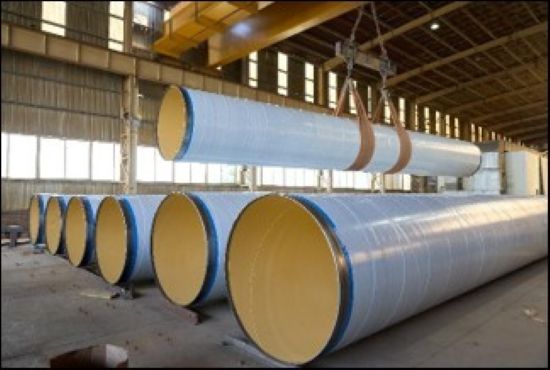
Visco-elastic coatings are primarily hand-applied, making the technology particularly suitable for field applications. As a result, applications have historically been limited to pipe sections rather than full new pipeline coatings. Recent developments by Denso have enabled the supply of cost-effective, long-term line pipe coatings for the oil and gas, water and offshore industries (Figure 6).
Figure 6. Long-term line pipe coatings for the oil and gas, water and offshore industries.
 Denso
DensoPreviously, high-temperature applications above 95 °C represented a limitation. As demand for such applications has increased, visco-elastic systems such as the Viscotaq XHT system have been developed over recent years to meet these requirements. These systems are currently commercially available and in service with leading oil companies.
Conclusion
Visco-elastic coatings offer the industry an innovative approach to addressing corrosion challenges by combining advanced polymer technology with practical benefits such as durability, cost savings and environmental sustainability. As industries continue to adopt these innovations, pipeline networks are better protected, supporting safe and reliable infrastructure. Across oil and gas, utilities and water applications, visco-elastic coatings provide long-term benefits to pipeline integrity management and contribute positively to industry performance and quality of life.
References
1 U.S. Energy Information Administration. Natural Gas Pipelines; U.S. Energy Information Administration: Washington, DC. https://www.eia.gov/energyexplained/natural-gas/natural-gas-pipelines.php.
2 American Society of Civil Engineers. 2021 Infrastructure Report Card: Drinking Water. https://2021.infrastructurereportcard.org/cat-item/drinking-water-infrastructure/.
3 Global Growth Insights. Pipe Coatings Market Size, Share & Forecast Report 2035; Global Growth Insights: [no publication city given], 2025. https://www.globalgrowthinsights.com/market-reports/pipe-coatings-market-105518.
Looking for a reprint of this article?
From high-res PDFs to custom plaques, order your copy today!