PPG Highlights Electrostatic Application for Marine Hull Coatings
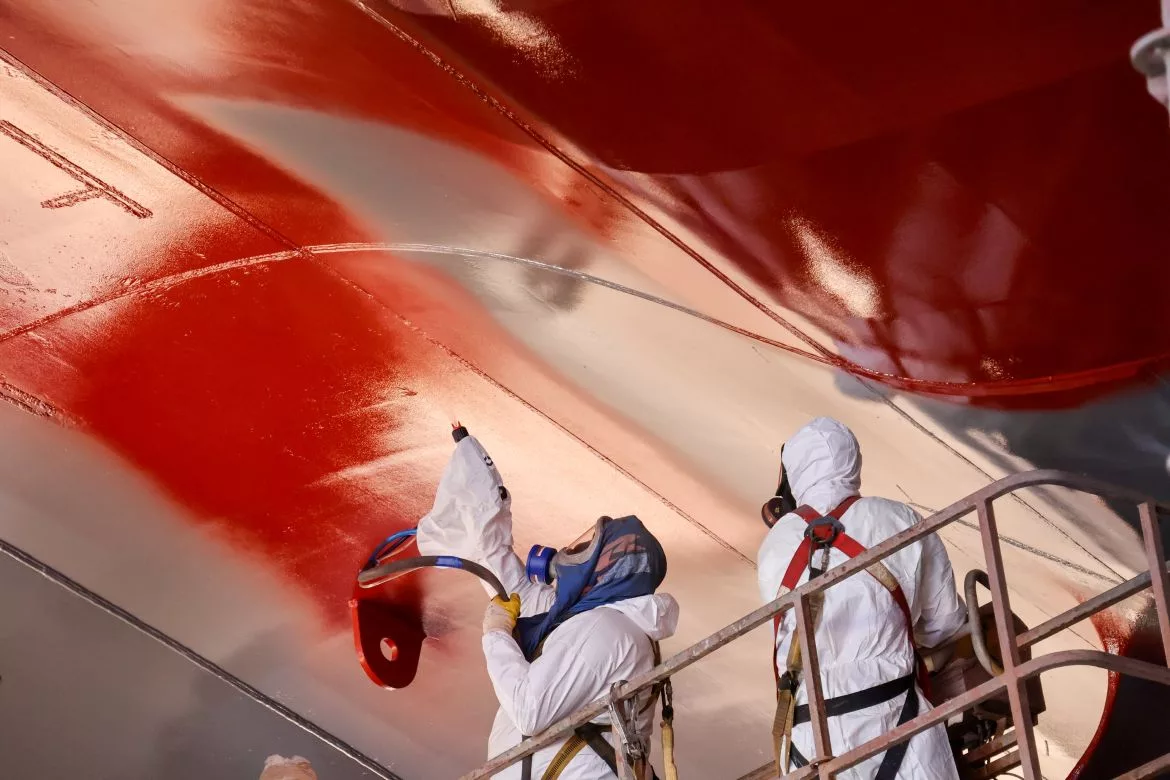
PPG announced the publication of Electrostatic Application of Marine Hull Coatings, a new report detailing how electrostatic application technology can help ship owners and operators improve efficiency and reduce environmental impact.
According to PPG, electrostatic application works by negatively charging paint particles at the spray gun nozzle while the substrate is grounded, causing the coating to be attracted to the surface. Compared with traditional spraying, the process can improve transfer efficiency and reduce overspray, resulting in more uniform coating application. In one case study cited by PPG, the EDR Antwerp shipyard reported a 40% reduction in overspray.
“Electrostatic application is a breakthrough process innovation that, combined with our chemistry innovation, delivers improved productivity and sustainability for our shipyard customers,” said Jan Willem Tegelaar, PPG global platform director, marine coatings. “It has already revolutionized the automotive and aerospace industries; building on this cross-industry expertise, we have adapted the technology and developed compatible fouling control coatings to save time and reduce waste without disrupting existing workflows for marine vessels.”
PPG said the process supports reduced waste and Scope 3 carbon lifecycle savings compared to traditional application methods, as reduced paint consumption means fewer raw materials need to be extracted, manufactured or transported. The company said these reductions are in addition to operational carbon savings achieved by vessels coated with low-friction solutions, which can help ship owners reduce Scope 1 emissions.
“Electrostatic application is just one piece of the puzzle. Combined with advanced hull coating performance, it contributes to a more effective sustainability solution,” said Joanna van Helmond, PPG product development director, marine fouling control, Protective and Marine Coatings. “Friction caused by biofouling can account for 50% of a ship’s total drag, leading to higher fuel consumption. By applying solutions such as PPG SIGMAGLIDE® 2390 coating electrostatically, we can create a smoother, glossier film that reduces hydrodynamic resistance. This in turn leads to lower fuel consumption and greenhouse gas emissions.”
Topics covered include the history of electrostatic spray technology and how it works, operational advantages for shipyards and owners, and the role of hull coatings in supporting International Maritime Organization decarbonization goals and vessel efficiency.
PPG will also present its 360-degree approach to marine coatings, including low-friction hull coatings, electrostatic application and digital tools, at the Posidonia International Shipping Exhibition.
The report is available for download from PPG.
Looking for a reprint of this article?
From high-res PDFs to custom plaques, order your copy today!