Challenges in Selecting Bio-Based Dispersing Additives for Latex Paints

Need to Know
- Do not assume a bio-based dispersant can replace a conventional product on a 1:1 basis.
- Determine the effective dose through mill-base viscosity and flow testing.
- Test each binder system for viscosity drift and storage compatibility.
- Compare scrub resistance, washability and color acceptance before scale-up.
- Consider grinding energy and batch temperature alongside renewable content.
Green transformation and sustainable development also include raw materials, which are increasingly and consciously being replaced from conventional to bio-based ones, including in waterborne paints. Traditionally used ingredients of latex paints, although these paints are considered to be more eco-friendly than solventborne paints, also require revision and consideration of greener alternatives obtained fully or partially from renewable resources, produced using green energy, recycled, etc. Among the ingredients of latex paints that can increasingly be found on the market as bio-based are dispersing additives. These are key ingredients in the formulation of waterborne paints, both in the case of architectural paints, wood coatings containing pigments and fillers and direct-to-metal paints.
Dispersing additives are responsible for enabling the preparation of paints with pigments and fillers, stabilizing their particles during storage and interacting with other formulation ingredients, including thickeners and binders. As surfactants, they are an extremely important element of every formulation, hence their selection must also be given appropriate attention at the laboratory testing stage. However, with such an important component of the formulation as dispersants, it is not easy to replace the dispersant used so far, which is a conventional chemical compound, usually fossil-based, with a new bio-based one, usually with a completely different chemical composition. Changing the dispersant may cause problems with the dispersibility of the pigments and fillers used and with the entire paint production process, as well as changes in key parameters such as rheological properties, viscosity drift over time, loss of compatibility with pigments in the case of tinting bases, changes in scrub resistance and impact on gloss. Therefore, changing the dispersant is a big challenge for the formulator, and it can be made easier by providing appropriate knowledge from application studies showing how best to proceed with formulation changes using exemplary case studies and guideline formulations.
Conventional vs. Bio-Based
Conventional dispersing additives range from the simplest sodium polymethacrylate-based products through more developed polymer-block dispersants and sequential additives to hyperdispersants that are used to disperse carbonate fillers, functional fillers, titanium dioxide pigments or organic pigments. Conventional dispersants are mostly produced from fossil fuels or their derivatives, contributing to the burden on the environment through the use of exhaustible resources, carbon footprint, etc. Their effectiveness and performance are well known and, although they require laboratory tests, their use in formulations is much easier. They are also cost-effective and allow for long-lasting paint performance.
Bio-based dispersants, in turn, are additives mostly based on completely different chemistries that cannot be replaced on a 1:1 basis. Their advantages include not only a more environmentally friendly formulation or a production process using renewable resources but also a smaller carbon footprint, fulfillment of sustainability requirements, in many cases a biocide-free 14C bio-based composition and a number of other benefits, such as easier Ecolabel certification of the final paint.
There are also some limitations and disadvantages that cannot be ignored. These include limited availability on the market, low cost-effectiveness and, above all, the need to perform a large amount of research to find the appropriate performance in formulations and to be sure that the performance is the same as or better than that of the conventional equivalent used.
In order to avoid greenwashing and the forced use of bio-based additives, including dispersants, it is necessary to analyze to what extent it will be possible to introduce a new additive to the formulation and how expensive it will be in the context of the need to change the formulation and the incurred R&D costs. It will be necessary to cooperate closely with external research units and laboratories that are able to provide practical consultation through application studies on the process of introducing such dispersants to the market. Over time, this will lead to a reduction in the cost of these additives and make them widely available because the green transformation in the paint industry today is at an initial stage, but in the long run it is necessary to make another contribution to caring for the planet.
Dispersing Process
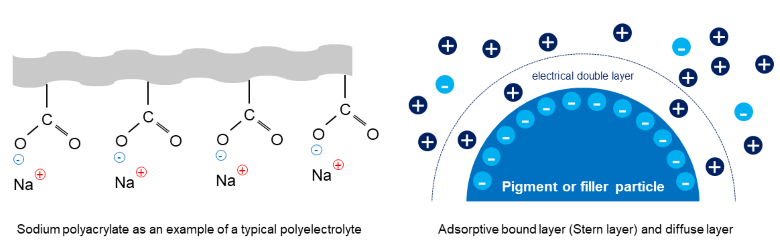
Dispersing additives work effectively by creating a double electrical layer that causes pigment and filler particles to repel each other (Figure 1). The interaction between these electrostatic forces and the attractive London-van der Waals forces is described by the DLVO theory.
Figure 1. Schematic effect of a dispersant additive on a filler/pigment particle.
 Credit: Spektrochem
For more theory, I invite you to the books, and in this article I will focus on the practical assessment of the effectiveness of dispersing additives in formulations.
However, for the dispersing theory to work, it is not enough to just add a dispersing additive. A number of points must be met, starting with the fact that a given additive must act as a dispersant, i.e., reduce the viscosity of the mill-base during grinding. For this to happen, an appropriate chemical base is needed, as well as the dose at which this effectiveness is best, and the conditions for carrying out this process, such as the concentration of pigments and/or fillers, appropriate equipment, high power, and the speed of setting the pigment and filler particles in motion. But first, I would like to explain the terms I will use in this article. As you have already noticed, I used the term grinding, but also dispersing.
When we use pigments or fillers to produce paints, they are in the form of a powder composed of particles of a specific size. Due to the crystalline nature of these raw materials, they are in the form of aggregates and agglomerates, i.e., clusters of primary particles (aggregates) and clusters of aggregates (agglomerates). In the terminology of paints and the production process, dispersing is understood as the mechanical disintegration of agglomerates that occurs as a result of high-speed mixing (high-speed dispersing). Grinding is the process of disintegrating aggregates with air between the particles. The disintegration of these particles is possible by ensuring appropriate high-speed dispersing, and it must also be supported by the action of agents that replace the air between the particles of the medium with reduced surface tension, which in turn is referred to as wetting. Grinding can occur only if there is a sufficient concentration of particles in the mill-base so that high-speed dispersing causes them to vigorously collide and rub against each other. In the case of latex paints, this is achieved by building a high-concentration slurry for fillers and pigments (dispersed and ground together or separately), e.g., above 80 wt%, or in the case of pigment concentrates, in which such concentrations cannot be obtained, grinding is carried out in an additional medium such as beads, in ball mills that cause the breakdown of these aggregates.
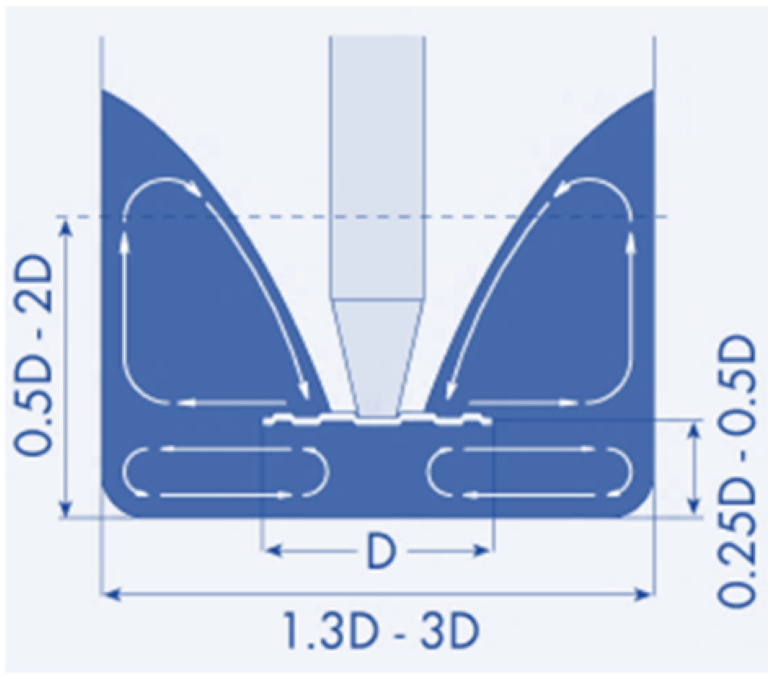
Everyone in the paint industry is familiar with the diagram presented in Figure 2, which shows the dimensions of the Cowles dissolver container along with the dimensions of the blade (serrated disc) and bottom access, diameter dependence, etc. This diagram is extremely useful for designing the grinding process in a Cowles dissolver to ensure adequate flow and particle movement in the vessel caused by the high-speed dispersing blade (saw-disc impeller).
Figure 2. Diagram of vessel dimensions in a Cowles dissolver for ensuring flow during grinding.
 Credit: Spektrochem
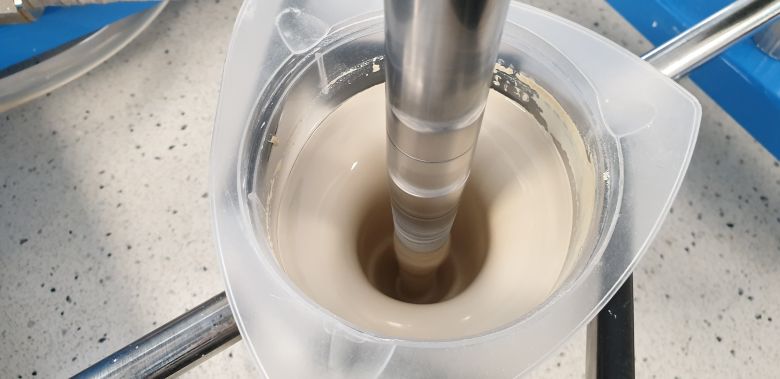
The flow should take place in such a way that there are no dead spots (stasis), and the flowing mill-base should form toroidally in the shape of a donut (Figure 3). This is why it is necessary to select the appropriate dose of the dispersant, which will ensure the maximum reduction in mill-base viscosity, allowing for a high loading of solids (pigments and fillers), which will result in good collision of particles during grinding and their effective separation into primary particles and stabilization, as described in the theory of dispersing.¹
Figure 3. Donut-like flow in vessel while grinding in a dissolver.
 Credit: Spektrochem
It is also crucial to take into account parameters such as the foaming properties of the dispersant in water. This is important from the point of view of the need to add a defoamer and select it appropriately to eliminate foam at the stage of the initial introduction of pigments and fillers into the mill-base, where there are no shear forces sufficient to ensure proper incorporation of the defoamer.
Finding the Best Dose
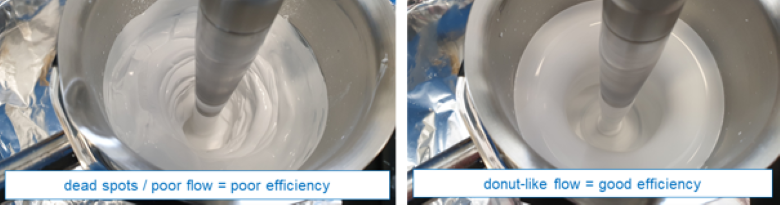
Determining the best dispersant dose is a multi-step procedure. First, after selecting the dispersing additive and ensuring that it will reduce the viscosity of the mill-base, the effectiveness range is established. This usually includes the lowest point to which viscosity reduction is possible, but dispersibility tests are also carried out in terms of flow and elimination of dead spots during donut-like flow (Figure 4).
Figure 4. Example of poor flow caused by incorrect flow (left) and correct flow (right).
 Credit: Spektrochem
The next step in determining the dispersant dose is to check the effect on the key parameters of the designed paint. The influence of the dispersant can be noticed in such obvious parameters as viscosity, storage stability and compatibility with pigment concentrates. However, because these are surfactants, the influence on scrub resistance, gloss and dirt pick-up also cannot be ignored when these properties are important for the designed paint.
Due to the complicated nature of such application studies, it is necessary to rely on guideline formulations showing comparisons between dispersants, especially when replacing a conventional dispersant with a bio-based one based on a new chemical composition. The following part of the article discusses an example of a project carried out in our laboratory for one of the producers of such dispersants to compare the effectiveness of a typical dispersant from the U.S. market with a newly designed bio-based dispersant.²
Experimental
The aim of the project was a comparative assessment of the performance of a conventional dispersant, a simple dispersant typically used in the paint industry for the production of waterborne architectural paints, with a newly developed 100% bio-based dispersant. Their effectiveness was checked across a range of doses ensuring the lowest mill-base viscosity in the first stage of the laboratory work. The second stage compared their impact on paint properties identified as key performance features.
Dispersing Agents for Studies
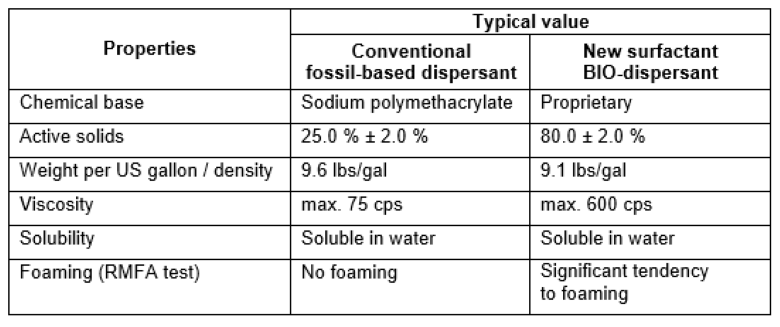
The dispersants differed in their chemical base, active ingredient content and tendency to foam. The characteristics of the dispersant samples used for testing are presented in Table 1.
Table 1. Characteristics of dispersants for application studies.
 Credit: Spektrochem
Formulation
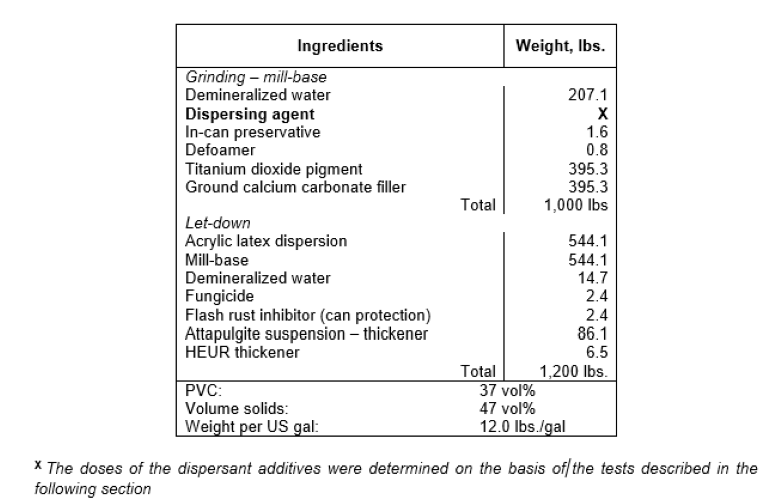
The entire project was carried out at the Spektrochem laboratory. The formulation presented in Table 2 and samples of mill-base and dyes described in the following sections were prepared.
Table 2. Interior latex paint formulation, PVC 37%.
 Credit: Spektrochem
The formulation was prepared to determine the impact of a conventional fossil-based dispersant additive and a new bio-based dispersant on parameters such as:
- Dispersibility, including mill-base viscosity reduction in ladder dosing and determination of the most effective viscosity-reducing dose, followed by its use to prepare paints from the formulation in Table 2 and evaluate the following paint parameters:
- Compatibility with polymer dispersions as binders
- Scrub resistance
- Washability
- Color acceptance
Dispersibility
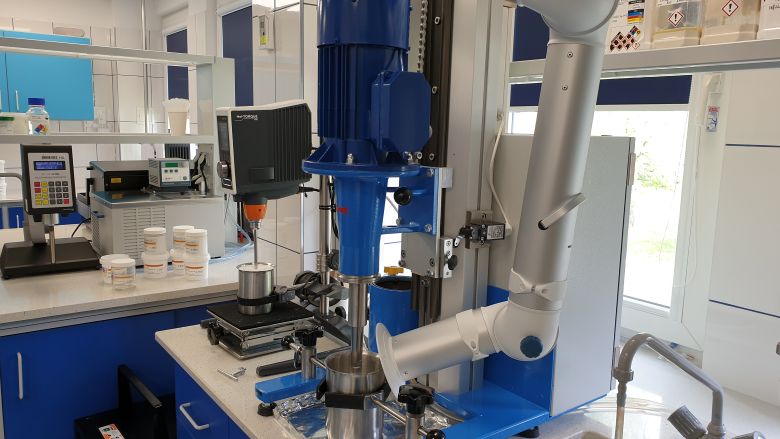
The broadly understood dispersibility parameter should be understood as the ability to create a dispersion of pigments and fillers during grinding while obtaining the lowest viscosity level at the maximum expected mill-base loading. In the formulation used for testing, titanium dioxide and a filler in the form of GCC (ground calcium carbonate) with specific particle-size characteristics were used as the pigment and filler, respectively. In this case, it was assumed that the mill-base loading would be approximately 80 wt%. Grinding was carried out using a laboratory-scale Cowles dissolver equipped with a serrated disc (Figure 5). Data collected during the dispersibility research are presented below.
Figure 5. Laboratory-scale dispersing and grinding station in the Spektrochem laboratory.
 Credit: Spektrochem
The prepared mill-base was ground with ladder doses of fossil-based and bio-based dispersants, and their viscosities were compared using ASTM D2196, Method A, immediately after slurry preparation. The viscosity measurement results are shown in Figure 6. As you can see, the graphs differ significantly in their position, which means that the effectiveness of the fossil-based and bio-based dispersants is completely different. This shows, first of all, that there can be no question of a 1:1 change, even though the doses determined for the tests were selected based on the ratio of each dispersant’s active ingredients to the pigments and fillers in the mill-base.
The fossil-based dispersant has the lowest viscosity level at doses from 0.25% to 0.50% active ingredients relative to the sum of pigments and fillers in the mill-base, while the remaining doses have higher viscosities. However, it can be seen that the increase in viscosity at doses from 0.50% to 1.25% is quite mild, and the slurry still has low viscosity in each case. The exception is the significantly higher viscosity at the 0.1% dose.
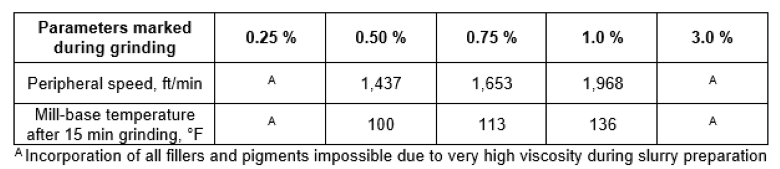
In turn, the bio-based dispersant did not allow for such a wide dosage spectrum because, during dispersing and grinding, it was possible to prepare only three doses of 0.50%, 0.75% and 1.00% active ingredients relative to the sum of pigments and fillers in the mill-base. The remaining doses resulted in a complete inability to incorporate titanium dioxide and filler at the assumed concentration necessary for good grinding. Marginal doses, e.g., 0.25% and 3.00%, made it impossible to introduce the assumed amount of bulk ingredients into the mill-base (Figure 7).
Figure 7. Photographs showing siltation at marginal doses for the bio-based dispersant.
 Credit: Spektrochem
It should be noted that although doses in the range of 0.50% to 1.00% enabled viscosity measurement, the degree of grinding obtained was not satisfactory. During the grinding process, there were dead spots and problems with flow and obtaining the donut shape of the ground batch. The lowest viscosity obtained at a dose of 0.75% of the bio-based dispersant was indeed the lowest among the tested points where slurry preparation was possible. However, the mill-base viscosity was drastically high at 19,000 mPa·s compared with the viscosity at the lowest dose for the fossil-based dispersant of approximately 550 mPa·s.
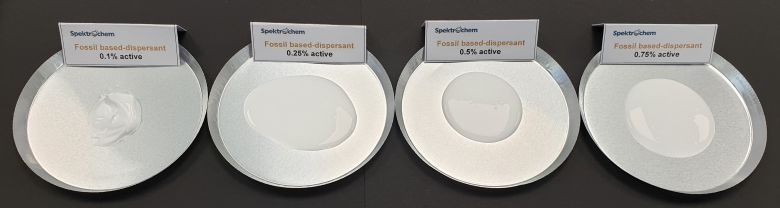
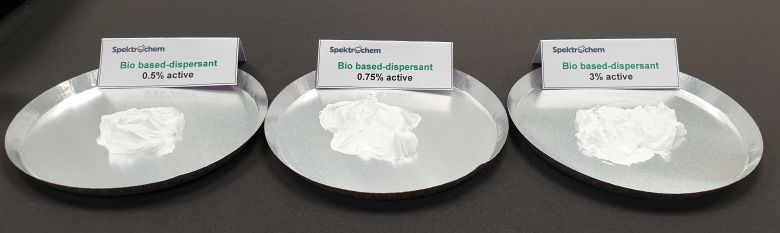
The differences in pourability and flow of individual doses of dispersants in the mill-base are presented below for better illustration. Figure 8 shows all doses for the fossil-based dispersant, and Figure 9 shows the bio-based dispersant after pouring the slurry onto dishes immediately after preparation.
Figure 8. Slurries with fossil-based dispersant poured onto dishes.
 Credit: Spektrochem
Figure 9. Slurries with bio-based dispersant poured onto dishes.
 Credit: Spektrochem
It is clearly visible that the flowability of the fossil-based dispersant differs completely from that of the slurries obtained with the bio-based dispersant. This translates not only into mill-base viscosity, which is crucial for obtaining appropriate grinding at high concentration and should be understood directly as the effectiveness of the dispersant, but also into difficulties in the grinding process in the case of lower-power production equipment, as well as the need to grind longer with greater energy expenditure and the need to cool the batch. Grinding at such high viscosity and the lack of sufficient separation of the aggregates will result in higher energy consumption and an increase in temperature during grinding.
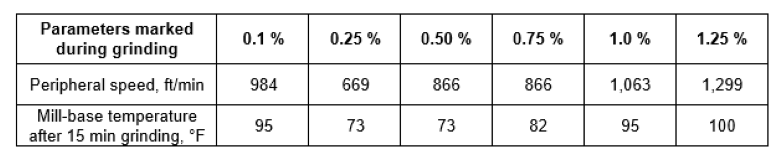
Data on the need to increase speed during grinding and the measured batch temperatures are presented in Table 3 for the fossil-based dispersant and in Table 4 for the bio-based dispersant.
Table 3. Grind speed and temperature data for mill-base with fossil-based dispersant.
 Credit: Spektrochem
Table 4. Grind speed and temperature data for mill-base with bio-based dispersant.
 Credit: Spektrochem
Comparing the results in the tables, it is clear that grinding the same mill-base using the bio-based dispersant required much more energy and power. This results directly from the data on peripheral speed during grinding, and it is also apparent that the energy-intensive process led to a much higher temperature compared with the fossil-based dispersant. At this point, it is clear that the bio-based, sustainability-focused approach has a significant disadvantage in the tested case because the use of the bio-based dispersant in the tests required much greater energy expenditure in the paint production process.
With such an increase in temperature, above 100 °F, it is necessary to cool the mill-base to minimize evaporation of water from the surface of the vessel, as well as to avoid destabilization of some in-can preservatives, which lose their effectiveness at high temperatures and are necessary for use in the mill-base.
However, for the purposes of further tests and paint preparation, doses that ensured the lowest mill-base viscosity were selected: 0.25% for the fossil-based dispersant and 0.75% for the bio-based dispersant, calculated as active ingredients relative to the sum of pigments and fillers in the mill-base. Paints prepared with these quantities were used for further tests.
Compatibility with Polymer Dispersions
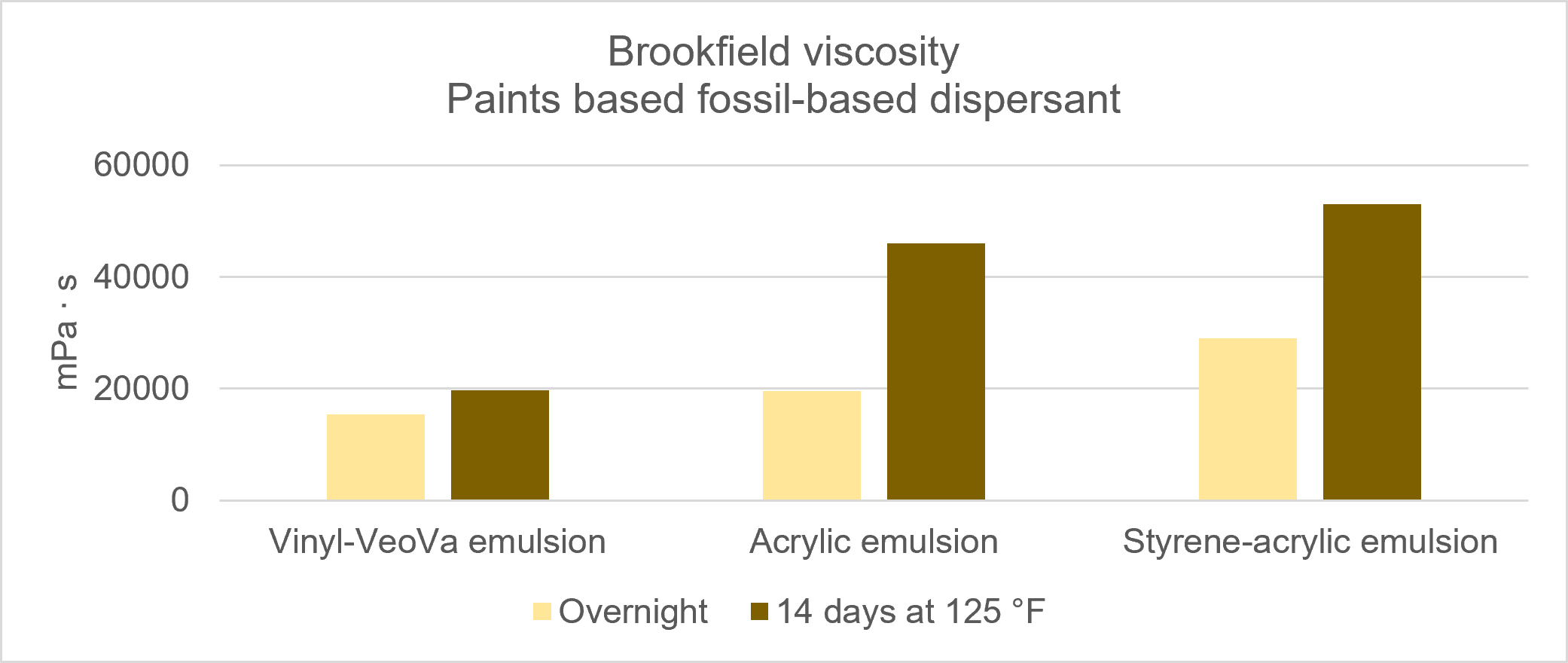
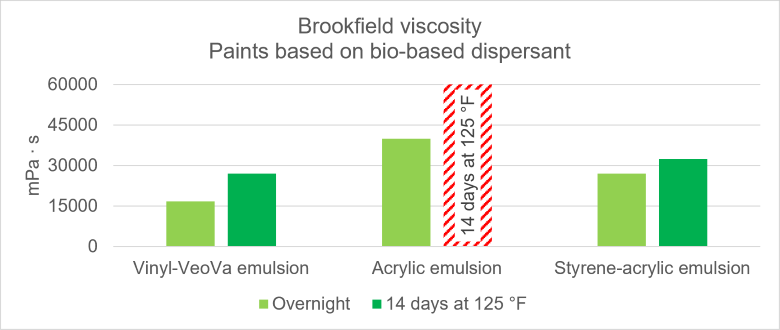
In order to check how the fossil-based dispersant and bio-based dispersant at fixed doses interact with polymer dispersions, and more precisely with the surfactants present in them, a compatibility test with three polymer emulsions used as binders for latex paints was carried out. Vinyl-VeoVa, pure acrylic and styrene-acrylic copolymer emulsions were used. The paints were prepared by letdown according to the formulation presented in Table 2, adjusting the amount of dispersion based on solids content to maintain PVC in all paints. Then, viscosity and other tests were performed (other tests were described in the cited report,² the content of which is available on request) to determine compatibility with the individual binders. The viscosity measurement results are shown in Figure 10 for paints with the fossil-based dispersant and Figure 11 for paints with the bio-based dispersant.
Then, the samples were subjected to a 14-day storage stability test to check whether there was any viscosity drift as a result of accelerated aging of the liquid sample. The results are placed on the same charts for comparison.
As seen in Figure 10, compatibility with the vinyl-VeoVa copolymer emulsion gave the best results. For pure acrylic and styrene-acrylic emulsions, the increase in viscosity is quite high, but it is still within the acceptable viscosity range. This is a sign that even a well-known fossil-based dispersant is not always compatible with all binders and their surfactants, and it is necessary to prepare appropriate application studies for these types of conventional additives to provide the formulator with the necessary knowledge about formulation performance.
Figure 10. Viscosity of paints with various binders and fossil-based dispersant.
 Credit: Spektrochem
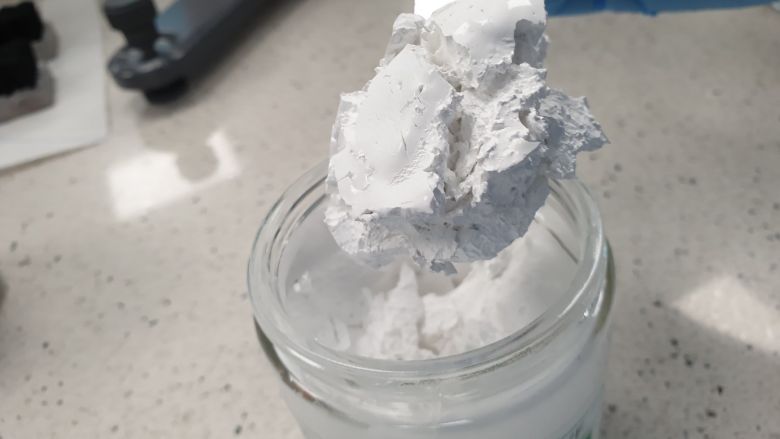
In turn, when comparing the compatibility of paints with the bio-based dispersant, it can be seen that the high viscosity of the initial slurry prepared for the paints resulted in a high initial viscosity of the paints. It can also be seen that the compatibility situation is slightly different compared with the fossil-based dispersant. Paints with vinyl-VeoVa emulsion show a greater increase in viscosity after the storage stability test, while paint based on styrene-acrylic emulsion is more compatible. The most drastic result is shown for the paint based on pure acrylic emulsion. It turns out that the bio-based dispersant interacted so strongly with the surfactants and particles of this dispersion that the paint completely failed the storage stability test, and the viscosity increased so much that measurement was impossible (Figure 12).
Figure 11. Viscosity of paints with various binders and bio-based dispersant.
 Credit: Spektrochem
The paint with bio-based dispersant and acrylic polymer emulsion also experienced a further uncontrolled increase in viscosity in samples sent for further laboratory testing, and after just 10 days in the laboratory it looked similar to the sample after the storage stability test shown in Figure 12. These results show the very different compatibility of the bio-based dispersant and also show how important it is to conduct such tests with various binders, showing where compatibility is good and where, unfortunately, the use of a given dispersant is limited. This is especially important in the case of new and bio-based additives. Only compatible samples were taken for further tests, and pure acrylic dispersion paints were rejected.
Figure 12. Failure of paint with bio-based dispersant and acrylic binder after storage stability test.
 Credit: Spektrochem
Scrub Resistance
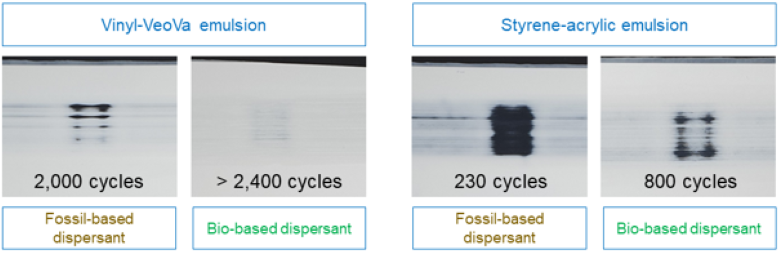
The scrub resistance test is conducted to determine, in this case, the influence of the surfactant on the reemulsification of the coating and the resulting increase in its susceptibility to wet abrasion during the scrub resistance test in accordance with ASTM D2486, Method B. After the standard conditioning time and under the conditions specified in the ASTM standard, the coatings are tested using a nylon brush and an abrasive medium and are scrubbed on a washability machine with a shim under the coating until the number of cycles to failure is reached.
The results are presented in Figure 13, and two conclusions are clearly visible. The first is much higher scrub resistance for paint samples with vinyl-VeoVa emulsion binder, which is caused by higher hardness and other surfactants present in the binder. The second conclusion is a visible improvement in scrub resistance with the bio-based dispersant used, both in the case of vinyl-VeoVa emulsion and styrene-acrylic emulsion as binders. For the vinyl-VeoVa binder, the result was more than 100% higher when comparing the fossil-based and bio-based dispersants. In the case of the difference between these dispersants used in paint with a styrene-acrylic binder, an almost 350% higher result was recorded for the sample with bio-based dispersant.
Figure 13. Scrub resistance results for paints with fossil-based and bio-based dispersants.
 Credit: Spektrochem
Washability
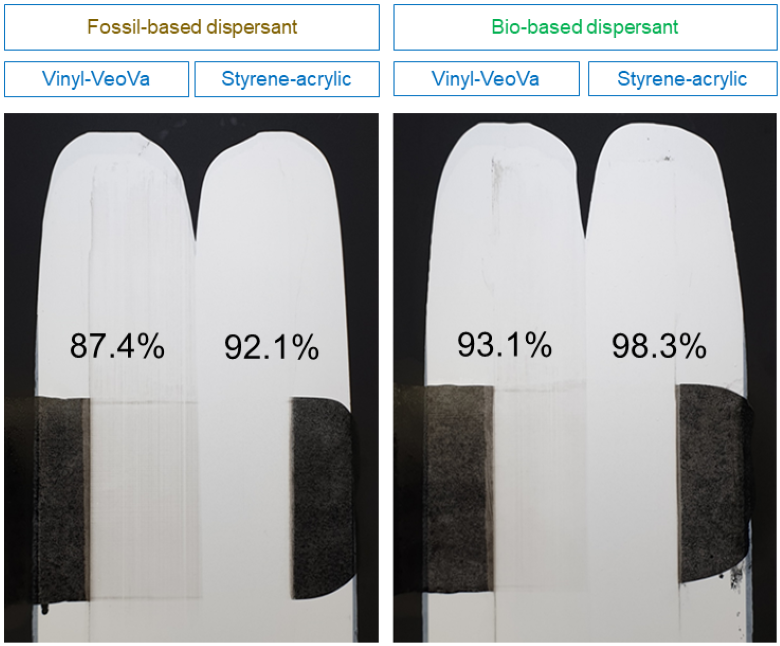
The washability test is an assessment that involves washing a soiled coating using a washability machine, a standard-loaded cellulose sponge and a nonabrasive medium in four series of 25 cycles in accordance with ASTM D3450. The result is percentage reflectance recovery, calculated from reflectance measurements using a reflectometer before application of the soilant medium and after the washability test. It is used to determine, among other things, the influence of raw materials that migrate to the coating surface and affect coating-surface properties, including dispersants.
The test results are shown in Figure 14. The photographs clearly show the influence of the type of binder used in the tests, with the styrene-acrylic emulsion providing a benefit in both cases of dispersants. There is also a noticeable, but not negligible, difference in favor of the bio-based dispersant, which allows for higher percentage reflectance recovery.
Figure 14. Measurement results of reflectance recovery after washability test.
 Credit: Spektrochem
Color Acceptance
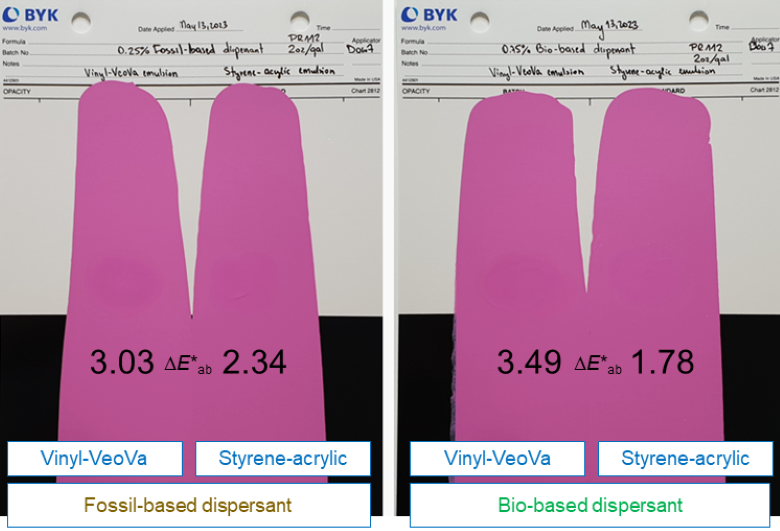
A test showing how the dispersant used to prepare paints that are also bases for POS tinting affects the acceptance of pigment concentrates is color acceptance, performed in this case in a simplified version as a rub-out test on freshly drying coatings applied by automatic drawdown onto contrast charts. The results are shown in Figure 15, comparing the differences in color tone at the rub-out test area. Tinting was performed using a waterborne colorant based on PR112 pigment at a dosage of 2 fl oz/US gal.
As can be seen from the results, in general, each sample should be considered for use with an additional color acceptance aid. However, one result stands out, showing that it was possible to achieve relatively satisfactory color acceptance in the case of paint based on styrene-acrylic emulsion and bio-based dispersant.
Figure 15. Results of differences in color development after rub-out tests.
 Credit: Spektrochem
Summary
The results from the extensive application studies presented as examples in this article show that, in the case of the tested bio-based dispersant as a general representative of this group of additives, interesting results can be obtained, including some that do not provide entirely satisfactory performance.
This article should serve as an indication that, in the case of both early R&D work on new bio-based raw materials and especially additives, extensive application research should be carried out in formulations that take into account real-life requirements for the paint production process, as in the case of the presented dispersants, as well as the requirements for the parameters necessary to interest the paint industry in additives that are currently tested reluctantly, such as bio-based additives.
The presented results show that good results can be obtained, often surprisingly good compared with typical conventional additives, but there is still a long way to go for producers of such raw materials. It is important that this work is supported by projects that allow only truly green additives to be introduced to the market, providing an advantage but, above all, ensuring appropriate performance in formulations.
References
¹ Palasz, A. Challenges in the Selection of Bio-Based Dispersing Additives for Architectural Paints. Chinacoat 2023 Tech Talks, Shanghai, China, Nov 15–17, 2023. Video on Demand.
² Comparison of the Effectiveness of Fossil-Based and Bio-Based Dispersant in the Formulation of Latex Paints, PVC 37%; Spektrochem Report to the BIO-Dispersant Comparison Project, April 2023; June 7, 2023.
Explore PCI’s coverage of formulation strategies for additional technical guidance on developing waterborne coatings.
Looking for a reprint of this article?
From high-res PDFs to custom plaques, order your copy today!