No-Rinse Pretreatment Update Targets Water and Air Use
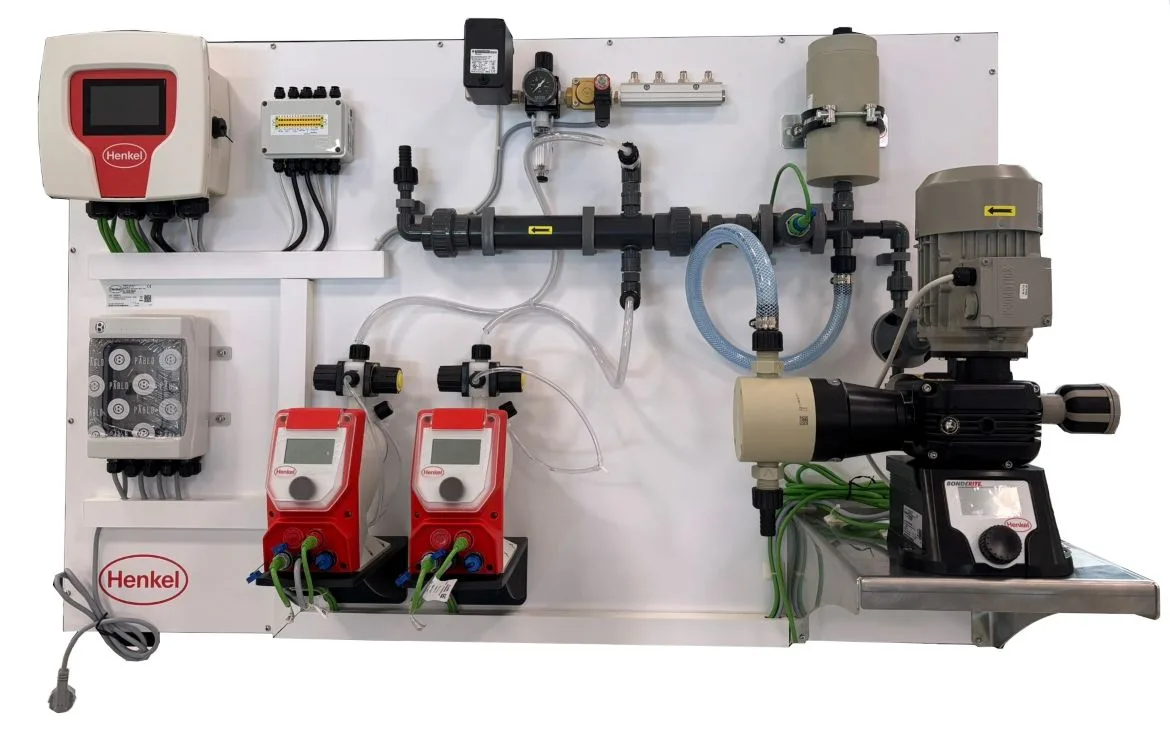
Henkel has introduced an updated version of its no-rinse adhesion-promotion technology for metal pretreatment, combining a revised application system with expanded operating and monitoring capabilities.
APNR 2.0, or Adhesion Promoter No Rinse, replaces a conventional passivation bath with a precisely metered spray application at the end of the pretreatment line. The chemistry is mixed inline and applied as a thin film to the still-wet surface, eliminating the need for a downstream rinse.
Based on internal company evaluations, Henkel reports that the updated system can reduce process-water use by up to 50% and compressed-air demand by up to 20% compared with the previous APNR generation. Actual results depend on line design and operating conditions.
Henkel said more than 100 APNR systems have been installed since the technology entered the market in 2015. The system is intended for operations where limited floor space, short pretreatment lines or a transition from hexavalent-chromium-containing processes to chrome-free alternatives creates a need for compact equipment.
The updated EcoFlex control unit uses a redesigned pump system and control architecture intended to support precise, repeatable application. It monitors conductivity, pressure and tank levels and can be connected with broader digital production systems. Henkel said the equipment can also be retrofitted into existing lines without major modifications.
The company is continuing work on lower-water formulations and nozzle designs intended to support complex part geometries and spray arrangements.
Pretreatment performance directly affects coating adhesion and corrosion resistance. Eliminating a rinse stage can reduce water, chemical and utility use while allowing finishing operations to shorten or retrofit existing metal pretreatment lines.
Looking for a reprint of this article?
From high-res PDFs to custom plaques, order your copy today!