Ensuring Successful Adhesion of UV-Curable Coatings to Plastic Substrates
Adhesion is a major topic of interest among today's formulators, as it is the most vital property of a coating. Without proper adhesion, other physical properties such as tensile strength, elongation, flexibility, clarity and impact resistance become irrelevant, because without adhesion coatings simply do not exist. Adhesion of ultraviolet, or UV-cure coatings, is of particular interest, as the market for this type of coating increases. Most notably, the market for UV-cured coatings applied to plastic substrates is rapidly increasing because of the unique benefits they provide.
The reasons for the growth of the UV-cure coatings market include not only performance improvements, but environmental issues and increased processing efficiency. UV curing of coatings does not create excessive heat generation and overcomes many of the shortcomings of thermal curing, particularly where plastic substrates are concerned. UV curing is the most efficient, environmentally clean and low-energy method for coating plastics. Also, the variety of acrylate and methacrylate monomers and oligomers used in UV-curable coatings provides coating formulators with unlimited options, enabling them to achieve specific, desired coating properties.
Regardless of the cure method, ensuring strong adhesion of coatings to plastic substrates can be a challenge. Plastics are typically nonporous substrates and adhesion to these surfaces is often difficult to achieve. Unlike metal substrates, where a chemical as well as a physical bond can occur, plastic substrates have only a physical bond present.
Key Factors Affecting Adhesion
In UV-curable coatings, two factors affect the ability of the coating to adhere to the substrate: substrate penetration/swelling and solubility parameters. Although numerous factors relating to a coating determine its final film adhesion, substrate swelling and solubility parameters are the two factors on which this article will focus.Substrate Swelling
Substrate swelling and penetration play a key role in the ability of a coating to bond to a substrate. Substrate penetration by a monomer, or swelling of a substrate, is determined by properties of the monomers and oligomers used in the film formulation.Many factors affect the ability of a coating to swell a substrate, including viscosity, molecular weight, the size of the molecules, temperature, time of exposure and compatibility with the substrate or solubility parameters.
Monomers have specific affinities for the substrate and can swell and attack it. After curing, an interpenetration of both substrates and coating network is obtained and the interpenetrating network (IPN) is formed at the interface. This kind of interaction results in excellent adhesion.
To initiate an IPN, it is necessary to deal with a swellable substrate and include in the formulation a sufficient amount of product that has the capacity to attack or penetrate the substrate. A diagram of monomer penetration is presented in the figure.
The most common examples of swellable substrates are polycarbonate, PVC (polyvinyl chloride) and polystyrene.
Swelling monomers are typically monofunctional or difunctional acrylates or methacrylates that have fairly low molecular weights. However, a number of other factors - including functionality and temperature - affect substrate swelling.
Functionality Factor
Monofunctional monomers are less effective than difunctional monomers in terms of the ability to swell the substrate. Research has revealed that the adhesion between a coating with monofunctional monomers and the plastic is not as strong as when difunctional monomers are used. Crosslinking within the polymer matrix, which occurs when difunctional monomers are used, results in good adhesion. In most cases, 10-20% of a diacrylate in the formulation is sufficient to ensure adherence.Temperature Factor
The interpenetration effect is enhanced with temperature. If the right monomers are selected in the formulation, adhesion can then be improved if the substrate is preheated.A good example of this is tripropylene glycol diacrylate, SR306, on polycarbonate. Only if polycarbonate is preheated to 60 deg C will the presence of SR306 in a formulation initiate an interpenetrating network to provide adhesion. Of course, PC grade, density and the process of manufacturing are variables.
Table 1 presents examples of swellable substrates with the corresponding swelling acrylate monomers at room temperature. Products that can attack or swell the substrate need to be included in the coating formulation. Upon curing, an interpenetrating network is formed between the coating and the substrate. The substrate polymer chain allows penetration of the monomer into the substrate and adherence results.
Solubility Parameters
Solubility parameters are another variable in determining the ability of a coating to adhere to a particular substrate. Compatibility with the substrate or solubility parameters has been described by VanKrevelen and Hoftyzer in their book Properties of Polymers.Determining the solubility parameter of a substrate provides a good idea of which monomers will act as "adhesion promoters" in coating formulations. Molecules are more compatible the closer their solubility parameters are to each other. Also, the determination of the solubility parameter of the substrate is required. The solubility parameters can be determined theoretically using calculations, or experimentally by measuring swelling in different solvents with known solubility parameters.
Use monomers that have solubility parameters similar to that of the substrate to enhance the swelling effect. Multifunctional monomers may be more beneficial because of chain linking. The solubility parameter can be calculated by combining three values related to the molecule - mobility, polarity and hydrogen bonding character. These three values can be calculated by using a group contribution method. Combined together using a mathematical equation, these three characteristics contribute to the Hildebrand solubility parameter reported as (cal/cm3)1/2. For (meth)acrylate monomers, these values range from around 8-12 (cal/cm3)1/2. High values typically represent a more hydrophilic character, and low numbers represent a more hydrophobic character.
Because these values are calculated and not always determined experimentally, there is some error present. In particular, molecules with multiple ring structures may have solubility parameters that are artificially high.
These values should be used to determine adhesion compatibility by matching the solubility parameter of the monomers to the substrate being coated. Although many factors play a role in adhesion, this is one method that should be used in monomer selection.
Adhesion is a complicated phenomenon, but it is vital for coating performance. Difficulties can be overcome with the use of the scientific tools discussed above. Matching the solubility parameters of the substrate and the monomers in the coating formulation and utilizing monomers that swell the plastic substrate are two methods used to help determine monomer candidates for specific plastics. Although numerous factors also play a role, these two parameters provide an excellent starting point for monomer selection.
For more information, contact Lujean Burak, Technical Communications Manager Sartomer Co., Oaklands Corporate Center, 502 Thomas Jones Way, Exton, PA 19341; phone 610/363.4199 ; e-mail Lujean.burak@sartomer.com; or visit www.sartomer.com.
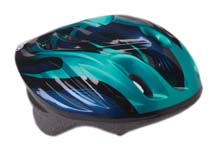
This UV-cure coated bike helmet exhibits excellent impact resistance, a crucial property in sporting equipment coatings.
Looking for a reprint of this article?
From high-res PDFs to custom plaques, order your copy today!