Painting & Coating Industry (PCI) logo Powder coating summit logo
search
cart
facebook twitter linkedin youtube
  • Sign In
  • Create Account
  • Sign Out
  • My Account
Painting & Coating Industry (PCI) logo Powder coating summit logo
  • NEWS
    • Latest News
    • Market Trends & Reports
    • Finishing News
    • Price Alerts
    • Subscribe to Newsletters
    • Global Top 10/ PCI 25
    • Weekly Featured Article
    • COATLE Word Game
  • PRODUCTS
    • Product News
    • Must See Products and Services
  • MATERIALS
    • Additives
    • Resins/Polymers
    • Pigments
    • Equipment
    • Distributors
  • TECHNOLOGIES
    • Adhesives
    • Architectural Coatings
    • Finishing Articles
    • Finishing Technologies
    • Finishing Equipment
    • Industrial Coatings
    • Nanotechnology
    • Powder Coatings
    • Solventborne
    • Special Purpose Coatings
    • Sustainability
    • UV Coatings
    • Waterborne
  • RESOURCES
    • Columns
      • Did you know?
      • Distribution Dive
      • Formulating With Mike
      • Innovation Insights
      • Powder Coating Perspectives
      • TiO2 Insider
    • Blogs
      • Editor's Viewpoint
      • Industry Insights
    • Coatings Supplier Handbook
    • Podcasts and Videos
      • COAT-IT! Podcast
      • Videos/PCI TV
    • PCI Store
    • Classifieds
    • eBooks
    • Sponsor Insights
    • White Papers
    • COATLE Word Game
  • EVENTS
    • Coatings Trends & Technologies Summit
    • Paint and Coatings Academy
    • Webinars
    • Calendar of Events
    • Lifetime Achievement Award
  • DIRECTORIES
    • Buyer's Guide
    • Equipment Directory
    • Materials Directory
  • EMAGAZINE
    • Current Issue
    • eMagazine Archive
    • China Issue Archive
    • Editorial Advisory Board
  • CONTACT
    • Contact Us
    • Advertise
    • Subscribe to eMagazine
    • Subscribe to Newsletters
  • SIGN UP!

New Chemistry Improves Surface Performance
By Steven Bock, Masayuki Hayashi, Dr. Peter Hupfield, Dr. Katsuhiko Imoto, Masahiko Maeda, Dr. Tetsuya Masutani, Dr. Tetsuo Shimizu
September 14, 2007


Recent developments in the chemistry of silicone and fluorine materials for coatings applications present exciting opportunities from the synergistic effect of these two chemistry sets. The introduction of hydrosilylation-cure fluorine resin technology for coatings applications can significantly broaden the range of applications where this technology could be applied. Fast and low-temperature cure, hardness, flexibility, weatherability, chemical resistance, and adhesion properties are some key performance enhancements achieved with this new technology. Existing and new coatings market segments, including construction, chemical process industry, automotive and electronics, are a few of the applications where improved surface performance is required. These hydrosilylation-curable fluoro-polymer resins can be cured quickly at low temperature, providing significant cost savings and process application flexibility to the coating application process.

Introduction

Fluorine-based materials are extensively used in surface protection due to the unique properties that can be imparted through material design such as water and oil repellency, weatherability, chemical resistance, stain repellency and durability. Silicone-based cure chemistries have been widely used not only for silicone materials, but also for organic polymers. In particular, fast and low-temperature cure properties of the hydrosilylation cure system attracted much interest and has been investigated in numerous applications, especially on plastic substrates, from the perspectives of good productivity and energy saving during application. The following paper describes the development of a hydrosilylation cure-enabled fluoropolymer coating and its unique properties, which are attributed by the synergistic effect of fluorine-based polymer and silicone cure chemistry.

Table 1

Results and Discussion

A wide range of fluoropolymer coatings exist today that provide substantial performance benefits to the end user, but many of these coatings are limited in their use due to the processing conditions required for film formation on a substrate. One of the most common coatings is polytetrafluoroethylene (PTFE) used as a low-maintenance coating for cookware and bake ware. PTFE provides excellent stain resistance and durability but requires high-temperature processing when applied on a substrate, limiting its application to temperature-resistant substrates. Vinylidene fluoride (PVDF) and other common fluoropolymers such as copolymers of tetrafluoroethylene and perfluoroalkyl vinylether (PFA) or tetrafluoroethylene and ethylene (ETFE) also require high-temperature processing. In addition, the high degree of crystallinity in these polymers makes their solubility in common organic solvents very poor and limits the options for processing and fabrication of these materials as coatings.

Monomers such as tetrafluoroethylene and chloro-trifluoroethylene can be copolymerized with a variety of different vinyl monomers to yield polymeric materials that are amorphous in structure and have excellent solubility in common organic solvents. Reactive functionality can also be introduced into these copolymers through the introduction of suitably functionalized monomers during the polymerization process. Polymers of this type have excellent room-temperature processability and can be readily fabricated into coatings and films on a wide variety of substrates. Using TFE as the monomer enables some of the inherent characteristics of PTFE to be retained in the final copolymer (TFEC) such as excellent weatherability and dirt resistance, but with the added advantage of the improved ease of processing. The properties of common fluoropolymers are summarized in Table 1.

Figure 1

However, recent interest in reducing energy consumption and a reduction of environmental load increase the demand for fast and low-temperature cure processability. Adhesion to various substrates that have no surface treatment or primers is achievable with this novel coating technology. Therefore the introduction of hydrosilylation-curable fluoro-resin technology for coatings applications has been investigated to impart fast and low-temperature cure properties to the TFEC-based coating.

Figure 1 summarizes the structural components of the newly developed TFEC and their role in providing performance properties to a finished coating. The introduction of alkenyl groups into TFEC enables the hydrosilylation crosslinking that is widely used today in many common reactive silicone materials. In terms of fluoro resin functionality the TFE unit contributes excellent weatherability, chemical resistance and anti-corrosion properties, while incorporation of vinyl monomers enables modification of the co-polymer characteristics to provide important properties such as transparency, solvent solubility and compatibility with pigments and polymer additives. The TFEC coating can be cured with conventional Si-H-containing crosslinkers in the presence of a platinum catalyst, as shown in Figure 2.
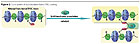
Figure 2

The cure behavior of the hydrosilylation-based TFEC coating at various cure temperatures was investigated using MEK resistance of the cured film as the response metric. The hydrosilylation-based TFEC coating showed a rapidly increasing cure profile that started after a very short induction time, with complete cure achieved in 60 seconds at 150 ºC, while the melamine cure system required twice the cure time to achieve good MEK resistance. The isocyanate cure system displayed essentially no cure within the initial 120 seconds at 150 ºC. As the cure temperature increased from 150 ºC to 230 ºC, the induction time of the hydrosilylation-based TFEC coating decreased with a dramatic increase in the cure speed. This data demonstrates the high curing speed of the hydrosilylation-based TFEC coating system, which could provide a lower total applied cost by better productivity and less energy consumption.

Share This Story

Looking for a reprint of this article?
From high-res PDFs to custom plaques, order your copy today!


Steven Block, Dow Corning Corporation, U.S.A.
Masayuki Hayashi, Dow Corning Toray Ltd., Japan
Senior Development Specialist, Dow Corning Ltd., United Kingdom
Katsuhiko Imoto, Daikin Industries Ltd., Japan
Masahiko Maeda, Daikin Industries Ltd., Japan
Business Development Manager, Daikin Industries Ltd., Japan
Dr. Tetsuo Shimizu, Daikin Industries Ltd., Japan

Recommended Content

JOIN TODAY
to unlock your recommendations.

Already have an account? Sign In

  • pci1022-Kinaltek-Lead-1170.jpg

    A Novel Pigment Production Technology

    Following an extensive R&D program that demonstrated...
    Paint and Coating Pigments
    By: Jawad Haidar and Nitin Soni
  • pci global top 10

    2025 Global Top 10: Top Paint and Coatings Companies

    The following is PCI’s annual ranking of the top 10...
    Global Top 10 and PCI 25
    By: Courtney Bassett
  • 2025 pci 25

    2025 PCI 25: Top Paint and Coatings Companies

    PCI's annual ranking of the top 25 North American paint...
    Paint and Coating Market Reports
    By: Courtney Bassett
You must login or register in order to post a comment.

Report Abusive Comment

Manage My Account
  • eMagazine
  • Newsletters
  • Online Registration
  • Subscription Customer Service

More Videos

Sponsored Content

Sponsored Content is a special paid section where industry companies provide high quality, objective, non-commercial content around topics of interest to the PCI audience. All Sponsored Content is supplied by the advertising company and any opinions expressed in this article are those of the author and not necessarily reflect the views of PCI or its parent company, BNP Media. Interested in participating in our Sponsored Content section? Contact your local rep!

close
  • colorful building exterior
    Sponsored byDow

    Insights into Exterior Architectural Coating Degradation: Bridging Accelerated and Natural Weathering

  • digital pigments
    Sponsored bySiltech

    The Fourth Dimension of Silicon: Siltech Q Resins

Popular Stories

Company News

What the AkzoNobel–Axalta Merger Means for the Future of Coatings

AkzoNobel and Axalta Headquarters

AkzoNobel and Axalta Announce $25 Billion Merger

Wacker logo

WACKER Plans More Than 1,500 Job Cuts


PCI Buyers Guide

Submit a Request for Proposal (RFP) to suppliers of your choice with details on what you need with a click of a button

Start your RFP

Browse our Buyers Guide for manufacturers and distributors of all types of coatings products and much more!

Find Suppliers

Events

September 4, 2025

N-Butylpyrrolidone (NBP) as a Green Solvent to Replace N-Methylpyrrolidone (NMP) in Industrial Coating Applications

ON DEMAND: EPA published a regulation proposal around N-methylpyrrolidone (NMP) in June 2024 to ban or limit NMP in many applications, such as paints and coatings and their removers. N-butylpyrrolidone (NBP) is a powerful and versatile solvent for a variety of industries looking for alternatives to substance of very high concern (SVHC)-listed solvents.

March 24, 2026

The Manufacturing & Automation eXchange (MAX)

MAX presents a rare opportunity to observe the full scope of manufacturing in one environment. From systems integration and materials handling to automation, quality, safety, and packaging, each discipline is represented through live, operational displays. By experiencing these technologies side by side, as they are on actual production floors, attendees gain a grounded understanding of how manufacturing functions align, overlap, and evolve in practice.

View All Submit An Event

Poll

Longest-running laboratory experiment

What is the longest-running laboratory experiment?
View Results Poll Archive

Products

Automotive Paints and Coatings, 2nd Edition

Automotive Paints and Coatings, 2nd Edition

Now in its second edition and still the only book of its kind, this is an authoritative treatment of all stages of the coating process.

See More Products
pci voices from the top ebook

PCI webinar

Related Articles

  • Alt text: Pile of White Chemical Powder on black table

    Revealing the Hidden Impact of TiO₂ Surface Chemistry on Pigment Performance

    See More
  • New Anti-Fingerprint Coatings

    See More
  • New Treatment Solution Protects Any Surface, Increases Performance

    See More

Related Products

See More Products
  • Surfactants and Rheology: Chemistry, Theory, Mechanism and Application (Zoom course 3/26/26)

See More Products

Events

View AllSubmit An Event
  • March 5, 2025

    Fibrillated Cellulose Boosts Mechanical, Surface & Rheology Performance of Elastomeric Roof Coatings

    On Demand The topic of this webinar will be the use of Valida fibrillated cellulose in Elastomeric roof coatings.
View AllSubmit An Event

Related Directories

  • Innospec Performance Chemicals

    Innospec is a global supplier of specialty chemicals for many different markets, including construction, emulsion polymerization, paint and coatings, polymers and waxes. Our innovative and responsible solutions cover a strong portfolio of additives and technically advanced solutions: rheology modifiers, anionic emulsifiers, wetting agents and dispersants.
×

Keep the info flowing with our eNewsletters!

Get the latest industry updates tailored your way.

JOIN TODAY!
  • RESOURCES
    • Advertise
    • Contact Us
    • Directories
    • Store
    • Want More
    • Manufacturing Division
  • SIGN UP TODAY
    • Create Account
    • eMagazine
    • Newsletters
    • Customer Service
    • Manage Preferences
  • SERVICES
    • Marketing Services
    • Reprints
    • Market Research
    • List Rental
    • Survey & Sample
  • STAY CONNECTED
    • LinkedIn
    • Facebook
    • Youtube
    • X (Twitter)
  • PRIVACY
    • PRIVACY POLICY
    • TERMS & CONDITIONS
    • DO NOT SELL MY PERSONAL INFORMATION
    • PRIVACY REQUEST
    • ACCESSIBILITY

Copyright ©2025. All Rights Reserved BNP Media.

Design, CMS, Hosting & Web Development :: ePublishing