Painting & Coating Industry (PCI) logo Powder coating summit logo
search
cart
facebook twitter linkedin youtube
  • Sign In
  • Create Account
  • Sign Out
  • My Account
Painting & Coating Industry (PCI) logo Powder coating summit logo
  • NEWS
    • Latest News
    • Market Trends & Reports
    • Finishing News
    • Price Alerts
    • Subscribe to Newsletters
    • Global Top 10/ PCI 25
    • Weekly Featured Article
    • COATLE Word Game
  • PRODUCTS
    • Product News
    • Must See Products and Services
  • MATERIALS
    • Additives
    • Resins/Polymers
    • Pigments
    • Equipment
    • Distributors
  • TECHNOLOGIES
    • Adhesives
    • Architectural Coatings
    • Finishing Articles
    • Finishing Technologies
    • Finishing Equipment
    • Industrial Coatings
    • Nanotechnology
    • Powder Coatings
    • Solventborne
    • Special Purpose Coatings
    • Sustainability
    • UV Coatings
    • Waterborne
  • RESOURCES
    • Columns
      • Did you know?
      • Distribution Dive
      • Formulating With Mike
      • Innovation Insights
      • Powder Coating Perspectives
      • TiO2 Insider
    • Blogs
      • Editor's Viewpoint
      • Industry Insights
    • Coatings Supplier Handbook
    • Podcasts and Videos
      • COAT-IT! Podcast
      • Videos/PCI TV
    • PCI Store
    • Classifieds
    • eBooks
    • Sponsor Insights
    • White Papers
    • COATLE Word Game
  • EVENTS
    • Coatings Trends & Technologies Summit
    • Paint and Coatings Academy
    • Webinars
    • Calendar of Events
    • Lifetime Achievement Award
  • DIRECTORIES
    • Buyer's Guide
    • Equipment Directory
    • Materials Directory
  • EMAGAZINE
    • Current Issue
    • eMagazine Archive
    • China Issue Archive
    • Editorial Advisory Board
  • CONTACT
    • Contact Us
    • Advertise
    • Subscribe to eMagazine
    • Subscribe to Newsletters
  • SIGN UP!
FT Archives

Get Reactive: Benefits of Plural-Component Coatings

By Mike Bourdeau
February 1, 2008
Reactive-cure coatings often are used to finish heavy-duty construction equipment and other OEM products.


Industrial manufacturing OEMs often experience bottlenecks at the paint line that impact throughput times. Relatively simple process changes, coupled with the use of reactive-cure coatings, can increase manufacturing volumes from 20 to 50%. Also called plural-component or two-component coatings, reactive-cure finishes offer several production advantages to improving efficiency. But not all manufacturers take full advantage of the benefits they can provide.

Environmentally, reactive-cure coatings minimize volatile organic compounds (VOCs) and reduce energy/curing costs when compared to single-component material. Certain reactive-cure coatings can be applied in one-third of the traditional time for this type of coating, significantly enhancing production efficiency and increasing throughput.

In addition to OEM products, outdoor structures such as bridges benefit from the fast cure speed and long-term durability of reactive-cure coatings.

Reactive-Cure Technology Options

With three basic product platforms available, reactive-cure coating solutions provide a substantial amount of performance flexibility. Many are capable of wet-on-wet application, so the product can move straight from priming to painting with no cure time required.

Epoxy Technology. Epoxies consist of an epoxy resin with tough corrosion protection that can be sprayed wet-on-wet with a urethane or non-isocyanate (NISO) topcoat. They typically are used in primer applications and provide robust chemical resistance.

Urethane Technology.Urethanes can be used as a topcoat in direct-to-metal applications but most often are used over a primer for improved corrosion protection. At the upper end of the spectrum, they can provide a high-end quality finish comparable to the coatings used in the automotive industry, with exceptional weathering characteristics and strong chemical resistance.

NISO Technology. NISO coatings can be used either as a topcoat or a direct-to-metal primer application with comparable performance capabilities to urethane technology, yet they don’t contain isocyanates like urethane. They provide durable weathering characteristics, solid chemical resistance and a high-quality finish. With a significantly longer pot life than urethanes, they minimize material waste. This coating tends to cost more than other reactive-cure options.
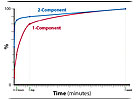
Figure 1. Cure rate comparison between single-component and reactive-cure coatings.

Application Considerations

A higher-quality, more durable finish often can be achieved with reactive-cure coatings, along with significant material and productivity savings. Even with an investment in plural-component equipment, payback often is achieved within two years or less. Following are some considerations when using this type of coating.

Mixing and Applying. Materials can be hand-mixed, but this process typically creates more material waste. It’s difficult to determine exactly how much coating will be required, and the pot life has to be longer - typically three to four hours - to allow adequate time to mix, prepare, apply and clean up. Any product not used within the pot life has to be disposed of, creating additional costs. An electronic proportioning system can eliminate a significant amount of labor, energy and waste from your painting process. In essence, there is no pot life because the material is mixed near the spray gun when it’s needed.

Cure Time. Two-part coatings typically cure faster than single-component materials and at lower temperatures than baking products, so they spend a shorter time in the oven or air drying (see Figure 1). They don’t have to be fully cured when removed from the drying area, so less energy is required to get top performance. When using a wet-on-wet application, one step of the curing cycle can be eliminated by going straight from the primer coat to topcoat. And if you use electronic proportioning, you can formulate the coating to cure in as little as 30 minutes.

Coverage. Reactive-cure coatings typically are applied using air spray, high-volume low-pressure (HVLP), air assisted airless or airless technology, depending on the type of finish required. With a high-performance coating, operators may only need to apply one pass rather than multiple applications, saving time and labor costs.

Standard vs. Custom Formulations

Nearly every coatings manufacturer offers custom color matching, but not all offer custom formulating of the coating itself. For example, if you purchase an off-the-shelf coating, you do not have control of the pot life or cure rate.

If you want to maximize efficiency on your production line, consider a custom formulated coating that takes into consideration your production line and how you’ll be mixing, applying, and curing your painted products. You can achieve significant productivity enhancements by ensuring that you’ve selected the right formulation for your specific application needs.

In addition, when making a purchase, consider the total cost for the product. If it is premixed, it’s ready to use. If you need to add solvent, you increase your material costs and preparation time.

Steps to Maximize Cost Savings Using Reactive-Cure Coatings

Performance Based on Industry Trends

Within the coatings industry, there is a trend toward continuing to lower solvent emissions levels. In the U.S., the trend is to reduce VOCs with reactive-cure products. Two-component materials have the capability of achieving VOC levels of 2.3 to 2.8 lb/gal. In Europe, there is a growing trend toward water-based technology, and a wide range of plural-component coatings are available to meet this need.

There’s also a growing global trend to focus on total cost solutions - not just on the price of paint, but on the entire paint process, from operator time to throughput efficiency. The lowest-cost coating isn’t necessarily the most cost-effective solution. Achieving a lower total cost in the manufacturing process is often possible by streamlining the production process used with reactive cure coatings.

Another industry trend is lean manufacturing, which is focused on eliminating all waste in manufacturing processes and aligning production with customer demand. Some of the steps that may be taken to improve efficiency within coating operations range from redesigning the paint line to reducing the cost of operating paint ovens by using a faster curing product.

Reactive-cure coatings offer excellent opportunities to meet goals related to lower VOC emissions, lower total cost solutions and lean manufacturing.


For more information, visit www.valsparglobal.com/corp.

Share This Story

Looking for a reprint of this article?
From high-res PDFs to custom plaques, order your copy today!


Mike Bourdeau is business director, general industrial, for Valspar Corp., one of the largest global manufacturers of coatings and coating intermediates. Bourdeau can be reached at 800.825.7727, ext. 8888.

Recommended Content

JOIN TODAY
to unlock your recommendations.

Already have an account? Sign In

  • pci1022-Kinaltek-Lead-1170.jpg

    A Novel Pigment Production Technology

    Following an extensive R&D program that demonstrated...
    Paint and Coating Pigments
    By: Jawad Haidar and Nitin Soni
  • pci global top 10

    2025 Global Top 10: Top Paint and Coatings Companies

    The following is PCI’s annual ranking of the top 10...
    Global Top 10 and PCI 25
    By: Courtney Bassett
  • 2025 pci 25

    2025 PCI 25: Top Paint and Coatings Companies

    PCI's annual ranking of the top 25 North American paint...
    Paint and Coating Market Reports
    By: Courtney Bassett
You must login or register in order to post a comment.

Report Abusive Comment

Manage My Account
  • eMagazine
  • Newsletters
  • Online Registration
  • Subscription Customer Service

More Videos

Sponsored Content

Sponsored Content is a special paid section where industry companies provide high quality, objective, non-commercial content around topics of interest to the PCI audience. All Sponsored Content is supplied by the advertising company and any opinions expressed in this article are those of the author and not necessarily reflect the views of PCI or its parent company, BNP Media. Interested in participating in our Sponsored Content section? Contact your local rep!

close
  • colorful building exterior
    Sponsored byDow

    Insights into Exterior Architectural Coating Degradation: Bridging Accelerated and Natural Weathering

  • digital pigments
    Sponsored bySiltech

    The Fourth Dimension of Silicon: Siltech Q Resins

Popular Stories

Company News

What the AkzoNobel–Axalta Merger Means for the Future of Coatings

AkzoNobel and Axalta Headquarters

AkzoNobel and Axalta Announce $25 Billion Merger

Wacker logo

WACKER Plans More Than 1,500 Job Cuts

pci academy

PCI Buyers Guide

Submit a Request for Proposal (RFP) to suppliers of your choice with details on what you need with a click of a button

Start your RFP

Browse our Buyers Guide for manufacturers and distributors of all types of coatings products and much more!

Find Suppliers

Events

September 4, 2025

N-Butylpyrrolidone (NBP) as a Green Solvent to Replace N-Methylpyrrolidone (NMP) in Industrial Coating Applications

ON DEMAND: EPA published a regulation proposal around N-methylpyrrolidone (NMP) in June 2024 to ban or limit NMP in many applications, such as paints and coatings and their removers. N-butylpyrrolidone (NBP) is a powerful and versatile solvent for a variety of industries looking for alternatives to substance of very high concern (SVHC)-listed solvents.

March 24, 2026

The Manufacturing & Automation eXchange (MAX)

MAX presents a rare opportunity to observe the full scope of manufacturing in one environment. From systems integration and materials handling to automation, quality, safety, and packaging, each discipline is represented through live, operational displays. By experiencing these technologies side by side, as they are on actual production floors, attendees gain a grounded understanding of how manufacturing functions align, overlap, and evolve in practice.

View All Submit An Event

Poll

Longest-running laboratory experiment

What is the longest-running laboratory experiment?
View Results Poll Archive

Products

Automotive Paints and Coatings, 2nd Edition

Automotive Paints and Coatings, 2nd Edition

Now in its second edition and still the only book of its kind, this is an authoritative treatment of all stages of the coating process.

See More Products
pci voices from the top ebook

PCI webinar

Related Articles

  • Metering System Improves Plural-Component Mixing - Posted 3/5/07

    See More
  • Sampson Maintenance Uses Plural-Component Proportioner for Coating Work (9/20/06)

    See More
  • Plural-Component Sprayer Makes Two-Part Spraying Easy and Affordable

    See More

Related Products

See More Products
  • durability.jpg

    Increasing the Durability of Paint and Varnish Coatings in Building Products and Construction 1st Edition

  • failiure-analysis-of-paints

    Failure Analysis of Paints and Coatings, Revised Edition

  • corrosion of linings.jpg

    Corrosion of Linings & Coatings: Cathodic and Inhibitor Protection and Corrosion Monitoring

See More Products
×

Keep the info flowing with our eNewsletters!

Get the latest industry updates tailored your way.

JOIN TODAY!
  • RESOURCES
    • Advertise
    • Contact Us
    • Directories
    • Store
    • Want More
    • Manufacturing Division
  • SIGN UP TODAY
    • Create Account
    • eMagazine
    • Newsletters
    • Customer Service
    • Manage Preferences
  • SERVICES
    • Marketing Services
    • Reprints
    • Market Research
    • List Rental
    • Survey & Sample
  • STAY CONNECTED
    • LinkedIn
    • Facebook
    • Youtube
    • X (Twitter)
  • PRIVACY
    • PRIVACY POLICY
    • TERMS & CONDITIONS
    • DO NOT SELL MY PERSONAL INFORMATION
    • PRIVACY REQUEST
    • ACCESSIBILITY

Copyright ©2025. All Rights Reserved BNP Media.

Design, CMS, Hosting & Web Development :: ePublishing