Painting & Coating Industry (PCI) logo Powder coating summit logo
search
cart
facebook twitter linkedin youtube
  • Sign In
  • Create Account
  • Sign Out
  • My Account
Painting & Coating Industry (PCI) logo Powder coating summit logo
  • NEWS
    • Latest News
    • Market Trends & Reports
    • Finishing News
    • Price Alerts
    • Subscribe to Newsletters
    • Global Top 10/ PCI 25
    • Weekly Featured Article
    • COATLE Word Game
  • PRODUCTS
    • Product News
    • Must See Products and Services
  • MATERIALS
    • Additives
    • Resins/Polymers
    • Pigments
    • Equipment
    • Distributors
  • TECHNOLOGIES
    • Adhesives
    • Architectural Coatings
    • Finishing Articles
    • Finishing Technologies
    • Finishing Equipment
    • Industrial Coatings
    • Nanotechnology
    • Powder Coatings
    • Solventborne
    • Special Purpose Coatings
    • Sustainability
    • UV Coatings
    • Waterborne
  • RESOURCES
    • Columns
      • Did you know?
      • Distribution Dive
      • Formulating With Mike
      • Innovation Insights
      • Powder Coating Perspectives
      • TiO2 Insider
    • Blogs
      • Editor's Viewpoint
      • Industry Insights
    • Coatings Supplier Handbook
    • Podcasts and Videos
      • COAT-IT! Podcast
      • Videos/PCI TV
    • PCI Store
    • Classifieds
    • eBooks
    • Sponsor Insights
    • White Papers
    • COATLE Word Game
  • EVENTS
    • Coatings Trends & Technologies Summit
    • Paint and Coatings Academy
    • Webinars
    • Calendar of Events
    • Lifetime Achievement Award
  • DIRECTORIES
    • Buyer's Guide
    • Equipment Directory
    • Materials Directory
  • EMAGAZINE
    • Current Issue
    • eMagazine Archive
    • China Issue Archive
    • Editorial Advisory Board
  • CONTACT
    • Contact Us
    • Advertise
    • Subscribe to eMagazine
    • Subscribe to Newsletters
  • SIGN UP!
FT Archives

Improved Pretreatment With Phosphonate

By Allen Miskowiec
May 1, 2008
Iron and zinc phosphating processes have been around for longer than many finishing professionals have been alive, and the reactions and bonding properties of these technologies are well understood. These processes require significant heat, generate tremendous sludge and can be a maintenance nightmare. A new phosphonate-based enhanced performance pretreatment (EPP) can be used at ambient temperatures to improve coating adhesion while providing considerable energy, water and labor saving


Iron and zinc phosphating processes have been around for longer than many finishing professionals have been alive, and the reactions and bonding properties of these technologies are well understood. These processes require significant heat, generate tremendous sludge and can be a maintenance nightmare. Many times a sealer step must be used to achieve the desired performance.

In the early 2000s, new technologies began to emerge, some of which carried the impressive label “nanotechnology.” Marketers of these products claimed that they would revolutionize the pretreatment industry. However, few people understood how these products affected the substrate surface to improve adhesion and corrosion resistance.

In 2001, General Electric (GE) purchased a chemical company called BetzDearborn, a company with a long history of industry-changing breakthroughs in the water treatment industry. The acquisition spawned research on a process that would combine a passivation technology used in cooling towers with technology used in the conversion coating process. This was the beginning of a technology called enhanced performance pretreatment (EPP).

The Phosphonate Advantage

Using a broad description, EPP is a combination of fluoacids and phosphonate. When the fluoacids and phosphonate are operated under the correct conditions (pH of 4.8 to 5.2, Ti absorbance of 0.05 to 0.12, and 30 to 60 ppm phosphonate), a thin coating develops on the surface of a metal substrate. This pretreatment is inherently self-limiting, and the elemental structure provides strong adhesion and corrosion-resistant properties when used in conjunction with a quality coating (powder, e-coat, etc.). The molecular structure is amorphous, and the strength of the paint-to-substrate bond is enhanced over what is provided from a traditional iron phosphate. This bond is achieved without the use of a sealer and at ambient temperatures.

By using phosphonate in the process, the EPP technology can be used in an existing mild steel system without fear of acidic attack. Other pretreatments have claimed to offer this benefit in the past, but have not followed through. However, phosphonates are great passivators. The phosphonate in EPP, in conjunction with the fluoacids, places the same thin coating on the system’s equipment metallurgy as it deposits on the substrate being treated, thereby protecting the equipment from acid attack. Of course, many factors exist that, when combined, can speed up or slow down the rate of corrosion in a system, and all metal surfaces will corrode to some degree over time. The EPP simply will not speed up that process, and it might slow it down.
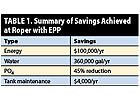
Table 1.

Substantial Savings and Enhanced Performance

In the fall of 2005, the GE Roper facility in Lafayette, GA, asked its pretreatment supplier to assist the plant in cutting costs. The pretreatment was a traditional iron phosphate supplied by GE Water & Process Technologies, the same company that developed the EPP. While the two GE companies were related, the Roper facility was under no obligation to use the Water & Process Technologies product over anything else that was commercially available. The Roper facility completed panel testing and line trials of the EPP and another new technology offered by a global leader in pretreatment technology. After all of the testing and a thorough cost/benefit analysis, the Roper plant settled on EPP. The EPP process went live in July 2006 and has been running well ever since, with no signs of EPP-related corrosion in the mild steel system.

After running the EPP process for about 12 months, the Roper facility decided to calculate its savings in making the switch. Data had been collected over the past year of operation and compared to the average operational costs over the past several years when the traditional iron phosphate process was used. The cost savings were calculated using GE’s Ecomagination certification process. This process requires everything claimed as a cost reduction to be documented and approved by an independent auditor. The cost savings are summarized in Table 1.

The first and largest savings realized by the Roper facility was a reduction in natural gas usage. In the past, Roper heated its iron phosphate bath using direct steam injection, which consumed a tremendous amount of steam. By turning the heat off in its pretreatment stage, Roper was able to turn off one of its boilers. The natural gas consumed by the boiler the plant shut down cost $100,000 annually. In addition to the natural gas savings, the plant eliminated 13.9 million ft3 of green house gas emissions per year.*
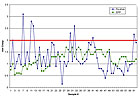
Figure 1. A direct comparison of the EPP and chlorate accelerated iron phosphate in neutral salt spray (NSS) demonstrates the superior performance of EPP.

The second largest benefit Roper saw was a significant reduction in water usage. The facility was no longer evaporating water from the pretreatment stage and was able to eliminate some of the rinsing steps needed in the traditional iron phosphate system. This change resulted in an annualized savings of 360,000 gallons of water per year.

The third benefit was a labor reduction. The EPP generated little sludge when compared to the iron phosphate system. The plant went from cleaning out the system every 12 to 16 weeks to annual cleanings. Instead of having 1 to 2 ft of sludge in the system, the plant found 1 in. or so of fine, silty material that could be washed down the drain with a hose. No more tank dives were required.

Finally, the plant saw a 45% reduction in phosphates (PO4) at its wastewater treatment facility. Elimination of phosphates was not one of the driving factors for this facility in making the change. However, even if it were, the plant could handle the small amount of PO4 present in the EPP because it only becomes an issue when operators dump the EPP stage where the PO4 level might be around 100 ppm. The benefit of being able to use the existing mild steel washer is huge compared to a small amount of phosphate needing treatment annually

Table 2

The energy, water and labor savings, as well as the phosphate reductions, were substantial benefits for the Roper plant. But what about performance? Figure 1 represents a direct comparison of the EPP and chlorate accelerated iron phosphate in neutral salt spray (NSS), the plant’s main indicator of performance, while Table 2 is a comparison of EPP to sealed zinc phosphate using an automotive e-coat. Figure 1 indicates that the chlorate-accelerated Fe phosphate had a number of data points below that of the EPP. The performance goal was to maintain NSS creep at <2 mm. The EPP was much more consistent in its performance, and did not exceed the upper limit of 2 mm creep over the 18-month time period studied.

A Promising Pretreatment

The Roper application demonstrated the tremendous operational benefits that can be captured by using EPP. The technology is designed to run at ambient temperatures, produces only a small amount of silt and does not require stainless steel tanks. As finishing operations look for ways to improve quality and cut costs, technologies such as the phosphonate-based pretreatment offer a promising solution.


Editor’s note: Effective January 1, 2008, the EPP technology was acquired by Chemetall Oakite and is no longer a part of the GE portfolio. For more information, visit www.chemetalloakite.com.

*For plants that don’t use a boiler to heat their washer, the Powder Coater’s Manual contains a generic equation that can be used to estimate energy savings.

Share This Story

Looking for a reprint of this article?
From high-res PDFs to custom plaques, order your copy today!


Allen Miskowiec is market manager, surface treatment, for Chemetall Americas, New Providence, NJ. He can be reached at 563.212.1432 or allen.miskowiec@chemetall.com.

Recommended Content

JOIN TODAY
to unlock your recommendations.

Already have an account? Sign In

  • pci1022-Kinaltek-Lead-1170.jpg

    A Novel Pigment Production Technology

    Following an extensive R&D program that demonstrated...
    Paint and Coating Pigments
    By: Jawad Haidar and Nitin Soni
  • pci global top 10

    2025 Global Top 10: Top Paint and Coatings Companies

    The following is PCI’s annual ranking of the top 10...
    Paint and Coating Market Reports
    By: Courtney Bassett
  • 2025 pci 25

    2025 PCI 25: Top Paint and Coatings Companies

    PCI's annual ranking of the top 25 North American paint...
    Paint and Coating Market Reports
    By: Courtney Bassett
You must login or register in order to post a comment.

Report Abusive Comment

Manage My Account
  • eMagazine
  • Newsletters
  • Online Registration
  • Subscription Customer Service

More Videos

Sponsored Content

Sponsored Content is a special paid section where industry companies provide high quality, objective, non-commercial content around topics of interest to the PCI audience. All Sponsored Content is supplied by the advertising company and any opinions expressed in this article are those of the author and not necessarily reflect the views of PCI or its parent company, BNP Media. Interested in participating in our Sponsored Content section? Contact your local rep!

close
  • colorful building exterior
    Sponsored byDow

    Insights into Exterior Architectural Coating Degradation: Bridging Accelerated and Natural Weathering

  • digital pigments
    Sponsored bySiltech

    The Fourth Dimension of Silicon: Siltech Q Resins

Popular Stories

Company News

What the AkzoNobel–Axalta Merger Means for the Future of Coatings

AkzoNobel and Axalta Headquarters

AkzoNobel and Axalta Announce $25 Billion Merger

Wacker logo

WACKER Plans More Than 1,500 Job Cuts


PCI Buyers Guide

Submit a Request for Proposal (RFP) to suppliers of your choice with details on what you need with a click of a button

Start your RFP

Browse our Buyers Guide for manufacturers and distributors of all types of coatings products and much more!

Find Suppliers

Events

September 4, 2025

N-Butylpyrrolidone (NBP) as a Green Solvent to Replace N-Methylpyrrolidone (NMP) in Industrial Coating Applications

ON DEMAND: EPA published a regulation proposal around N-methylpyrrolidone (NMP) in June 2024 to ban or limit NMP in many applications, such as paints and coatings and their removers. N-butylpyrrolidone (NBP) is a powerful and versatile solvent for a variety of industries looking for alternatives to substance of very high concern (SVHC)-listed solvents.

March 24, 2026

The Manufacturing & Automation eXchange (MAX)

MAX presents a rare opportunity to observe the full scope of manufacturing in one environment. From systems integration and materials handling to automation, quality, safety, and packaging, each discipline is represented through live, operational displays. By experiencing these technologies side by side, as they are on actual production floors, attendees gain a grounded understanding of how manufacturing functions align, overlap, and evolve in practice.

View All Submit An Event

Poll

Longest-running laboratory experiment

What is the longest-running laboratory experiment?
View Results Poll Archive

Products

Automotive Paints and Coatings, 2nd Edition

Automotive Paints and Coatings, 2nd Edition

Now in its second edition and still the only book of its kind, this is an authoritative treatment of all stages of the coating process.

See More Products
pci voices from the top ebook

PCI webinar

Related Articles

  • Improved Performance with Radiation-Curable Polyesters

    See More
  • Sol-Gel Hybrid Coatings for Wood Products with Improved Surface Durability and Repellence Properties

    See More
  • Nanotechnology Enables Breakthrough Coatings With Improved Resistance to Chipping, Scratching and Water Spotting

    See More

Related Products

See More Products
  • pci january 2020

    PCI January 2020 Issue

See More Products
×

Keep the info flowing with our eNewsletters!

Get the latest industry updates tailored your way.

JOIN TODAY!
  • RESOURCES
    • Advertise
    • Contact Us
    • Directories
    • Store
    • Want More
    • Manufacturing Division
  • SIGN UP TODAY
    • Create Account
    • eMagazine
    • Newsletters
    • Customer Service
    • Manage Preferences
  • SERVICES
    • Marketing Services
    • Reprints
    • Market Research
    • List Rental
    • Survey & Sample
  • STAY CONNECTED
    • LinkedIn
    • Facebook
    • Youtube
    • X (Twitter)
  • PRIVACY
    • PRIVACY POLICY
    • TERMS & CONDITIONS
    • DO NOT SELL MY PERSONAL INFORMATION
    • PRIVACY REQUEST
    • ACCESSIBILITY

Copyright ©2025. All Rights Reserved BNP Media.

Design, CMS, Hosting & Web Development :: ePublishing