
Zapping Corrosion with Zinc
Zinc-rich coatings based on zinc dust have been used on dams, bridges, ships, pipelines and other structures. However, problems associated with the manufacture, storage, handling, cost and application of these materials have limited their use. Advanced coatings containing a low-cost, highly conductive zinc flake material produce superior anticorrosion results compared to conventional zinc dust formulas. Additionally, the greater conductivity of the zinc powder allows the ratio of zinc metal-to-binder to be reduced, thereby lowering the cost of the coating.

During the 1940s, Australian inventors Victor C. Nightingall and A. McDonald developed a series of inorganic zinc-rich primers for protecting steel substrates from corrosion. Since then, zinc-rich coatings have been used on dams, bridges, ships, pipelines and other structures. However, problems associated with the manufacture, storage, handling, cost and application of these materials have limited their use. Only an estimated 10 million gallons of zinc-rich coatings are used annually worldwide, primarily as air-dry maintenance primers that require a blasted substrate for effective performance.
The main challenge in formulating zinc-rich coatings that are applicable on a broader scale lies in the zinc materials themselves. During the past half century, the coatings industry has used zinc dust manufactured by the evaporation condensation process as the principal pigment for formulating both organic and inorganic zinc-rich primers. Unfortunately this method produces a zinc particulate containing approximately 3% zinc oxide. The combination of zinc oxide and manufacture by the evaporation and cooling produces a zinc dust particulate that is a poor conductor. (An ohmmeter will indicate considerable resistivity of conventional zinc dust.) A loss of current in a cathodic primer negatively affects the coating’s long-term corrosion resistance.
The result was a dramatic improvement in overall corrosion resistance. Using zinc powder as a principal pigment produces superior anticorrosion results compared to conventional zinc dust formulas. Additionally, the greater conductivity of the zinc powder allows the ratio of zinc metal-to-binder to be reduced, thereby lowering the cost of the coating.
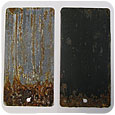
More recent developments have improved zinc-rich coatings even further. For example, milling with zinc powder rather than all zinc dust in a high-velocity kinetic energy mill produces a low-cost, highly corrosion-resistant zinc flake. Considerable experimentation using highly conductive zinc flake with organic and inorganic binders has shown that the resulting coatings are effective in galvanizing heavy rust - not just inhibiting it. Tests conducted in B-117 salt fog have demonstrated impressive resistance to the passage of rust into the primer for periods exceeding hundreds of hours (see Figure 1). Control tests using stainless steel flake and nickel flake with identical binders rusted through the primers in a matter of hours.
The effective use of zinc-flake coatings over rust can reduce the cost of painting bridges, dams, ships and other structures dramatically by containing the rust, thereby eliminating the need for costly sandblasting and a conventional coat of zinc-rich primer.
Several dozen panels coated with the zinc-flake primer were exposed in San Diego Bay and the warm waters of Fort Lauderdale. The control was USN Navy specification MIL-P-15169, containing approximately 14 lb/gal of cuprous oxide and 50% rosin in the vinyl chloride binder to permit a slow release of the biocide.
After several months of exposure, the Navy control panels in San Diego were free of barnacles but were covered with slime. The zinc flake panels were virtually pristine with no fouling. After eight months, the control panels exhibited substantial fouling, while the panels coated with the zinc-flake primer remained relatively pristine. Within the same time period, the zinc-flake panels submerged in South Florida exhibited a few barnacles and worms, while the Navy panels were covered with barnacles.
These tests are not conclusive; further evaluations are needed to determine the efficacy of a zinc-flake nonablative primer on ship bottoms. The extreme reactivity of the zinc flake when exposed to salt water produces white rust (zinc carbonate and zinc oxide), which is resistant to barnacle formation. However, while these tests have yet to be evaluated on an empirical basis on ship bottoms, the positive effect of zinc flake over rust has been shown repeatedly in other testing. Without topcoating, no further rusting of the primer has occurred after more than 1,000 hours of salt fog exposure.
The benefits of zinc in preventing corrosion are widely understood. With recent developments in zinc-flake coatings, enhanced cathodic protection can be achieved in a range of applications at a lower cost.
For more information, call 760.343.0626, e-mail hypersealCA@yahoo.com or visit www.hypersealinc.com.
2. U.S. Patent #4,891,394, January 2, 1990, “Coating composition containing metallic pigments exhibiting excellent resistance to environmental attack.”
3. U.S. Patent #4,931,491, June 5, 1990, “Coating composition exhibiting improved resistance to environmental attack.”
4. U.S. Patent #5,098,938, March 24, 1992, “Coating composition exhibiting improved resistance to environmental attack.”
5. U.S. Patent #5,167,701, December 1, 1992, “Zinc rich coating with inorganic binder.”
6. U.S. Patent #5,182,318, January 26, 1993, “Coating composition containing metal coated microspheres.”
7. U.S. Patent #5,252,632, October 12, 1993, “Low cost cathodic and conductive coating compositions comprising lightweight hollow glass microspheres and conductive phase.”
8. U.S. Patent #5,338,348, September 16, 1994, “Zinc powder rich coating composition."
9. U.S. Patent #5,413,628, May 9, 1995, “Stable inorganic zinc powder coatings.”
10. U.S. Patent #5,580,907, December 3, 1996, “Cathodic coating compositions comprising lightweight hollow glass microspheres, zinc powder and zinc dust.”
11. U. S. Patent #5,677,367, October 14, 1997, “Graphite containing compositions.”
12. U.S. Patent #5,792,803, August 11, 1998, “Cathodic coating compositions comprising lightweight hollow glass microspheres and zinc powder.”
13. U.S. Patent #6,638,628 B2, October 28, 2003, “Silicate coating compositions.”
14. U.S. Patent #7,021,573 B2, April 4, 2006, “Process for dry milling zinc powder to produce zinc flake.”
15. U.S. Patent #7,201,790, April 10, 2007, “Zinc flake coating compositions.”
16. U.S. Patent #7,304,100 B2, December 4, 2007, “Process for manufacturing a latex composition.”
During the 1940s, Australian inventors Victor C. Nightingall and A. McDonald developed a series of inorganic zinc-rich primers for protecting steel substrates from corrosion. Since then, zinc-rich coatings have been used on dams, bridges, ships, pipelines and other structures. However, problems associated with the manufacture, storage, handling, cost and application of these materials have limited their use. Only an estimated 10 million gallons of zinc-rich coatings are used annually worldwide, primarily as air-dry maintenance primers that require a blasted substrate for effective performance.
The main challenge in formulating zinc-rich coatings that are applicable on a broader scale lies in the zinc materials themselves. During the past half century, the coatings industry has used zinc dust manufactured by the evaporation condensation process as the principal pigment for formulating both organic and inorganic zinc-rich primers. Unfortunately this method produces a zinc particulate containing approximately 3% zinc oxide. The combination of zinc oxide and manufacture by the evaporation and cooling produces a zinc dust particulate that is a poor conductor. (An ohmmeter will indicate considerable resistivity of conventional zinc dust.) A loss of current in a cathodic primer negatively affects the coating’s long-term corrosion resistance.
Figure 1. Two coated panels exposed to B-117 salt fog. The panel on the left was coated with a standard zinc-rich epoxy binder, while the one on the right features the proprietary zinc powder/zinc flake formulation. Both coatings were applied over heavy rust.
Improving Conductivity
Several years ago, while working on an alkaline battery project, I observed that the battery powder designed to produce an effective cell requires an ultra-low resistivity of only a fraction of an ohm. I devoted considerable effort to developing zinc powder manufactured by an atomization process as a partial or total replacement for zinc dust.The result was a dramatic improvement in overall corrosion resistance. Using zinc powder as a principal pigment produces superior anticorrosion results compared to conventional zinc dust formulas. Additionally, the greater conductivity of the zinc powder allows the ratio of zinc metal-to-binder to be reduced, thereby lowering the cost of the coating.
More recent developments have improved zinc-rich coatings even further. For example, milling with zinc powder rather than all zinc dust in a high-velocity kinetic energy mill produces a low-cost, highly corrosion-resistant zinc flake. Considerable experimentation using highly conductive zinc flake with organic and inorganic binders has shown that the resulting coatings are effective in galvanizing heavy rust - not just inhibiting it. Tests conducted in B-117 salt fog have demonstrated impressive resistance to the passage of rust into the primer for periods exceeding hundreds of hours (see Figure 1). Control tests using stainless steel flake and nickel flake with identical binders rusted through the primers in a matter of hours.
The effective use of zinc-flake coatings over rust can reduce the cost of painting bridges, dams, ships and other structures dramatically by containing the rust, thereby eliminating the need for costly sandblasting and a conventional coat of zinc-rich primer.
Preventing Fouling
Another potential application of zinc-flake development is in the area of marine antifouling. Most marine vessels are protected with a coating containing a high level of cuprous oxide and rosin, which permits the ablation of the oxide with a slow release of the copper biocide. This release is total; periodic recoating of the vessel is required as virtually all of the cuprous oxide is ablated into the surrounding salt water.Several dozen panels coated with the zinc-flake primer were exposed in San Diego Bay and the warm waters of Fort Lauderdale. The control was USN Navy specification MIL-P-15169, containing approximately 14 lb/gal of cuprous oxide and 50% rosin in the vinyl chloride binder to permit a slow release of the biocide.
After several months of exposure, the Navy control panels in San Diego were free of barnacles but were covered with slime. The zinc flake panels were virtually pristine with no fouling. After eight months, the control panels exhibited substantial fouling, while the panels coated with the zinc-flake primer remained relatively pristine. Within the same time period, the zinc-flake panels submerged in South Florida exhibited a few barnacles and worms, while the Navy panels were covered with barnacles.
These tests are not conclusive; further evaluations are needed to determine the efficacy of a zinc-flake nonablative primer on ship bottoms. The extreme reactivity of the zinc flake when exposed to salt water produces white rust (zinc carbonate and zinc oxide), which is resistant to barnacle formation. However, while these tests have yet to be evaluated on an empirical basis on ship bottoms, the positive effect of zinc flake over rust has been shown repeatedly in other testing. Without topcoating, no further rusting of the primer has occurred after more than 1,000 hours of salt fog exposure.
The benefits of zinc in preventing corrosion are widely understood. With recent developments in zinc-flake coatings, enhanced cathodic protection can be achieved in a range of applications at a lower cost.
For more information, call 760.343.0626, e-mail hypersealCA@yahoo.com or visit www.hypersealinc.com.
Potential Applications for Zinc-Flake Coatings
- Railroad Rolling Stock
- Dams and Bridges
- Storage Tanks
- Ships and Port Facilities
- Guardrails
- Transmission Towers
- Trucks, Automotive Parts, Chassis, etc.
- Light Poles
- Gutters and Downspouts
- Air Conditioning Equipment
- Wire Fencing
- Ducting
- Pipes, Plumbing and Tubing
- Fasteners and Powdered Metal Products
- Steel Reinforcement Bars
- Offshore Drilling Platforms
- Construction Equipment
- Sea Containers
- Any Application Requiring Rust Passivation
Related Patents Held by Col. Savin
1. French patent #2,602,239, October 7, 19882. U.S. Patent #4,891,394, January 2, 1990, “Coating composition containing metallic pigments exhibiting excellent resistance to environmental attack.”
3. U.S. Patent #4,931,491, June 5, 1990, “Coating composition exhibiting improved resistance to environmental attack.”
4. U.S. Patent #5,098,938, March 24, 1992, “Coating composition exhibiting improved resistance to environmental attack.”
5. U.S. Patent #5,167,701, December 1, 1992, “Zinc rich coating with inorganic binder.”
6. U.S. Patent #5,182,318, January 26, 1993, “Coating composition containing metal coated microspheres.”
7. U.S. Patent #5,252,632, October 12, 1993, “Low cost cathodic and conductive coating compositions comprising lightweight hollow glass microspheres and conductive phase.”
8. U.S. Patent #5,338,348, September 16, 1994, “Zinc powder rich coating composition."
9. U.S. Patent #5,413,628, May 9, 1995, “Stable inorganic zinc powder coatings.”
10. U.S. Patent #5,580,907, December 3, 1996, “Cathodic coating compositions comprising lightweight hollow glass microspheres, zinc powder and zinc dust.”
11. U. S. Patent #5,677,367, October 14, 1997, “Graphite containing compositions.”
12. U.S. Patent #5,792,803, August 11, 1998, “Cathodic coating compositions comprising lightweight hollow glass microspheres and zinc powder.”
13. U.S. Patent #6,638,628 B2, October 28, 2003, “Silicate coating compositions.”
14. U.S. Patent #7,021,573 B2, April 4, 2006, “Process for dry milling zinc powder to produce zinc flake.”
15. U.S. Patent #7,201,790, April 10, 2007, “Zinc flake coating compositions.”
16. U.S. Patent #7,304,100 B2, December 4, 2007, “Process for manufacturing a latex composition.”
Looking for a reprint of this article?
From high-res PDFs to custom plaques, order your copy today!