This study explores paint film degradation through accelerated aging to better understand the relevant degradation mechanisms and improve long-term performance.
The University of South Florida reduced cooling costs and improved energy efficiency by applying a heat-reflective exterior coating that lowers building surface temperatures by up to 40 °F.
A new thermal additive enhances energy efficiency and fire resistance, reducing heat absorption, improving emissivity, and meeting stringent environmental and building performance standards.
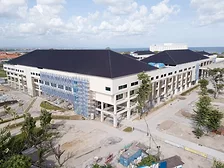
Built on a 50,000-square-meter site, the 250-bed facility is a green hospital designed according to global healthcare standards. The project required coatings that could stand up to extreme weather, humidity, UV rays, and dirt.
Polyvinylidene fluoride (PVDF)-based topcoats have long been the choice of architects and specifiers who are seeking superior weatherability.Arkema, Inc. has developed water-based PVDF-acrylic hybrid dispersions to meet the need of resins applied in the field or over temperature-sensitive substrates.
In order to meet the Paris Agreement’s net-zero by 2050 target, wind and solar electricity generation needs to increase by between 72.97-74.7%, according to the 2021 State of Climate Action Report. In order to support this seismic growth, leading edge repair and protection systems play a critical role in extending the lifespan of wind turbine blades and, therefore, supporting a net-zero future for the planet.
A new blog service from Atlas can help users stay ahead of the curve with timely content covering trends in material testing, technological advancements, and instrumentation testing methods.
Emergence of real-world testing of coatings products to validate the protection levels of assets worldwide is becoming a major issue. Here Sherwin-Williams reveals how the company is committing to a new level of these tests on behalf of its customers.