Painting & Coating Industry (PCI) logo Powder coating summit logo
search
cart
facebook twitter linkedin youtube
  • Sign In
  • Create Account
  • Sign Out
  • My Account
Painting & Coating Industry (PCI) logo Powder coating summit logo
  • NEWS
    • Latest News
    • Market Trends & Reports
    • Finishing News
    • Price Alerts
    • Subscribe to Newsletters
    • Global Top 10/ PCI 25
    • Weekly Featured Article
    • COATLE Word Game
  • PRODUCTS
    • Product News
    • Must See Products and Services
  • MATERIALS
    • Additives
    • Resins/Polymers
    • Pigments
    • Equipment
    • Distributors
  • TECHNOLOGIES
    • Adhesives
    • Architectural Coatings
    • Finishing Articles
    • Finishing Technologies
    • Finishing Equipment
    • Industrial Coatings
    • Nanotechnology
    • Powder Coatings
    • Solventborne
    • Special Purpose Coatings
    • Sustainability
    • UV Coatings
    • Waterborne
  • RESOURCES
    • Columns
      • Did you know?
      • Distribution Dive
      • Formulating With Mike
      • Innovation Insights
      • Powder Coating Perspectives
      • TiO2 Insider
    • Blogs
      • Editor's Viewpoint
      • Industry Insights
    • Coatings Supplier Handbook
    • Podcasts and Videos
      • COAT-IT! Podcast
      • Videos/PCI TV
    • PCI Store
    • Classifieds
    • eBooks
    • Sponsor Insights
    • White Papers
    • COATLE Word Game
  • EVENTS
    • Coatings Trends & Technologies Summit
    • Paint and Coatings Academy
    • Webinars
    • Calendar of Events
    • Lifetime Achievement Award
  • DIRECTORIES
    • Buyer's Guide
    • Equipment Directory
    • Materials Directory
  • EMAGAZINE
    • Current Issue
    • eMagazine Archive
    • China Issue Archive
    • Editorial Advisory Board
  • CONTACT
    • Contact Us
    • Advertise
    • Subscribe to eMagazine
    • Subscribe to Newsletters
  • SIGN UP!
Paint and Coating EquipmentPowder CoatingsEU TodayTesting, Monitoring &ToolsArticles From Europe

Understanding Spray Coating Performance

Using Powder Rheology
By Doug Millington-Smith
Understanding Spray Coating Performance
February 1, 2016

Powder coating can deliver many advantages including more-efficient operations, waste reduction, and the absence of solvents and the associated volatile organic compounds (VOCs). This makes it an environmentally sound and financially attractive alternative to traditional liquid finishing, and many manufacturers are therefore considering powder coating for a wide range of applications. However, in order to optimize coating operations and enhance product quality, it is critical to understand how a powder will behave in transit, during storage and ultimately in the final process. Powders are complex assemblies of solids, liquids and gases, and the way they can behave certainly provides their industrial value, but it also makes it challenging to characterize them and predict how they will perform. There are many traditional methods for testing powders, but the limitations to these methods are quickly becoming recognized as applications become more demanding and the need to test powders under process-relevant conditions is acknowledged as being crucial.

The Challenges of Spray Coating

In spray coating, a fine powder is drawn from a storage chamber before being fluidized and ejected through a charged nozzle onto a substrate. It is essential that the powder is effectively and consistently fluidized without the formation of agglomerates that may block the nozzle and affect the charging of individual particles. This ultimately leads to poor adhesion or the formation of agglomerates on the surface of the substrate. Uniform flow from the storage chamber is also important, as any evidence of erratic flow will affect the fluidization process and result in a poorly distributed product.

Identifying powders that are conducive to efficient performance allows compatible raw materials to be identified or new formulations to be optimized without running samples through the process in order to assess suitability. This generates significant savings in terms of time and resources, and minimizes the number of products rejected for being out of specification.

Assessing Process Performance and Product Quality

This article presents a case study in which three polymer powders were used in a corona charging spray coating system. Despite being almost identical in terms of their particle size and particle size distribution, the three materials behaved very differently in process. Sample A was categorized as being “good”, as it flowed through the nozzle well and adhered consistently to the substrate. Sample B was only considered to be “acceptable” and Sample C performed poorly in both critical areas; it regularly blocked the nozzle and fell away from the surface of the substrate during subsequent transportation.

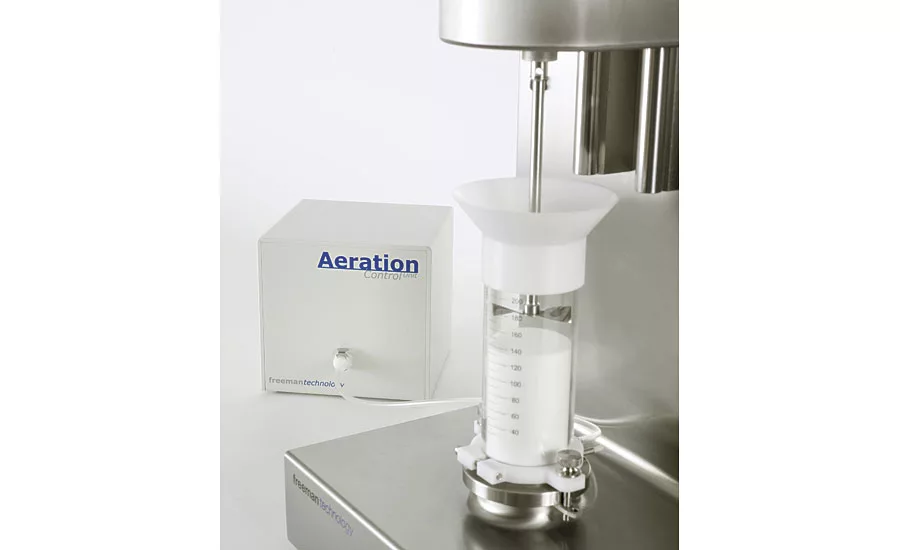
Samples of the three materials were analyzed using an FT4 Powder Rheometer®. Clear and repeatable differences were observed in the test results, which rationalized the in-process variation. In addition, the data could then be used to provide criteria against which future raw materials and formulations could be assessed.

Analysis of Test Results

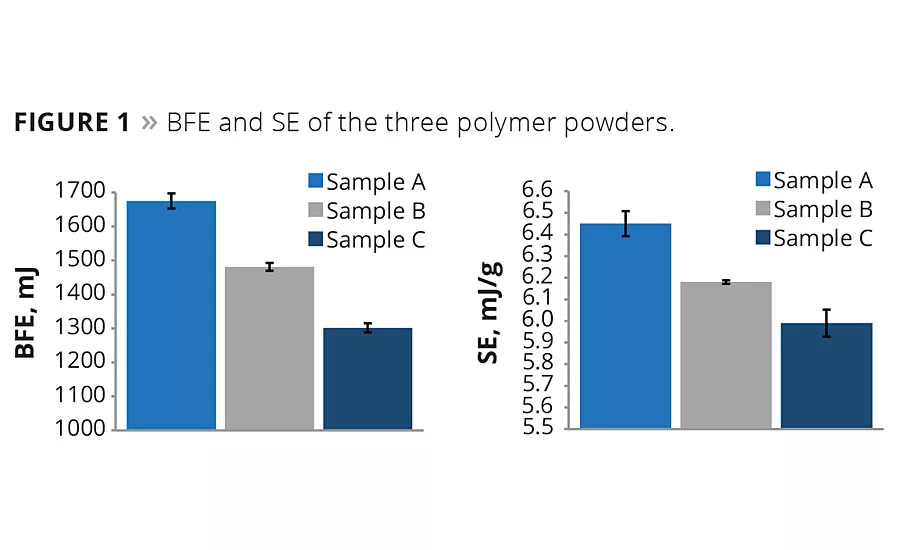
Sample A generated the highest basic flowability energy (BFE) and specific energy (SE) values (Figure 1), which together indicate greater cohesion as well as higher levels of inter-particular friction and mechanical interlocking. In contrast, Sample C generated the lowest BFE and SE values. This suggests that a certain degree of inter-particular cohesion is required to form a uniform coating on the substrate.

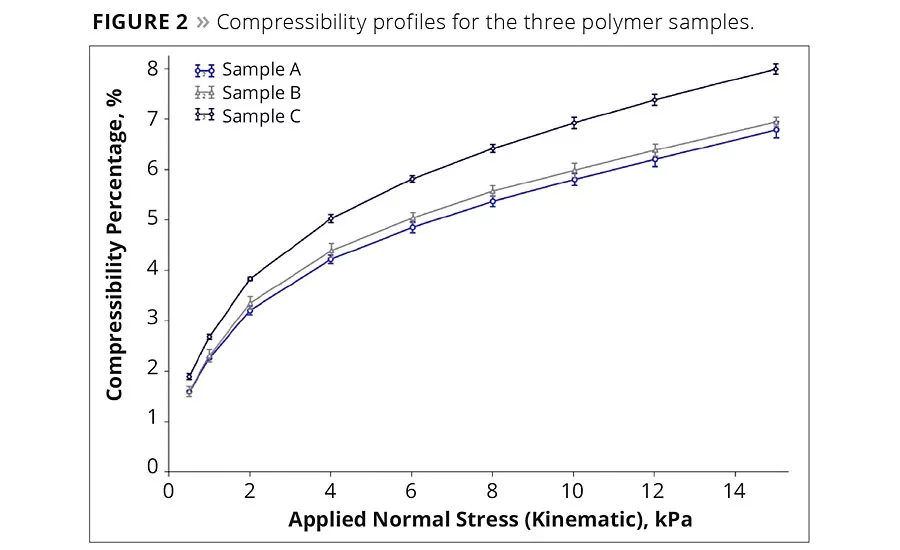
Sample C was the most compressible of the three samples (Figure 2), indicating a greater sensitivity to applied stress. Powders that compress easily will consolidate more under their own weight and are therefore more likely to be problematic when required to flow following storage. They are also likely to be more prone to agglomeration, which is typically detrimental to many unit operations but will certainly have a negative impact on the spraying and charging stages of the spray coating process.

Sample A generated the lowest pressure drop across the powder bed (Figure 3) when a controlled quantity of air was introduced to the sample. This indicates higher permeability, which is typically associated with free-flowing materials. Poor permeability is known to cause erratic, pulsatile flow, which can lead to variation in the distribution of the powder within the fluidization chamber and inconsistent flow of the fluidized powder.

Interestingly, no differentiation was observed in the results of shear cell tests on the three powders. The three Yield Loci shown in Figure 4 are almost identical with the measured shear stress values, all being within 2.5% RSD. Shear cell tests measure how easily a highly consolidated powder at rest will transition into flow. The results here suggest that the test conditions are not relevant to the dynamic, low-stress environment that prevails in a spray coating application.

Conclusion

Sample A generates the highest BFE, SE and permeability values, and the lowest compressibility value. This suggests that a certain degree of cohesion is required to form a uniform coating and that susceptibility to agglomeration and/or erratic flow is likely to be detrimental to the process. Sample C, with the lowest BFE and permeability, and the highest compressibility, is most sensitive to compaction during storage and conveyance, and is more likely to form agglomerates that can block the nozzle and result in inconsistent charging.

The case study presented here illustrates the importance of testing powders under conditions that simulate the process environment. Spray coating is typically a very low-stress, dynamic process with small quantities of powders being stored, conveyed and fluidized. In order to understand how powders will behave under such conditions, it is essential that the tests employed subject the sample to the same diverse conditions. The lack of differentiation in the shear cell test results reinforces the need to generate process-relevant information. Similarly, no single parameter or test method is capable of describing how a powder will behave across a range of conditions. Two powders may exhibit a similar response in a certain stage within a process but behave completely differently in another. This further highlights the need to identify tests that are representative of a given part of the process. For example, the compressibility test shows very similar results for Sample A and Sample B but the BFE values are significantly different. This suggests that these two samples may exhibit similar levels of compaction when subjected to an applied stress but will respond differently when required to flow under forced, dynamic conditions.

The multifaceted approach to powder characterization provided by a powder rheometer made it possible to quantify properties of three very similar powders and explain why they perform so differently in a typical spray coating application. 

For more information, visit www.freemantech.co.uk.

KEYWORDS: Testing Equipment

Share This Story

Looking for a reprint of this article?
From high-res PDFs to custom plaques, order your copy today!


By Doug Millington-Smith, Ph.D., Principal Applications Specialist, Freeman Technology Ltd., Tewkesbury, UK

Recommended Content

JOIN TODAY
to unlock your recommendations.

Already have an account? Sign In

  • pci1022-Kinaltek-Lead-1170.jpg

    A Novel Pigment Production Technology

    Following an extensive R&D program that demonstrated...
    Paint and Coating Pigments
    By: Jawad Haidar and Nitin Soni
  • pci global top 10

    2025 Global Top 10: Top Paint and Coatings Companies

    The following is PCI’s annual ranking of the top 10...
    Paint and Coating Market Reports
    By: Courtney Bassett
  • 2025 pci 25

    2025 PCI 25: Top Paint and Coatings Companies

    PCI's annual ranking of the top 25 North American paint...
    Paint and Coating Market Reports
    By: Courtney Bassett
You must login or register in order to post a comment.

Report Abusive Comment

Manage My Account
  • eMagazine
  • Newsletters
  • Online Registration
  • Subscription Customer Service

More Videos

Sponsored Content

Sponsored Content is a special paid section where industry companies provide high quality, objective, non-commercial content around topics of interest to the PCI audience. All Sponsored Content is supplied by the advertising company and any opinions expressed in this article are those of the author and not necessarily reflect the views of PCI or its parent company, BNP Media. Interested in participating in our Sponsored Content section? Contact your local rep!

close
  • colorful building exterior
    Sponsored byDow

    Insights into Exterior Architectural Coating Degradation: Bridging Accelerated and Natural Weathering

  • digital pigments
    Sponsored bySiltech

    The Fourth Dimension of Silicon: Siltech Q Resins

Popular Stories

Company News

What the AkzoNobel–Axalta Merger Means for the Future of Coatings

AkzoNobel and Axalta Headquarters

AkzoNobel and Axalta Announce $25 Billion Merger

Wacker logo

WACKER Plans More Than 1,500 Job Cuts

pci academy

PCI Buyers Guide

Submit a Request for Proposal (RFP) to suppliers of your choice with details on what you need with a click of a button

Start your RFP

Browse our Buyers Guide for manufacturers and distributors of all types of coatings products and much more!

Find Suppliers

Events

September 4, 2025

N-Butylpyrrolidone (NBP) as a Green Solvent to Replace N-Methylpyrrolidone (NMP) in Industrial Coating Applications

ON DEMAND: EPA published a regulation proposal around N-methylpyrrolidone (NMP) in June 2024 to ban or limit NMP in many applications, such as paints and coatings and their removers. N-butylpyrrolidone (NBP) is a powerful and versatile solvent for a variety of industries looking for alternatives to substance of very high concern (SVHC)-listed solvents.

March 24, 2026

The Manufacturing & Automation eXchange (MAX)

MAX presents a rare opportunity to observe the full scope of manufacturing in one environment. From systems integration and materials handling to automation, quality, safety, and packaging, each discipline is represented through live, operational displays. By experiencing these technologies side by side, as they are on actual production floors, attendees gain a grounded understanding of how manufacturing functions align, overlap, and evolve in practice.

View All Submit An Event

Poll

Longest-running laboratory experiment

What is the longest-running laboratory experiment?
View Results Poll Archive

Products

Automotive Paints and Coatings, 2nd Edition

Automotive Paints and Coatings, 2nd Edition

Now in its second edition and still the only book of its kind, this is an authoritative treatment of all stages of the coating process.

See More Products
pci case ebook

PCI webinar

Related Articles

  • Air Spray Guns Optimize Spray Performance - Posted 5/27/08

    See More
  • Equipment Application

    New Handbook on Maximizing Performance and Reducing Costs in Spray Operations

    See More
  • pci1121-Sabreen-1167753689-1170.jpg

    Industrial Spray Coating of Low-Surface-Energy Thermoplastics

    See More

Related Products

See More Products
  • cold-spray-tech

    Cold Spray Technology

See More Products
×

Keep the info flowing with our eNewsletters!

Get the latest industry updates tailored your way.

JOIN TODAY!
  • RESOURCES
    • Advertise
    • Contact Us
    • Directories
    • Store
    • Want More
    • Manufacturing Division
  • SIGN UP TODAY
    • Create Account
    • eMagazine
    • Newsletters
    • Customer Service
    • Manage Preferences
  • SERVICES
    • Marketing Services
    • Reprints
    • Market Research
    • List Rental
    • Survey & Sample
  • STAY CONNECTED
    • LinkedIn
    • Facebook
    • Youtube
    • X (Twitter)
  • PRIVACY
    • PRIVACY POLICY
    • TERMS & CONDITIONS
    • DO NOT SELL MY PERSONAL INFORMATION
    • PRIVACY REQUEST
    • ACCESSIBILITY

Copyright ©2025. All Rights Reserved BNP Media.

Design, CMS, Hosting & Web Development :: ePublishing