Specialized Coatings for Gas Turbines
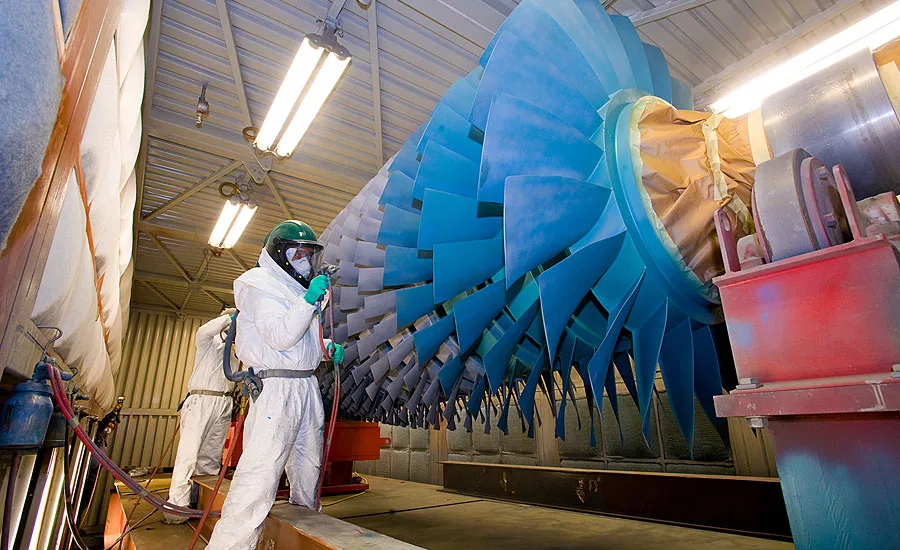
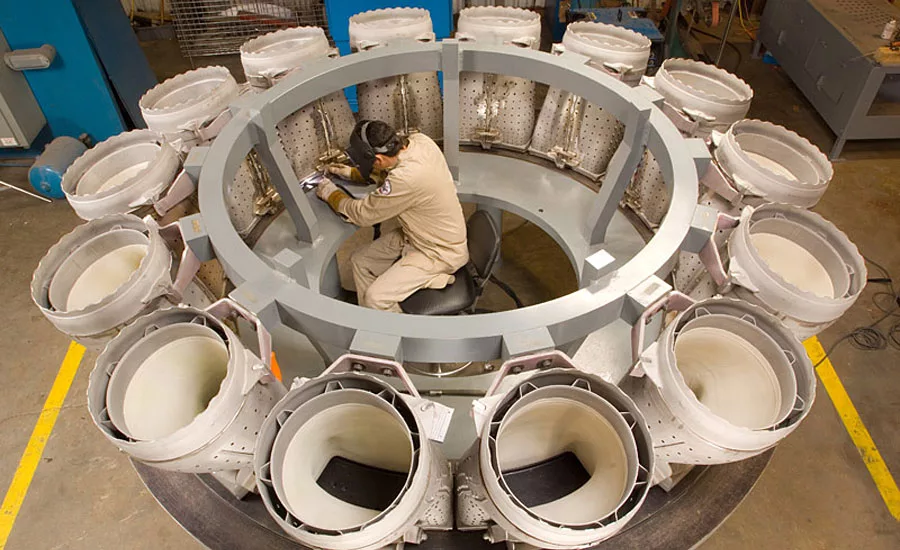
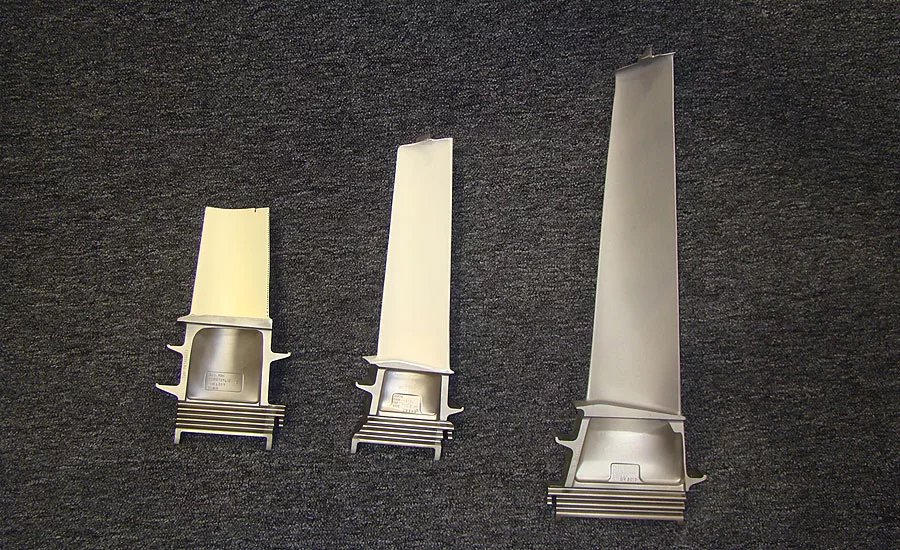
Industrial gas turbines rely on specialized coatings to deliver continued performance and reliability. Renewing these protection systems is an important part of the routine maintenance schedule, and the quality of the new coatings is dependent on attention to detail and the expertise of the refurbishment team. With a high-level understanding of the processes, it is possible for operators to assess this expertise and select the most suitable suppliers.
Many gas turbines are used to support national power grids, generating electricity especially at times of peak demand. As such, their continued reliability offers that reassurance that when we flick the switch, the lights will come on.
Components in an industrial gas turbine are subjected to high temperatures that can cause oxidation, corrosion, and even fatigue within their microstructure. These degradation mechanisms can be a limiting factor in not only the operating interval of the gas turbine, but also the overall life of the component. Specialized coatings have been developed to protect these components and extend their operational life as well as improve the overall performance of the gas turbine.
The process of replacing these protection systems requires expert knowledge and state-of-the-art equipment to ensure that the new coating performs equal to, if not better, than the original. An attention to detail down to microscopic levels is required in a continuous and rigorous quality control strategy.
However, finding the most appropriate coatings supplier requires the turbine operator to have a certain amount of knowledge about the process. By asking a number of insightful questions, it is possible to determine what level of expertise and quality controls are at the disposal of the potential vendor.
Methodology
Industrial gas turbine coatings require an array of application methods that involve specific processes and equipment. High velocity oxygen fuel (HVOF), plasma, arc wire, combustion, air spray and chemical vapor deposition (CVD) are all used in the refurbishment of gas turbine components.
Different coatings have slightly varied bonding properties with different substrates, so it is essential to understand the conditions required to achieve a perfect bond. A coatings bond is one of the most critical aspects of its success in service. As such, it should be in focus during all processes associated with coating. Furthermore, the remaining range of properties of the finished coating must be sufficient for the application – the hardness value is an indicator of the proper application of wear coatings while the surface roughness will have a major impact on flow efficiency. By inspecting the microstructure and mechanical properties of the coating it is possible to verify that it was applied to required specifications and that it will provide all of the expected benefits in operation.
In every refurbishment project, establishing the process foundation is essential to the long-term success and durability of the coating. This involves detailing the equipment and parameters as well as the properties required for the coating, such as its tensile strength, microstructure characteristics, hardness and surface roughness values. Together with a revision-controlled shop process scope, this information forms the basis of a high-quality application. Qualifying and freezing all influencing parameters of the process for each layer and each component helps ensure the quality and consistency that is provided by the vendor.
Preparation
In many cases, coatings are applied as one of the final stages of a larger repair project. It is therefore important to first make sure all prerequisite steps have been taken to ensure the substrate is properly prepared for application. The criticality of preparation for coating is magnified when the repair and coating suppliers are not integrated. Without a mutual understanding of the importance of surface preparation, repair projects can be protracted and offer less than optimum results.
A sound substrate is essential for optimum performance of the protection systems. Therefore, the component repair process is critical to the quality of the coating. Once the coating is applied, minimal process can be done without removing or damaging the coating.
Pre-Coating Checks
Most of the superalloys that are used in gas turbine components develop oxidation and corrosion while in operation. It is essential that any of these contaminants are removed completely, including remnants of the previous coating. The presence of any intermediate layer between the substrate and the new coating will likely cause issues with the bond between the two.
However, care should be taken when grit blasting or blending, to minimize any removal of the original substrate. To identify any remaining areas of oxidation or residual coating, components are heat tinted. If contaminants remain, the process repeats until suitable results are achieved.
Once any intermediate layers are removed, further processes may be required. In some cases, the component’s microstructure needs to be prepared in terms of any applicable heat treatments. These processes should be performed prior to application to ensure the coating is not subjected to anything outside of its previously qualified specifications. Similarly, the component may need to be dimensionally altered prior to coating. The thickness of the newly overlaid coating will affect the final dimensions of the component, so in many situations it will be necessary to remove some base material or adjust geometric profiles to accept the additional thickness.
Final pre-coat quality control checks should be completed, including dimensions, flow checks and inspections for defects, using penetrant if necessary. Coatings will only bond properly if there are no gaps or cracks in the substrate; any such flaws will cause rapid deterioration of a new coating.
Application Process
Having removed any debris, determined the part is crack free, dimensionally ready to accept the coating and all other repairs completed, the component is nearly ready for the coating application. Up to this point, the part likely came into contact with various contaminants, such as oil, machining fluid and non-destructive evaluation (NDE) penetrant fluid. These contaminants are removed via chemical or thermal means in the “degrease” process. From this point, extreme care is taken to ensure contaminants are not re-introduced to the substrate that would jeopardize the bonding of the coating.
The next step is to prepare the surface to accept the new protection system using grit profiling. This process roughens the target surface of the component, creating an “anchor-tooth pattern” for the coating to mechanically bond to. This profile is attributed to the type and size of blast material used in this process, which will depend on both the substrate and the coating to be applied. However, in all cases care should be taken to use virgin grit as opposed to re-used grit to prevent contamination, which can result in a poor-quality bond or even diffusion of contaminants into the base material.
At this point the equipment involved starts to become more complicated and for good reason. The application of both base and top coats requires considerable accuracy and precision to ensure the right amount of coating is applied to the correct areas and with the specified characteristics. Industrial robot arms, controlled by positioning software, work in conjunction with custom holding fixtures to give a consistent application.
Optimizing Quality
Robotic application can, if done properly, provide a leap forward in quality control and consistency when compared to manual processes. It is important to have a thorough understanding of the fundamentals of coating application prior to program development. Without these fundamentals, robotic programming may result in a false sense of quality.
Once applied, the base coat in some cases requires heat treatment – the temperature, duration and type of furnace will depend on the coating and the substrate material. Once again, accuracy in all aspects of this process are crucial in achieving a successful outcome.
Following any heat treatment process, it is essential that a NDE is completed to ensure that no voids opened during the heat treatment process. This will typically be a penetrant inspection using red dye or even fluorescent dye to detect even the slightest defect.
Final Dimensions
When applicable, a top coat, typically a thermal barrier coating (TBC), is applied in a similar quality-controlled manner as the bond coat. After this application is complete, it is important to carefully remove any overspray and polish the coating so that it meets the specified surface roughness. The final quality inspection should identify any areas that may need minor repairs and confirm that all the required specifications have been met.
Following the coating inspection, test fitting or dimensional checks should be performed to ensure that the coating has not pushed the dimensions of the component out of specification. If a third party is being used, they should be involved with this process. For components with cooling channels, any change in flow rate can lead to decreased turbine efficiency, overheating of components, and even failure.
Therefore, it is critical that flow checks are performed once more to ensure coating, grit or any other foreign matter has not caused the component’s cooling air to flow below its specified rate. During these post-coating processes and any further handling of coated components, it is important to ensure that the coating remains protected and in pristine condition until the component is reinstalled. This is particularly important for brittle TBCs.
Improving Performance
The performance of an industrial gas turbine is dependent on specialized protection systems, such as TBCs, without which the base materials would quickly overheat and fail; efficiency is maintained by abradable coatings between the blade tip and shroud; hardface coatings reduce wear mechanisms on the substrate; anti-corrosion protection improves durability and prolongs the service life of the machine.
In each case, a specialized coating enhances the performance of a component, but each one is different and the processes to apply them vary as well. Only through years of experience and expertise in the metallurgical properties, the application technology and quality control procedures, can a reliable and durable protective system be realized.
Finding the Best Service
With such a complex procedure that demands precision and attention to detail throughout, the application of specialized coatings requires a considerable amount of expertise and experience to achieve the best results. This also needs to be coupled with rigorous quality control systems and a very close partnership with the component repair engineers upstream of the process.
Working with an experienced service provider, such as Sulzer, can offer peace of mind when it comes to refurbishing gas turbines. By continuously striving to improve procedures to perfect repair processes, Sulzer aims to maximize productivity and keep operating costs to a minimum.
By Sulzer
Looking for a reprint of this article?
From high-res PDFs to custom plaques, order your copy today!