Painting & Coating Industry (PCI) logo Powder coating summit logo
search
cart
facebook twitter linkedin youtube
  • Sign In
  • Create Account
  • Sign Out
  • My Account
Painting & Coating Industry (PCI) logo Powder coating summit logo
  • NEWS
    • Latest News
    • Market Trends & Reports
    • Finishing News
    • Price Alerts
    • Subscribe to Newsletters
    • Global Top 10/ PCI 25
    • Weekly Featured Article
    • COATLE Word Game
  • PRODUCTS
    • Product News
    • Must See Products and Services
  • MATERIALS
    • Additives
    • Resins/Polymers
    • Pigments
    • Equipment
    • Distributors
  • TECHNOLOGIES
    • Adhesives
    • Architectural Coatings
    • Finishing Articles
    • Finishing Technologies
    • Finishing Equipment
    • Industrial Coatings
    • Nanotechnology
    • Powder Coatings
    • Solventborne
    • Special Purpose Coatings
    • Sustainability
    • UV Coatings
    • Waterborne
  • RESOURCES
    • Columns
      • Did you know?
      • Distribution Dive
      • Formulating With Mike
      • Innovation Insights
      • Powder Coating Perspectives
      • TiO2 Insider
    • Blogs
      • Editor's Viewpoint
      • Industry Insights
    • Coatings Supplier Handbook
    • Podcasts and Videos
      • COAT-IT! Podcast
      • Videos/PCI TV
    • PCI Store
    • Classifieds
    • eBooks
    • Sponsor Insights
    • White Papers
    • COATLE Word Game
  • EVENTS
    • Coatings Trends & Technologies Summit
    • Paint and Coatings Academy
    • Webinars
    • Calendar of Events
    • Lifetime Achievement Award
  • DIRECTORIES
    • Buyer's Guide
    • Equipment Directory
    • Materials Directory
  • EMAGAZINE
    • Current Issue
    • eMagazine Archive
    • China Issue Archive
    • Editorial Advisory Board
  • CONTACT
    • Contact Us
    • Advertise
    • Subscribe to eMagazine
    • Subscribe to Newsletters
  • SIGN UP!
Industrial Coatings

A Guide to Conversion Coating

By Ralph Zoontjens
Lead-image.jpg
The iPod Mini, carabiners, and Al Noor Butterfly House in the United Arab Emirates stand out with anodized aluminum. (Image credit: Ben Szymanski, Nikolay Vasiliev, and Mohammad Amin on Unsplash)
March 25, 2022

Conversion coatings imbue metals with special properties, such as corrosion and wear resistance, paint receptivity, or aesthetic effects. These treatments are generally straightforward to implement and open up a plethora of new applications. However, because of the chemical nature of the process, there are caveats to conversion coating that are important to understand.


What Is Conversion Coating?

In conversion coating, the outer surface of a metal part chemically transforms into an oxide layer. In contrast with electroplating, or passive coatings such as spray paints, direct-to-metal (DTM), coil coating, physical vapor deposition (PVD), and powder coating, the newly formed surface is integral to the part. The treatment results in enhanced mechanical properties and durability.

Conversion coating is basically a form of controlled rusting. The superior mechanical properties it provides to the base metal are similar to what is achieved in the production of weathered or COR-TEN steel. COR-TEN steel was invented to reinforce railroad hopper cars, and it remains popular for architecture and artworks.
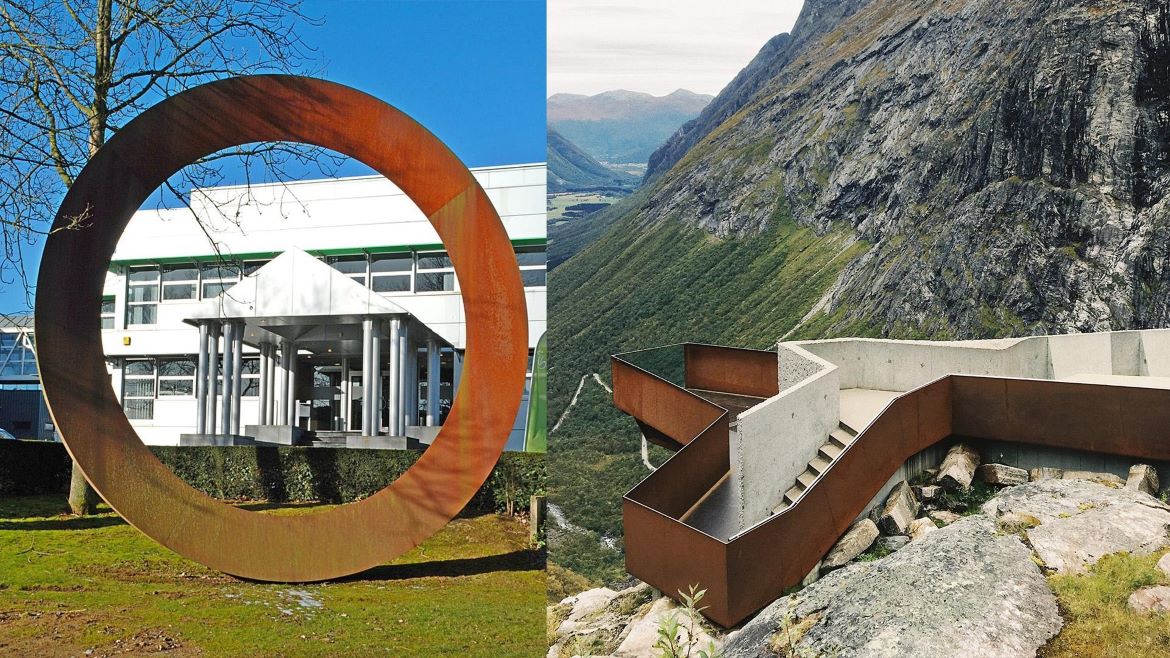
COR-TEN steel’s coating is formed by controlled weathering. (Image credit: Wikipedia, CC BY-SA 4.0,  Paul Povoroznuk on Unsplash)
COR-TEN steel’s coating is formed by controlled weathering. (Image credit: Wikipedia, CC BY-SA 4.0, Paul Povoroznuk on Unsplash)

The most common methods of conversion coating are:

  • Anodizing
  • Alodining
  • Passivation
  • Black oxide

The following are the details of each process.

Anodizing

Anodization, or eloxation, involves the electrolytic passivation of aluminum that is submerged in a 15% sulphuric acid solution. The part forms an anode where a layer of aluminum oxide builds up on the outer surface. At the same time, the oxidation grows down into the part to an equal degree. So a 2 μm coating will increase dimensions by 1 μm, and parts have to be toleranced accordingly.

During the process, parts are suspended on conductive racks, leaving rack marks where the solution does not come in contact with the part. To control the location of rack marks, contact your supplier.

Dyeing and infusion of corrosion inhibitors is an optional next step. A wide spectrum of colors is available, yet light colors are difficult to produce, reds and blues tend to fade over time, and black may turn out gray on thinner coatings.

Inorganic colorants produce the most lightfast colors such as black and gold, but they can also be the least ecologically sensitive.

When investing in a chemical process at mass-manufacturing scale, some knowledge of organic chemistry can help in planning operations and concurrent waste management.

After dyeing, remaining nanopores are filled using hydrothermal nickel-acetate sealing. The increased hardness by several factors, together with its lustrous sheen and light weight makes anodized aluminum a sought-after material for consumer electronics, medical devices, tools, wheel hubs, bicycle frames, flashlights, architectural facades, and structural frames in space.

According to military-grade specifications, there are three types of anodization:

  • Type I. Using chromic acid results in a thinner coating which is better for fatigued components such as aircraft fuselages.
  • Type II. Most common type with coat thicknesses of 5-30 μm.
  • Type III. Ceramic-like hardcoat of 25-100 μm.

A drawback of Type I anodization, or the Bengough-Stuart process, is that it involves hexavalent chromium, a known carcinogen and environmental pollutant. This substance is used in lead chromate pigments in the red-yellow color space used for inks, paints, and plastic products made with injection molding.

Heightened cost is a disadvantage of Type III anodization because of higher voltages and increased process control in terms of solution temperature, acidity, concentration, and current.

Due to its brittleness, thicker coatings are prone to cracking induced by thermal stresses or fatigue. Sharp corners are to be avoided, with the minimum edge fillet radius being 31 x the anodic layer thickness. Polytetrafluoroethylene (PTFE) sealing results in the smoothest parts.

In Type III coatings over 75 μm, abrasion resistance drops significantly. Alloys containing over 2% copper are also less wear-resistant, and 6061 is generally the most suitable type of aluminum, surpassing 2000 or 7000 series grades.

Anodized parts adhere excellently to paint, so this is a popular post-process, along with laser etching and pad printing. In addition to aluminum, the process can be applied to titanium, tantalum, magnesium, and zinc.
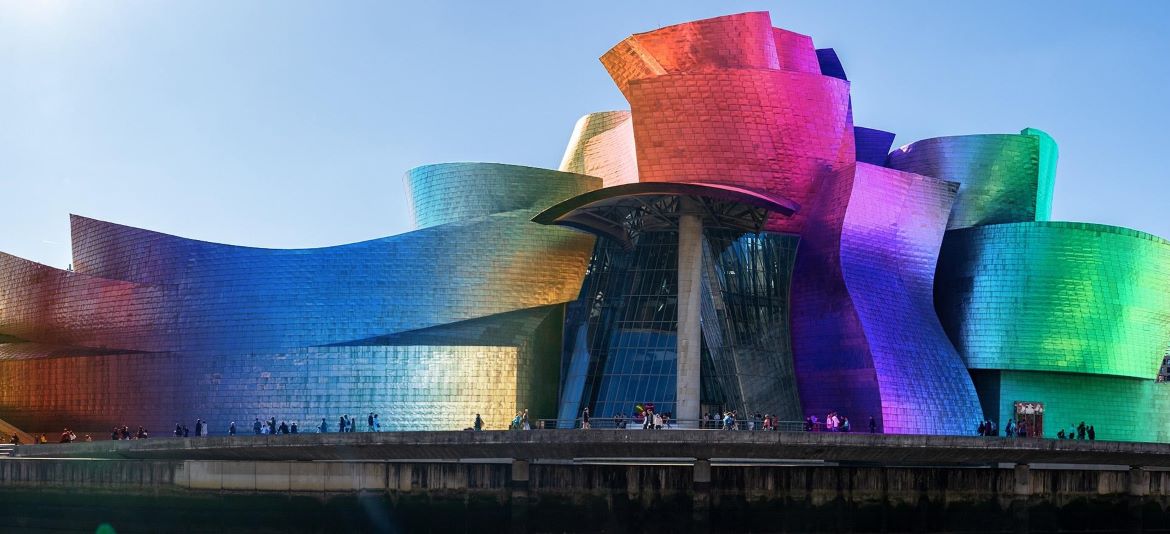
The Guggenheim Museum in Bilbao, Spain, with possible anodization colors for its titanium-clad facade. (Image credit: David Vives on Unsplash)

Alodine

Better known as chromate conversion coating, chem film, or Iridite, Alodine results in the thinnest coatings of 0.25-1 μm. It is often used for fasteners like screws, bolts, and brackets because no additional geometric dimensioning and tolerancing (GD&T) is required.

Since no electrolysis takes place the process is cheaper but also results in less durable coatings. As opposed to anodizing, Alodine results in better electrical conductivity. As a dual finish, anodization can follow Alodine to further enhance corrosion resistance in places where tolerances are irrelevant.

A greenish gold sheen can be achieved but the process releases chromium 6 as a byproduct, which can seep into bodies of water and be hazardous to fish. So to help phase out hexavalent chromium and improve sustainability, opt for the clear variant.

Black Oxide

Colloquially known as bluing or browning, black oxide applies to steel and stainless steel, enhancing its corrosion resistance. The cost-effective finish results in a matte black look because of chemical baths converting the surface into magnetite. An oil or wax sealing further adds lubriciousness.

Passivation

Steel passivation is generally understood to be a synonym for conversion coating, despite there being different kinds. In one version of the process, the high chromium content of stainless steel reacts with oxygen to form a protective barrier.

In another variant called phosphate conversion coating, phosphoric acid and salts are applied to the part to sheathe it with a durable metalophosphate microcoating 5-15 μm in thickness. The nanopores are then covered with a manganese or zinc seal, a process known as parkerization. The final result is a smooth and glossy part that is now “passive.” In other words, it is unaffected by environmental influences.


Final Takeaway

Through-and-through conversion coatings are the superior choice to passive coatings that adhere to a part’s outer surface without any structural chemical bond. Conversion coatings are corrosion and wear resistant while improving suitability for painting and impregnation. Still, there are substantial differences in cost, mechanical properties, visual aesthetics, and environmental impact between the various processes.
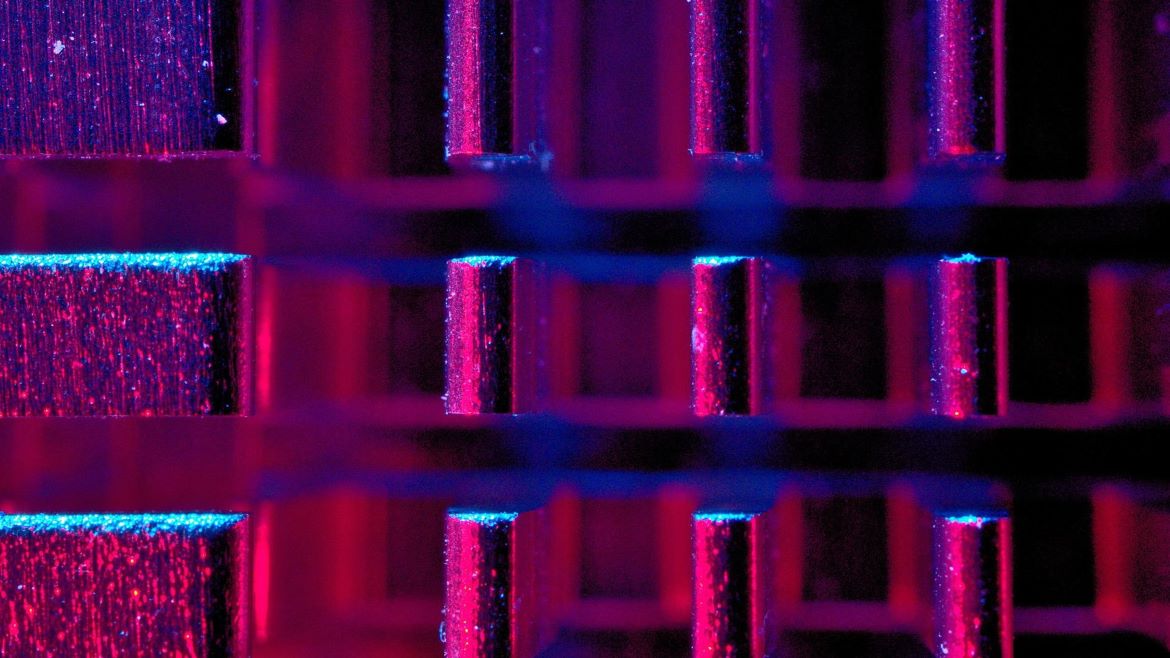
Anodization improves surface emissivity, which is perfect for heat sinks. (Image credit: Michael Dziedzic on Unsplash)

Anodizing truly glamorizes a product, making it attractive for a mainstream audience. Unique looks for architectural buildings can be achieved that emulate bronze, gold, copper, or brass. Plus it’s fairly harmless to the environment and free of volatiles (VOCs).

When developing new products, include conversion coating choices in the early stage of color-material-finish (CMF) specification and take into account the corresponding guidelines presented here for spectacular results.

KEYWORDS: Corrosion Control

Share This Story

Looking for a reprint of this article?
From high-res PDFs to custom plaques, order your copy today!

By Ralph Zoontjens, Product Designer/Freelancer, Tilburg, the Netherlands

Recommended Content

JOIN TODAY
to unlock your recommendations.

Already have an account? Sign In

  • pci1022-Kinaltek-Lead-1170.jpg

    A Novel Pigment Production Technology

    Following an extensive R&D program that demonstrated...
    Paint and Coating Pigments
    By: Jawad Haidar and Nitin Soni
  • pci global top 10

    2025 Global Top 10: Top Paint and Coatings Companies

    The following is PCI’s annual ranking of the top 10...
    Global Top 10 and PCI 25
    By: Courtney Bassett
  • 2025 pci 25

    2025 PCI 25: Top Paint and Coatings Companies

    PCI's annual ranking of the top 25 North American paint...
    Global Top 10 and PCI 25
    By: Courtney Bassett
You must login or register in order to post a comment.

Report Abusive Comment

Manage My Account
  • eMagazine
  • Newsletters
  • Online Registration
  • Subscription Customer Service

More Videos

Sponsored Content

Sponsored Content is a special paid section where industry companies provide high quality, objective, non-commercial content around topics of interest to the PCI audience. All Sponsored Content is supplied by the advertising company and any opinions expressed in this article are those of the author and not necessarily reflect the views of PCI or its parent company, BNP Media. Interested in participating in our Sponsored Content section? Contact your local rep!

close
  • colorful building exterior
    Sponsored byDow

    Insights into Exterior Architectural Coating Degradation: Bridging Accelerated and Natural Weathering

  • digital pigments
    Sponsored bySiltech

    The Fourth Dimension of Silicon: Siltech Q Resins

Popular Stories

Company News

What the AkzoNobel–Axalta Merger Means for the Future of Coatings

AkzoNobel and Axalta Headquarters

AkzoNobel and Axalta Announce $25 Billion Merger

Wacker logo

WACKER Plans More Than 1,500 Job Cuts


PCI Buyers Guide

Submit a Request for Proposal (RFP) to suppliers of your choice with details on what you need with a click of a button

Start your RFP

Browse our Buyers Guide for manufacturers and distributors of all types of coatings products and much more!

Find Suppliers

Events

September 4, 2025

N-Butylpyrrolidone (NBP) as a Green Solvent to Replace N-Methylpyrrolidone (NMP) in Industrial Coating Applications

ON DEMAND: EPA published a regulation proposal around N-methylpyrrolidone (NMP) in June 2024 to ban or limit NMP in many applications, such as paints and coatings and their removers. N-butylpyrrolidone (NBP) is a powerful and versatile solvent for a variety of industries looking for alternatives to substance of very high concern (SVHC)-listed solvents.

March 24, 2026

The Manufacturing & Automation eXchange (MAX)

MAX presents a rare opportunity to observe the full scope of manufacturing in one environment. From systems integration and materials handling to automation, quality, safety, and packaging, each discipline is represented through live, operational displays. By experiencing these technologies side by side, as they are on actual production floors, attendees gain a grounded understanding of how manufacturing functions align, overlap, and evolve in practice.

View All Submit An Event

Poll

Longest-running laboratory experiment

What is the longest-running laboratory experiment?
View Results Poll Archive

Products

Automotive Paints and Coatings, 2nd Edition

Automotive Paints and Coatings, 2nd Edition

Now in its second edition and still the only book of its kind, this is an authoritative treatment of all stages of the coating process.

See More Products
pci voices from the top ebook

PCI webinar

Related Articles

  • eig

    A Methodology for Optimizing Chromate Conversion Coating Process Parameters

    See More
  • Conversion Coating Expected to Cut GM's Process Costs - Posted 6/24/08

    See More
  • feature

    Selecting Resins for Wood Coating Applications: A Guide for Formulators

    See More

Events

View AllSubmit An Event
  • September 4, 2025

    N-Butylpyrrolidone (NBP) as a Green Solvent to Replace N-Methylpyrrolidone (NMP) in Industrial Coating Applications

    ON DEMAND: EPA published a regulation proposal around N-methylpyrrolidone (NMP) in June 2024 to ban or limit NMP in many applications, such as paints and coatings and their removers. N-butylpyrrolidone (NBP) is a powerful and versatile solvent for a variety of industries looking for alternatives to substance of very high concern (SVHC)-listed solvents.
View AllSubmit An Event

Related Directories

  • Orion S.A.

    Orion manufactures specialty carbon blacks for paint, coatings, ink, toner, adhesives, polymers, batteries, tires and rubber goods. Our specialty carbon blacks tint, colorize, impart conductive properties to, and enhance the performance of paints and coatings. The company runs 15 production sites and four Applied Technology Centers worldwide.
×

Keep the info flowing with our eNewsletters!

Get the latest industry updates tailored your way.

JOIN TODAY!
  • RESOURCES
    • Advertise
    • Contact Us
    • Directories
    • Store
    • Want More
  • SIGN UP TODAY
    • Create Account
    • eMagazine
    • Newsletters
    • Customer Service
    • Manage Preferences
  • SERVICES
    • Marketing Services
    • Reprints
    • Market Research
    • List Rental
    • Survey & Sample
  • STAY CONNECTED
    • LinkedIn
    • Facebook
    • Youtube
    • X (Twitter)
  • PRIVACY
    • PRIVACY POLICY
    • TERMS & CONDITIONS
    • DO NOT SELL MY PERSONAL INFORMATION
    • PRIVACY REQUEST
    • ACCESSIBILITY

Copyright ©2025. All Rights Reserved BNP Media.

Design, CMS, Hosting & Web Development :: ePublishing