Painting & Coating Industry (PCI) logo Powder coating summit logo
search
cart
facebook twitter linkedin youtube
  • Sign In
  • Create Account
  • Sign Out
  • My Account
Painting & Coating Industry (PCI) logo Powder coating summit logo
  • NEWS
    • Latest News
    • Market Trends & Reports
    • Finishing News
    • Price Alerts
    • Subscribe to Newsletters
    • Global Top 10/ PCI 25
    • Weekly Featured Article
    • COATLE Word Game
  • PRODUCTS
    • Product News
    • Must See Products and Services
  • MATERIALS
    • Additives
    • Resins/Polymers
    • Pigments
    • Equipment
    • Distributors
  • TECHNOLOGIES
    • Adhesives
    • Architectural Coatings
    • Finishing Articles
    • Finishing Technologies
    • Finishing Equipment
    • Industrial Coatings
    • Nanotechnology
    • Powder Coatings
    • Solventborne
    • Special Purpose Coatings
    • Sustainability
    • UV Coatings
    • Waterborne
  • RESOURCES
    • Columns
      • Did you know?
      • Distribution Dive
      • Formulating With Mike
      • Innovation Insights
      • Powder Coating Perspectives
      • TiO2 Insider
    • Blogs
      • Editor's Viewpoint
      • Industry Insights
    • Coatings Supplier Handbook
    • Podcasts and Videos
      • COAT-IT! Podcast
      • Videos/PCI TV
    • PCI Store
    • Classifieds
    • eBooks
    • Sponsor Insights
    • White Papers
    • COATLE Word Game
  • EVENTS
    • Coatings Trends & Technologies Summit
    • Paint and Coatings Academy
    • Webinars
    • Calendar of Events
    • Lifetime Achievement Award
  • DIRECTORIES
    • Buyer's Guide
    • Equipment Directory
    • Materials Directory
  • EMAGAZINE
    • Current Issue
    • eMagazine Archive
    • China Issue Archive
    • Editorial Advisory Board
  • CONTACT
    • Contact Us
    • Advertise
    • Subscribe to eMagazine
    • Subscribe to Newsletters
  • SIGN UP!
Paint and Coatings AdditivesIndustrial CoatingsSpecial Purpose CoatingsSustainableFormulating with Mike

Self-Leveling Coatings: Polyols for Urethanes

By Mike Praw, Technical Service & Development Manager – Coatings and Performance Products, Indorama Ventures, The Woodlands, TX
pci0423-Formulating-874157664-1170.jpg

Davizro / iStock / Getty Images Plus, via Getty Images.

May 11, 2025

In previous articles we have covered self-leveling coatings, urethanes and isocyanates. In this month’s column, I will cover the isocyanate-reactive components: polyols and amines. 

An isocyanate can react with a hydroxyl group, water or an amine. Figure 1 shows these reactions. If an isocyanate reacts with a hydroxyl group, a urethane is created (a). If it reacts with water, an amine and CO₂ evolve (b). If an isocyanate reacts with an amine, then a urea results (a). 
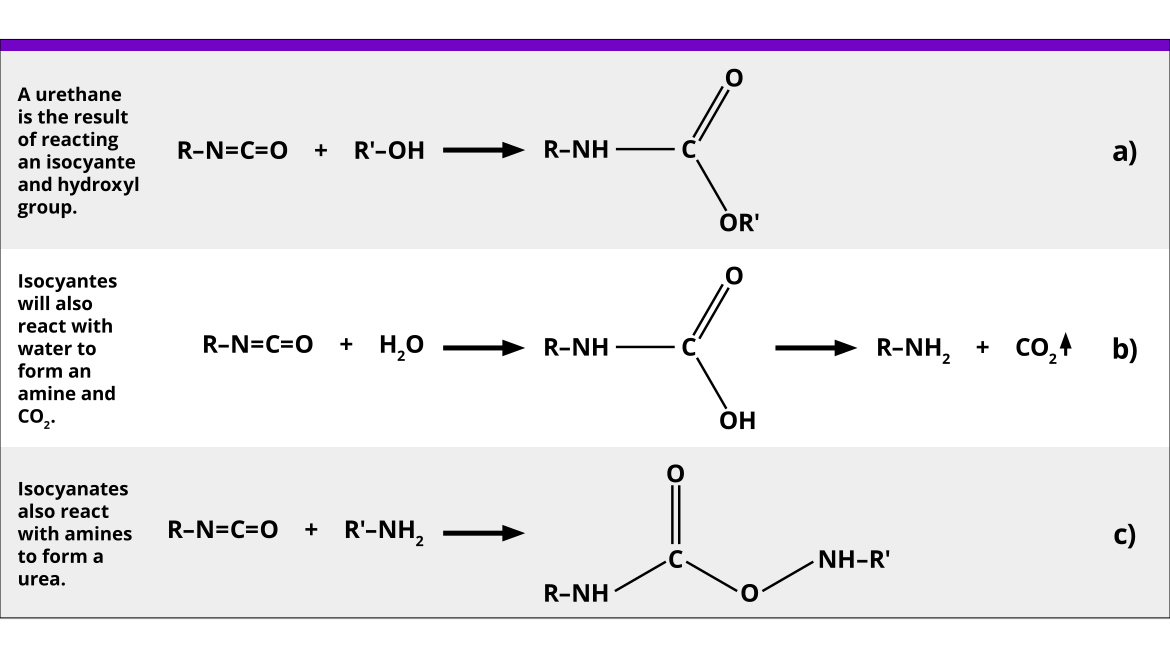
Isocyanate reactions.
FIGURE 1 » Isocyanate reactions. Graphics courtesy of Michael Praw.

However, functional groups have different reactivities. They are detailed in Table 1. A couple of things to notice from Table 1: water is much more reactive than secondary alcohols, and the amine groups are incredibly fast compared to polyol groups. I will cover how this affects formulation in the next column.
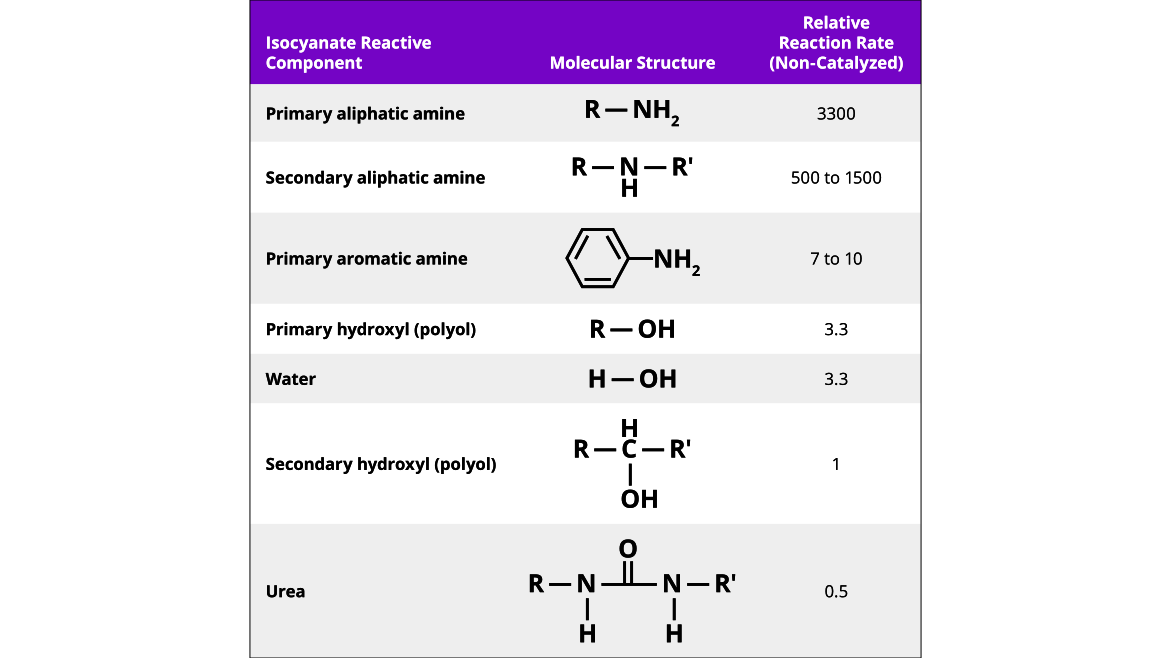
Relative reactivities of groups that react with isocyanates.
TABLE 1 » Relative reactivities of groups that react with isocyanates. Graphics courtesy of Michael Praw.

For most self-leveling coatings, 100% solids are needed. This precludes polyols like acrylic-based ones. Also, since water pools on self-leveling coatings, polyester polyols have limited use due to the hydrolysis of the backbone. This leaves polyether polyols and castor oil as the most used polyols.

Due to the high reactivity of amines with methyl diphenyl diisocyanate (MDI), the pot life is too short, and they are used with aliphatic isocyanates and UV-resistant topcoats. It is rare for monomeric MDI to be used; generally, ~200 centipoise/~2.7-functional polymeric MDI (pMDI) is used due to increased crosslinking.

Castor oil is used in large quantities in self-leveling coatings but needs some polyether polyols to balance properties. Triols (usually alkoxylated glycerin) are used to increase toughness (compression strength and hardness), while diols are used to increase flexibility and crack bridging. It is rare to use only castor oil with polymeric MDI. Castor oil is unique; it contains ~92% ricinoleic acid, so it is very consistent in structure and properties across the world (Figure 2).

If higher hydroxyl content is needed, you can hydrogenate the double bonds in the castor backbone. Functionality can be increased up to six from three. This will significantly increase crosslink density and toughness of the coating. However, nothing comes without cost: hydrogenated castor oil has a high viscosity and can reduce the flowability of the coating.
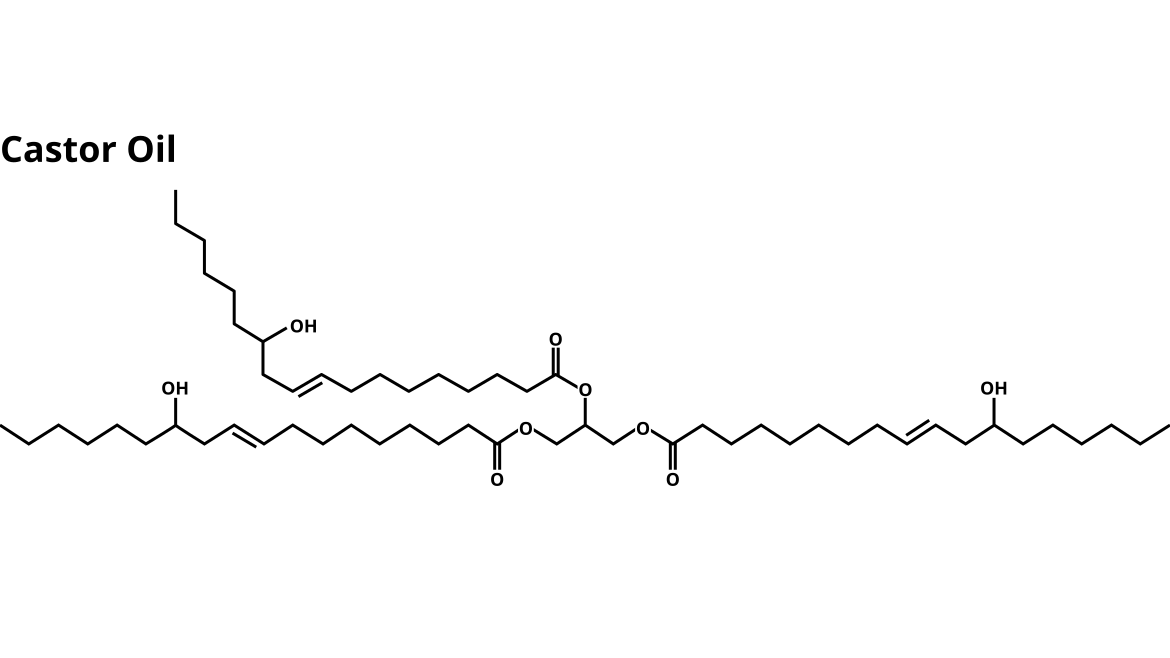
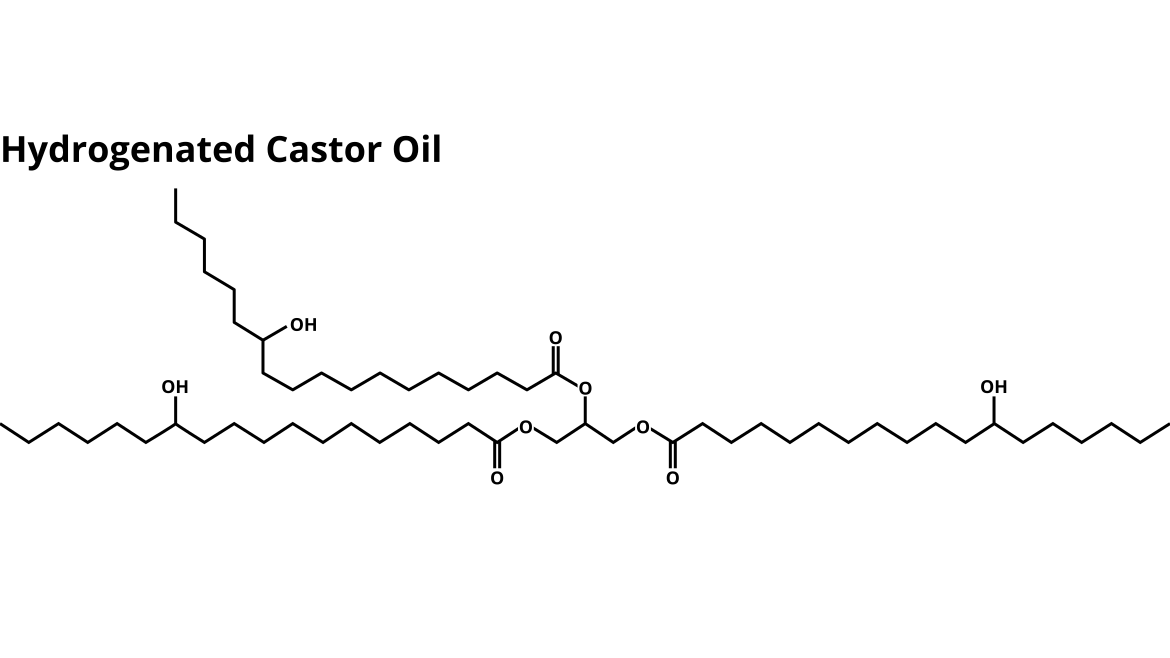
Castor oil structure Hydrogenated Castor oil structure
FIGURE 2 » Castor oil structure (above). Hydrogenated castor oil structure(below). Graphics courtesy of Michael Praw.

Polyether polyols are based on the alkoxylation of the hydroxyl groups on a starter. Since the hydroxyl group is extended out during the alkoxylation, if you start with a diol, you end up with a diol — the same for triols (Figure 3 shows the reaction). Normally, for self-leveling coatings, most starter alcohols used are alkoxylated with propylene oxide (proproxylated). While ethoxylation with ethylene oxide is sometimes used, it increases the hydrophobicity and viscosity of the polyol when compared to proproxylated polyethers.
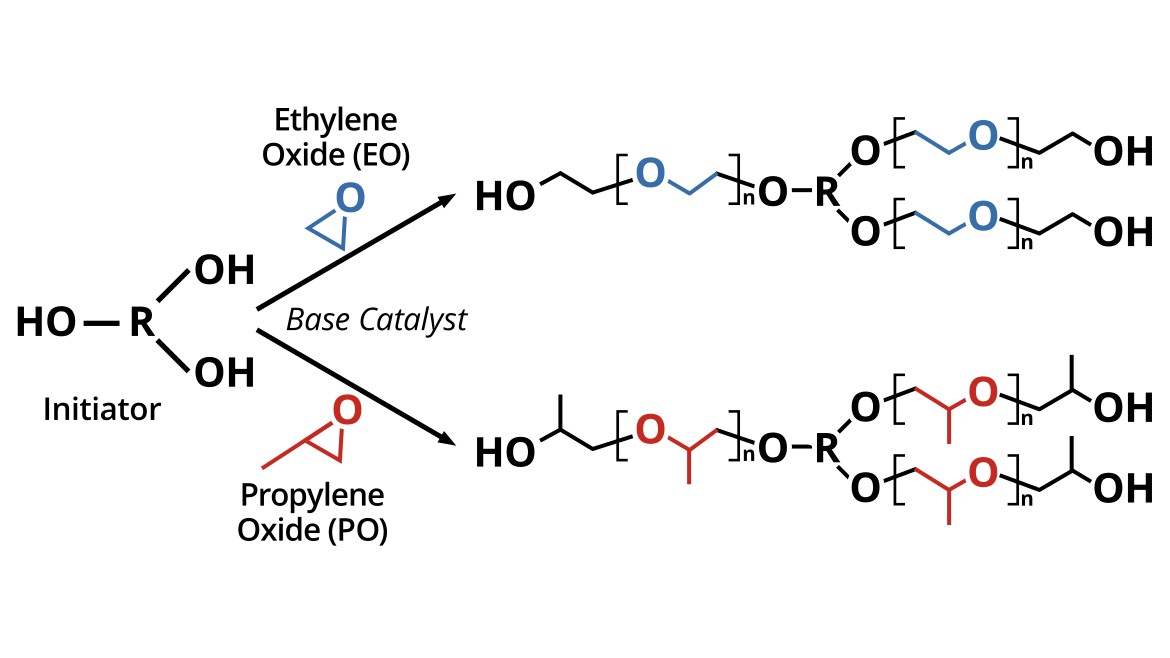
Alkoxylation reaction.
FIGURE 2 » Alkoxylation reaction. Graphics courtesy of Michael Praw.

If using a base catalyst like KOH, as proproxylation increases, side reactions and backbiting lead to unsaturation. This lowers the crosslink density of the polyurethane, and monols cap chain growth and decrease physical properties. So, it is common to put an ethoxylated cap on the end of the proproxylated polyol since the side reactions are reduced. Another advantage of an EO cap is similar reactivity as water, lessening the water side reactions. Newer catalysts like double metal cyanide (DMC) catalysts eliminate most of the side reactions compared to base catalysts, yielding a “purer” polyol.

In next month’s edition of Formulating with Mike, we will complete self-leveling coatings with formulation tips.


All information contained herein is provided "as is" without any warranties, express or implied, and under no circumstances shall the author or Indorama be liable for any damages of any nature whatsoever resulting from the use or reliance upon such information. Nothing contained in this publication should be construed as a license under any intellectual property right of any entity, or as a suggestion, recommendation, or authorization to take any action that would infringe any patent. The term "Indorama" is used herein for convenience only, and refers to Indorama Ventures Oxides LLC, its direct and indirect affiliates, and their employees, officers, and directors.

KEYWORDS: amines catalysts crosslinking agents polyols Polyurethane Resins Rheology Modifiers Viscosity Control

Share This Story

Looking for a reprint of this article?
From high-res PDFs to custom plaques, order your copy today!

Mike Praw, Technical Service & Development Manager – Coatings and Performance Products, Indorama Ventures, The Woodlands, TX

Recommended Content

JOIN TODAY
to unlock your recommendations.

Already have an account? Sign In

  • pci1022-Kinaltek-Lead-1170.jpg

    A Novel Pigment Production Technology

    Following an extensive R&D program that demonstrated...
    Paint and Coating Pigments
    By: Jawad Haidar and Nitin Soni
  • pci global top 10

    2025 Global Top 10: Top Paint and Coatings Companies

    The following is PCI’s annual ranking of the top 10...
    Paint and Coating Market Reports
    By: Courtney Bassett
  • 2025 pci 25

    2025 PCI 25: Top Paint and Coatings Companies

    PCI's annual ranking of the top 25 North American paint...
    Global Top 10 and PCI 25
    By: Courtney Bassett
You must login or register in order to post a comment.

Report Abusive Comment

Manage My Account
  • eMagazine
  • Newsletters
  • Online Registration
  • Subscription Customer Service

More Videos

Sponsored Content

Sponsored Content is a special paid section where industry companies provide high quality, objective, non-commercial content around topics of interest to the PCI audience. All Sponsored Content is supplied by the advertising company and any opinions expressed in this article are those of the author and not necessarily reflect the views of PCI or its parent company, BNP Media. Interested in participating in our Sponsored Content section? Contact your local rep!

close
  • colorful building exterior
    Sponsored byDow

    Insights into Exterior Architectural Coating Degradation: Bridging Accelerated and Natural Weathering

  • digital pigments
    Sponsored bySiltech

    The Fourth Dimension of Silicon: Siltech Q Resins

Popular Stories

Company News

What the AkzoNobel–Axalta Merger Means for the Future of Coatings

AkzoNobel and Axalta Headquarters

AkzoNobel and Axalta Announce $25 Billion Merger

Wacker logo

WACKER Plans More Than 1,500 Job Cuts


PCI Buyers Guide

Submit a Request for Proposal (RFP) to suppliers of your choice with details on what you need with a click of a button

Start your RFP

Browse our Buyers Guide for manufacturers and distributors of all types of coatings products and much more!

Find Suppliers

Events

September 4, 2025

N-Butylpyrrolidone (NBP) as a Green Solvent to Replace N-Methylpyrrolidone (NMP) in Industrial Coating Applications

ON DEMAND: EPA published a regulation proposal around N-methylpyrrolidone (NMP) in June 2024 to ban or limit NMP in many applications, such as paints and coatings and their removers. N-butylpyrrolidone (NBP) is a powerful and versatile solvent for a variety of industries looking for alternatives to substance of very high concern (SVHC)-listed solvents.

March 24, 2026

The Manufacturing & Automation eXchange (MAX)

MAX presents a rare opportunity to observe the full scope of manufacturing in one environment. From systems integration and materials handling to automation, quality, safety, and packaging, each discipline is represented through live, operational displays. By experiencing these technologies side by side, as they are on actual production floors, attendees gain a grounded understanding of how manufacturing functions align, overlap, and evolve in practice.

View All Submit An Event

Poll

Longest-running laboratory experiment

What is the longest-running laboratory experiment?
View Results Poll Archive

Products

Automotive Paints and Coatings, 2nd Edition

Automotive Paints and Coatings, 2nd Edition

Now in its second edition and still the only book of its kind, this is an authoritative treatment of all stages of the coating process.

See More Products
pci voices from the top ebook

PCI webinar

Related Articles

  • Bio-Based Solution for Self-Leveling Coatings

    See More
  • pci0423-Formulating-874157664-1170.jpg

    The Role of Self-Leveling Coatings

    See More
  • pci0423-Formulating-874157664-1170.jpg

    Self-Leveling Coatings: Formulating Tips

    See More

Related Products

See More Products
  • Kevin-Biller-PC-BOOK.jpg

    Powder Coatings - Foundation for the Novice Formulator (ebook)

  • intelligent.jpg

    Intelligent Coatings for Corrosion Control 1st Edition

See More Products
×

Keep the info flowing with our eNewsletters!

Get the latest industry updates tailored your way.

JOIN TODAY!
  • RESOURCES
    • Advertise
    • Contact Us
    • Directories
    • Store
    • Want More
  • SIGN UP TODAY
    • Create Account
    • eMagazine
    • Newsletters
    • Customer Service
    • Manage Preferences
  • SERVICES
    • Marketing Services
    • Reprints
    • Market Research
    • List Rental
    • Survey & Sample
  • STAY CONNECTED
    • LinkedIn
    • Facebook
    • Youtube
    • X (Twitter)
  • PRIVACY
    • PRIVACY POLICY
    • TERMS & CONDITIONS
    • DO NOT SELL MY PERSONAL INFORMATION
    • PRIVACY REQUEST
    • ACCESSIBILITY

Copyright ©2025. All Rights Reserved BNP Media.

Design, CMS, Hosting & Web Development :: ePublishing