
Four thermolatent catalysts are evaluated for pot life, dust-free time and hardness in two-component polyurethane coatings under ambient and elevated-temperature cure conditions.
PPG researchers explore how thermolatent tin catalyst design changes the balance between working time and low-temperature cure in polyurethane coatings.
An evaluation of QUV stability, corrosion resistance, chemical spot testing and heat aging performance in a single-coat system for industrial and rail applications.
A triple-resin coating is evaluated against multiple atmospheric stressors, with results highlighting both protective performance and a corrosion-test limitation.
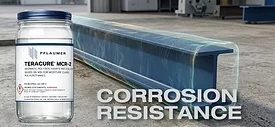
An MDI-based pre-polymer supports corrosion-resistant polyurethane primers with strong durability, chemical resistance and flexibility in one- and two-component systems.
Global coating resins demand is rising as sustainability regulations, emerging markets and bio-based technologies reshape binder innovation and coatings formulation strategies.
This work shows how CE10P acrylic and hybrid polyols improve flow, drying speed and appearance in acetone-rich clearcoat formulations while meeting strict VOC limits.
This article examines biobased 1,5 pentanediol, highlighting its verified biocontent, reduced emissions, production advantages, and performance in paint and coatings.
The bio-based coatings market is growing rapidly, driven by environmental regulations, sustainability demands, and innovations in resins, polymers, and smart technologies.
Temperature control in 2K coating processes improves component mixing, induction time management and viscosity stability, helping manufacturers reduce waste and improve application outcomes.