Keeping Blasting Operations Efficient
A Conversation with Titan Abrasive Systems’ Brandon Acker
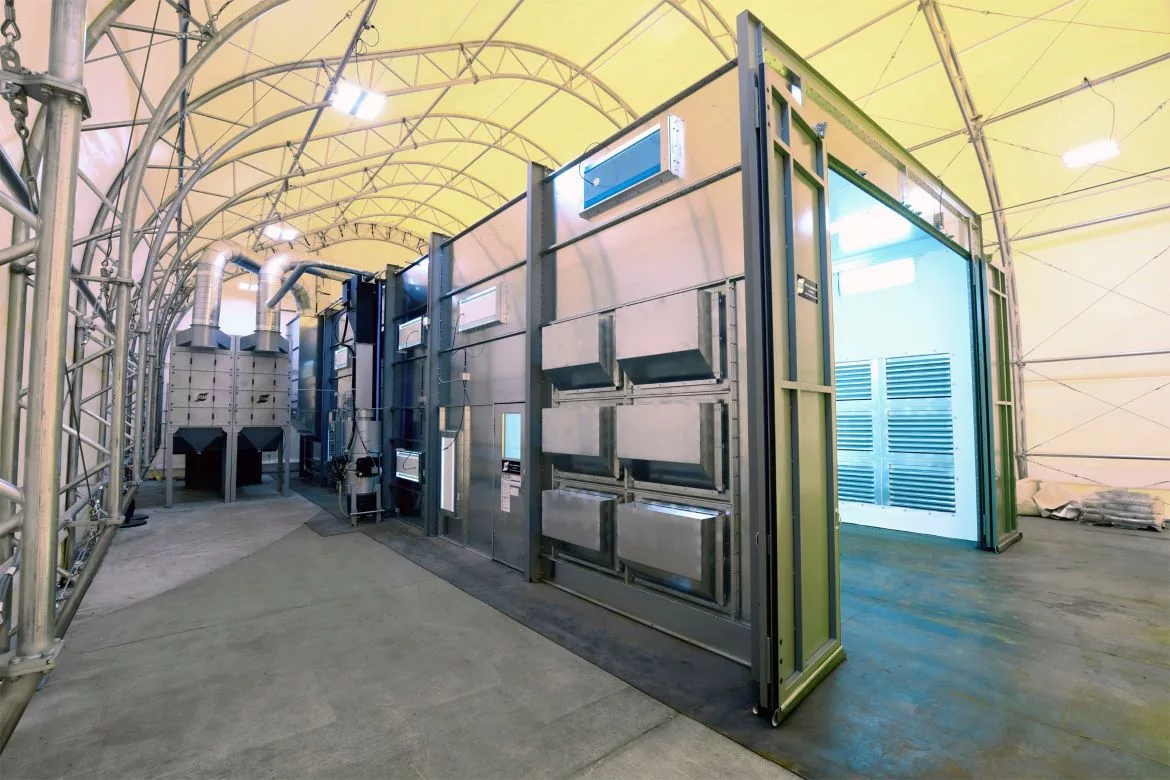
Image courtesy of Titan Abrasive Systems.
This article is based on an interview recorded for the Coat It! Podcast, where PCI explores the processes, technologies and practical challenges shaping the paint and coatings industry. To hear the full conversation, listen to the podcast episode here.
Abrasive blasting is rarely the star of the production line, but it directly influences throughput, coating performance and long-term maintenance demands. Many facilities treat blasting as a necessary but background process, yet small missteps at this stage can ripple across an entire finishing operation.
To better understand where inefficiencies arise, and what facilities can do to prevent them, PCI sat down with Brandon Acker, president of Titan Abrasive Systems, who has spent more than a decade modernizing blast rooms and blast machines for manufacturers across the United States. In this conversation, he explains why blasting is “the most maintenance-intense piece of equipment in a facility,” the real cost of reclaim issues, and how proper profiling supports coating success.
PCI: We hear from manufacturers who feel their blasting operations are inefficient, but that can mean a lot of different things. From your perspective, what are the most common sources of inefficiency?
Acker: There can be a lot of inefficiencies in a blasting operation — from the equipment, to the media, to the operator’s technique. I’d say it usually comes down to training or lack of training. When we install a system, we send our installers to train operators on how to use and maintain it. We also offer to come back six months or a year later, especially for new users, to retrain them so they don’t develop bad habits.
It’s a big process. Blasting is very maintenance intense, probably the most maintenance-intense piece of equipment in a facility. And because it’s often placed in a back corner, people tend to overlook it. It doesn’t always get the attention it deserves.
PCI: You provide a lot of follow-up support and training after installation. What kinds of issues do you see when operations haven’t been optimized?
Acker: A lot of it starts with media waste. If the reclaim system isn’t tuned properly, you get carryover into the dust collector. That media is getting disposed of rather than reused. It might not seem huge at first, but it adds up — especially if you’re using twice as much media as you should.
Then there’s nozzle wear and blast time. If a nozzle is worn or pressure isn’t right, operators might take an hour to blast something that should take 30 minutes. People don’t always account for blast time as a cost factor.
The biggest issue is maintenance. Something as simple as a $20 or $30 part not being replaced can shut the whole operation down. If that part fails and you don’t have a replacement, your blasting operation — and everything that depends on it — is down for the day.
PCI: Every facility is different. How do you work with maintenance teams to help them improve efficiency?
Acker: Communication is key. The maintenance team and the blast operator need to be in constant communication. If something isn’t running smoothly, they have to talk about it early instead of pushing through until something breaks.
Blasting is unique because it’s self-destructive. The equipment is constantly being worn down by the media. Even the dust is abrasive. Anywhere the media travels, it’s wearing something. You have to stay on top of that. If you don’t catch a small wear point early, it becomes a larger failure. A little rubber diaphragm in a valve might wear out, but once the media gets through it, now it’s wearing out the next part — and eventually the valve casting itself.
PCI: Let’s talk about the blasting itself. What happens when parts are under-blasted or over-blasted?
Acker: You can go both ways. If you over-blast and create too much profile, the coating team will need more coats to cover that surface and get the right finish. That’s a lot of wasted product.
If you under-blast, or if you rely on chemical cleaning without profiling, adhesion becomes the problem. Powder coating is especially sensitive to this. It’ll look good at first, but once it’s out in the field, it’ll peel quickly. And powder doesn’t peel a little — it usually comes off in a big chunk. When you see that, the surface underneath is smooth, which tells you it wasn’t blasted properly.
Most coatings call out a required profile on their data sheets. That usually dictates what kind of blast you’re going for and what media you’re using.
PCI: You mentioned reclaim earlier. Many companies hesitate to invest in these systems. What advice do you give them?
Acker: Reclaim systems can be expensive, depending on how elaborate they are. Some setups are simple and just clean and return the media. Others are full in-floor systems with augers and grating. Those can get pretty involved and expensive.
The key is that the reclaim has to clean the media so it can be reused. That’s the priority. How you get the spent media to the reclaim — whether operators push it to a hopper or it drops through the floor automatically — is a secondary question.
If you’re building a new blast room, it’s something you want to consider up front. Once concrete is poured, your options become limited. Even if you don’t put in a full recovery system right away, it’s worth knowing what it would take to add it later.
PCI: As you look ahead, do you expect major changes in blasting technology over the next year?
Acker: The abrasive blasting world sees more gradual change. It’s been around a long time. Medias have changed, equipment has changed and recovery systems have come a long way since the days of sandblasting, but it’s not a year-over-year transformation.
That said, we’re always working to make things better — longer-lasting components, more efficient systems, easier maintenance. Customer feedback drives a lot of our innovation. If there’s a better way to do something, we’re up for it.
Looking for a reprint of this article?
From high-res PDFs to custom plaques, order your copy today!