Catching the Unseen
How Silicone Oil Absorption Is Safeguarding Paint Quality in Automotive Coatings

- Oil Absorption in Coatings Lines
- Oleophilic Melt-Blown Polypropylene
- Automotive Finish Quality Protection
- Filtration for Silicone Contamination
- High-Viscosity Coating Environments
- Multi-Layer Filter Bag Systems
The mirror-smooth finish on an automobile is more than just a shine. It’s a statement of precision, protection and brand trust — what customers see and what manufacturers stake their name on. And yet, one of the biggest threats to that perfect finish is practically invisible: silicone oil.
Modern automotive paint and coatings represent millions of dollars in R&D, tightly choreographed manufacturing processes and customer expectations that leave no room for error. But silicone oil contamination can derail entire production runs. Including cratering and adhesion failure, aesthetic defects can trigger production slowdowns or lead to warranty claims that can damage reputations. Even traces of residue measured in parts per billion are sufficient to spoil otherwise tightly controlled processes.
Automotive paint and coatings are already a $22 billion slice of the global industry, expected to double to nearly $44 billion by 2034.¹ Add 80 million new vehicles a year to the mix,² and even minor contamination issues start adding up in a major way.
A Filtration Fix
Silicone oils are a subtle contaminant that often enters through overlooked sources: lubricants used during assembly, seals in fluid-handling systems, cleaning agents and even airborne particulates. And once they enter the supply chain — be it through paint production, transport or application — they stick around.
Because they’re inert and have low surface tension, they tend to spread out widely and quickly. A single droplet can disperse over an entire panel, making it nearly impossible to isolate and eliminate the source without halting production.
Traditional filter bag systems relying on needle felt or woven media are primarily designed to remove solid particles like dust, metal shavings or debris from liquid streams. However, they are not engineered with the oleophilic (oil-attracting) properties necessary to remove silicone oils from liquid coatings or paints.
That’s where specialty filter bags come in, especially those made with pure melt-blown polypropylene (PP) fibers. Unlike conventional filter media for particle separation, pure PP fibers have hydrophobic and oleophilic properties, so they repel water and attract oils to their surface.
With their fine diameter and nonwoven construction, these fibers form a dense, high-surface-area matrix perfectly suited for trapping and retaining oil droplets. And because melt-blown polypropylene can be manufactured without surface treatments like spin finishes (often employed to stabilize fibers in traditional media), there’s a significantly reduced risk of leaching or chemical interference with sensitive paint chemistry.
This absence of surface treatments preserves the fiber’s purity, ensuring compatibility with both solvent-borne and waterborne coatings. The result is not just passive filtration, but an active defense system that binds silicone oils on contact.
Making It Work
For coatings makers, flexibility matters. That’s why filter bag systems are so compelling. They’re adaptable, user-friendly and cost-efficient, being capable of slotting into existing filter housing arrangements.
In continuous operations like e-coat and topcoat lines where uptime is critical and contamination risks are constant, bag filters equipped with oil absorption layers provide a steady line of defense against silicone oil intrusion. Their ability to function without interrupting flow or requiring frequent maintenance makes them especially valuable in high-throughput environments.
Filter variants with 10–40 µm fineness are particularly well suited for sensitive applications like clear coats and high-performance base coats, where even the smallest surface defect (e.g., crater, fisheye, or loss of adhesion) can lead to scrapping high-value parts. The finer end of the spectrum (e.g., 10 µm) is ideal for final-stage filtration, ensuring a pristine finish, while coarser options like 30–40 µm are better suited for intermediate stages where both oil capture and particulate control are needed.
These filters continuously strip trace oils from the fluid stream, providing the in-line control required for consistent finish quality across long production runs, and without forcing operators to pause for filter changes or to troubleshoot surface defects midcycle.
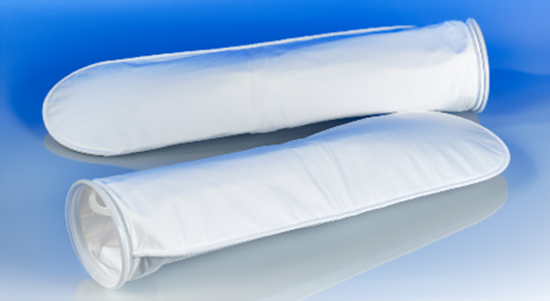
Figure 1. Eaton’s LOFCLEAR™ 100 automotive filter bags are purpose-built for oil removal in automotive paint and coating applications. Made with oleophilic melt-blown polypropylene, they provide reliable, continuous oil absorption to protect finish quality and minimize contamination risk.
 Credit: Eaton
Dual-Layer Filters for Complex Coatings
Other paint processes routinely contend with high-viscosity formulations such as underbody coatings, sound-deadening materials or high-build primers that require thicker consistency for functional performance. At the same time, in facilities without tightly controlled climate systems, fluid behavior and pressure profiles can be altered by fluctuating seasonal temperatures or even shift-based swings. Meanwhile, unstable operating conditions can occur during frequent color changeovers, pump restarts or when switching between solvent-borne and water-borne systems.
Each of these scenarios can introduce variables that strain conventional filtration setups, leading to increased risk of clogging, bypass or insufficient contaminant capture. In these cases, a dual-layer bag filter configuration can deliver the most efficient, targeted performance.
By pairing a durable needle felt outer shell (known for mechanical strength and dirt-holding capacity) with an internal melt-blown polypropylene core, a dual-layer filter bag arrangement combines robust particulate capture with targeted oil absorption. The outer layer traps larger solids and prevents premature clogging, while the inner melt-blown matrix zeroes in on silicone oils and other low-surface-tension contaminants.
This tiered system enables a single-pass solution capable of managing both the mechanical and chemical threats to paint quality. It’s a design that excels in complex paint environments from primer-heavy industrial lines to color-sensitive clearcoat applications, where filtration has to be adaptive and nondisruptive to flow rates or finish quality.
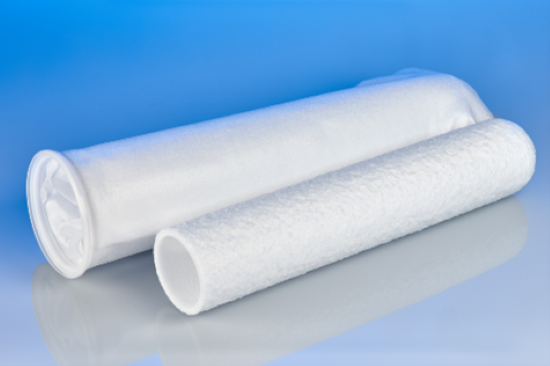
Figure 2. Eaton’s SENTINEL® MAXPO and DURAGAF™ MAXPOXL high-performance filter bags combine durable polypropylene needle felt with an integrated melt-blown pre-filter. Ideal for high-viscosity or unstable process conditions, they capture more oil and particulates in a single pass than conventional filtration options.
 Credit: Eaton
Built-In Backup for Paint Lines
Sometimes a more aggressive solution is required, especially in automotive paint shops with frequent material changeovers, high-volume e-coat operations or facilities handling multiple fluid chemistries. That’s where spiral-cut melt-blown absorption inserts come into play. Engineered to nest inside standard filter bags, these inserts enhance performance without changing existing filter housings.
The spiral-cut construction of the insert dramatically increases the surface area exposed to contaminated fluid, while the open-core design allows for smooth, unrestricted flow through the filter. This combination ensures that pressure remains stable even as the insert begins to capture significant amounts of oil — up to 0.5 gallon (2 L) in total.
Think of it as a high-capacity sponge built specifically for oil that doesn’t just provide an added layer of defense for everyday use; it’s also a go-to solution for emergency response. If an upstream equipment failure or material issue suddenly introduces silicone oil into the system, this insert can act as a frontline barrier, absorbing the surge and protecting downstream processes from damage.
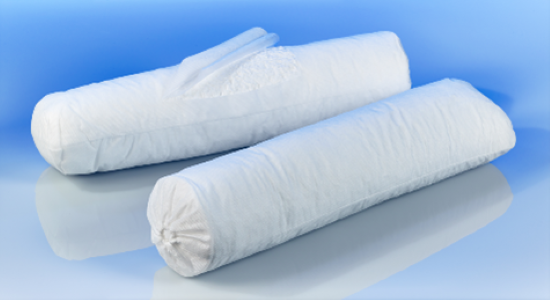
Figure 3. Eaton’s ABSORPTION INSERT filter element is designed for maximum oil and dirt absorption. Installed inside standard filter bags, it uses high-efficiency melt-blown polypropylene fibers to capture oil while maintaining optimal flow and low differential pressure throughout the process.
 Credit: Eaton
A Critical Layer
Silicone oil contamination isn’t just a final-stage issue. It’s a supply chain-wide vulnerability. Paint makers, chemical suppliers, logistics teams and body shops all have a stake in maintaining a clean, controlled environment.
Proactive filtration should be seen as an investment. The earlier oil-absorbing technologies are implemented, the better the downstream quality protection. And since modern filter systems fit into standard filter bag housings, adoption doesn’t require facility overhauls or high capital spend.
Of course, filtration must be paired with strong process discipline, equipment hygiene and training. As part of a layered strategy, advanced filtration is one of the most cost-effective steps you can take to protect surface integrity.
Because silicone oils, despite their microscopic profile, create disproportionately large issues. But with the right approach and the right filtration tools, they don’t have to. Absorptive filter technologies give manufacturers a way to fight back. They keep coatings clean, production lines moving and customer expectations intact.
References
1 Precedence Research. Automotive Paints and Coatings Market — Market Size, Trends and Forecasts 2023–2032. Retrieved June 5, 2025.
2 Statista. Worldwide Automobile Production From 2000 to 2023. Retrieved June 5, 2025.
For more on filtration trends affecting high-performance automotive finishing, explore additional resources on PCI’s topic page for Automotive Coatings.
Looking for a reprint of this article?
From high-res PDFs to custom plaques, order your copy today!