Replacing Fluorine-Based Additives in Coating Formulations

- This article explains why replacing fluorosurfactants is challenging due to their multifunctional performance and chemical stability in coating formulations.
- It compares organic, siloxane-based surfactants and defoamers across waterborne wood, decorative and leather coatings to evaluate surface tension, foam control and application quality.
- It highlights formulation tradeoffs, dosage effects and compatibility considerations when using non-fluorinated additive alternatives in paint and coatings systems.
Many coatings formulators are now having to find alternatives to fluorosurfactants in response to potential or increased regulations. Lack of availability of mainstream technology is another major reason for many to seek alternatives. Reformulation can be difficult due to the unique multifunctional properties and chemical stability of fluorosurfactants, so replacement is often not a direct one-for-one substitution.
Fluorosurfactants and additives are relatively low molecular weight additives containing fully (per) or partly (poly) fluorinated carbon chains connected to different functional groups. These additives are highly efficient at lowering the surface tension of liquid coatings to improve wetting of substrates and eliminate film defects. They can also improve the stain and chemical resistance of coatings and improve slip and mar resistance.
Formulators seeking alternatives to fluorinated additives need to consider all the potential effects these additives can bring to formulations and then identify alternatives that can provide similar performance. This paper will compare different additive families and review how these additives or combinations of additives can be used to replace fluorosurfactants when needed.
Materials and Methods
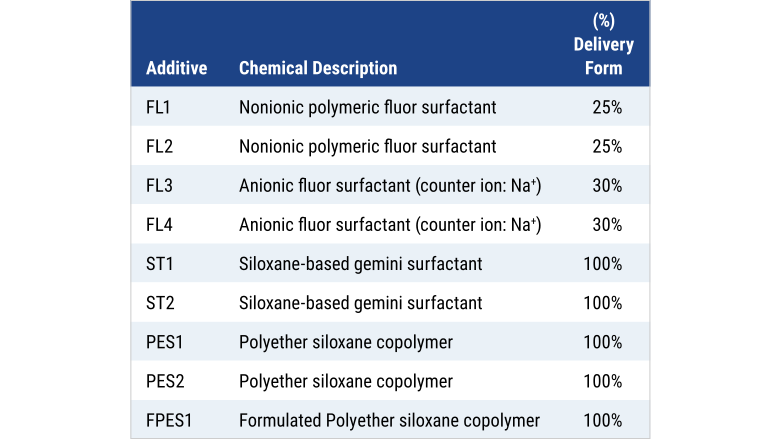
A series of organic and siloxane-based surfactants were tested in three different waterborne wood coating formulations to determine their effectiveness as alternatives to the fluorosurfactant benchmarks. The additives tested are shown in Table 1. Each additive was evaluated for its ability to lower formulation surface tension, measured using the Wilhelmy plate method, foaminess of the formulation measured by a pour-down method and visual assessment of surface quality after application. The three formulations tested were a 1K waterborne clear high-gloss furniture coating based on a self-crosslinking acrylic emulsion, a 2K waterborne matt polyurethane topcoat and a white pigmented 1K decorative topcoat.
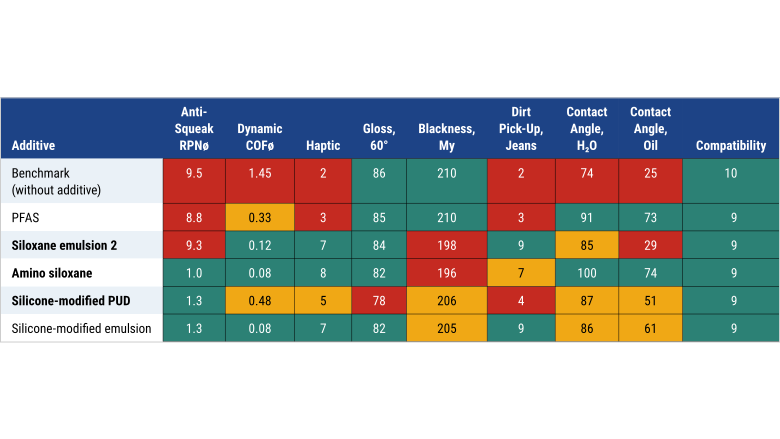
Similar studies were also conducted with higher molecular weight additives in two waterborne leather coatings based on polyurethane dispersions. Squeak resistance was measured according to the Zins–Ziegler tribology slip method. Contact angles with water and vegetable oils were measured using a Krüss MSA Flex. Gloss was measured using a BYK Gardner Micro Tri-Gloss and jetness was assessed using an X-Rite spectrophotometer. Haptic feel was assessed manually and the dynamic coefficient of friction (COF) was measured using an Instron dynamic testing system according to ISO 8295.
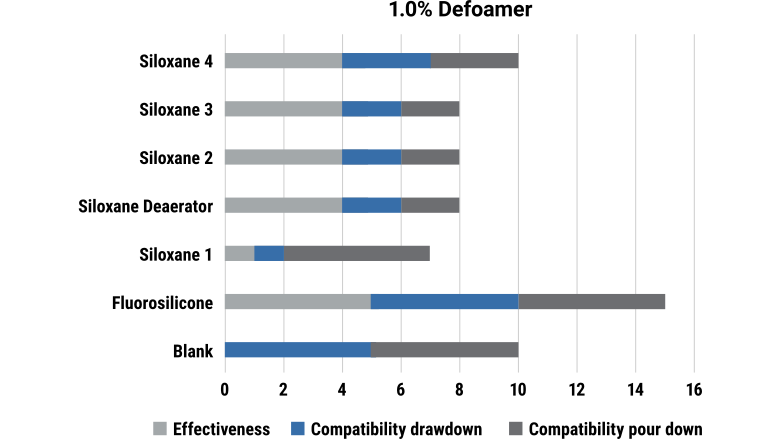
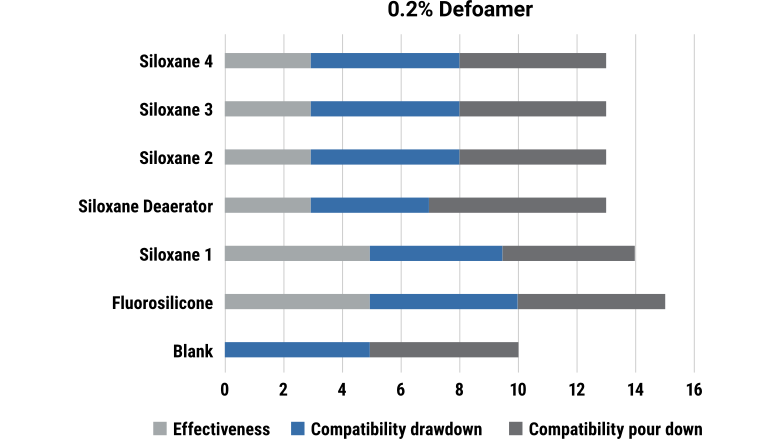
Five siloxane defoamers were also tested as alternatives to fluorosilicone-based defoamers in a solventborne 2K polyurethane clearcoat based on Setal S RD181 binder from Allnex. The defoamers were tested for defoaming efficiency using an internal high-shear foam test and for film compatibility by drawdown onto a Leneta chart and pour-down over a glass substrate.
Results and Discussion
The ability of different surfactants to lower the surface tension of the waterborne clear furniture coating is shown in Figure 1, and the effect of these additives on formulation foaminess is shown in Figure 2. A visual assessment of the ability of these surfactants to prevent surface defects in the applied coating is shown in Figure 3. Similar studies were completed with the same additives in the 2K waterborne matt polyurethane topcoat and the white pigmented 1K decorative topcoat.
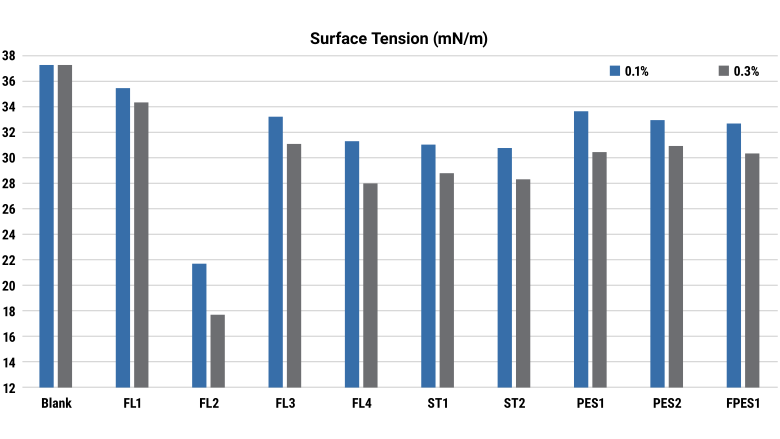
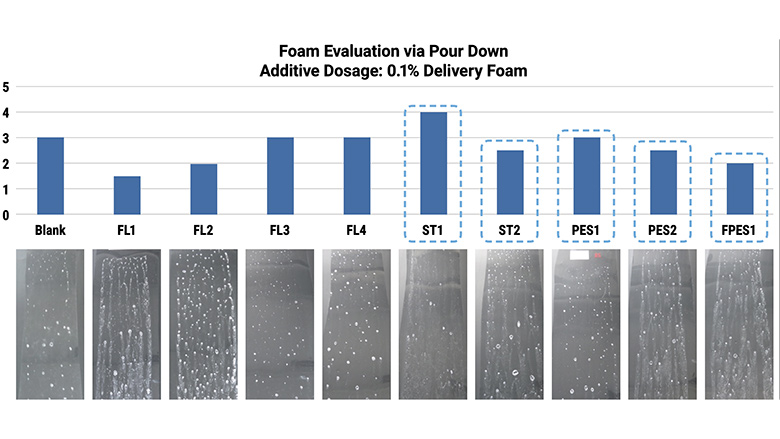
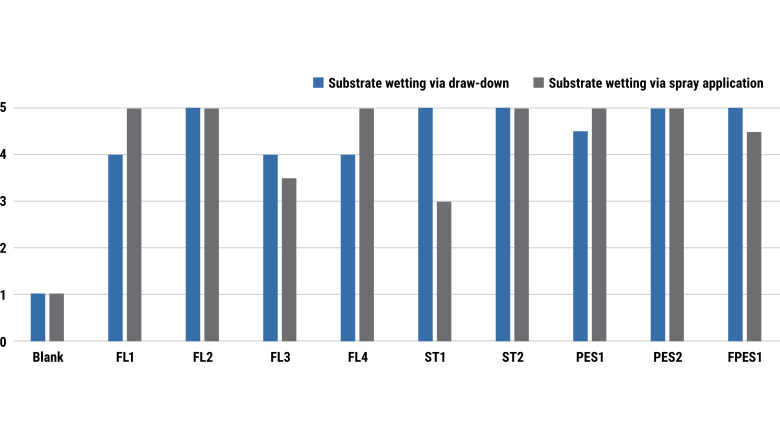
Most of the additives tested gave similar surface tension results in this formulation, except for FL2. However, as very few contaminants or materials have such low surface energy, this is unlikely to be a problem. The siloxanes generally gave comparable or improved foam control compared with the fluorosurfactants. The fluorosurfactants gave the best overall application performance when tested at a 0.1% dose in the formulation, but at a 0.3% dose, a number of the siloxane additives, including ST2 and PES2, gave equally good performance.
The results in the waterborne leather coating are shown in Table 2, where no single additive, including the fluorinated surfactant tested, could meet all the desired test criteria.
The results for the five siloxane defoamers tested as alternatives to a fluorosilicone-based defoamer at different dosages in the solventborne 2K polyurethane clearcoat are shown in Figure 4. The fluorosilicone defoamer is only 1% active as supplied, whereas most of the siloxane defoamers tested were 100% active, so the siloxane defoamers were effectively used at a much higher dose. This particularly affected the compatibility of the defoamers, with many giving surface defects such as craters and fisheyes when tested as one-to-one replacements in the formulation. When tested at a lower use level, the performance of the siloxane defoamers was much more comparable with the fluorosilicone benchmark.
Conclusions
Fluorosurfactants are a unique class of additives and can be difficult to replace, especially on a one-to-one basis. Higher additive doses may be required when replacing fluorine-based additives used for substrate wetting and defect control, particularly with hydrocarbon-based additives. Some Gemini siloxane-based additives have been found to be effective as one-to-one replacements, but ladder studies to optimize replacement additive dosage are still recommended. Conversely, when replacing fluorosilicone defoamers, a lower dose of siloxane defoamers may be needed due to the greater actives content of these materials.
Fluorosurfactants are also multifunctional, so it is important to consider all formulation and performance requirements when trying to find alternatives. Additive combinations may be required for optimal performance, and the performance of other additives, such as defoamers, in the formulation can also be affected by additive changes. Fluorosurfactants have good chemical and thermal stability, and it may be harder to find stable alternatives for coatings formulated at high or low pH. Finally, the complexity of finding suitable alternatives to fluorine-based additives can also be very time-consuming for formulators.
This article highlights formulation considerations tied to additive selection and replacement strategies within modern paint and coatings systems, particularly as regulatory and performance demands evolve.
Looking for a reprint of this article?
From high-res PDFs to custom plaques, order your copy today!