What Makes a Paint Asthma & Allergy Friendly?
Inside Benjamin Moore’s Zero-VOC Coating System

Inside this Article
- Zero-VOC architectural coatings can reduce emissions that contribute to indoor air quality concerns in residential and commercial buildings.
- Third-party certification programs verify coating emissions, ingredients and performance through independent laboratory testing.
- Eco Spec® coatings combine low-odor formulation with durability attributes such as hide, washability and chemical resistance.
- Testing protocols evaluate VOC emissions, ingredient safety, airborne particles and coating performance under real-world conditions.
Architectural coatings increasingly sit at the intersection of performance, environmental design and indoor air quality. In residential spaces, healthcare facilities and commercial buildings, coatings must deliver durability and application performance while also minimizing emissions that can affect sensitive occupants.
Benjamin Moore’s Eco Spec® interior coating system represents one example of how manufacturers are addressing those competing demands. Originally developed for commercial environments, the product has been optimized in recent years to meet the needs of both residential and institutional spaces where indoor air quality and odor sensitivity are key considerations.
A recent episode of PCI’s Coat It! podcast explored how these priorities shape formulation decisions, as well as how third-party certification programs verify performance and emissions claims.
Listen to the full Coat It! Podcast conversation with Benjamin Moore and certification experts to hear the complete discussion behind Eco Spec® development and testing.

Why Indoor Air Quality is Driving Coatings Innovation
Interest in low-VOC and zero-VOC coatings continues to grow as awareness of indoor environmental quality increases. Volatile organic compounds (VOCs) are commonly used in coatings to improve properties such as drying time, durability and freeze-thaw stability. During drying, however, VOCs can evaporate into the air and contribute to odor and indoor air pollution.
According to data cited by Benjamin Moore, indoor pollutant levels may be two to five times higher than outdoor levels, while Americans spend roughly 90% of their time indoors. For populations with asthma, allergies or odor sensitivity, those conditions make indoor air quality a growing concern.
Eco Spec coatings are designed to address that challenge by delivering zero-VOC content and extremely low odor while maintaining coating performance characteristics such as hide, application and durability.
During the podcast discussion, Benjamin Moore Product Marketing Manager Alfredo Valiente explained that improving odor performance became a major focus during product optimization.
“The fact that we significantly reduced the odor was a game changer,” Valiente said. “Out of the gate the product was already low odor, but within 30 minutes that low odor completely dissipates.”

Valiente noted that odor sensitivity is often the first signal occupants experience when entering a newly painted space.
“The minute you smell something, that is a trigger, especially for people with odor sensitivities,” he said.
The Role of Third-Party Certification
Performance claims related to sustainability or indoor air quality often require independent verification. Eco Spec coatings carry multiple environmental certifications, including recognition from the Asthma & Allergy Friendly® Certification Program.
The program is operated through a partnership between the Asthma and Allergy Foundation of America (AAFA) and Allergy Standards Limited (ASL), an independent scientific certification body.
According to Leah McInerney, Customer Success Manager of the certification program, the standards are designed to evaluate products based on their impact on indoor environments rather than direct medical outcomes.
“Everything that we do is based on improving the environment and reducing triggers in the environment,” McInerney explained.

Products seeking certification undergo laboratory testing to evaluate emissions and performance under controlled conditions. Key elements of coatings testing include:
- VOC emissions testing at both 24 hours and 14 days after application
- Chemical and ingredient review to identify substances that could negatively affect indoor environments
- Particle and surface evaluation during application
- Performance testing to ensure the coating functions as intended
This approach ensures that coatings must meet strict emission limits while still performing like conventional architectural paints.
The podcast explores how these testing protocols are developed and why independent verification is increasingly important in an era of sustainability claims. Listen now!
Balancing Environmental Performance and Coating Durability
One of the challenges for coatings manufacturers is maintaining durability and application performance while reducing emissions. Valiente noted that maintaining Benjamin Moore’s traditional coating attributes remained a priority during Eco Spec development. “Customers have a higher expectation for Benjamin Moore products that it is going to hide and cover in two coats,” he said.
As a result, Eco Spec was designed to retain key architectural coating characteristics such as:
- Strong hide and coverage
- Application consistency
- Touch-up capability
- Washability and durability
At the same time, the formulation incorporates additional attributes relevant to commercial and healthcare environments. Valiente explained that improving chemical resistance was an important factor for facilities that rely heavily on cleaning and disinfecting protocols.
“Hospitals, schools and other facilities are using common cleaners and disinfectants day in and day out,” he said. “Improving chemical resistance helps maintain the quality over a longer period of time.”
Eco Spec coatings also include antimicrobial additives designed to inhibit mold and mildew growth on the dry paint film, while remaining compatible with disinfectants used in healthcare and residential environments.
Certification and Indoor Environmental Design
Certification programs also play a role in broader building design frameworks.
Eco Spec coatings are designed to support multiple environmental building standards, including Green Seal®, LEED® indoor air quality credits and MPI Green Performance™ standards.
These frameworks increasingly influence product selection among architects, designers and facility managers who must balance durability, sustainability and indoor environmental quality.
According to Valiente, the role of certification extends beyond product marketing. “Having that validation from independent third-party certifications… shows that the product meets and exceeds those standards,” he said.
Certification also supports building operations in environments where occupancy interruptions must be minimized. Low-odor coatings that dry quickly can enable faster reopening of renovated spaces such as hospital rooms, classrooms and residential units.
Hear the full podcast discussion for additional insights into how certification programs intersect with coating formulation and facility operations. Listen now!
A Growing Focus on Indoor Air Quality
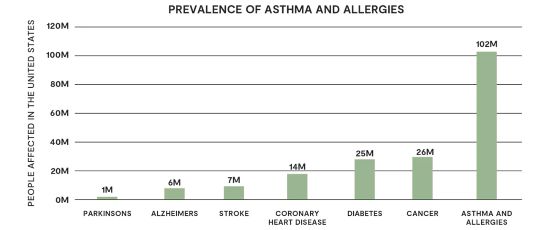
Both the coatings industry and certification bodies expect indoor environmental quality to remain a growing priority for building materials. McInerney noted that the prevalence of asthma and allergies continues to drive demand for products that minimize environmental triggers.
“There’s over 28 million people in the U.S. with asthma and over 100 million with allergies,” she said.
Rather than relying on a single product solution, improving indoor environments often requires a combination of materials and building practices. Paint, flooring, insulation, air purification systems and HVAC design can all contribute to reducing airborne triggers and improving indoor air quality.
As coatings manufacturers continue to explore new formulation strategies, products like Eco Spec illustrate how architectural coatings can address both environmental performance and traditional coating durability requirements.
Sources:
Eco Spec® CERTIFIED asthma & allergy friendly® Zero VOC Paint | Benjamin Moore
About the Program | Asthma & Allergy Friendly Certification Program
Explore more insights on architectural coatings and formulation trends in PCI’s coverage of the evolving coatings industry.
Looking for a reprint of this article?
From high-res PDFs to custom plaques, order your copy today!