
Increasing Block Resistance in Low-VOC Acrylic Paints with Colloidal Silica
A study of three commercial semigloss paints examines how silane-modified colloidal silica, drying time and rheology modifiers influence block resistance.

Need to Know
- Three commercial semigloss acrylic paints were evaluated with 0, 5 and 10 wt% colloidal silica and a paraffin wax comparison.
- Higher colloidal silica loading and longer drying times generally produced higher ASTM D4946 block-resistance ratings.
- Dynamic surface tension remained around 28 mN/m, indicating that the observed open-time extension was not caused by changes in surface tension.
- At similar measured viscosity, the formulation containing HEUR thickener achieved a higher block-resistance rating than the EHEC formulation.
Numerous studies have explored the use of silica nanoparticles in resin-based systems. Water-free systems of silane-modified colloidal silica particles have been shown to enhance the mechanical properties of coatings.1,2 Silane-modified fumed silica has also been used to improve coating properties. Organosols have been employed to enhance scratch resistance in clear coatings through surface enrichment. Aqueous colloidal silica has been used in the copolymerization of resins, and copolymerized colloidal silica-resin hybrids are known to improve properties such as hardness, block resistance and dirt-pickup resistance. More recently, silica particles derived from tetraethyl orthosilicate (TEOS) have been investigated in the copolymerization of hybrid coatings, where they were found to enhance hardness and adhesion. Non-surface-modified colloidal silica has been tested as a nanofiller in latex coatings, yielding promising mechanical-property results. However, few studies have examined silane-modified, water-based colloidal silica in waterborne coating formulations.3
In paint production, various materials are used to enhance block resistance. Noncolloidal silica, both natural and synthetic, is commonly used to create a microrough surface that reduces the contact area between layers, thereby minimizing blocking. Talc works similarly by increasing surface roughness. Calcium carbonate is often used when clarity is not a primary concern because it can reduce blocking but also affect coating transparency. Diatomaceous earth, a natural form of silica, is valued for its high porosity and ability to prevent layers from sticking together. Polyethylene wax modifies coating surface properties, reducing friction and preventing adhesion. Fatty acid amides can migrate to the surface, creating a lubricating layer that reduces blocking. Each material can present challenges: silica and talc may affect film smoothness and gloss, calcium carbonate can reduce clarity, diatomaceous earth may introduce porosity, polyethylene wax can affect coating hardness and fatty acid amides may lead to surface bloom or migration over time.
Additionally, environmental concerns have led to the banning of certain materials, such as quartz, due to its link to silicosis in workers, and PTFE, a type of PFAS, due to its persistence in the environment and potential health risks since some waxes can contain them.
Recently, there has been significant interest in colloidal silica particles for waterborne paints because their small particle size and high surface area can provide block resistance, sanding performance and reinforcement in acrylic emulsion-based wood coatings without compromising gloss or clarity. From an environmental perspective, colloidal silica can be advantageous in latex-based coating formulations. It enables the use of softer resins with better film-forming properties, which can reduce the need for coalescing agents and lower overall VOC content. Softer resins can also be used because colloidal silica enhances their mechanical properties to match those of harder resins. This improvement can eliminate the need for potentially hazardous film-forming agents such as NMP or glycol ethers.
Concentrated silane-modified colloidal silica, available as aqueous dispersions, is one of the most accessible sources of nanoparticles for coatings. These colloidal silica dispersions are characterized by high solids content, up to at least 50% by weight of silica, depending on particle size, which ranges from about 5 nm to 100 nm. Compared to conventional non-surface modified colloidal silica, silane-modified colloidal silica offers greater stability against aggregation and gelling, both in their original form and in latex-based coating formulations.
Although the main motivation of this present study is to gain insight into the anti-blocking behavior of commercial nanoparticle silica systems, it was also found important that drying time has a significant role since other chemistries can provide such properties. The blocking properties of coatings are influenced by several key factors. The type of resin used impacts blocking properties, with softer resins being more prone to blocking than harder resins. Additionally, the amount of pressure applied during stacking or storage and the duration of contact between coated surfaces can increase the likelihood of blocking. Relative humidity and temperature are additional factors to be considered. Understanding and controlling these factors can help in formulating coatings with improved anti-blocking properties.
Results and Discussion
The commercial silica colloidal dispersions (Levasil® colloidal silica) were water-based anionic products supplied by Nouryon, Sweden. In this study, Levasil® CC301, particle size of 7 nm and 28 wt. % solid an epoxy silane modified colloidal silica was selected for these experimental studies due to extensive paint stability. Non-modified colloidal silicas are mostly used in industrial applications where the demands on formulation stability and resin compatibility is limited. A non-surface modified colloidal silica can give very good dirt pick-up resistance results, but the commercial paints evaluated with this product gelled after 2 weeks.
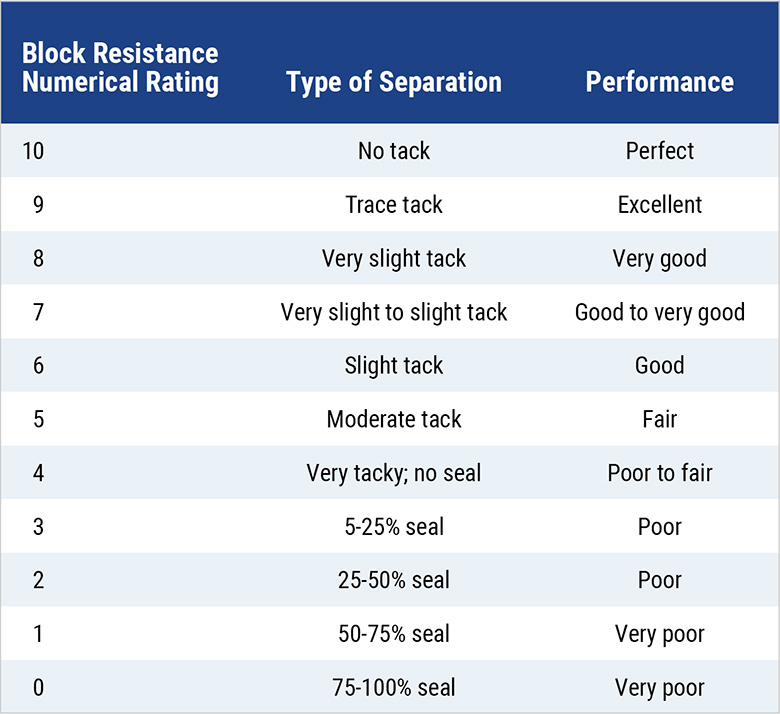
To demonstrate the concept, three commercial semigloss paints were evaluated for block resistance. Block performance, indicating face-to-face adhesion of two paint films pressed together, was rated on a scale of 0 to 10 as defined by ASTM D4946-89 (Table 1). The test paints were applied to Leneta 3B opacity charts using a 3-mil bird drawdown bar. The films were dried in a constant-temperature and constant-humidity (CTCH) environmental chamber at 23 °C and 50% relative humidity (RH). For the elevated-temperature (ET) block test, the paint strips were placed in a 50 °C oven after the specified CTCH drying time and held under a 1,000-g weight for 30 minutes. The weight was transferred to the paint films through a 1-inch-diameter rubber stopper, generating approximately 2.2 psi on the film strips. The films were then allowed to cool for 30 minutes before film separation was rated. Each test was run in triplicate, and the average value was reported.
Results and Discussion
Effect of Colloidal Silica Loading and Drying Time
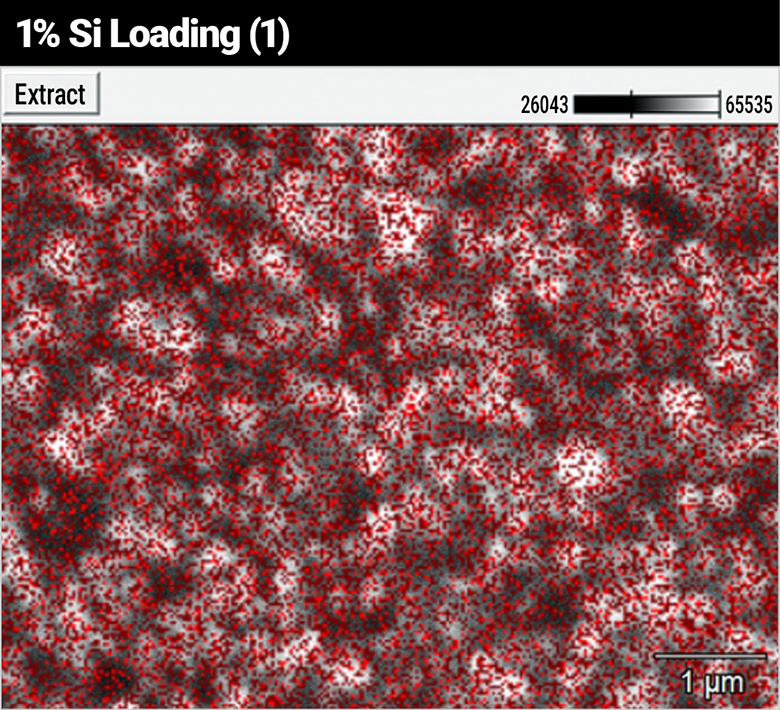
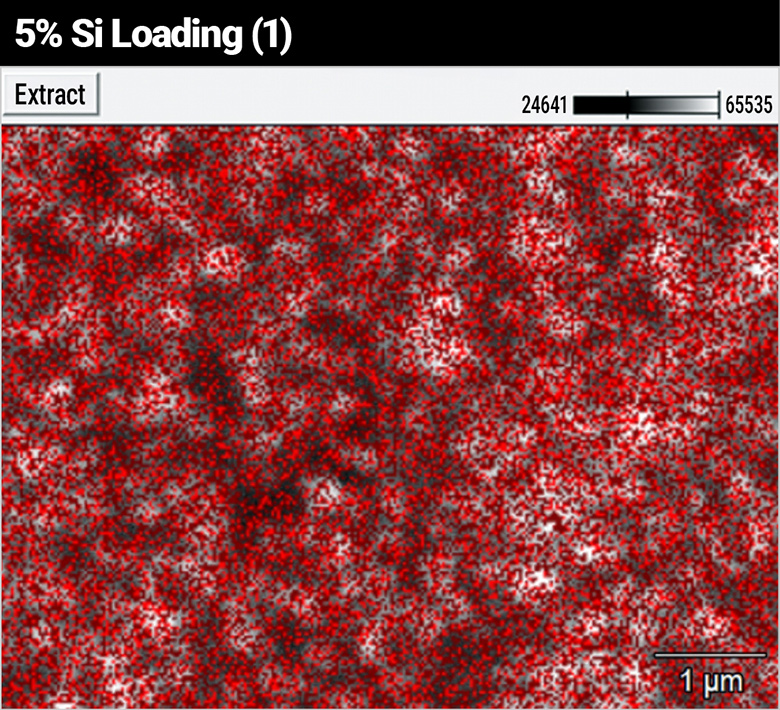
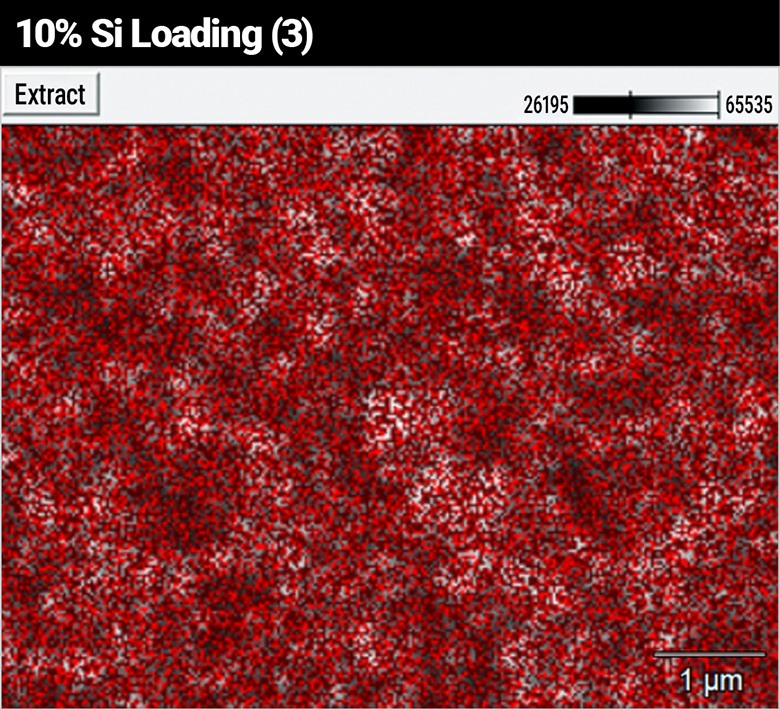
Tests were conducted after 3, 24 and 72 hours of drying with 0 wt% (control), 5 wt% and 10 wt% product loading of colloidal silica. A formulation containing 3 wt% of a paraffin wax emulsion with 35 wt% solids was included for comparison. Scanning electron microscopy/energy-dispersive X-ray spectroscopy (SEM-EDX) mapping was used to visualize the surface distribution of the inorganic component embedded in the organic matrix. Figures 1, 2 and 3 show the distribution of the inorganic component in semigloss paint containing 1, 5 and 10 wt% colloidal silica, respectively. The images show that the coating surfaces became increasingly enriched with silica at higher loading levels, corroborating the block-resistance results.
Figures 4, 5 and 6 show the block-resistance ratings after 3, 24 and 72 hours of drying, respectively. The efficiency of colloidal silica in extending the block resistance of water-based systems depends on drying time and concentration. Factors that influence open time and coalescence include the polymer glass-transition temperature (Tg); coalescing-agent content and minimum film-formation temperature (MFFT); the nature and stabilization of the polymer particles, including whether they are anionic or nonionic; polymer particle size and particle-size distribution; and additives such as waxes, dispersing agents, defoamers and thickeners. The type and level of thickener and the pigment volume concentration (PVC) can also affect the process. These factors influence coalescence to varying degrees and can increase or decrease open time.
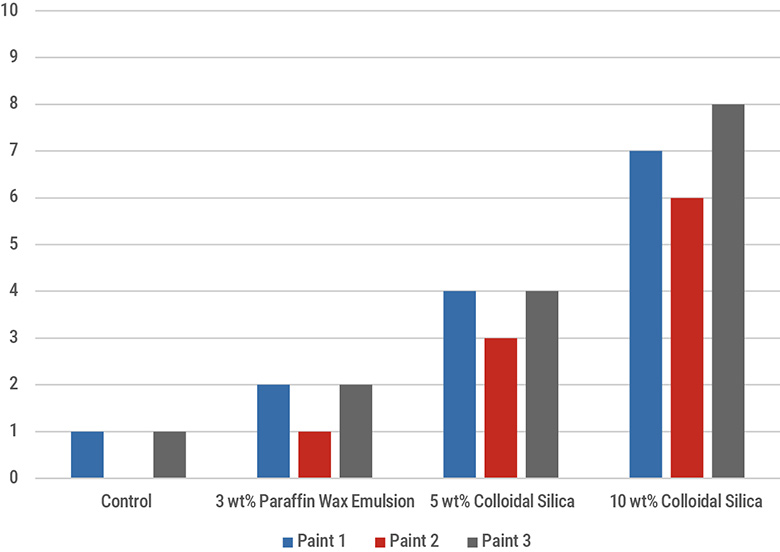
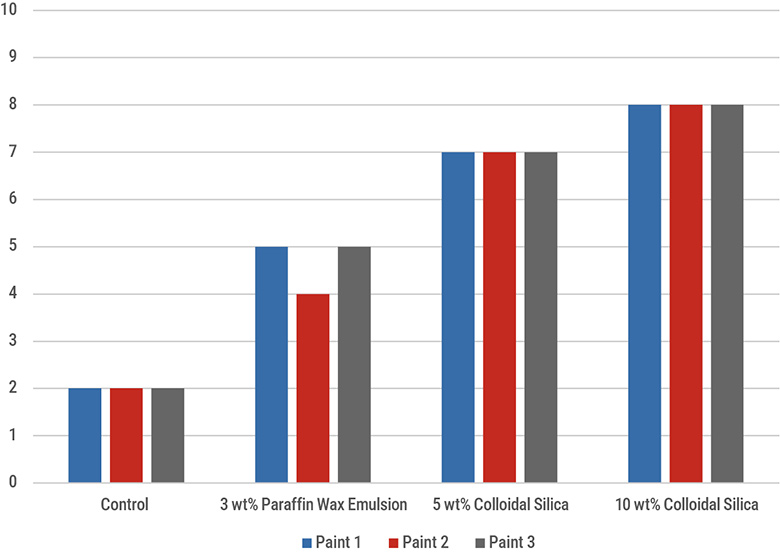
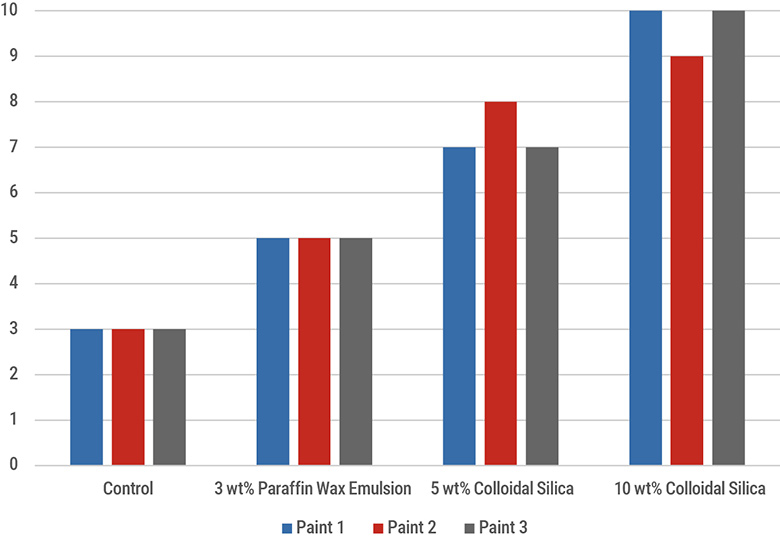
The use of colloidal silica significantly extended the open time of the coatings. Colloidal silica did not appear to affect surface tension; the dynamic surface tension of all paints remained around 28 mN/m throughout drying. Therefore, the longer open time cannot be attributed to changes in surface tension during drying. This observation supports the hypothesis that the longer open time is related to reduced skin formation caused by silica at the coating surface.4 The longer open time allows the emulsion particles to coalesce fully, while enrichment of the coating surface with silica particles improves block resistance.
The addition of colloidal silica reduced paint viscosity, particularly in the samples containing 10 wt% product. To evaluate the effect on block resistance at constant viscosity, several formulations were prepared with two thickener chemistries, cellulosic based (EHEC) and urethane (HEUR), as well as a hydrophobically modified EHEC/HEUR blend (Table 2). The measured Brookfield viscosity of all paint samples was approximately 3,000 to 3,500 cP, and Krebs viscosity was approximately 95 to 100 KU.
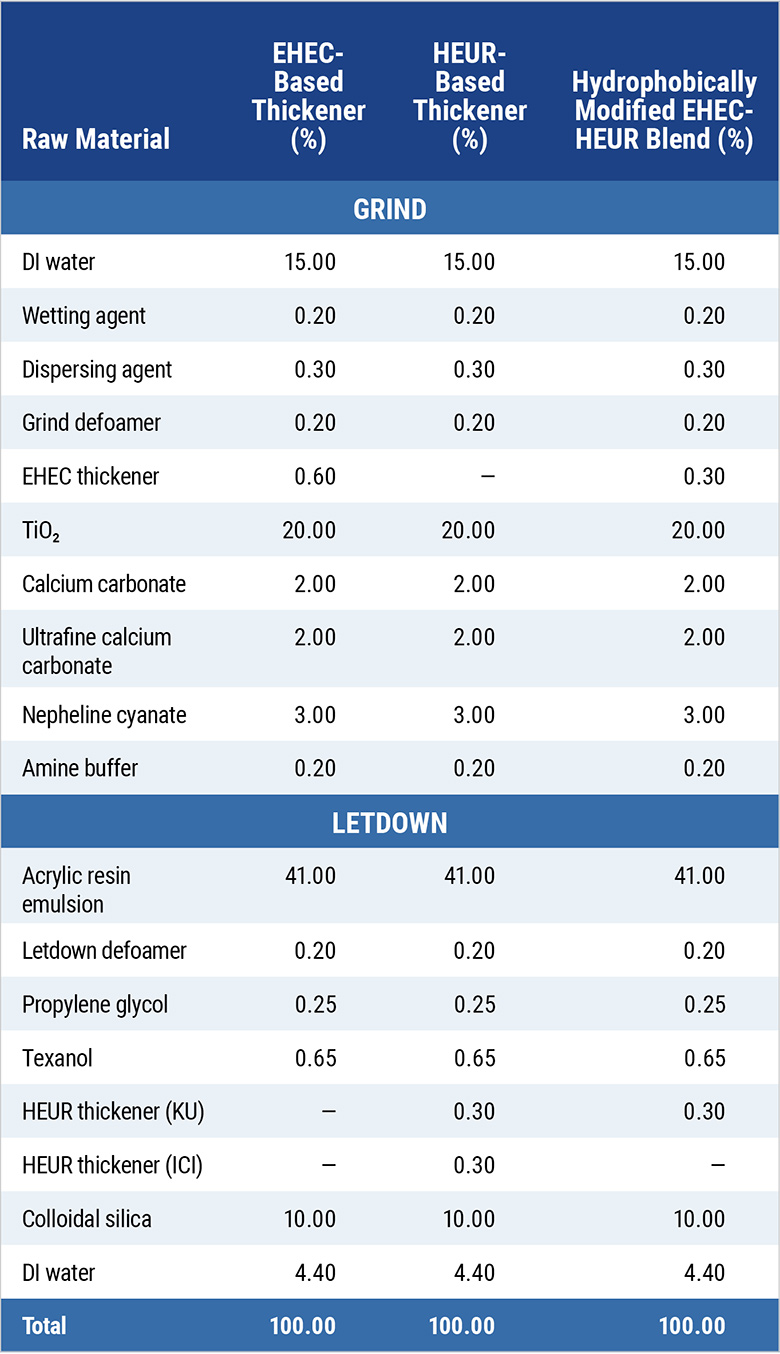
The formulation results indicate that silane-modified colloidal silica combined with HEUR thickener was beneficial for block resistance compared with EHEC.
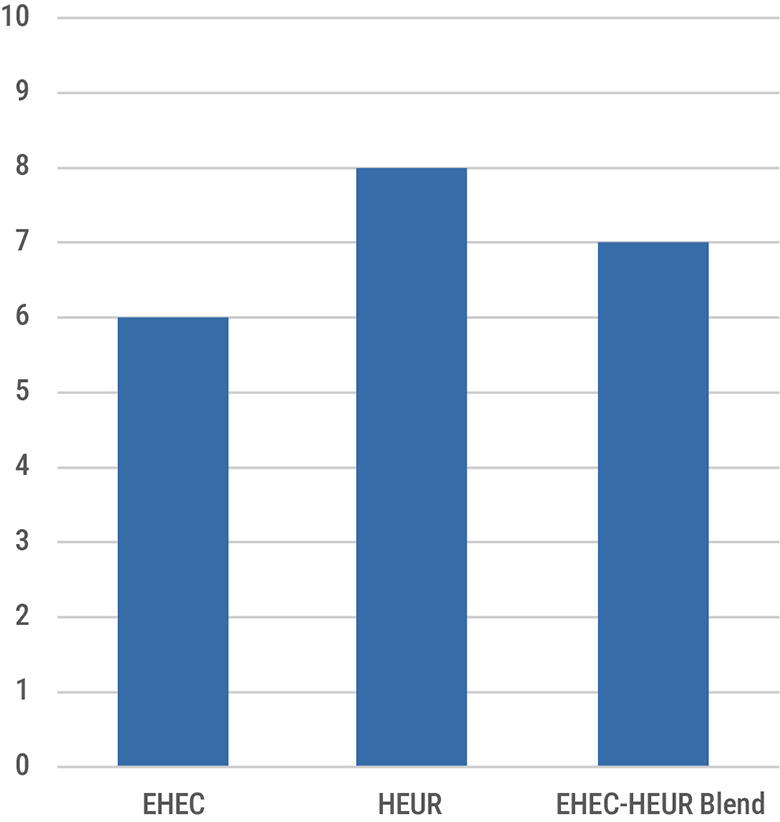
Figure 7 shows the block resistance of acrylic latex with an MFFT above 5 °C modified with different rheology additives. At the same loading level, HEUR provided better block resistance than EHEC. The slight tackiness of the specimen containing EHEC may be explained by an interaction between colloidal silica and cellulose, which could entrap colloidal silica in the film.
Conclusions
The effect of colloidal silica particles depends strongly on the resin and other coating formulation components, including rheology modifiers. This study focused on improvements in block resistance, but colloidal silica can also influence properties such as sanding and hardness. In addition, silane surface modification helps ensure good compatibility between colloidal silica and the resins, maintaining or, in some formulations, enhancing coating aesthetics, including gloss and haze.
References
- C. Vu, O. La Ferte and A. Eranian, “High Performance UV Multi-Layer Coatings Using Inorganic Nanoparticles,” Proc. RadTech Europe, 2005.
- P. Greenwood and B. Gevert, “Aqueous Silane-Modified Silica Sols: Theory and Preparation.”
- B. Chisholm and J. Resue, “UV-Curable, Hybrid Organic-Inorganic Coatings,” Proc. 30th International Waterborne, High-Solids, and Powder Coatings Symposium, New Orleans, 2003.
- P. Greenwood, “Impacts of Silane-Modified Colloidal Silica on Waterborne Clear Coatings.”
Explore PCI’s paint and coatings additives coverage for more formulation, performance and application research.
Looking for a reprint of this article?
From high-res PDFs to custom plaques, order your copy today!