Surface Preparation Showdown: Dunk It, Sand It, Spray It or Blast It?
Why Each Segment Has Its Champion
Inside this Article
- Surface preparation remains the most influential factor affecting coating durability, with inadequate preparation responsible for the majority of premature coating failures.
- Automotive OEM manufacturing relies on immersion and spray pretreatment systems that combine alkaline cleaning with conversion coatings such as phosphates or zirconium technologies.
- Automotive refinish and repair operations depend on sanding processes that create controlled microroughness to promote adhesion of primers, sealers and topcoats.
- Aerospace maintenance environments favor spray-applied conversion coatings because immersion systems are impractical and abrasive blasting can damage lightweight alloys.
- Protective and marine coatings applications rely primarily on abrasive blasting or water jetting to remove corrosion products and generate anchor profiles on large structures.
Surface preparation is widely regarded as the dirty, labor-intensive, hazardous and time-consuming stage of a coatings workflow, but it remains the most influential variable determining coating service life. Even industry-standard multilayer coating systems will experience premature failures if substrate preparation does not meet the required standards of cleanliness and surface profile. The Federal Highway Administration reports that inadequate surface preparation accounts for up to 80% of premature coating failures, a figure widely corroborated throughout corrosion literature.
The coatings industry employs a range of surface preparation methodologies tailored to substrate metallurgy, service environment, aesthetic requirements, cost constraints, application capabilities and as required by governing standards from SSPC/NACE (AMPP) or ISO. Metal surface preparation typically involves two primary operations:
- Removal of contaminants, rust products, oxides and/or mill scale through solvent or alkaline cleaning and/or chemical conversion processes.
- Surface profile generation by mechanical or abrasive techniques to ensure adequate mechanical anchorage and surface energy for coating adhesion.
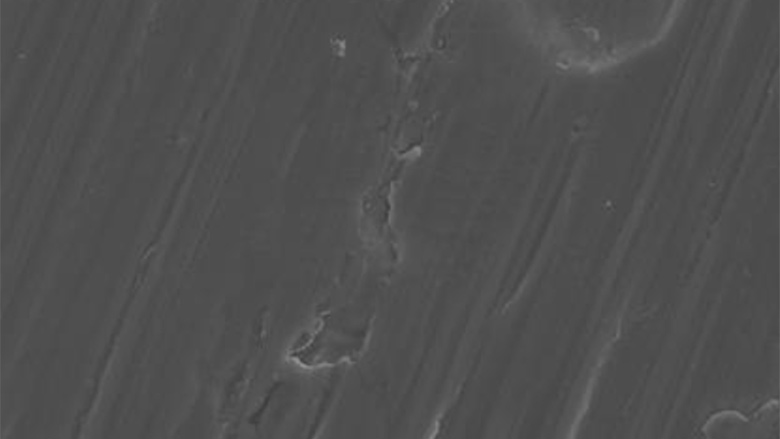
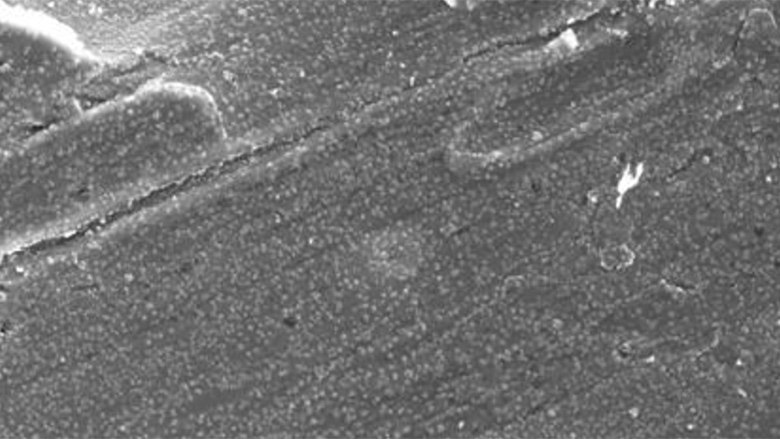
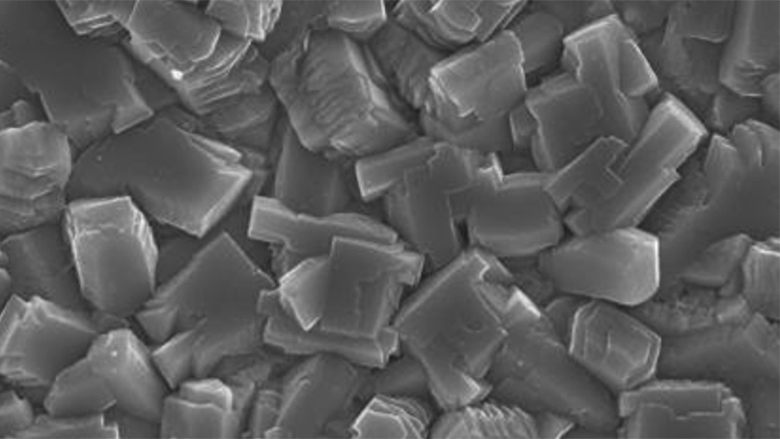
FIGURE 1. Cold-rolled steel surface image at 5000X magnification: cleaned only (top), treated with a zirconium-based conversion coating (left) and treated with a zinc phosphate pretreatment (right). Credit: PPG
In practice, Automotive, Industrial and Aerospace sectors predominantly employ chemical cleaning and conversion coating pretreatment systems (e.g., phosphates and zirconates) due to their compatibility with high-throughput manufacturing and tight dimensional tolerances (Figure 1). In contrast, the Protective and Marine Coatings (PMC) segment relies almost exclusively on mechanical preparation, specifically abrasive blasting and most recently water jetting, as it best fits the need to remove heavy corrosion products and legacy coating systems prior to recoating while the asset is in the field.
This article evaluates prevailing metal surface preparation technologies, analyzes industry-specific pretreatment selection criteria and reviews emerging innovations in this space.
Automotive or OEM Pretreatment Approaches: Dunk It (Immersion Pretreatments)
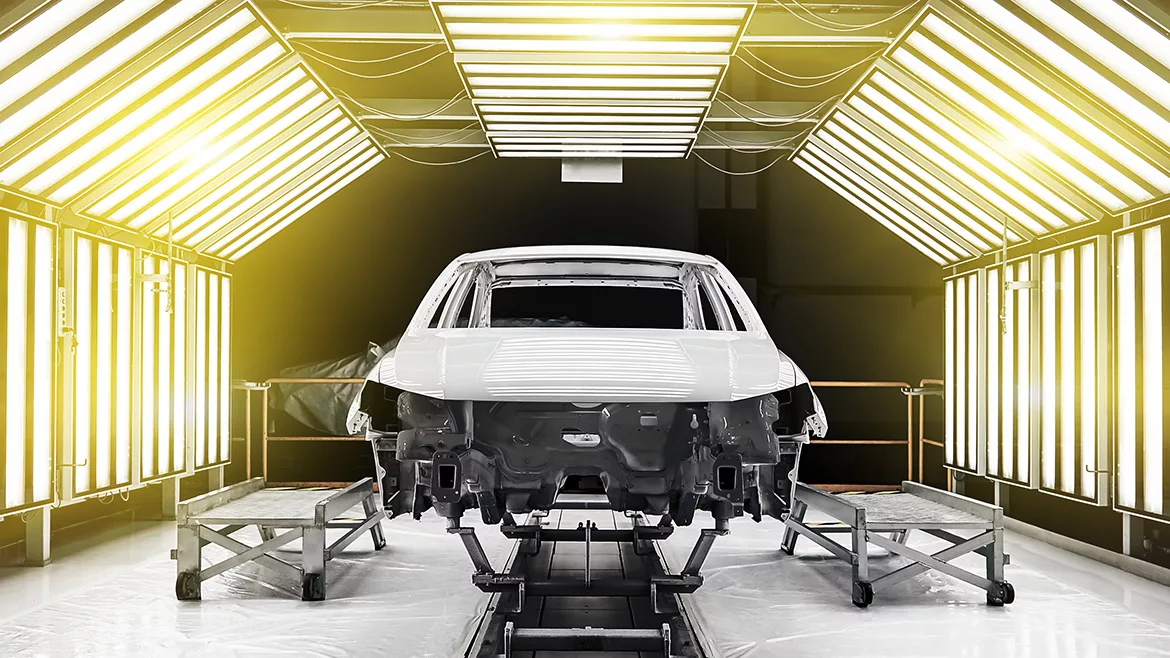
The efficiency of modern assembly lines has driven Original Equipment Manufacturers (OEMs) to use integrated spray and immersion systems for surface preparation, with immersion stages enabling complete wetting and uniform treatment of complex automotive geometries. Surface preparation begins with alkaline cleaning to remove oils, lubricants, soils and other contaminants generated during forming and machining, as required by SSPC SP 1. Effective cleaning and the removal of rust preventative oils, forming lubricants, mill scale and laser scale is critical for achieving a consistent pretreatment layer. Rinse stage design, including stage count, spray configuration, freshwater halo placement and replenishment rates, directly influences cleaning performance. Once cleaned, substrates receive a conversion coating that improves corrosion resistance and promotes paint adhesion. Common pretreatment systems include iron phosphate, zinc phosphate and thin-film zirconium-based technologies.
Phosphate Conversion Coatings
Phosphate-based pretreatments have been established for more than a century and remain a benchmark in the coatings industry. These coatings are produced through a topochemical reaction in which the substrate actively participates in forming the conversion layer. On steel, phosphoric acid dissolves iron at localized anodic sites while hydrogen evolves at cathodic locations. As the local pH increases, insoluble tertiary metal phosphates precipitate and deposit on the surface. Despite their long history of proven performance, phosphate systems generate significant quantities of insoluble sludge requiring specialized removal, handling and disposal. This is an increasing concern considering modern environmental and regulatory pressures.
Thin-Film Zirconium Pretreatments
Thin-film pretreatments are environmentally progressive conversion coatings based on hexafluorozirconic and/or hexafluorotitanic acids. They form a thin, amorphous oxide layer whose performance depends on precise control of pH, fluoride levels and proprietary additives that influence coating weight and uniformity on multimetal substrates.
PPG’s ZIRCOBOND® pretreatment system represents a transformative advancement in automotive surface preparation. Engineered to reduce environmental impact and simplify plant operations, the PPG Zircobond product generates over 80% less sludge compared to traditional zinc phosphate systems, significantly lowering waste-treatment and disposal burdens. The chemistry also enables easier bath control and improved sustainability through reduced energy consumption, minimized water usage and streamlined maintenance.
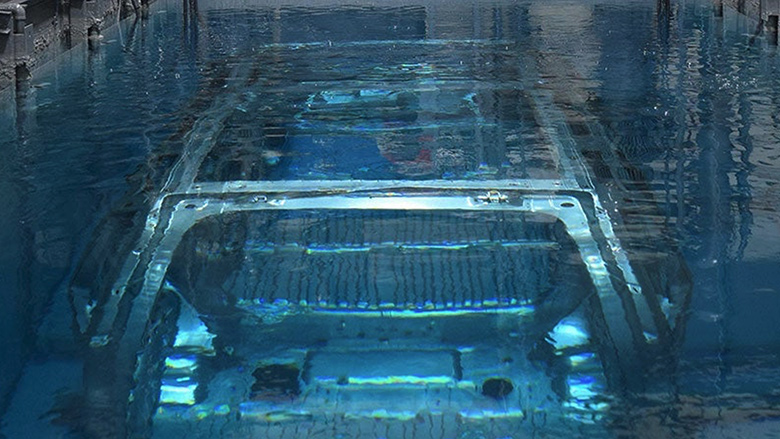
FIGURE 2. PPG ZIRCOBOND® zirconium-based pretreatment product reduces sludge generation by more than 80% compared to zinc phosphate systems. Credit: PPG
Automotive Aftermarket Pretreatment Approaches – Sand It
The Automotive Refinish industry employs a range of surface preparation techniques tailored to the nature of the work. Most refinish coating systems are used in collision repair scenarios, where damage to vehicle body panels necessitates either replacement or restoration. In typical repair operations, damaged panels are replaced with OEM components precoated with cationic electrocoat. These panels are lightly abraded to remove surface imperfections and establish microroughness to promote mechanical adhesion of two-component epoxy or urethane primers.
When panels are repairable, dents are pulled to minimize panel distortion and remediation may also involve body filler application to restore the original panel contours. Progressively sanding with finer grit sandpaper can expose layers of metal, primer, basecoat and clearcoat. Etch primers are recommended when bare metal has been exposed and these products offer the convenience of a spray-applied coating while also improving adhesion of subsequent coating layers. Urethane primers and sealers are then applied to prevent layer telegraphing and to ensure a repair indistinguishable from the original finish.
Restoration projects often involve severe corrosion or long-term degradation and can require more aggressive preparation, including abrasive blasting, filler application, precision sanding and selective part replacement. In both collision and restoration projects a primary technical concern is sand scratches telegraphing through primer and topcoat systems. To mitigate this, high-build sandable primers are applied at 3–4 mils, cured and sanded with increasingly fine abrasives to eliminate deep scratches. Sealers are subsequently used to create a uniform, low-porosity surface that supports defect-free basecoat and clearcoat application. Shop productivity can be enhanced with the use of UV-cured sandable primers such as PPG’s SU1280 UV Cured Primer Surfacer Primer which cures in as little as 2 minutes².
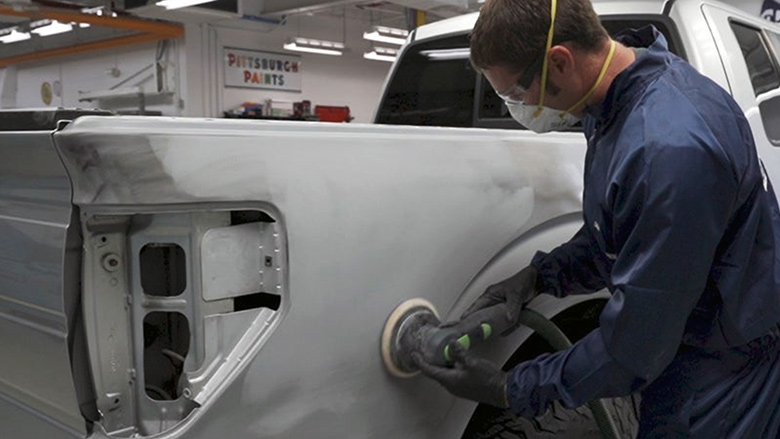
FIGURE 3. Illustrating the proper sanding technique for primer surfacer to ensure uniform surface preparation and reliable repair performance. Credit: PPG
Aerospace Pretreatment Approaches – Spray It
Aircraft require high-performance coating systems applied either during OEM manufacturing or during scheduled Maintenance, Repair and Overhaul (MRO). Unlike automotive finishes, aircraft outer mold line (OML) surfaces are often stripped to bare substrate and fully repainted many times throughout service life.
Immersion pretreatments are not feasible for assembled aircraft, and aggressive media blasting can damage thin aerospace alloys and composites. While sanding is widely used, performance requirements typically mandate a chemical conversion coating whenever metal is exposed, making low-pressure spray application the practical method for field and MRO operations. Aerospace-approved chemistries suitable for spray application include traditional chrome-based conversion coatings, sol-gel systems and alternative trivalent chrome or nonchrome pretreatments. Touch-up versions of many of these products are also available in brush or wipe-on formats.
Protective & Marine Surface Treatment Approaches – Blast It
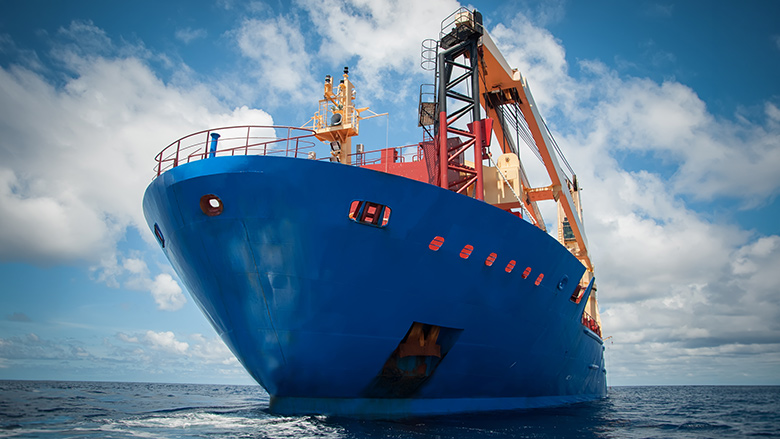
The Protective and Marine Coatings (PMC) industry primarily relies on abrasive blasting because large, fixed structures such as ships, bridges and storage tanks are incompatible with immersion-based pretreatments. Abrasive blasting provides surface mechanical anchoring required for long-term coating durability in severe environments and does not require automotive-grade aesthetics, making surface texture (e.g., orange peel) acceptable. Additionally, immersion or multistage spray pretreatments are impractical in uncontrolled outdoor environments due to flash rust risk, water quality variability and the scale of the assets. Abrasive blasting remains the most economical method, simultaneously removing corrosion and generating surface profile in a single operation.
Credit: Denys Yelmanov / iStock via Getty Images Plus
Abrasive Blasting
Abrasive blasting is the dominant surface preparation technique in PMC applications, providing both substrate cleaning and surface profile generation essential for coating adhesion under high-corrosivity conditions. High-velocity abrasives remove rust, aged coatings and contaminants while creating a prescribed anchor pattern. Surface cleanliness and profile requirements are defined by AMPP/SSPC/NACE and ISO 8501-1 standards. Despite its performance advantages, abrasive blasting produces substantial dust, noise and hazardous waste, requiring containment and specialized PPE. Wet abrasive blasting mitigates dust but yields a smoother surface profile.
Water jetting is increasingly adopted for the maintenance and repair segment due to its lower environmental impact, reduced operator exposure, minimal waste generation and cost efficiency. Ultrahigh-pressure water (>10,000 psi) removes corrosion products, marine growth and degraded coatings while preserving the existing steel profile. At the same time, robotic systems have further reduced labor demands and dry dock times. The primary technical limitation is flash rust formation during drying, which can compromise coating adhesion. Rust inhibitors provide temporary mitigation, but broader adoption requires more robust flash rust control and robust coating technologies.
Coblast technology combines abrasive blasting and pretreatment in a single step, thus creating the profiled surface with the desired pretreatment or coating. CoBlast skins are typically 2–5 microns thick, meaning that fine surface details are preserved after coating. The abrasive and coating materials and the process parameters can be tailored for the end-use markets.
Conclusion
Pretreatment is a foundational step in ensuring coating durability, adhesion and long-term corrosion protection across multiple industries. However, the specific method used to prepare a substrate varies significantly by market segment due to differences in part size, geometry, production scale, substrate type and performance requirements. Aerospace relies on spray-applied chrome-free pretreatments for precision and regulatory compliance. Automotive OEMs use immersion systems to achieve consistent large-scale production throughput. Refinish operations depend on sanding for flexibility and localized repair and PMC environments require abrasive blasting to deliver the robust surface profile essential for long-term corrosion protection.
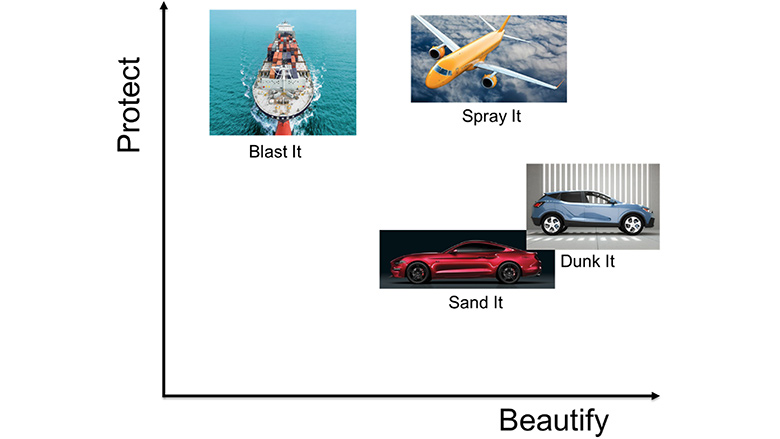
FIGURE 4. Different surface treatments influence both the protective and aesthetic performance of a coating system. Credit: PPG
Together, these differing approaches reflect the unique nature of each industry, underscoring the critical role surface preparation plays in achieving durable, high-performance coatings across all sectors.
Acknowledgements
Susan Donaldson, Patrick O’Neill, Jack Burgman, Daniel Connor, Jaclyn Laurich, Evert Van Rietschoten and Greta Edgar Borza.
References
¹ U.S. Department of Transportation, Federal Highway Administration. FHWA Field Manual for Bridge Paint Inspection; October 1997. https://www.fhwa.dot.gov/publications/research/infrastructure/structures/98084/98084.pdf
² Association for Materials Protection and Performance (AMPP). Popular Standards. AMPP.
³ Association for Materials Protection and Performance (AMPP). Solvent Cleaning; August 10, 2016.
⁴ Chemical Research Insight. Top 10 Companies in the Phosphate Conversion Coating Industry (2025): Market Leaders Protecting Global Manufacturing; November 1, 2025.
⁵ Zn-Phosphate Conversion Coatings Developed on High-Strength Steels at Reduced Processing Temperature. Journal of Electroanalytical Chemistry 2024, 975, December.
⁶ Review: Conversion Coatings Based on Zirconium and/or Titanium. Journal of The Electrochemical Society 2018, 165.
⁷ How PPG Enables Sustainability-Driven Innovation Through Corporate Entrepreneurship. Research-Technology Management 2026, 69(1), 42–54. https://doi.org/10.1080/08956308.2025.2586423
⁸ PPG Introduces OneChoice SU1280 UV-Cured Primer Surfacer. Body Shop Business; October 6, 2021.
⁹ Association for Materials Protection and Performance (AMPP). Surface Prep Standards – A Quick Summary; September 20, 2021.
¹⁰ Robotic Water Jetting: The New Standard for Shipyard Cleaning. Materials Performance; November 1, 2025.
¹¹ ENBIO. CoBlast.
Explore more technical insights into industrial coatings surface preparation and application technologies in PCI’s ongoing coverage of coatings finishing and corrosion protection.
Looking for a reprint of this article?
From high-res PDFs to custom plaques, order your copy today!