PPG Marine Coating Recognized for Safer Chemistry

A biocide-free fouling-release technology was recognized for its approach to improving vessel efficiency while reducing environmental impact.
PPG announced that its PPG Sigmaglide 2390 marine coating received a 2026 Green Chemistry Challenge Award from the American Chemical Society Green Chemistry Institute.
The coating was recognized in the Design of Safer Chemicals category. The annual awards honor technologies that use innovative chemistry to deliver environmental, economic and performance benefits.
PPG Sigmaglide 2390 is a biocide-free, silicone-based fouling-release coating designed to help vessel owners and operators improve fuel efficiency, reduce emissions and avoid releasing antifoulants into marine environments.
“This recognition from ACS underscores the role innovative solutions can play in addressing complex sustainability challenges,” said David Bem, PPG senior vice president, science and technology, and chief technology officer. “With PPG Sigmaglide 2390 coating, our scientists took a fundamentally different approach to marine fouling control, designing a solution that eliminates the need for biocides while delivering significant performance benefits.”
Marine biofouling can increase hydrodynamic drag on vessel hulls, leading to higher fuel consumption and greenhouse gas emissions.
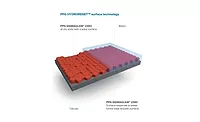
The coating incorporates PPG HydroReset technology, which responds to the presence of water by reorganizing the coating surface at the nanoscale. According to PPG, this creates an ultrasmooth, low-friction interface that marine organisms do not recognize as a suitable surface for permanent attachment.
Organisms that do attach can be released more readily as the vessel moves through the water.
Third-party testing conducted in accordance with ISO 19030 and International Towing Tank Conference standards indicates that the coating can provide potential power savings of up to 20% and potential carbon dioxide emissions reductions of up to 35%. Actual performance depends on the vessel type and operating conditions.
The coating is also suitable for electrostatic application, which PPG said can reduce overspray and material waste during dry-dock applications.
“The marine industry is increasingly focused on solutions that improve operational efficiency while reducing environmental impact,” said Amy Ericson, PPG senior vice president, Protective and Marine Coatings. “PPG Sigmaglide 2390 coating demonstrates that ship owners and operators do not have to choose between sustainability and performance.”
PPG is headquartered in Pittsburgh and operates in more than 50 countries. The company reported net sales of $15.9 billion in 2025.
Looking for a reprint of this article?
From high-res PDFs to custom plaques, order your copy today!