An Ultra-Low-Reflectance Structural Black Pigment and the Optical Behavior of Its Coating Films
Need to Know
- A sea-urchin-like bismuth sulfide morphology traps visible light and reduces specular and diffuse reflection.
- Coatings prepared with the structural black pigment achieved near-zero gloss and lower L* values than the carbon-black reference coatings.
- Sufficient hiding power was achieved at a film thickness of approximately 10 µm, supporting use in compact optical components.
- The coating reflected near-infrared light while maintaining low visible reflectance, limiting temperature rise under infrared irradiation.
Due to their versatility, black coatings are widely used in various fields, including automotive coatings and electronic device housings. Black coatings are designed to exhibit strong absorption across the visible spectrum. Therefore, they are also used as stray-light-suppression materials in optical systems. Stray light refers to light that is scattered or reflected within an optical system and is not intended by the optical design. It is a major source of image degradation, including ghosting and flare.1 Previous studies have demonstrated that stray light can be reduced by applying low-reflectance coatings.2 In smartphone cameras, a large number of components are integrated into a limited space.3 Therefore, coatings used for stray-light suppression in smartphone camera modules require both high light absorption and thin coating films.
Common black materials include carbon black, black flocking material and black-anodized aluminum. Carbon black is one of the most versatile black pigments and is widely used in various applications.4 However, coatings containing carbon black often exhibit relatively smooth film surfaces and high specular reflection. Such reflection can generate image artifacts, including ghosting, making these coatings less suitable for stray-light-suppression applications.5 Black flocking materials exhibit excellent visible-light absorption, but they are too thick for use in smartphone camera modules.6 Although black-anodized aluminum is widely used as a light-absorbing material, its application is limited to aluminum substrates, and commercially available black-anodized aluminum products with reflectance below 1.0% have not been reported to date.7
In recent years, vertically aligned nanotube arrays8 and microcavity surface textures9 have emerged as promising approaches for achieving ultra-low reflectance. Although both approaches exhibit excellent visible-light absorption, their fabrication relies on specialized techniques such as chemical vapor deposition (CVD) and ion-beam patterning. These processes generally limit scalable, large-area production and restrict applicability to specific substrate materials.
In this study, we developed a novel super-black pigment featuring a sea-urchin-like morphology, designated LUSHADE™ BLACK hereinafter referred to as “the structural black pigmen). Whereas conventional ultra-black materials rely on optimizing film or surface structures, our approach focuses on controlling the morphology of pigment particles. The pigment can be readily incorporated into conventional coating systems and applied to diverse substrates over large areas, offering a practical approach to scalable ultra-black coatings. In this article, we report the morphological and optical properties of the structural black pigment.
Product Design
Design Concept for Visible-Light Absorption
The structural black pigment is supplied as a solvent-based dispersion containing bismuth sulfide particles dispersed in propylene glycol monomethyl ether (PGME). Bismuth sulfide is a black semiconductor with a band gap of approximately 1.38 eV and can absorb visible light efficiently. However, its light-absorbing performance is generally inferior to that of conventional carbon black because it has a lower absorption coefficient (approximately 104 cm−1) and a larger particle size. At the same time, it has been reported that the morphology of this material can be controlled by adjusting the synthesis conditions, leading to the formation of nanoscale wire-like and sheet-like structures.11 Thus, bismuth sulfide is a promising material because it combines intrinsic blackness with excellent morphological controllability.
It has been reported that a material’s microstructure affects its optical properties. For example, the black feathers of certain birds-of-paradise possess complex three-dimensional structures, enabling the absorption of up to 99.95% of incident light through structural light-trapping effects.12 Inspired by the feather structures of birds-of-paradise, we developed the structural black pigment, a bismuth sulfide pigment with a unique sea-urchin-like morphology, by optimizing its microstructure for enhanced light absorption.
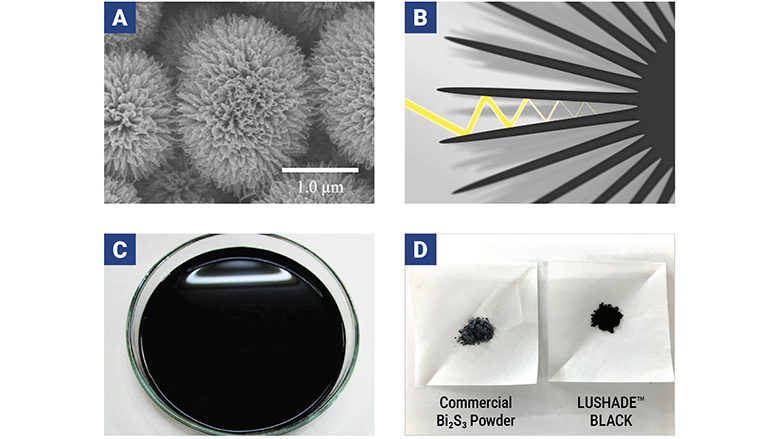
As shown in Figure 1a, the structural black pigment features a sea-urchin-like structure consisting of numerous wire-like structures that radiate from the center. Light incident on this structure is considered to be confined between the spines and attenuated through multiple scattering (Figure 1b). For conventional spherical particles, it is difficult to suppress surface reflection arising from the refractive-index difference between air and the particles. However, the present structure enables efficient light absorption by confining light between the spines. Figure 1c shows the structural black pigment as a solvent dispersion, and Figure 1d shows it in powdered form. For comparison, a commercially available bismuth sulfide powder is also shown. The images visually confirm a significant difference in blackness between the structural black pigment and the commercially available bismuth sulfide powder.
Design Concept for Infrared Reflectance
Bismuth sulfide exhibits little absorption beyond approximately 900 nm because of its band gap (approximately 1.38 eV). Furthermore, it has been reported that the refractive index of bismuth sulfide increases with wavelength in the near-infrared region.13 The structural black pigment predominantly absorbs visible light because its three-dimensional structure is designed for light trapping in the visible wavelength range. Consequently, it exhibits selective infrared reflectance while maintaining strong absorption in the visible region. Some composite oxides have been reported to exhibit selective infrared reflectance as black pigments.14 However, their blackness is inferior to that of conventional carbon black. In contrast, the structural black pigment combines deep blackness, superior to that of conventional carbon black, with selective infrared reflectance.
Product Forms
The structural black pigment is supplied as a solvent-based dispersion and can be readily incorporated into existing paint formulations. In contrast to conventional carbon black pigments, which typically require prolonged dispersion using media mills to achieve sufficient deagglomeration, the structural black pigment can be uniformly dispersed through a mixing process using conventional equipment such as planetary centrifugal mixers or dispersers. Paint formulations containing the structural black pigment are compatible with conventional spray-coating processes. Therefore, they enable (i) coating of large-area surfaces, (ii) application to three-dimensional objects with complex geometries and (iii) control of coating film thickness. At present, the structural black pigment is commercially available only as a PGME-based pigment dispersion. Alternative solvent-based dispersions and powder forms are under development to expand its applicability to a wider range of coating systems.
Optical Properties of Coating Films Prepared with the Structural Black Pigment
Visible-Light Absorption Characteristics
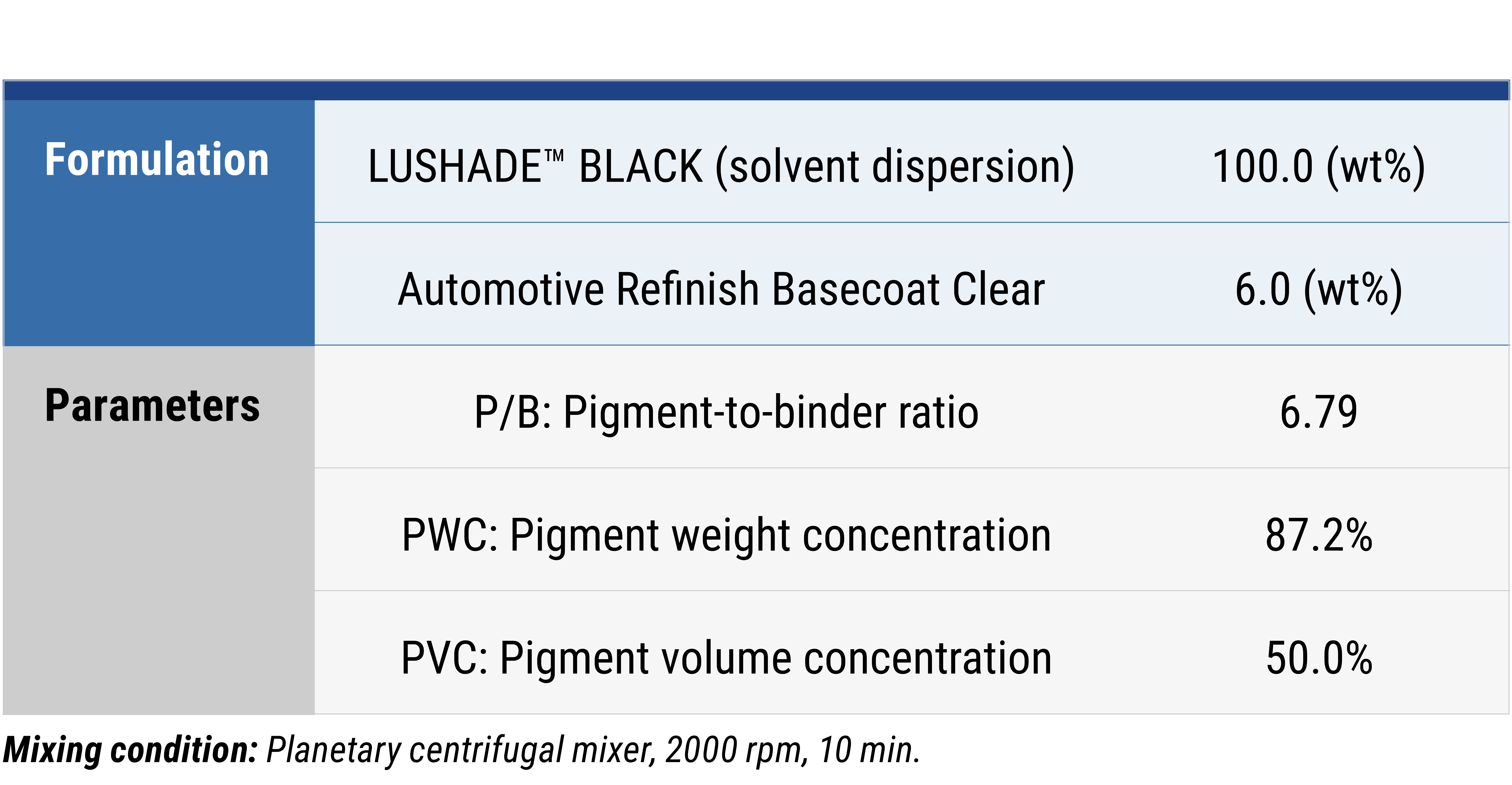
Table 1 shows the paint formulation and representative coating parameters used in this study. The mixture was stirred using a planetary centrifugal mixer at 2,000 rpm for 10 min. The paint prepared according to this formulation is hereafter referred to as “LB paint.” To facilitate exposure of the pigment particles at the coating surface, the pigment concentration in the LB paint formulation was intentionally set at a high level. When the pigment concentration is insufficient, inadequate exposure of the pigment particles at the coating surface makes it difficult to suppress specular reflection arising from the smooth air–resin interface. A coating film with low gloss and high blackness can be obtained by increasing the pigment concentration to promote exposure of the highly light-absorbing, sea-urchin-like structures at the coating surface.
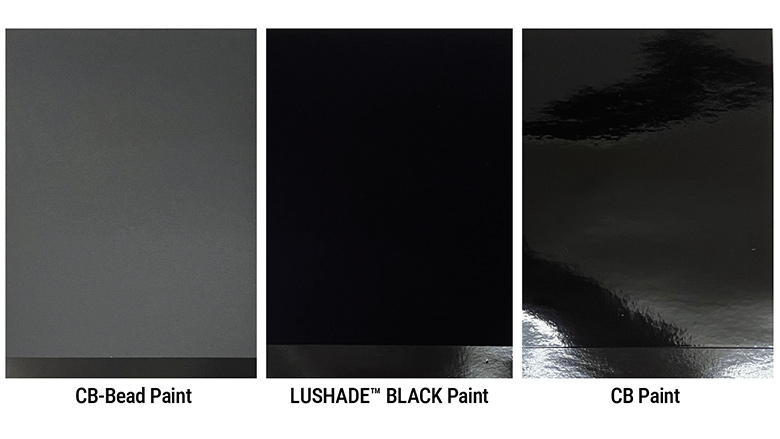
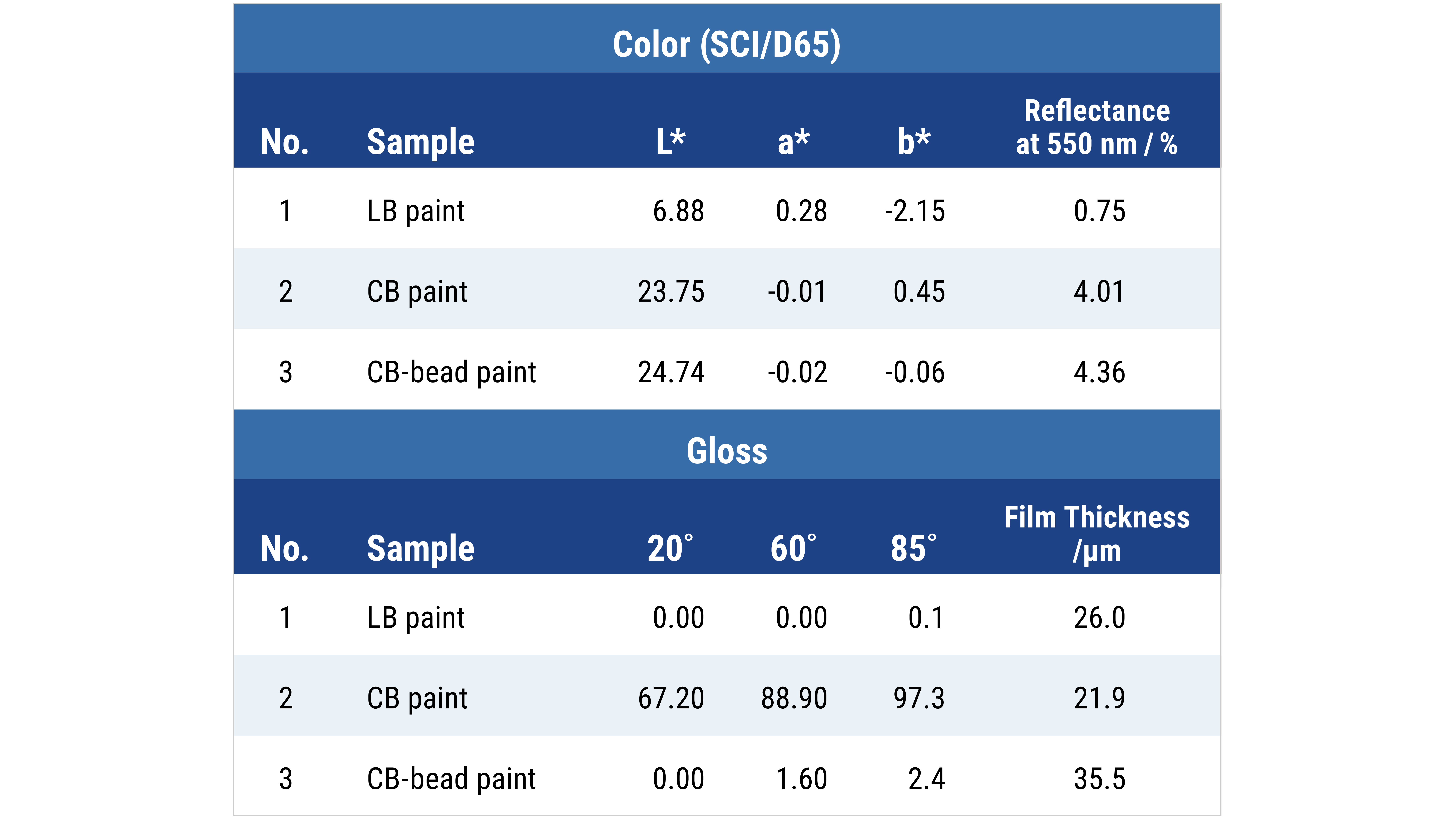
In this study, two reference samples were also evaluated. Reference sample 1 was an automotive refinish coating containing conventional carbon black, hereafter referred to as “CB paint.” Reference sample 2, hereafter referred to as “CB-bead paint,” was prepared by adding resin beads as a matting agent to CB paint. Test coating films were prepared by spray coating onto coated paper using the formulation described above. The color data for the test coating films are summarized in Table 2. Figure 2 shows photographs of the test coating films.
Strong dispersion enhances the blackness of carbon black by increasing the effective light-absorbing surface area. However, it also smooths the coating film surface, resulting in an undesirable glossy appearance. In this evaluation, the coating film prepared with CB paint exhibited high blackness because of the strong dispersion of carbon black (Figure 2). However, it also showed a glossy appearance because of the smooth film surface. In optical devices, high-gloss coatings can generate image artifacts such as ghost images because of stray-light reflection. Therefore, black coatings that combine high blackness with low gloss are required. The coating film prepared with CB-bead paint appeared matte but exhibited reduced blackness (Figure 2). Matting agents can decrease gloss. However, they also increase visible-light scattering, resulting in a loss of blackness.
The coating film prepared with LB paint exhibited the deepest black appearance among the three samples while maintaining a matte finish (Figure 2). The L* value of the LB paint was the lowest among the three coating films, and its gloss value was nearly zero (Table 2). These results indicate that LB paint achieves both high blackness and low gloss. The structural black pigment has a relatively large primary particle size of approximately 1.5–2.0 µm. By optimizing the pigment concentration, a microstructured surface capable of suppressing specular reflection can be formed on the coating film. In contrast to conventional spherical matting agents, which scatter incident light in various directions, the sea-urchin-like surface structure of the structural black pigment is considered to trap light effectively within its interstitial spaces, thereby minimizing diffuse-light scattering. Consequently, the coating film achieves a gloss value close to zero while retaining a low L* value, resulting in both high blackness and an excellent matte appearance.
In addition, the coating film exhibited excellent low-reflectance properties at a practical film thickness of 26.0 µm. Figure 3 shows the relationship between film thickness and contrast ratio for coating films prepared using LB paint. As shown in Figure 3, sufficient hiding power was achieved at a film thickness of approximately 10 µm, which is comparable to or thinner than advanced super-black materials such as vertically aligned nanotube arrays8 and microcavity surface textures.10
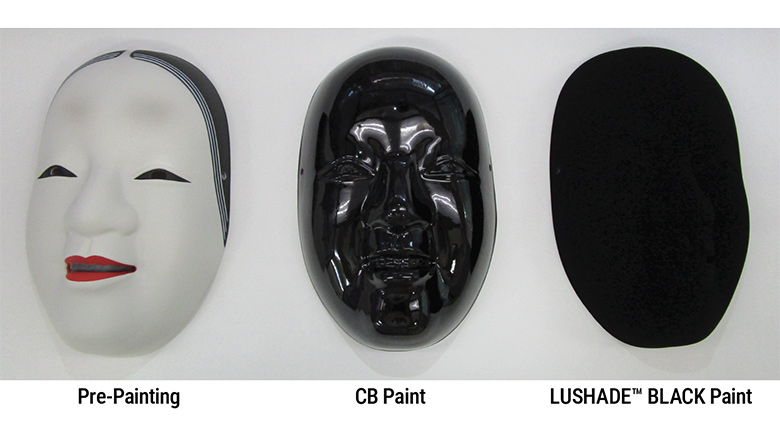
Figure 4 shows traditional Japanese masks coated with LB paint and CB paint. Humans recognize the shape of an object through visual information generated by the reflection and scattering of incident light from its surface. Because the coating film containing the structural black pigment absorbs most of the incident light, both reflected and scattered light are significantly reduced. As shown in Figure 4, the reference CB paint exhibits a black appearance. However, its gloss allows the contours and surface features of the mask, such as the eyes and nose, to remain visible. In contrast, LB paint provides both a deep black appearance and extremely low gloss, substantially reducing the visibility of surface features. As a result, although the mask is a three-dimensional object, it appears almost flat.
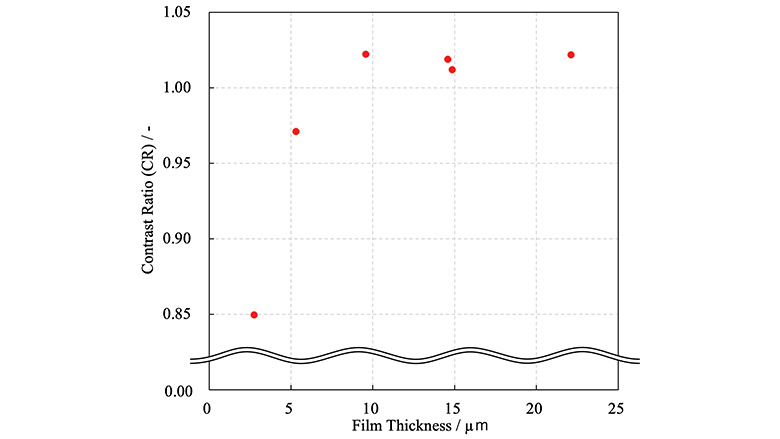
These results demonstrate that coating films prepared with LB paint effectively suppress light reflection, including specular reflection. Furthermore, sufficient hiding power was achieved at a film thickness of approximately 10 µm. These findings indicate that LB paint is well suited for stray-light suppression in optical devices such as smartphone camera modules and camera lenses, where numerous components must be integrated within a limited space.
Near-Infrared Reflectance Properties
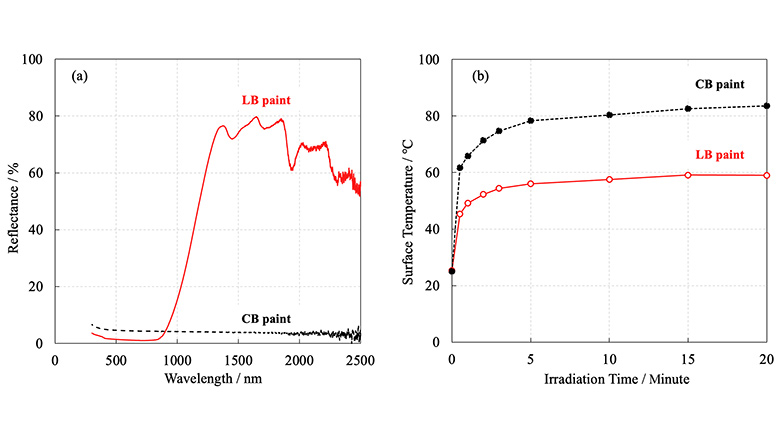
Figure 5a shows the ultraviolet–visible–near-infrared (UV–Vis–NIR) reflectance spectra of coating films prepared with LB paint and CB paint. Although the coating film prepared with CB paint exhibited broad light absorption from the visible through the near-infrared region, the coating film prepared with LB paint maintained extremely low reflectance in the visible region (380–780 nm) while showing a sharp increase in reflectance above 780 nm in the near-infrared region.
To evaluate the effect of near-infrared reflectance, a solar irradiation test was conducted using the coating film prepared with LB paint. In this test, the coating film’s surface temperature was monitored during irradiation with an infrared lamp. Because the coating film prepared with CB paint absorbs near-infrared light, its surface temperature increased significantly under infrared irradiation. In contrast, the coating film prepared with LB paint reflected near-infrared light, suppressing the temperature increase, as shown in Figure 5b.
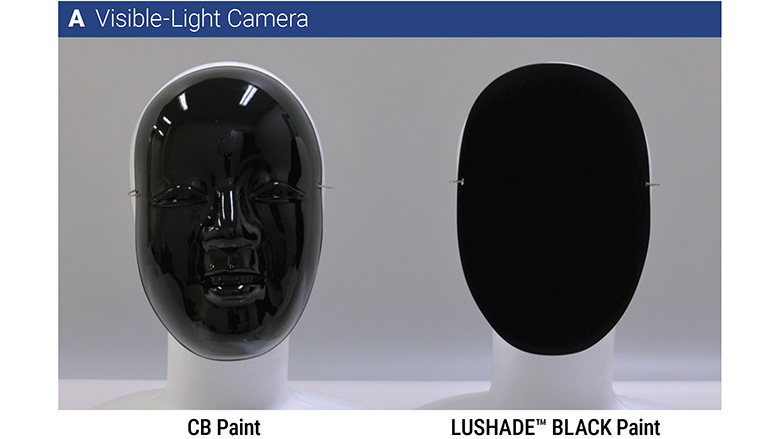
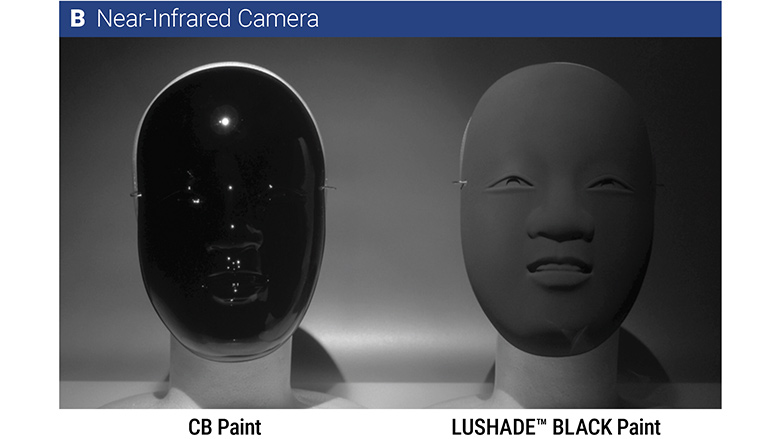
Figure 6 shows photographs of masks coated with LB paint and CB paint, captured with visible-light and near-infrared cameras. In the visible-light image, the mask coated with LB paint appears almost featureless because it reflects very little visible light, making surface features such as the nose and mouth difficult to distinguish. In contrast, the facial features are clearly revealed in the near-infrared image because the coating strongly reflects near-infrared light.
Conclusion
The structural black pigment exhibits a light-absorption mechanism that differs from the mechanisms of conventional black pigments, enabling the formation of low-reflectance coatings that are difficult to achieve with conventional pigments. In addition, its constituent materials and unique microstructure provide optical properties that selectively reflect near-infrared light.
Because the structural black pigment is supplied as a pigment dispersion, it can be readily formulated into coatings and applied to various substrate materials and three-dimensional objects with complex geometries. Furthermore, it provides low-reflectance performance in coating films approximately 10 µm thick.
These characteristics make LUSHADE™ BLACK a promising material for suppressing stray light by blackening optical components and improving image quality by coating the interior surfaces of lens housings.
References
- Knappen, J. S. Electronic Imaging 2023, 35, 1–7.
- Clermont, L.; Uhring, W.; Georges, M. Scientific Reports 2021, 11, 10081.
- Blahnik, V.; Schindelbeck, O. Advanced Optical Technologies 2021, 10, 145–232.
- Khodabakhshi, S.; Fulvio, P. F.; Andreoli, E. Carbon 2020, 162, 604–649.
- Liu, D.; Wang, L.; Yang, W.; Wu, S.; Fan, B.; Wu, F. Optical Engineering 2018, 57, 025105.
- Tu, C.; Cai, W.; Chen, X.; Ouyang, X.; Zhang, H.; Zhang, Z. Small 2019, 15, 1902070.
- Marshall, J. L.; Williams, P.; Rheault, J.; Prochaska, T.; Allen, R. D.; DePoy, D. L. Proceedings of SPIE 2014, 9147, 91474F.
- Yang, Z. P.; Ci, L.; Bur, J. A.; Lin, S. Y.; Ajayan, P. M. Nano Letters 2008, 8, 446.
- Amemiya, K.; Shimizu, Y.; Koshikawa, H.; Shitomi, H.; Yamaki, T. Science Advances 2023, 9, eade4853.
- Bouachri, M.; Oubakalla, M.; Farri, H. E.; Díaz-Guerra, C.; Mhalla, H.; Zimou, J.; El-Habib, A.; Beraich, M.; Nouneh, K.; Fahoume, M.; Fernández, P.; Ouannou, A. Optical Materials 2023, 135, 113215.
- Sahu, M.; Park, C. Materials Today Sustainability 2023, 23, 100441.
- McCoy, D. E.; Feo, T.; Harvey, T. A.; Prum, R. O. Nature Communications 2018, 9, 1.
- Al-Douri, A. A. J.; Madik, M. P. Renewable Energy 2000, 21, 411.
- Sangwong, N.; Suwan, M.; Supothina, S. Materials Today: Proceedings 2019, 17, 1595.
For more information about the structural black pigment, visit Ishihara Sangyo Kaisha, Ltd.
For coatings formulators, this study demonstrates how pigment morphology and loading can influence blackness, gloss, hiding power at low film build and selective near-infrared reflectance. Explore more technical coverage of paint and coating pigments.
Looking for a reprint of this article?
From high-res PDFs to custom plaques, order your copy today!