
Industrial Coatings at a Crossroads
Reformulating for Regulation, Electrification and Emerging Performance Requirements
Need to Know
- PFAS restrictions, VOC reduction and scrutiny of organotin compounds are influencing raw material selection and coating reformulation.
- Dispersants, catalysts and adhesion promoters must be evaluated for formulation compatibility, processing efficiency, long-term performance and total cost-in-use.
- Electric vehicles, data centers and energy infrastructure are introducing requirements for thermal management, electrical insulation and adhesion to lightweight substrates.
Industrial coatings have historically been engineered to provide corrosion protection, weatherability, abrasion resistance and aesthetic enhancement across sectors such as automotive, construction, marine, heavy equipment and industrial manufacturing. While these functions remain fundamental, today’s coating systems are expected to perform far beyond traditional protection.
The rapid electrification of transportation, expansion of semiconductor manufacturing, growth of AI-driven data centers and increasing adoption of lightweight materials are introducing new performance requirements that conventional coating technologies were not originally designed to meet. Simultaneously, tightening environmental regulations targeting per- and polyfluoroalkyl substances (PFAS), volatile organic compounds (VOCs) and organotin compounds are accelerating the need for reformulation across multiple coating chemistries.
For formulators, this represents more than a regulatory challenge. Every modification to a resin, dispersant, catalyst or adhesion promoter can influence viscosity, pigment stabilization, curing behavior, film formation, substrate adhesion, corrosion resistance and overall coating durability. Consequently, formulation development has become an exercise in balancing regulatory compliance, application performance, processing efficiency and total cost-in-use.
These changes are also reshaping the industrial coatings value chain. Raw material suppliers are introducing next-generation additives and sustainable resin technologies, formulators are redesigning coating systems for new substrates and applications, manufacturers are adapting production processes, and applicators are optimizing curing and application parameters to accommodate increasingly sophisticated formulations.
Rather than representing isolated trends, regulation, electrification and material innovation are collectively redefining how industrial coatings are designed, manufactured and qualified for commercial use.
Innovation Across the Industrial Coatings Value Chain
Unlike many specialty chemical industries, innovation in industrial coatings rarely occurs at a single point in the value chain. Changes introduced upstream frequently require downstream adjustments before new technologies can be successfully commercialized.
The value chain can be broadly divided into five interconnected stages.
| Value Chain Stage | Primary Focus | Current Innovation Priorities |
|---|---|---|
| Raw material suppliers | Resins, pigments, additives, catalysts | PFAS-free chemistries, biobased materials, lower-carbon feedstocks |
| Formulators | Coating formulation | Multifunctional performance, additive optimization, formulation economics |
| Manufacturers | Production | Flexible manufacturing, energy efficiency, sustainable processing |
| Applicators and equipment suppliers | Application technologies | Powder systems, UV curing, automation, transfer efficiency |
| End users (OEMs) | Qualification and performance | Durability, lightweight compatibility, corrosion resistance, sustainability |
Table 1. Innovation across the industrial coatings value chain.
For coating formulators, innovation increasingly begins with raw material selection. Resin chemistry, pigment dispersion, rheology control, catalyst packages and surface modification technologies must now satisfy a broader range of performance criteria than ever before.
Similarly, manufacturers are evaluating coating systems based not only on performance but also on production efficiency, curing time, application consistency, material utilization and environmental impact. Powder coating technologies, for example, continue to gain attention because transfer efficiencies can exceed 95%, significantly reducing overspray and improving material utilization compared with many conventional spray-applied systems.
Another notable trend is increasing collaboration across the value chain. Rather than working independently, raw material suppliers, resin manufacturers and coating producers are partnering to reduce product carbon footprints while maintaining coating performance. One example is the collaboration involving BASF’s bioattributed raw materials, Arkema’s superdurable powder resin technologies and AkzoNobel’s powder coating systems, illustrating how sustainability objectives are increasingly addressed through integrated value-chain strategies rather than isolated product developments.
Regulatory Pressures are Reshaping Formulation Priorities
Regulatory developments have become one of the strongest drivers of formulation innovation within industrial coatings. Rather than simply influencing product labeling or compliance documentation, regulations are now affecting fundamental formulation decisions, from resin selection to catalyst chemistry and application technology.
Three areas are currently having the greatest influence.
PFAS Restrictions
PFAS-containing chemistries have been widely incorporated into selected high-performance coating formulations because of their exceptional combination of chemical resistance, weatherability, thermal stability, low surface energy and release properties. These characteristics make fluoropolymer technologies particularly valuable in demanding industrial environments.
However, regulatory initiatives in Europe and increasing scrutiny in North America are encouraging formulators to evaluate alternative chemistries where equivalent performance can be achieved.
Importantly, PFAS replacement is not simply an ingredient substitution exercise. Removing fluorinated materials frequently requires rebalancing the complete formulation, including resin chemistry, dispersant selection, catalyst packages and curing conditions.
VOC Reduction Continues to Drive Technology Selection
VOC reduction remains another major formulation driver.
Lower-emission technologies, including waterborne coatings, high-solids formulations, UV-curable systems and powder coatings, continue to gain momentum as manufacturers seek to reduce emissions while maintaining coating performance.
For manufacturers, these technologies also provide operational benefits through improved material efficiency and reduced waste generation.
Organotin Restrictions Accelerate Catalyst Innovation
Catalysts play a critical role in controlling reaction kinetics, curing speed and final film properties.
As regulatory attention on organotin compounds increases, suppliers are developing alternative catalyst systems capable of maintaining productivity without compromising environmental objectives.
For formulators, catalyst replacement often requires careful optimization of curing profiles, crosslink density, hardness development and processing windows to ensure coating performance remains consistent.
| Regulatory Driver | Formulation Impact | Practical Considerations |
|---|---|---|
| PFAS restrictions | Reformulation of fluoropolymer systems | Evaluate alternative surface modifiers and long-term performance |
| VOC reduction | Shift toward powder, waterborne, UV-curable systems | Review curing conditions, transfer efficiency and line compatibility |
| Organotin restrictions | Adoption of alternative catalyst packages | Rebalance curing speed and film performance |
Table 2. Regulatory drivers and their formulation implications.
Additives and Formulation Technologies: Performance Through Smarter Chemistry
As coating performance requirements become increasingly complex, innovation is moving beyond resin development and toward the optimization of additives that influence dispersion, curing, adhesion, rheology and overall formulation stability.
Advanced Dispersants: Improving Performance Through Formulation Efficiency
Dispersants play a central role in achieving stable pigment distribution, viscosity control, color development and long-term storage stability.
Recent product introductions illustrate how suppliers are responding to both regulatory requirements and formulation challenges.
BASF introduced a high-performance acrylic dispersing agent designed to improve pigment wetting and dispersion efficiency, particularly in UV-curable coating systems.
Similarly, Borchers, a Milliken company, introduced an APEO-free and tin-free dispersant developed for 2K solventborne polyurethane industrial coatings. The product is designed to improve pigment compatibility while supporting evolving environmental requirements.
However, technical performance alone rarely determines commercial adoption.
For formulators, new additives are increasingly evaluated using a cost-in-use approach rather than purchase price alone.
Typical evaluation criteria include:
- Required additive dosage
- Pigment utilization efficiency
- Processing time
- Dispersion stability
- Compatibility with existing resin systems
- Long-term formulation robustness
A higher-priced dispersant may still reduce overall formulation costs if lower loading levels, improved color strength, reduced milling time or fewer production adjustments offset the initial material cost.
Practical implication for formulators: Before replacing an existing dispersant, evaluate not only laboratory performance but also processing efficiency, compatibility with current formulations and total formulation economics.
Tin-Free Catalyst Technologies
Catalyst innovation is following a similar path.
Products such as Borchers’ demonstrate how alternative catalyst systems are enabling rapid curing in polyurethane and RTV silicone systems while reducing dependence on organotin chemistries.
Replacing catalyst systems, however, often requires reformulation of the complete curing package. Variables including gel time, pot life, hardness development, chemical resistance and production throughput should be validated during pilot-scale trials rather than relying solely on laboratory evaluations.
Advanced Adhesion Promoters for Lightweight Substrates
The increasing use of aluminum, engineering plastics and fiber-reinforced composites is creating new adhesion challenges across automotive, electronics and industrial manufacturing.
To improve interfacial bonding, formulators are increasingly incorporating titanium acetylacetonate-based adhesion promoters and specialized chelate technologies capable of enhancing adhesion on low-surface-energy substrates.
As lightweight materials become more common, adhesion promotion is expected to become an increasingly important aspect of coating formulation rather than a niche requirement.
Case Study: Reformulating for Sustainability Without Sacrificing Performance
Arkema has expanded its coating solutions portfolio with wood coatings containing up to 93% biobased content while also introducing powder coating technologies incorporating up to 40% recycled content. Rather than replacing individual ingredients, these developments demonstrate how resin chemistry, formulation design and raw material selection can be optimized simultaneously to improve sustainability while maintaining industrial performance.
The PFAS Replacement Challenge: Matching Performance Without Fluoropolymers
Among the regulatory changes affecting industrial coatings, the transition away from PFAS-containing chemistries presents one of the industry’s most complex formulation challenges. Fluoropolymers have historically been incorporated into high-performance coatings because they provide a unique combination of low surface energy, chemical inertness, UV stability, weatherability, thermal resistance and nonstick properties within a single material platform.
Replacing PFAS is therefore not a direct material substitution but a formulation redesign exercise. Depending on the end-use application, formulators may need to modify resin chemistry, catalyst selection, pigment dispersion, curing profiles and adhesion promoters to compensate for changes in coating performance.
Several alternative technologies are commercially available, but their suitability depends on application requirements rather than acting as universal replacements.
| Alternative Technology | Suitable Applications | Key Advantages | Current Limitations |
|---|---|---|---|
| Silicone-based coatings | Architectural, release coatings, weather-exposed components | UV stability, flexibility, water repellency | Lower chemical resistance than fluoropolymers |
| Sol-gel ceramic coatings | Protective metal coatings, industrial equipment | High hardness and corrosion resistance | Brittle under certain conditions; processing complexity |
| Diamond-like carbon (DLC) coatings | Precision tools, automotive components | Excellent wear resistance and low friction | High application cost and limited scalability |
| Biobased polymer systems | Decorative and selected industrial coatings | Lower environmental footprint | Performance varies depending on chemistry |
| Plasma-applied coatings | Electronics, specialty engineering applications | Surface-specific functionality | Limited industrial-scale adoption |
Table 3. PFAS alternatives and their current readiness.
Practical implication for formulators: Rather than identifying a single PFAS replacement, the preferred approach is to map the application’s critical performance requirements, such as chemical resistance, coefficient of friction, UV durability or temperature resistance, and evaluate alternative technologies against those priorities.
This application-driven strategy reduces reformulation risk and helps avoid unnecessary compromises in coating performance.
Emerging Performance Requirements Across Industrial End Markets
While regulatory change is driving reformulation, evolving end-use applications are redefining the functional role of industrial coatings.
Today’s coating systems are increasingly expected to contribute to thermal management, electrical insulation, lightweight material compatibility and operational reliability rather than serving solely as protective barriers.
Electric Vehicles: Coatings Become Functional Components
Electric vehicles are reshaping coating requirements across both OEM and component manufacturing.
Unlike conventional automotive coatings, EV platforms require coatings capable of supporting:
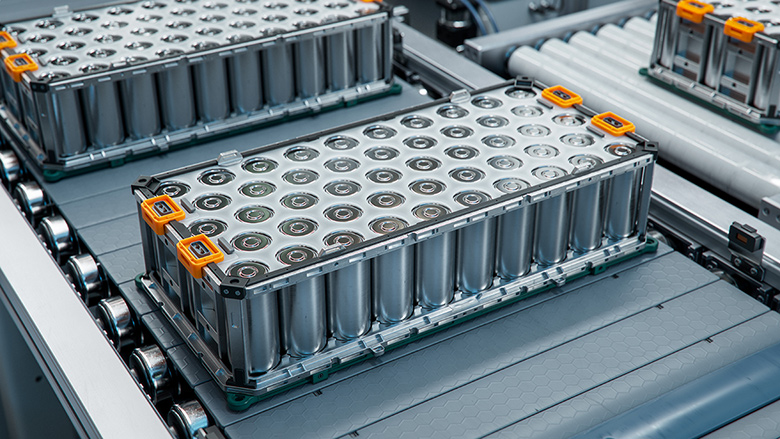
- Battery enclosure protection
- Busbar insulation
- Dielectric performance
- Thermal management
- Corrosion protection
- Adhesion to lightweight aluminum and composite substrates
- Enhanced stone-chip resistance
These requirements extend formulation priorities beyond corrosion protection and aesthetics.
For example, battery enclosures experience continuous thermal cycling and exposure to moisture, road salts and mechanical vibration. Consequently, coating systems must combine corrosion resistance with thermal stability while maintaining adhesion throughout the component’s service life.
Similarly, electrically insulating coatings for busbars and battery modules require consistent dielectric properties without compromising manufacturability.
Arkema’s strategic focus on mobility applications reflects this transition, with the company expanding resin technologies targeting transportation, electronics and energy-related applications.
Data Centers and Electronics: New Growth Markets for Functional Coatings
The expansion of artificial intelligence infrastructure and hyperscale data centers is creating a rapidly growing demand for advanced protective coatings.
Unlike traditional industrial facilities, modern data centers require coatings that support equipment reliability, thermal efficiency and corrosion protection.
Typical applications include:
- Corrosion-resistant HVAC systems
- Cool roof coatings
- Electronics protection
- Structural steel protection
- High-performance floor coatings
- Thermal management around sensitive equipment
Recognizing this opportunity, Dow announced an investment exceeding $100 million to expand specialty silicone manufacturing capacity, supporting applications across semiconductors, AI infrastructure, electric vehicles and medical technologies.
While silicone represents only one class of coating materials, the investment highlights the broader shift toward high-performance material platforms supporting digital infrastructure.

Renewable Energy and Industrial Infrastructure
Renewable energy installations, including wind turbines, hydrogen infrastructure and grid equipment, operate under aggressive environmental conditions that demand exceptional long-term durability.
Protective coatings are increasingly expected to provide:
- Corrosion resistance
- UV durability
- Moisture protection
- Chemical resistance
- Reduced maintenance intervals
For formulators, these requirements often involve balancing weatherability with application efficiency and life-cycle cost, particularly in offshore or remote installations where maintenance is expensive.
Regional Dynamics: Innovation Driven by Local Priorities
While formulation challenges are global, innovation priorities vary considerably across regions.
Europe
Europe continues to lead regulatory developments relating to PFAS, VOC reduction and sustainable chemistry. These policies are encouraging earlier adoption of low-emission technologies, biobased materials and alternative catalyst systems.
As a result, European coating manufacturers are often among the first to commercialize reformulated technologies aligned with evolving environmental legislation.
North America
North America is witnessing strong investment across advanced manufacturing sectors, including electric vehicles, battery production, semiconductors and AI infrastructure.
These investments are creating increased demand for coatings capable of supporting electrification, electronics protection and advanced industrial manufacturing.
Asia-Pacific
Asia-Pacific continues to strengthen its position as both a manufacturing hub and an innovation center.
Recent developments include:
- Beckers’ new R&D center in Shanghai
- Peter Lacke’s manufacturing expansion in Huizhou, China
- IMCD’s new coatings laboratory in Jakarta
- Wacker’s manufacturing expansion supporting regional specialty chemical demand
These investments reflect increasing localization of technical support, formulation development and customer collaboration.
India
India is emerging as an increasingly important manufacturing base for specialty chemicals and industrial coatings. Government initiatives supporting domestic manufacturing, infrastructure development and supply chain diversification are creating new opportunities for coating manufacturers and raw material suppliers.
Growing investments across automotive, electronics, industrial manufacturing and renewable energy are expected to drive demand for advanced coating technologies, particularly high-performance resins, additives, pigments and application systems.
Recent capacity expansion by Wacker in India further highlights the country’s growing role within the global specialty materials ecosystem.
Market Consolidation Reshapes Competitive Dynamics
Consolidation within the coatings industry reflects increasing pressure to combine technical capabilities, manufacturing scale and global market access.
The proposed merger between AkzoNobel and Axalta represents one of the industry’s most significant strategic developments, combining complementary portfolios across industrial, automotive, decorative, powder and protective coatings.
At the same time, interest from Nippon Paint and Sherwin-Williams demonstrated the strategic importance of coating technologies and global customer networks.
For formulators and suppliers, consolidation is expected to accelerate technology integration, expand application expertise and strengthen investment in sustainable coating platforms.

Practical Implications for the Coatings Value Chain
The trends discussed throughout this article translate into practical actions for each stakeholder group.
For Raw Material Suppliers
- Develop PFAS-free additives and sustainable resin systems.
- Improve technical support during reformulation projects.
- Focus on multifunctional additives that reduce formulation complexity.
For Formulators
- Evaluate new additives using cost-in-use rather than purchase price.
- Validate catalyst changes under production conditions.
- Balance regulatory compliance with long-term coating performance.
- Increase collaboration with raw material suppliers during product development.
For Manufacturers
- Invest in flexible production lines capable of handling powder, waterborne and high-solids technologies.
- Improve process monitoring to maintain coating consistency during reformulation.
For Equipment Suppliers
- Support higher transfer-efficiency application technologies.
- Develop energy-efficient curing systems.
- Enhance automation and digital process control.
For Applicators
- Revalidate curing schedules and application parameters when introducing new formulations.
- Monitor film build, transfer efficiency and surface preparation more closely during qualification.
Practical Checklist: Evaluating PFAS and Organotin Replacements
Before implementing new formulation technologies, formulators should consider the following steps:
- Identify the application’s critical performance requirements.
- Prioritize properties that cannot be compromised.
- Compare alternative chemistries based on technical performance, supplier support and commercial readiness.
- Conduct accelerated weathering, corrosion, adhesion and chemical resistance testing.
- Validate processing behavior through pilot-scale production.
- Assess cost-in-use, manufacturing efficiency and long-term qualification requirements before commercialization.
Future Outlook
Industrial coatings are transitioning toward multifunctional systems capable of delivering protection, sustainability, thermal management, electrical insulation and extended service life within increasingly demanding operating environments.
Future innovation is expected to focus on:
- Low-carbon formulation strategies
- PFAS-free performance technologies
- Advanced dispersants and catalyst systems
- Lightweight substrate compatibility
- Digital manufacturing and process optimization
- Coatings for electrification, energy infrastructure and advanced electronics
Rather than developing coatings for individual performance attributes, future formulation strategies will increasingly emphasize integrated material platforms capable of meeting multiple technical requirements simultaneously.
Conclusion
Industrial coatings are no longer defined solely by corrosion protection or decorative performance. Regulatory developments, electrification, advanced manufacturing and sustainability objectives are fundamentally changing formulation priorities across the value chain.
For formulators, success will increasingly depend on designing coatings that balance environmental compliance, processing efficiency, cost-in-use and application-specific performance. For manufacturers and suppliers, collaboration across the value chain will become essential to accelerate innovation while reducing commercialization risk.
As industrial applications become more complex, the next generation of coatings will be distinguished not only by their protective capabilities but by their ability to function as enabling materials for mobility, electronics, energy infrastructure and advanced manufacturing.
Regulatory pressures and emerging applications are influencing formulation, processing and qualification decisions throughout the coatings value chain. Explore related materials and technologies in PCI’s Industrial Coatings coverage.
Looking for a reprint of this article?
From high-res PDFs to custom plaques, order your copy today!