E-COATING The Benefits of a Two-Coat System
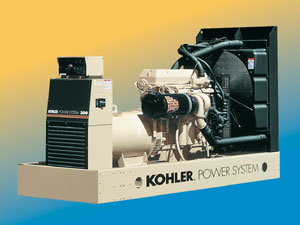
The generators and electrical controls produced at Kohler Co. America’s Power Systems Division are installed in a variety of hostile environments and require a durable finish. The electrocoat line that has provided the company’s corrosion-resistant primer was aging and required upgrading or replacement to improve the finish quality. The new coating process needed to meet the desired corrosion standards and not increase VOC emissions beyond the facility’s permitted VOC limits.
Three options were investigated to meet these requirements:
- Powder coating would provide a quality finish that would meet the salt spray and VOC requirements. The system would require two passes, one for a primer coat and then a second round for the topcoat. The investment in this system would be roughly $3 million in equipment, and it would require additional manual touch-up spray for the primer coat. It would also require a new pretreatment system and removal of the existing E-coat line.
- A two-step, liquid spray coating process was also considered. This would meet the requirements for finish and salt spray but it would not hold up to assembly operations or reduce VOC emissions. The investment would be $2 million, along with added manual spraying for the primer coat. The lead-time for this process would be more than double the current time, which would result in an increase in inventory. Liquid spray would also require a new pretreatment system and removal of the existing system.
- The third option was to upgrade the E-coat line.
The upgrade of the existing E-coat line has been investigated for the past three years. Tests were conducted to measure corrosion resistance of the coatings being considered, including 500 hours of salt spray exposure.
Modification of the E-coat line was selected as the most practical way to upgrade the system. This would allow Kohler Co. to maintain the high quality of coating that is required and meet the current VOC regulations with less investment and less labor.
Faster and more flexible
Upgrading the system with the latest technology in controls, hoists and power-and-free conveyor will decrease the cycle time by 33% and increase the flexibility of the indexing system. This increase in efficiency would provide a substantial cost savings but it did not meet the corporate standard of a three-year return on investment (ROI).Kohler asked its PPG (Pittsburgh) representatives for assistance in determining other ways to enhance the E-coat line. They recommended investigating the possibility of an E-coat topcoat instead of the current liquid spray and provided information about how their other customers have successfully implemented this option.
PPG representatives performed preliminary tests of the application on site. Using PPG’s application equipment, they were able to apply small batches of the new primer and topcoat to samples provided by Kohler. Apart from the paint application, these samples were prepared and cured with Kohler’s current system. This allowed testing to be done with real world samples, giving us confidence that this process would meet all Kohler specifications. In addition to Kohler’s testing, PPG tested the samples to verify the performance of the coatings.
It would not be practical to change several colors to E-coat because of the need for a tank and post-rinse system for each color. Kohler’s paint technician, Jay Montemayor, gathered information on the square footage for each of the colors the generator components are painted. It was determined that black was used most, so it will be the color used in the two-coat E-coat system. The other topcoat colors will continue to be coated in the liquid spray system with a two-component urethane. Moving our black topcoat from a spray operation to an electrocoat application opened the door to additional savings.

The search for savings
The most obvious savings was the labor that was no longer needed to load and unload the product twice. Also, no spray operators are required. The second source of substantial savings is from the increase in material utilization of a dip process that does not generate overspray and a lower cost per gallon of the paint.These savings alone would create sufficient ROI to justify the installation of the topcoat process. But since the topcoat process relies on the upgrade of the controls and hoist system, further savings were needed to generate an acceptable return on the entire project. Additional savings were surprisingly easy to find.
The E-coat process was reviewed step by step to identify where improvements might be made. The first improvement to be made involved the accuracy of the film build. As the part is coated, the amount of amps being drawn by the rectifier decreases. Currently, the bath remains charged even after the desired film thickness has been reached, leading to excess film build. The new PLC will utilize the information on amp draw from the new rectifier to limit the amount of time the bath is being charged. This will result in a minimum of 20% reduction in primer usage.
Since the E-coat process doesn’t use chemical solvents and it reclaims excess paint from the two post rinses, there is a significant reduction in VOCs, solids and liquid waste compared to a spraying operation. This reduces the amount of hazardous material that must be shipped off site for processing. To further reduce disposal costs, the anodes for the primer tank were upgraded from stainless steel to ruthenium oxide. Chrome leaches from the existing stainless-steel anodes and the water treatment system cannot remove it from the anolyte solution. The ruthenium oxide anode prevents the development of chrome in the anolyte solution. The new anode material also has a longer life and provides 10 amps per square foot, compared to the five amps per square foot that the old stainless-steel anodes provided.
The amount of rework that currently has to be stripped and recoated is an additional expense that will decrease. Urethane coatings are good products for spray applications and produce a high quality finish, but they don’t have the same scratch and mar resistance that acrylics do. Acrylics are not as friendly to spray, but are perfect for an E-coat application. The properties of the new topcoat and the fact that it is thermoset technology will reduce defects that currently occur during material handling or assembly operations. Eliminating the need to strip part hangers from two separate operations will also reduce costs.
The justification for the project was completed and the ROI exceeds corporate standards by 14%.
The final step in completing the request for capital was to pick a contractor. Price is usually the major deciding factor in the selection, assuming the quality of the deliverables is equal. Of course, the contractor has to be able to supply expertise in material handling, controls and finishing systems. It is critical that there be no gaps in management, communication or accountability between these three areas of installation. Each component is critical to the success of the project.
Herr Industrial Inc. (Lancaster, PA) was chosen because of its experience in finishing systems and its ability to provide the necessary competencies. During the quoting process, Herr was helpful in exploring possibilities that could increase the ROI.
The old liquid spray booth that was used to apply the topcoat would be removed and three new tanks added to provide the second E-coat stage. The new tanks would be used for applying the primer and the old E-coat tank converted to a topcoat tank. Engines and alternators would continue to be coated on the separate liquid spray line. In the near future, Kohler will investigate replacing the liquid spray line with a more environmentally friendly powder coating line.

Installation begins
After these decisions were made, installation began. Pairing the new black topcoat E-coat tank with the existing E-coat primer offers a lot of advantages. E-coat is still the most cost-efficient application of paint for higher volume processes.Powder coating and liquid spray applications were considered as options that could provide a high-quality finish. But these systems would run independent of the material-handling system and could be tied in with the upgrade of the controls, hoists and conveyor to improve the ROI. However, changing the system to a two-coat E-coat process added cost savings in the finishing operation and combined the material-handling upgrade and cost savings to achieve the necessary ROI. The superior finish of a two-coat E-coat, using PPG products, has made this project possible by converting a spray operation consuming a modest 4,700 gallons per year of black paint to a more flexible and cost-effective electrocoat process.
The new E-coat process goes through the following stages:
- Cationic epoxy primer
- Permeate rinse immersion
- Permeate rinse immersion
- Virgin permeate halo
- Cure
- R/O quench cool
- Cationic acrylic topcoat
- Permeate rinse spray
- Permeate rinse immersion
- R/O rinse spray
- Virgin R/O halo
- Dehydration
- Cure
- Ambient cool
Parts are transported to the E-coat system and from the system by power-and-free conveyor. The E-coat system is a programmable hoist arrangement.
One of the other benefits of the new conductive primer arrangement is the ability to recoat parts if a poor ground or other cause leads to a void in the coating. The part can simply be rerouted back through the primer and come out looking good as new. This same capability allows Kohler to add a second coat for further additional film build and better corrosion protection.
After viewing the samples done by PPG, associates at Kohler are already planning on changing the finish of some parts to black due to the benefits the new process can offer. With all the advantages a two-coat E-coat system has to offerhigh quality, low cost and positive environmental impactKohler Power Systems is happy with its new finishing operation.
Looking for a reprint of this article?
From high-res PDFs to custom plaques, order your copy today!