PCI’s coverage through early September shows how resin suppliers and formulators are balancing higher performance, renewable content and a changing supply base.
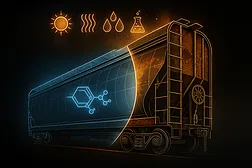
An evaluation of QUV stability, corrosion resistance, chemical spot testing and heat aging performance in a single-coat system for industrial and rail applications.
A triple-resin coating is evaluated against multiple atmospheric stressors, with results highlighting both protective performance and a corrosion-test limitation.
ACS 2026 brought coatings professionals to Indianapolis for technical sessions, exhibitor innovations, live industry polling and PCI’s expanded show-floor coverage.
ACD research shows how Responsible Distribution supports safer chemical handling, stronger environmental controls and more reliable coatings supply chains.
This article examines how multifunctional architectural coatings combine air-purification and thermal-regulation technologies within sustainable building envelopes.
Global coating resins demand is rising as sustainability regulations, emerging markets and bio-based technologies reshape binder innovation and coatings formulation strategies.
Advances in acrylic and vinyl acrylic resin technologies improve hiding efficiency, durability and sustainability across interior and exterior architectural coating formulations.
The Coatings Trends & Technologies Summit call for abstracts is in its final weeks, with rolling review continuing as the technical program takes shape. The deadline for submissions is April 10.
Chitosan is emerging as a multifunctional biobased polymer enabling antimicrobial performance, corrosion protection, and sustainable coating design across multiple paint and coatings applications.
Dow applies large language models to convert subjective paint application feedback into structured performance data, accelerating coatings R&D analysis.

 RSS
RSS