Painting & Coating Industry (PCI) logo Powder coating summit logo
search
cart
facebook twitter linkedin youtube
  • Sign In
  • Create Account
  • Sign Out
  • My Account
Painting & Coating Industry (PCI) logo Powder coating summit logo
  • NEWS
    • Latest News
    • Market Trends & Reports
    • Finishing News
    • Price Alerts
    • Subscribe to Newsletters
    • Global Top 10/ PCI 25
    • Weekly Featured Article
    • COATLE Word Game
  • PRODUCTS
    • Product News
    • Must See Products and Services
  • MATERIALS
    • Additives
    • Resins/Polymers
    • Pigments
    • Equipment
    • Distributors
  • TECHNOLOGIES
    • Adhesives
    • Architectural Coatings
    • Finishing Articles
    • Finishing Technologies
    • Finishing Equipment
    • Industrial Coatings
    • Nanotechnology
    • Powder Coatings
    • Solventborne
    • Special Purpose Coatings
    • Sustainability
    • UV Coatings
    • Waterborne
  • RESOURCES
    • Columns
      • Did you know?
      • Distribution Dive
      • Formulating With Mike
      • Innovation Insights
      • Powder Coating Perspectives
      • TiO2 Insider
    • Blogs
      • Editor's Viewpoint
      • Industry Insights
    • Coatings Supplier Handbook
    • Podcasts and Videos
      • COAT-IT! Podcast
      • Videos/PCI TV
    • PCI Store
    • Classifieds
    • eBooks
    • Sponsor Insights
    • White Papers
    • COATLE Word Game
  • EVENTS
    • Coatings Trends & Technologies Summit
    • Paint and Coatings Academy
    • Webinars
    • Calendar of Events
    • Lifetime Achievement Award
  • DIRECTORIES
    • Buyer's Guide
    • Equipment Directory
    • Materials Directory
  • EMAGAZINE
    • Current Issue
    • eMagazine Archive
    • China Issue Archive
    • Editorial Advisory Board
  • CONTACT
    • Contact Us
    • Advertise
    • Subscribe to eMagazine
    • Subscribe to Newsletters
  • SIGN UP!
Industrial CoatingsSpecial Purpose CoatingsSustainable

Zinc-Rich Primers

Sacrificial and/or Barrier?

By Kalsani Venkateshwarlu, Scientist, PPG, Calum Munro, Paul Bradley
The arch of the Humber River Walk Bridge in Toronto, Ontario
tillsonburg / E+ via Getty Images
August 6, 2025

Zinc-rich primers (ZRPs) have been a major anticorrosion technology in protective markets for decades.1 Industry specification bodies and customers largely adopted specifications based on zinc percentage. This article highlights recent market innovations and emerging technologies that challenge the traditional belief that higher zinc content equates to better corrosion resistance.


ZRP Background

According to a report from the National Association of Corrosion Engineers (NACE), which is now the Association of Materials Protection and Performance (AMPP), the global economic impact of corrosion is estimated to be US $2.5 trillion.2 Protective coatings largely address this issue by significantly increasing the lifetime of substrates. For example, protective coatings on cars or bridges can extend their life over decades. This is a vast area of research, and coatings suppliers offer a variety of solutions ranging from pretreatments, primers, basecoats and clearcoats, but mechanistically they can be classified into barrier and sacrificial protective coatings. End users select protective coatings based on the environmental conditions, specifications, life span expectations, application parameters and, sometimes, regulatory requirements.

Barrier protective coatings (BPC) utilize crosslinking networks and adhesion to achieve a nonporous film that delays external elements from reaching the metal substrate (Figure 1). Often, epoxy has been the chemistry of choice for barrier coatings, with some exceptions. However, when there is physical damage to the barrier coating and it is exposed to external elements, the substrate can corrode.

Schematic representation of corrosion mechanism of a typical epoxy barrier coating.
FIGURE 1 » Schematic representation of corrosion mechanism of a typical epoxy barrier coating. Courtesy of PPG

Sacrificial protective coatings (SPC) safeguard steel surfaces using more electrochemically active metal pigments, such as zinc, which acts as a sacrificial anode and preferentially corrodes instead of the steel substrate, which acts as a cathode. Unlike BPC, SPC is not impacted by minor film damage, as the sacrificial components “self-heal” to protect the substrate. Zinc has been primarily used as the sacrificial anode material, and products are sold as zinc-rich primers under various brand or trade names (Figure 2). 
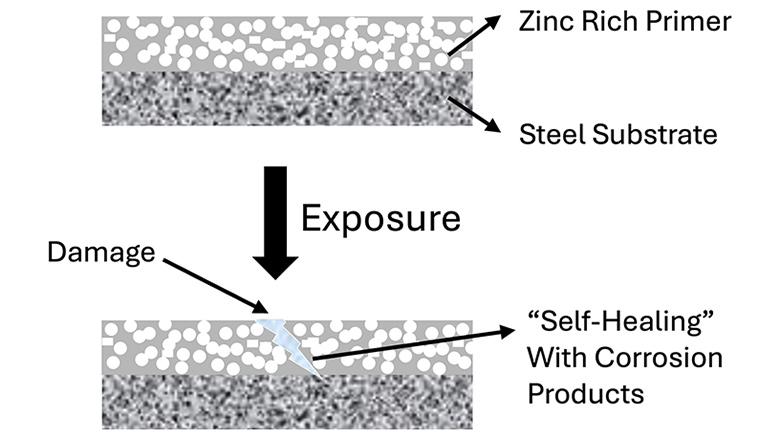
Schematic representation of corrosion mechanism of a typical zinc-rich primer coating.
FIGURE 2 » Schematic representation of corrosion mechanism of a typical zinc-rich primer coating. Courtesy of PPG

It is interesting to note that although ZRPs are often described as sacrificial, both barrier and sacrificial mechanisms work together to prevent steel corrosion, especially epoxy ZRPs. As highlighted in the “Lower Zinc ZRPs” section below, there is immense potential to optimize barrier and sacrificial mechanisms to achieve optimal levels of corrosion resistance. 


Specifications and the Need for Innovations

As the SPC protection mechanism is sacrificial or cathodic protection, the extent of protection has generally been expected to depend on the level of sacrificial elements. There are standards and specifications defining the percentage of zinc. Specifically, the Society for Protective Coatings (SSPC), now part of the AMPP, Paint Specification 20 describes two types of zinc-rich coatings with three zinc levels in the dry film:

  • Level 1 ≥ 85%
  • Level 2 is ≥ 77% and < 85%
  • Level 3 is ≥ 65% and < 77%

The industry generally follows the principle that a higher zinc content leads to better corrosion resistance. Customers rely on standards such as ISO 12944, NTPEP and SSPC Paint 29 that stipulate weight percentage of zinc.1

However, as listed below, high-zinc ZRP formulations present several application and sustainability challenges:

  • Films are brittle; any substrate movements can lead to cracks3
  • Solvent trapping
  • Poor transfer efficiency and difficulty in building film thickness
  • Add weight to the infrastructure
  • Need topcoats and/or tie coats to manage sacrificial nature, along with UV durability and aesthetics

These challenges make high-zinc ZRPs difficult to use. Additionally, zinc ranks as the fourth most widely used material, behind iron, aluminum and copper, with approximately 20 million tons produced annually. This element has been used in a range of applications from coatings to skin care products. Prolonged exposure to zinc can have health hazards, as shown in these products’ safety data sheets. The cost of zinc has also impacted markets negatively. Given zinc’s broad usage, supply chain constraints, potential hazards and application issues, it is imperative that the coatings industry explores maximizing zinc performance while lowering the levels used in coatings.


Lower-Zinc ZRPs

In recent years, progress has been made toward lowering the zinc content in ZRPs, offering different perspectives on barrier versus sacrificial aspects. A recent study4 highlighted the role of zinc but also other factors such as polymer chemistry, crosslink density, pigment/binder ratio, etc., and concluded that the corrosion resistance of ZRPs is not solely dependent on the percentage of zinc in the coating but rather several other factors.

Several research articles have highlighted the use of conductive materials such as carbon nanotubes,5 graphite,6 polyanilines and polypyrroles7 to reduce the zinc levels and/or improve corrosion performance (Figure 3). In addition, ZRPs with glass spheres and other proprietary materials surpassed traditional ZRPs in corrosion resistance and mechanical properties.8

Schematic representation of conductive additive-modified zinc-rich primer.
FIGURE 3 » Schematic representation of conductive additive-modified zinc-rich primer. Courtesy of PPG

Recently launched PPG PRIMERON™ optimal zinc epoxy powder primer offers optimized zinc amounts, much lower than traditional ZRPs, to deliver exceptional transfer efficiency, scribe corrosion resistance and excellent adhesion on multiple substrates (Figure 4). This technology surpassed 10,000 hours of salt spray performance on blasted steel and offers overall better performance than traditional ZRPs. The lower zinc levels enhance transfer efficiency up to 80% better than traditional ZRPs and corrosion performance exceeding ISO 12944 and C5 standard. 
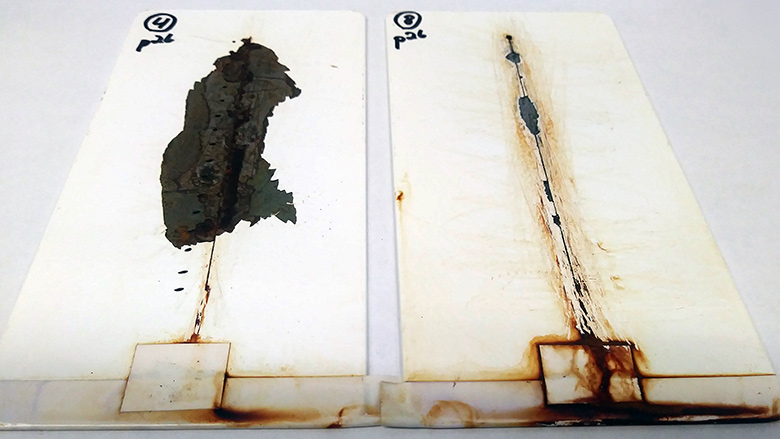
Salt fog results of traditional ZRP system vs. PPG PRIMERON system over iron phosphate-treated steel substrate.
FIGURE 4 » Salt fog results of traditional ZRP system vs. PPG PRIMERON system over iron phosphate-treated steel substrate. Courtesy of PPG


Conclusion and Recommendations

The proof of concept for lowering zinc levels in zinc-rich primers (ZRPs) has shown promising market success. However, widespread adoption remains a long-term goal. Coatings companies, including PPG, continue to explore ways to reduce zinc content in ZRPs, with further developments expected in the future.

Zinc percentage specifications were introduced decades ago, but given the challenges associated with high-zinc ZRPs and emerging solutions, it is time to revise these standards. Specifications should be based on validated performance data rather than zinc percentage alone. The commercial adoption of lower-zinc primer technologies needs to shift to more performance-based specifications, in contrast to current zinc-level-based specifications. Further discussions are necessary to align regulatory standards, encourage specification modifications and facilitate customer adoption.


Acknowledgements

Susan Donaldson, John Schneider, Nicole Rakers, Travis Bush, Marisol Rodriguez, Denise Callihan and Desiree M Miller.

References

[1] Hussain, A.K.; Seetharamaiah, N.; Pichumani, M.; Chakra, C. S. Research Progress in Organic Zinc Rich Primer Coatings for Cathodic Protection of Metals – a comprehensive review. Progress in Organic Coatings 2021, 153, 106040.

2 Impact.nace.org/economic-impact.aspx

3 Carboline news, BIC Magazine’s June/July 2018 issue: bic-junejuly-2018-hook.pdf

4 Nicole, R; Lim, Mary Lin; McCarthy, Michael; Begley, James; Mubarok, Arif. Efficacy of Zinc Content in Sacrificial Protection Coatings. SSPC Coatings 2021, S2021-00018, 1-10.

5 Tesla Nanocoatings news: Advancements in Zinc Primers for Offshore Protection.

6 Dandan, He; Lida, Wang; Zhengqing,Yang; Wen, Sun; Yixuan, Feng; Kaixin, Xu; Xuesong, Chen; Yine, Ren; Guichang, Liu. A New Understanding of Graphene Influencing the Protective Performance of Zinc-Rich Coatings. Ind. Eng. Chem. Res. 2024, 63, 17, 7661–7672.

7 Niteen, Jadhav; Subramanyam, Kasisomayajula; Victoria, Johnston Gelling. Polypyrrole/Metal Oxides-Based Composites/Nanocomposites for Corrosion Protection. Frontiers in Materials 7, 95.

8 Hempel’s AvantGuard® technology

KEYWORDS: barriers conductive coating Corrosion Control epoxy coatings Primers Regulations

Share This Story

Looking for a reprint of this article?
From high-res PDFs to custom plaques, order your copy today!

Kalsani Venkateshwarlu, Scientist, PPG

Calum Munro, Associate Fellow, PPG

Paul Bradley, Technical Manager, PPG

Recommended Content

JOIN TODAY
to unlock your recommendations.

Already have an account? Sign In

  • pci1022-Kinaltek-Lead-1170.jpg

    A Novel Pigment Production Technology

    Following an extensive R&D program that demonstrated...
    Paint and Coating Pigments
    By: Jawad Haidar and Nitin Soni
  • pci global top 10

    2025 Global Top 10: Top Paint and Coatings Companies

    The following is PCI’s annual ranking of the top 10...
    Paint and Coating Market Reports
    By: Courtney Bassett
  • 2025 pci 25

    2025 PCI 25: Top Paint and Coatings Companies

    PCI's annual ranking of the top 25 North American paint...
    Paint and Coating Market Reports
    By: Courtney Bassett
You must login or register in order to post a comment.

Report Abusive Comment

Manage My Account
  • eMagazine
  • Newsletters
  • Online Registration
  • Subscription Customer Service

More Videos

Sponsored Content

Sponsored Content is a special paid section where industry companies provide high quality, objective, non-commercial content around topics of interest to the PCI audience. All Sponsored Content is supplied by the advertising company and any opinions expressed in this article are those of the author and not necessarily reflect the views of PCI or its parent company, BNP Media. Interested in participating in our Sponsored Content section? Contact your local rep!

close
  • colorful building exterior
    Sponsored byDow

    Insights into Exterior Architectural Coating Degradation: Bridging Accelerated and Natural Weathering

  • digital pigments
    Sponsored bySiltech

    The Fourth Dimension of Silicon: Siltech Q Resins

Popular Stories

Company News

What the AkzoNobel–Axalta Merger Means for the Future of Coatings

AkzoNobel and Axalta Headquarters

AkzoNobel and Axalta Announce $25 Billion Merger

Wacker logo

WACKER Plans More Than 1,500 Job Cuts


PCI Buyers Guide

Submit a Request for Proposal (RFP) to suppliers of your choice with details on what you need with a click of a button

Start your RFP

Browse our Buyers Guide for manufacturers and distributors of all types of coatings products and much more!

Find Suppliers

Events

September 4, 2025

N-Butylpyrrolidone (NBP) as a Green Solvent to Replace N-Methylpyrrolidone (NMP) in Industrial Coating Applications

ON DEMAND: EPA published a regulation proposal around N-methylpyrrolidone (NMP) in June 2024 to ban or limit NMP in many applications, such as paints and coatings and their removers. N-butylpyrrolidone (NBP) is a powerful and versatile solvent for a variety of industries looking for alternatives to substance of very high concern (SVHC)-listed solvents.

March 24, 2026

The Manufacturing & Automation eXchange (MAX)

MAX presents a rare opportunity to observe the full scope of manufacturing in one environment. From systems integration and materials handling to automation, quality, safety, and packaging, each discipline is represented through live, operational displays. By experiencing these technologies side by side, as they are on actual production floors, attendees gain a grounded understanding of how manufacturing functions align, overlap, and evolve in practice.

View All Submit An Event

Poll

Longest-running laboratory experiment

What is the longest-running laboratory experiment?
View Results Poll Archive

Products

Automotive Paints and Coatings, 2nd Edition

Automotive Paints and Coatings, 2nd Edition

Now in its second edition and still the only book of its kind, this is an authoritative treatment of all stages of the coating process.

See More Products
pci voices from the top ebook

PCI webinar

Related Articles

  • pci0912-MO-bridge-422.jpg

    Waterborne Epoxy Zinc-Rich Primers: There Are Viable Options

    See More
  • Zinc-Rich Primers With Micaceous Iron Oxide

    See More
  • pci0219-Autonomic-148958314-900.jpg

    The Next Generation of Zinc-Rich Coatings

    See More

Related Products

See More Products
  • 9780080447087.jpg

    Handbook of Adhesives and Sealants, Volume 2

  • thin films.jpg

    Thin Films and Coatings: Toughening and Toughness Characterization

  • handbook-of-ad-and-surface-

    Handbook of Adhesives and Surface Preparation

See More Products
×

Keep the info flowing with our eNewsletters!

Get the latest industry updates tailored your way.

JOIN TODAY!
  • RESOURCES
    • Advertise
    • Contact Us
    • Directories
    • Store
    • Want More
  • SIGN UP TODAY
    • Create Account
    • eMagazine
    • Newsletters
    • Customer Service
    • Manage Preferences
  • SERVICES
    • Marketing Services
    • Reprints
    • Market Research
    • List Rental
    • Survey & Sample
  • STAY CONNECTED
    • LinkedIn
    • Facebook
    • Youtube
    • X (Twitter)
  • PRIVACY
    • PRIVACY POLICY
    • TERMS & CONDITIONS
    • DO NOT SELL MY PERSONAL INFORMATION
    • PRIVACY REQUEST
    • ACCESSIBILITY

Copyright ©2025. All Rights Reserved BNP Media.

Design, CMS, Hosting & Web Development :: ePublishing