
Our November has a heavy focus on developments in industrial coatings. A few article highlights include the application of core-shell organic polymer binders and hybrid inorganic-organic polymer composites, a corrosion study on U.S. Marine Corps ground vehicles, and where silicon materials can replace PFAS.
This month’s Formulating with Mike columncontinues the focus on resins. Mike tests paints with APE-containing and APE-free emulsions for stability, particle size, and final paint quality.
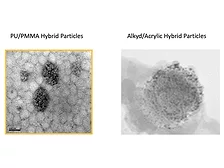
Tailor-made waterborne core-shell polymers are increasingly used as binders in industrial coatings. Almost unlimited possibilities to control polymer properties make them the first-choice raw material in industrial metal protection, wood protection, and anti-fouling coatings.
For those looking to replace PFAS in their coatings formulations, this article discusses some experiments and data that show how organosilicones compare to PFAS compounds in critical performance criteria such as low surface tension/surface energy, COF, water repellency, oil repellency, stain resistance, and chemical stability.
Naval Surface Warfare Center, Carderock Division has an ongoing project funded through the Office of Naval Research to develop a novel, corrosion-resistant poly(styrene-co-catechol) tie coat and adhesion promoter to improve CARC adhesion and performance to various composites, aluminum, and steel USMC ground vehicle surfaces.
The recent Western Coatings Show in Las Vegas featured an exhibit hall packed with new technology for coatings formulators. This article offers a sampling of some of the raw materials and services showcased.
Through the incorporation of such unique benefits as leak-free operation and line-stripping capabilities, the eccentric-disc principle makes the pump extremely flexible, allowing the pumping of low-viscosity, high-viscosity, and highly abrasive materials within a single process — all with the same pump.
As industries put an increasing emphasis on sustainability, reconditioned equipment that utilizes existing high-quality components to minimize waste can be an impactful choice for manufacturers.
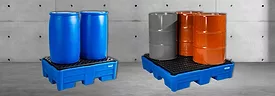
The drum spill containment pallets catch spills, drips, and leaks to keep work areas clean and safe, making them ideal for the safe storage of oils, coolants, acids, caustics, and other corrosive liquids.
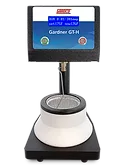
Boost accuracy and repeatability withthe new CE-certified Gardner Gel Timers, specifically engineered to determine the gel time of various materials such as resinous plastics, epoxy resins, adhesives, drying oils, FRP, two-component elastomers and paints.