Using Simulation Tools and Physicochemical Properties to Guide the Selection of Additives, Part Two
Part 2: Methods and Materials

Davizro / iStock / Getty Images Plus, via Getty Images.
Following last month’s column, which introduced the theory of using physicochemical properties to determine optimal pigment dispersants, this article outlines the materials and methods used in the study.
I will say that without Alann O. P. Bragatto, Suzy S. Alves, Beatriz Pinto, Rafael S. Dezotti, Robson Pagani, Bruno S. Dario, and Fabricio. G. Pereira (of Indorama Ventures:Indovinya Brazil), none of this would be here. Their work in this area is truely inspirational, and I have learned a lot from them. In fact, they are the reason we won best paper at both the 2025 Waterborne Symposium and the 2025 Eastern Coatings Show. While I accepted the awards, they made it possible.
Materials and Methods
Physicochemical measurements for dispersants were conducted using a solution with 0.10% (w/v) surfactant active content in deionized water at 25 °C. Static surface tension was measured using a force tensiometer, and dynamic surface tension curves were obtained using a maximum bubble tensiometer. Wetting time was determined using raw cotton thread, following ASTM D2281-10.
The dispersion and grinding process used a high-speed disperser equipped with a basket mill, zirconium spheres, and a thermostatic bath. Tinting was performed with a dual axial centrifuge (speed mixer type). Viscosity was measured using a spindle viscometer, and color measurements for tinting power and rub-out were obtained using a spectrophotometer.
To build adsorption isotherms, dispersions were prepared with a rotary homogenizer. A refrigerated centrifuge was used for phase separation, and absorbance of the supernatants was measured with a fluorescence and UV/Vis spectrophotometer. Analysis was conducted with dispersant concentrations ranging from 0.10 to 2.50 g/L and a constant pigment mass of 100 mg. Calibration curves were developed for each dispersant.
Simulation data and experimental determination of Hansen solubility parameters were generated using HSPiP software, 5th edition, version 5.4.08. Experimental HSP values were determined internally by evaluating dispersant solubility in 27 solvents. Dosing and mixing were performed using an automatic volumetric/gravimetric liquid handling system.
Adsorption Isotherm Methodology
Dispersant Quantification
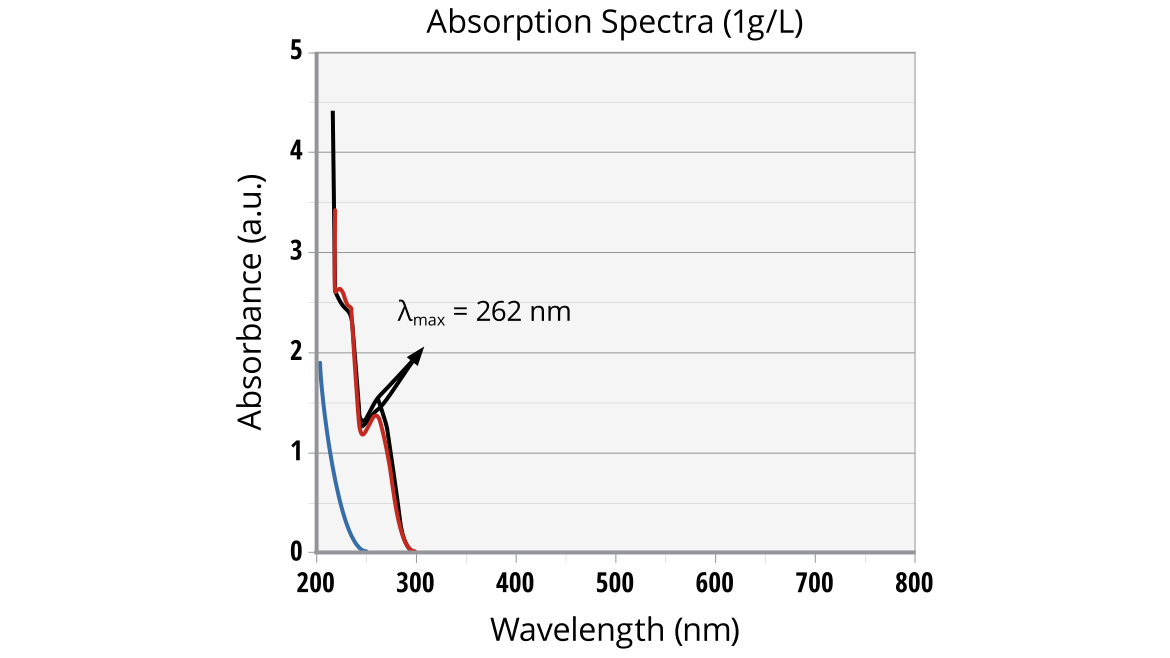
High-performance liquid chromatography (HPLC) with UV/Vis detection was used to identify dispersants. This method provided optimal results. Calibration curves were developed and used with Beer’s Law (Beer-Lambert Law) to determine the concentration of surfactant remaining in the supernatant after centrifugation. Figure 1 shows a UV/Vis curve; Figure 2 shows a calibration curve for surfactant 2.

Pigment Selection and Grind Preparation
Pigments were selected and dispersed under consistent grinding conditions, including temperature, grind time and concentration. Table 1 presents the formulations used for the isotherm studies.

Quantification of Free Dispersant
Once dispersions were prepared, they were centrifuged to separate pigment-bound dispersant from the liquid supernatant. The supernatant was analyzed to quantify unadsorbed surfactant. Adsorbed surfactant was calculated by subtracting the concentration in the supernatant from the original concentration.
In next month’s column, I’ll begin presenting the results and show how using simulation tools to select the best pigment dispersant can streamline lab work.
Acknowledgment
The author wishes to acknowledge Alann O. P. Bragatto, Suzy S. Alves, Beatriz Pinto, Rafael S. Dezotti, Robson Pagani, Bruno S. Dario, and Fabricio G. Pereira of Indorama Ventures: Indovinya Brazil. Their outstanding work in this area made this research possible and served as the foundation for its success. The team’s contributions were instrumental in earning Best Paper honors at both the 2025 Waterborne Symposium and the 2025 Eastern Coatings Show. While the author accepted the awards, the recognition belongs to them.
Looking for a reprint of this article?
From high-res PDFs to custom plaques, order your copy today!