Mechanical Performance of a Triple Resin DTM Coating
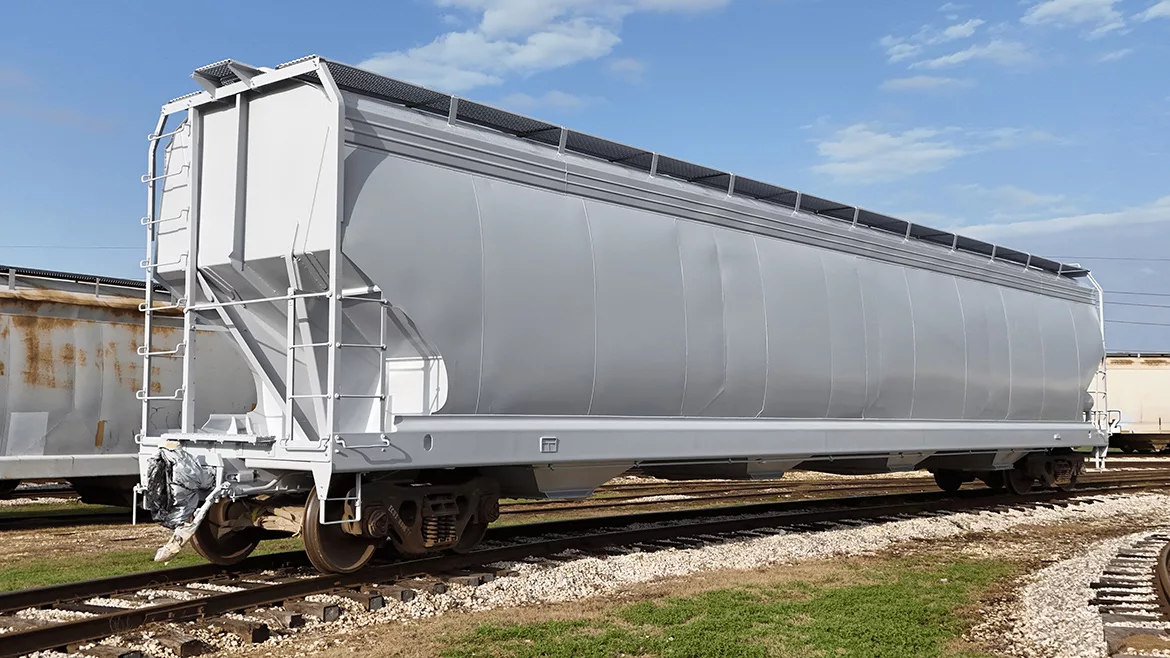
Industrial coating systems are increasingly expected to provide multifunctional performance across various operational challenges. In rail transportation, chemical processing, and heavy manufacturing, coatings are routinely exposed to dynamic mechanical forces, including thermal expansion, vibrational stress, impact events, and deformation during handling or assembly. As such, mechanical properties such as adhesion, flexibility, and impact resistance are not supplemental but rather foundational to long-term coating success and asset protection.
This triple resin DTM coating achieves these performance targets through a unified, high-performance formulation that merges chemical resistance with enhanced mechanical robustness. Incorporating three synergistic resin chemistries allows the coating to achieve the adhesion and chemical barrier properties typical of epoxy systems while also delivering the toughness and flexibility often reserved for elastomeric or polyurethane topcoats. This paper presents laboratory evaluations conducted to characterize mechanical performance by widely accepted ASTM test standards, reflecting conditions relevant to real-world use environments.
Background
Traditional high-performance coating systems often rely on a multi-layer architecture that includes a zinc-rich primer for adhesion and corrosion protection, an epoxy midcoat for chemical resistance, and a urethane or acrylic topcoat for UV and abrasion resistance. While effective, these systems are labor-intensive, time-consuming, and prone to application inconsistencies. Achieving mechanical resilience across all layers requires precise film builds and proper intercoat adhesion, which can be disrupted by field variability or environmental conditions during application.
The new triple resin coating represents a departure from this paradigm. Its formulation is built around a tri-resin architecture in which each resin plays a specific mechanical and chemical role. The primary resin promotes UV and chemical corrosion resistance, the secondary resin enhances flexibility and crack resistance, and the tertiary resin provides fast through-cure. These components are co-cured into a homogeneous matrix, enabling single-coat application with the mechanical integrity of a multi-layer system. The following sections detail standardized laboratory methods used to evaluate the coating’s mechanical behavior and compare performance to current benchmarks.
Materials and Test Methods
Adhesion Testing with Surface Conditioner
To evaluate adhesion to steel substrates under realistic surface conditions, carbon steel panels were prepared via dry abrasive blasting to a near-white metal finish (SSPC-SP10 / NACE No. 2). Panels were then exposed to three different pre-coating treatments:
- No submersion (control)
- Submersion in distilled water
- Submersion in a 50:1 water dilution of HoldTight® 102
HoldTight® 102 is a biodegradable, non-flammable surface preparation additive that removes soluble salts and prevents flash rusting post-blasting. Although widely used in field settings, its compatibility with high-performance coatings must be verified to ensure no adverse impact on adhesion.
After treatment, panels were coated with the DTM coating (Gray) at an average dry film thickness (DFT) of 8 mils (203 µm) and cured under ambient laboratory conditions (23 ± 2 °C, 50 ± 5 % RH) for seven days. Pull-off adhesion was tested per ASTM D4541 using an Elcometer 510 hydraulic adhesion tester with 20 mm aluminum dollies. Failure modes were classified as adhesive (at the substrate), cohesive (within the coating), or interfacial (between coating and dolly).
Flexibility Testing
Flexural properties were assessed using ASTM D522 Method A (cylindrical mandrel bend). Coated panels were conditioned for seven days post-application and then bent 180 degrees over mandrels of decreasing diameter ranging from 1 inch (25.4 mm) to 1/8 inch (3.2 mm). The smallest mandrel diameter with no observed cracking was recorded. A qualitative assessment of crack resistance was also performed by manually flexing fully cured panels to simulate repetitive bending stress and flexural fatigue.
Impact Resistance Testing
Impact resistance was evaluated by ASTM D2794 using a falling weight impact tester capable of delivering both direct and reverse impact. A hemispherical indenter was dropped from a fixed height to apply a known energy load (in inch-pounds) to the coated surface. For direct impact, the indenter contacted the coating directly. For reverse impact, force was applied to the uncoated backside of the panel. Failure was defined by visible cracking, delamination, or rupture of the coating film. Results were compared to reference data from standard epoxy coatings.
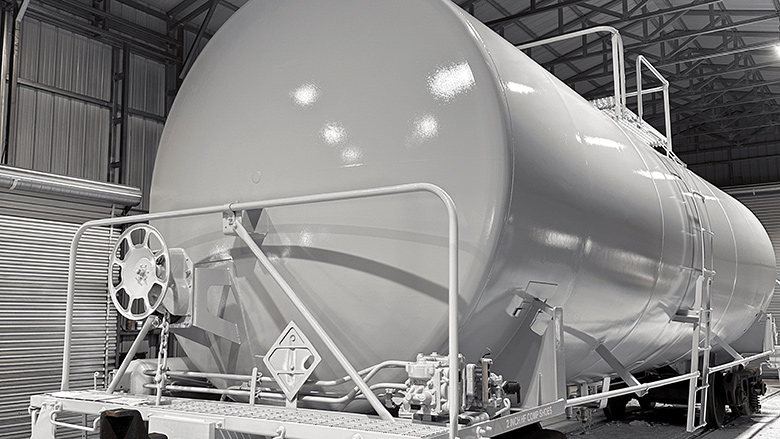 Credit: Advanced Polymer Coatings
Results and Discussion
Adhesion Performance
The average adhesion strength across all test conditions remained consistent. The control panel exhibited a pull-off strength of 1802 psi, while the distilled water-treated and surface protection additive-treated panels measured 1814 psi and 1796 psi, respectively. These differences are statistically negligible. All tests exhibited cohesive failure within the film, indicating failure occurred in the bulk material rather than at the substrate interface. This demonstrates that the coating establishes a robust bond to carbon steel surfaces and maintains interfacial strength even in the presence of salt removal agents or residual moisture. Field use of the surface protection additive does not compromise adhesion and may be confidently included in standard surface treatment protocols.
Flexibility Results
The coating demonstrated high flexibility, withstanding 180-degree bending over a 1/8-inch mandrel without cracking or delamination. This performance equates to an elongation threshold exceeding 30 %, surpassing the flexibility range typical of conventional epoxies (6–12 %). The triple resin matrix distributes mechanical stress across the film, reducing localized strain concentrations. When manually flexed, panels retained film integrity, supporting static and dynamic strain tolerance—ideal for vibration, thermal cycling, and structural movement environments.
Impact Resistance
Results from ASTM D2794 testing showed impact resistance exceeding 160 in-lb for both direct and reverse impacts. Conventional epoxy coatings typically register 70–90 in-lb in direct impact and show diminished resistance in reverse impact due to brittleness. The coating’s ability to absorb and dissipate energy from both directions without cracking reflects the synergistic effect of its resin composition, making it well-suited for high-wear environments and handling stages.
Conclusion and Future Work
The mechanical testing results establish the triple resin DTM coating as a high-performance solution capable of withstanding a broad range of mechanical stressors. Its excellent adhesion, flexibility exceeding 30 %, and dual-mode impact resistance above 160 in-lb position it as a durable single-coat alternative to traditional multi-layer epoxy systems. For asset owners and applicators seeking reduced downtime and simplified application, this technology offers a validated and effective solution.
Further validation is underway through comparative testing against conventional coatings, including corrosion resistance (ISO 12944-6) and gloss/color retention (QUV accelerated weathering). These studies will provide quantitative benchmarks for evaluating unified resin coating systems in industrial applications.
For technical inquiries or collaboration opportunities, contact the technical services team at Advanced Polymer Coatings. Email the author.
Learn more about advancements in industrial coatings.
Looking for a reprint of this article?
From high-res PDFs to custom plaques, order your copy today!