
Cool Roof Reflective Coatings for a Warming Planet
How acrylic, silicone, polyurethane and elastomeric systems can reduce heat gain, support energy savings and strengthen climate resilience.

Need to Know
- Cool roof reflective coatings reduce solar heat gain by reflecting sunlight, releasing absorbed heat and limiting heat transfer into the building.
- Acrylic, silicone, polyurethane and elastomeric systems offer different balances of cost, UV resistance, waterproofing, durability and flexibility.
- Adoption is growing as building codes, corporate sustainability goals and urban heat mitigation programs increase demand for high-SRI roofing solutions.
In many places, including the Gulf region, the United States and India, a majority of peak summer electricity consumption comes from air-conditioning systems. Extreme heat waves in these regions have had a measurable impact on electricity demand in the past, and the same is expected in the future. Estimates from the United Nations Environment Programme (UNEP) and Cool Coalition in 2021 show that cities are warming at twice the global average, which clearly means a greater need for air-conditioning systems.
We know that extreme heat is one of the deadliest consequences of climate change, resulting in high energy consumption and even deaths. We cannot air-condition ourselves out of this crisis; the world needs a more sustainable and equitable way to cool down. This is where cool roof reflective coatings draw attention, as they can easily reduce the twin burdens of energy bills and carbon emissions.
But can cool roof reflective coatings really save lives?
Absolutely. Studies show a significant reduction in building temperatures after these coatings are applied, which is why experts have gone so far as to estimate that their large-scale adoption could prevent thousands of heat-related deaths.
For instance, a joint study by University College London (UCL) and the University of Exeter found that during London’s 2018 heat wave, one of the hottest on record, around 249 lives were lost and reflective roofs could have prevented nearly one-third of those heat-related deaths.
How Do They Help?
Cool roof reflective coatings fight heat on three fronts: They reflect incoming solar rays, efficiently release absorbed heat into the air and act as a protective barrier that prevents heat transfer indoors. As urban populations grow and temperatures climb, these coatings are emerging as both a climate shield and a public health safeguard.
According to various studies, most dark roofs absorb approximately 90% of solar energy, and roof temperatures can exceed 66 °C during scorching summers. Traditional roofs tend to have a solar reflectance index (SRI) of 0–30, whereas these coatings have an SRI of approximately 90. The higher the SRI value, the greater the ability to reflect the sun’s energy. These cool roof reflective coatings can reduce rooftop surface temperatures by up to 20 °C and indoor temperatures by 10%.
Several types of cool roof reflective coatings are widely used, including acrylic, silicone and polyurethane coatings, each offering distinct advantages. Silicone coatings offer exceptional UV resistance and waterproofing. Polyurethane coatings provide superior durability and protection against foot traffic. Acrylic coatings are cost-effective, easy to apply and provide good UV protection. Acrylic-based coatings account for more than 40% of the total cool roof reflective coatings market because of their strong UV resistance and durability.
Broader Benefits of Cool Roof Reflective Coatings
Alongside the aforementioned material types preferred for different roof coatings, white elastomeric coatings and infrared (IR) roof coatings represent broader roof-coating classes that deliver enhanced flexibility and thermal performance.
White roof paint is a highly reflective coating designed to minimize heat absorption by reflecting sunlight rather than absorbing it. These coatings offer excellent flexibility and crack resistance while effectively lowering roof surface heat by up to 40% during peak summer conditions.
Not only white elastomeric coatings, but all types of roof coatings provide some form of benefit. A few are described below:
- Energy Savings: Cool reflective coatings reduce peak cooling demand by up to 30%, depending on roof size, climate and SRI. On large retail or warehouse roofs, such as a 10,000 m² roof using traditional cooling systems, this can translate to annual savings of $15,000–$50,000 in hot climates. Additionally, by lowering energy use, cool roofs decrease the associated air pollution.
- Maintenance and Roof Longevity: Coatings protect substrates from UV degradation and thermal cycling, extending roof life by 3–5 years and reducing unplanned maintenance. Depending on the thickness of the initial application, elastomeric roof coatings can also last 10–20 years.
- Indirect Benefits: Cool roof coatings result in lower indoor temperatures, which further improve occupant comfort and can reduce adverse health impacts, including heat exhaustion, respiratory difficulties, dizziness, cramps and heat-induced death.
Where Are Cool Roof Coatings Making the Biggest Impact?
Coatings are widely used on residential, commercial and industrial buildings to mitigate the urban heat island effect, reduce cooling costs and enhance indoor comfort by minimizing heat transfer through the roof. However, commercial buildings have emerged as the largest source of demand for cool roof reflective coatings.
The reason is simple: Offices, malls, hospitals and hotels operate at high occupancy levels, use intensive lighting and electronic systems, and require uninterrupted comfort. This makes their cooling loads far higher per square meter than those of residential homes or industrial facilities. By lowering roof surface heat, cool roof coatings help commercial operators cut air-conditioning costs, reduce emissions and meet sustainability targets, delivering both economic and environmental value.
With climate change driving more frequent and intense heat waves, residential and other users will also rapidly adopt reflective coatings to maintain indoor comfort without relying excessively on air conditioning.
Emerging markets in the Asia-Pacific region are seeing the fastest growth, with energy-conscious commercial developers adopting coatings for both economic benefits and compliance with new green building codes. For example, Tamil Nadu’s Cool Roof Initiative in India deploys reflective coatings on mass housing to reduce indoor temperatures by up to 5–8 °C, improving comfort without additional energy use. The program’s success earned United Nations recognition, highlighting how reflective coatings are scaling as a practical climate-resilience tool globally.
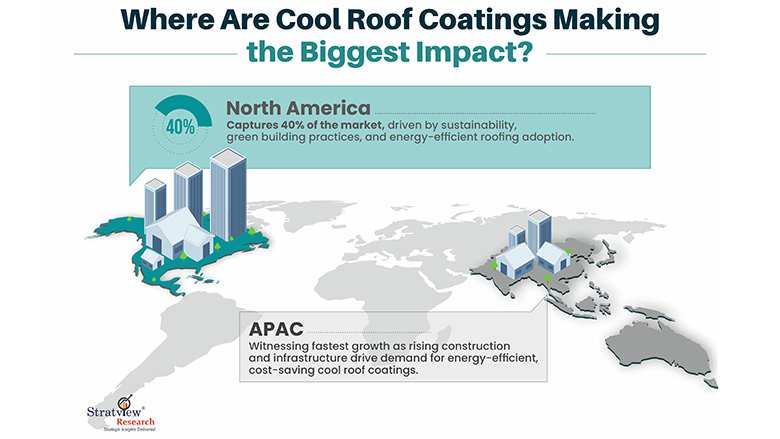
Sustainability and green building practices are also gaining strong momentum across North America. Cool roof coatings play a vital role in advancing these initiatives by mitigating the urban heat island effect and reducing energy consumption, positioning them as a preferred solution for both new construction and retrofit projects. Environmental, social and governance (ESG) commitments and Leadership in Energy and Environmental Design (LEED) certification goals further accelerate the adoption of coatings in North America.
Furthermore, stringent building energy codes and standards in the region, such as ASHRAE 90.1, provisions of the International Energy Conservation Code (IECC) and California’s Title 24, mandate or incentivize high-SRI, low-slope roofs on commercial buildings.
Additionally, large retailers, logistics centers and office complexes across the United States and Canada are adopting coatings aggressively to curb heating, ventilation and air-conditioning (HVAC) loads and meet corporate ESG targets.
As a result, code-driven demand has positioned North America as the largest and most mature market for cool roof reflective coatings, accounting for more than 40% of global demand.
Toward a Cooler and More Sustainable Built Environment
Cities are expanding. According to the United Nations, the global urban population is expected to rise from 57% in 2015 to 68% by 2050, with the total global population projected to exceed 9.8 billion that same year.
Cities will therefore soon face the new reality of higher population densities and intensified urban heat, further driving the need for energy-efficient, climate-resilient infrastructure. Cool roof reflective coatings are set to see growing adoption as cities invest in sustainable, heat-resilient urban spaces.
The increasing frequency and severity of global heat waves also pose significant challenges to maintaining comfortable indoor temperatures in many cities worldwide, consequently driving demand for energy-efficient and sustainable building solutions.
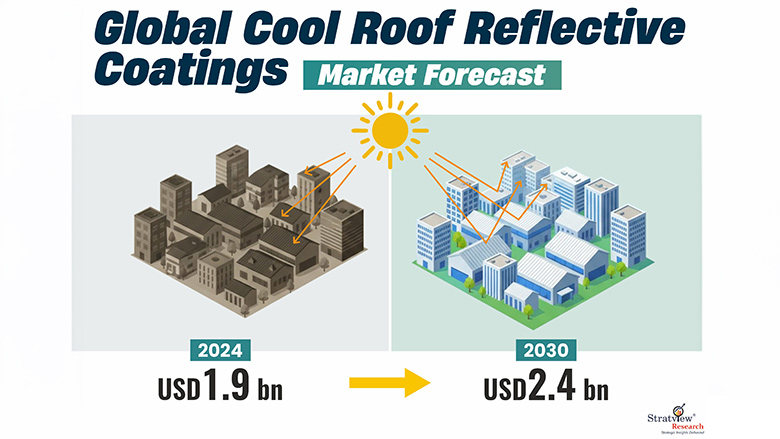
Reflecting this growing importance, the global cool roof reflective coatings market is anticipated to expand from $1.9 billion in 2024 to $2.4 billion by 2030. As regulatory frameworks tighten and corporate ESG commitments deepen, adoption of these coatings is set to accelerate, reinforcing their role as a cornerstone of future-ready, heat-resilient urban infrastructure.
For more information on coatings technologies that improve building performance and energy efficiency, visit PCI’s Architectural Coatings topic page.
Looking for a reprint of this article?
From high-res PDFs to custom plaques, order your copy today!